National Issues Convention Deliberative Poll
The Wisdom of CrowdsThe National Issues Convention Deliberative Poll was a January 2003 experiment in informed public judgment: 343 carefully selected Americans met in Philadelphia for a weekend of debate on foreign policy, with their views measured before and after deliberation. Conceived by political scientist James Fishkin, it offered a practical alternative to ordinary polling by asking not only what people thought, but what they might conclude after receiving information and discussing difficult questions with others.
Design and Participants
The 343 participants were chosen to represent an almost perfect cross-section of the American population. Before the weekend, organizers polled them to establish their initial positions. They then sent participants briefing materials designed to present relevant facts and the continuing debate in an evenhanded fashion. The sequence made the initial poll a baseline rather than the event’s final measure of public judgment.
The gathering took place in Philadelphia in January 2003 and addressed American foreign policy. Its agenda ranged from the impending conflict with Iraq to nuclear proliferation and the global AIDS epidemic. The breadth of those subjects placed questions of immediate policy alongside longer-term international concerns.
How Deliberation Worked
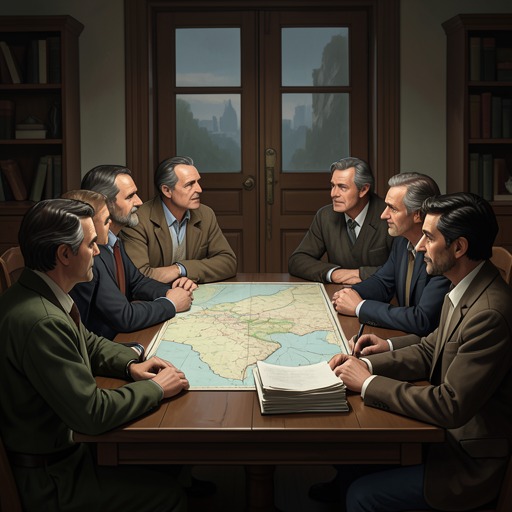
After arriving, participants were divided into small groups led by trained moderators. They spent the weekend deliberating, with opportunities to question panels of competing experts and political figures. The format combined prepared information, peer discussion, and direct engagement with people presenting different views; it did not leave participants to rely solely on their initial impressions or on a single authority.
At the end of the weekend, participants were polled again to assess how deliberation had affected their positions. That before-and-after design made change itself part of the event’s inquiry: the poll could compare initial responses with judgments formed after sustained discussion and exposure to briefing materials and competing perspectives.
Fishkin’s Proposal and Its Significance
Fishkin devised the deliberative poll out of frustration with the limits of traditional polling and concern that Americans lacked both the information and the opportunity needed to make intelligent political choices. The method rested on a different premise from simply asking people for an immediate opinion: given adequate information and time to talk matters through with peers, ordinary citizens could understand complex issues and make meaningful choices.
The project therefore expressed confidence in both informed debate and people’s capacity for self-government. Deliberative polls had by then been conducted in hundreds of cities around the world, extending the model beyond this Philadelphia gathering. Fishkin hoped the approach might become a regular nationwide process, supplementing, if not replacing, traditional polls. He argued that these deliberative results better represented what voters really thought about public issues than a typical Gallup survey.
That ambition met practical limits. Deliberative polling was time-consuming and expensive, making its routine adoption in American politics difficult to imagine; it was also uncertain whether incumbent politicians would want voters to be better informed. The convention’s importance thus lay not in establishing a new permanent polling institution, but in demonstrating the proposed conditions under which public opinion might be examined differently: representative participation, balanced information, structured discussion, and a second measure after deliberation.