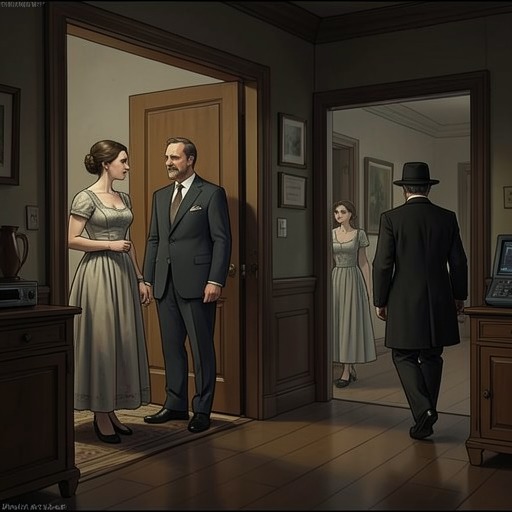
Jenny Fields assassination
The World According to GarpJenny Fields assassination is the murder of Jenny Fields by Kenny Truckenmiller, a man whose wife had sought a divorce after years of abuse. The event links Jenny’s public influence to a private struggle for safety and independence, then returns as a test of Garp’s judgment about political extremism and violence.
Causes and Background
Kenny Truckenmiller’s wife had endured repeated abuse by her husband and abuse of their three children. For years, she regarded the suffering as her own problem and lot in life. Reading Jenny’s autobiography, A Sexual Suspect, helped her recognize that Kenny was responsible for the violence and consider what rights she might have. She obtained a divorce with the assistance of a New York divorce lawyer.
Kenny blamed the women’s movement for his wife’s self-education and divorce. He told friends that child support was financially crushing him and that women’s liberation had changed his wife. His resentment thus fell not only on his former wife but also on the ideas that had helped her understand her circumstances.
The Murder and Its Aftermath
Kenny was the man who killed Jenny Fields. He was later shot by New Hampshire State Police and other armed hunters who had been cruising a parking lot. His death ended the child-support payments his former wife had depended on, leaving her responsible for supporting their three children, one of whom was in a reform school for preteens.
The practical consequences were immediate for the family Jenny’s influence had helped set on a new course. The former wife continued working as a hair stylist in North Mountain, New Hampshire, but found it difficult to support the family on that income alone. In an application to the board, she said she had been forced to compromise herself to make ends meet and did not want to repeat that compromise. Although she did not identify herself by a first name, she acknowledged that her hatred of Kenny might prejudice the board against her and said she would understand if it chose not to help.
Meaning and Later Recollection
When Garp later considers Jenny’s murder, he describes it as the work of madness, extremism, self-righteousness, and monstrous self-pity. He calls Kenny a thug and a true believer: someone so absorbed in self-pity that he could make enemies of people who had contributed only ideas to his undoing. The murder, in this reading, arises from Kenny’s conversion of grievance into blame directed at others.
That judgment also sharpens Garp’s scrutiny of the Ellen Jamesians. He asks whether their gesture is similarly desperate and empty of an understanding of human complexity, then announces, nastily, that the motion will be withdrawn and that the Ellen Jamesians should live. He does not, in fact, withdraw it. John Wolf counters that they have not murdered anyone, distinguishing their actions from Kenny’s lethal violence. Jenny’s assassination therefore remains a point of comparison in Garp’s argument about fanaticism, but the scene also insists on a difference between a protest he condemns and a murder.