Vienna
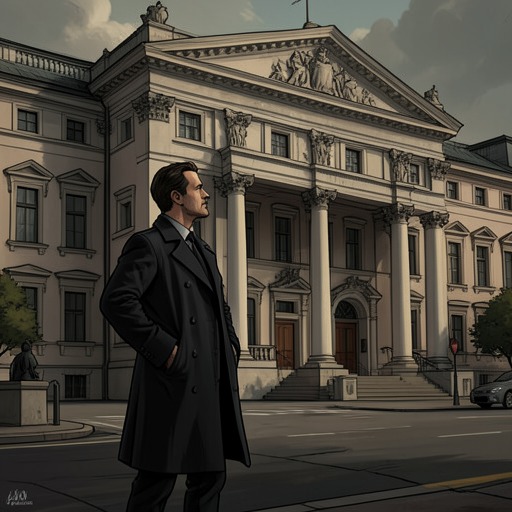
The World According to GarpVienna is both a place Garp inhabits and a way of seeing: a city whose solitude and visible age sharpen his attention, and whose pensions supply the material for “The Pension Grillparzer,” his first major short story. In 1961, Jenny brings her eighteen-year-old son to Europe. The city’s historical absences make him feel peculiarly alone, but that estrangement becomes part of his education as a writer.
Arrival and a life in pensions
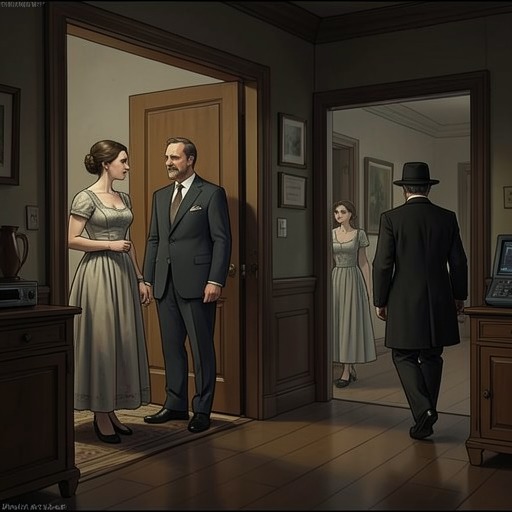
Before settling into an apartment, Jenny and Garp live in more than a dozen pensions across Vienna. Mr. Tinch proposes the itinerant arrangement as a way to sample the city’s districts and choose where they would most like to live. The plan soon loses its appeal: moving from one short-term lodging to another means repeatedly lugging their typewriters, and the pensions prove inconsistent. Some are clean, comfortable, and friendly; others are seedy. Garp learns that a pension is smaller and less elegant than a hotel, may or may not offer breakfast, and can be either a bargain or a mistake.
The inconvenience becomes useful. Garp had not known what a pension was before arriving, but the lived differences among these lodgings give him the setting and texture for “The Pension Grillparzer.” Vienna thus enters his fiction not first as a grand historical subject but as a succession of rooms, furnishings, and provisional stays. The city’s ordinary accommodations furnish his first major story with material that travel itself has made available.
Jenny and Garp soon decide they want to live in or near the Ringstrasse, the great circular street around the heart of the old city. The area gathers much of what they need and makes daily life easier for Jenny, who does not speak German. It is also presented as Vienna’s more sophisticated, cosmopolitan district, though the narration lightly qualifies whether any part of Vienna can quite claim that distinction.
Solitude and the historical city
Garp is unusually prepared for life alone. He has already flourished in a private imaginative world, and Jenny regards solitary living as natural; it takes years for him to notice that he has no friends. For her, the absence does not seem remarkable. Ernie Holm, distant and polite, is the first friend Jenny has ever had. In Vienna, then, Garp’s isolation is not simply a temporary problem caused by travel: it extends a household habit of solitude into a new city.
The young Garp walks and rides the trolleys around Vienna without meeting anyone. In letters to Helen, he describes the adolescent sense that no one else is sufficiently like oneself to understand, and says that Vienna intensifies it because there is no one like him there. The city’s age profile gives that feeling a historical basis. Few Viennese were born in 1943, and few were born between the beginning of the Nazi occupation in 1938 and the end of the war in 1945. Although many babies were born as a result of rape, births remained uncommon until after 1955, when the Russian occupation ended. Vienna had been occupied by foreigners for seventeen years, a period many residents did not consider a good time to have children. At eighteen, Garp finds himself among the few young people of his age; the experience seems to make him grow older faster.
He comes to regard Vienna less as a living city than as “a museum housing a dead city.” The observation is not a complaint. Garp likes wandering through a museum, and later writes, “A more real city might not have suited me so well.” He values the city’s stillness because it lets him look, think, and look again; a living city, by contrast, would not hold still long enough for him to notice so much. Vienna’s historical quiet is therefore both an atmosphere he experiences and a condition that suits his particular attention.
Death, perception, and writing
As Garp’s time in Vienna continues, the city seems increasingly saturated with mortality. Parks and gardens appear to him to reek of decay; the paintings in its great museums seem repeatedly to take death as their subject. On the No. 38 Strassenbahn, he sees cripples and old people traveling toward Grinzinger Allee. Even the flowers along the carefully pruned paths at the Rudolfinerhaus bring funeral parlors to mind. These impressions connect the city’s historical stillness to Garp’s growing preoccupation with bodily vulnerability and death.
The city’s earlier lodgings return to his mind in the same register: faded, mismatched wallpaper, dusty bric-a-brac, chipped china, and hinges in need of oil. Such details give physical substance to the sense of age that shapes his view of Vienna. The remembered pensions are not merely places he has left behind; their worn interiors become part of the imaginative landscape through which he reads the city.
In July, Garp returns to work on “The Pension Grillparzer,” entering what the narrative describes as the beginning of a writer’s long-sought trance, when the world falls under one embracing tone of voice. His attention to Vienna’s rooms, streets, and signs of mortality has by then become creative work. The timing also places his writing alongside Jenny’s: while he resumes his story, she is finishing the manuscript that will soon change both their lives. In August, she announces that she is ready to travel farther through Europe and proposes taking the train somewhere, perhaps to Greece. Garp declines the journey because he has too much work to do. Vienna has become not only the setting of their stay but the place where the city’s collected impressions hold him at his desk.
Narrative significance
Vienna’s importance lies in the fit between its historical character and Garp’s temperament. The city offers few peers his age, and its recent occupations have left a visible generational absence; the resulting loneliness confirms, rather than creates, his capacity to live in imagination. At the same time, its quiet streets and museum-like stillness give him room to observe without the distractions of a more visibly living city.
That stillness does not make Vienna inert in the narrative. It produces movement from experience to art: repeated pension stays become the substance of a story, and the city’s worn surfaces and encounters with death gather into a writerly way of seeing. Garp’s description of Vienna as a museum is therefore double-edged. It registers a city shaped by war and occupation, but also names the condition that lets him examine, remember, and transform what he sees. Vienna is a setting for his European youth and an early workshop for the attention on which his writing depends.