
The Narrator's Secret Journal
The Yellow Wall PaperThis flow traces private writing as the narrator's chosen means of self-expression, its suppression under treatment, and its survival through the final crisis.
increasing Bearing strength in each event
 decreasing
Bearing strength in each eventdecreasingWriting Begins in Secret
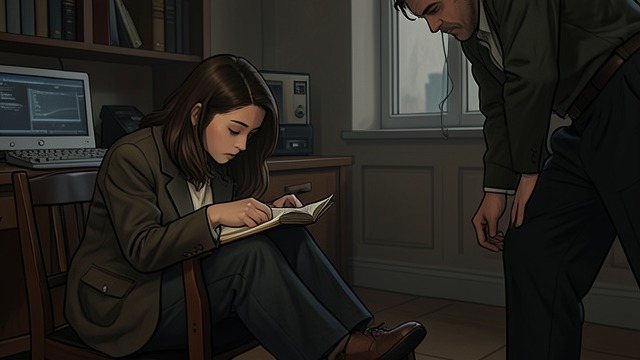
Writing Begins in Secret
A private outlet
The narrator writes despite being forbidden to work, hiding her pages when John approaches. She understands the practice as a relief for thoughts that have no acceptable public outlet.
The cost of concealment
Keeping the journal requires vigilance and drains her energy. Yet secrecy also gives her a space in which she can describe her condition in her own words.
Writing Resumes

Writing Resumes
A pause broken
After an interval without writing, the narrator returns to the page from the nursery window. She says that lack of strength, rather than lack of thought, limits her work.
A split existence
The journal records what she cannot safely say in the household. This split between written honesty and performed compliance deepens the story's sense of isolation.
The Burden of the Page

The Burden of the Page
Effort and relief
The narrator says writing helps her express what she feels, but the effort gradually becomes greater than the relief. Her ability to organize thoughts also feels less dependable.
Lost companionship
She wishes for advice and company about her work, but those needs are dismissed as unsuitable stimulation. The journal remains a solitary practice rather than a shared creative life.
Writing Yielded to Watching

Writing Yielded to Watching
A new focus
The narrator's observations of the wallpaper occupy more of her attention than her journal. She studies its shapes and changes, then keeps discoveries from those around her.
Expression redirected
Her interpretive energy has not disappeared; it has moved from writing into the wallpaper's imagined story. That redirection shows how suppression can distort expression without extinguishing it.
The Journal's Final Witness
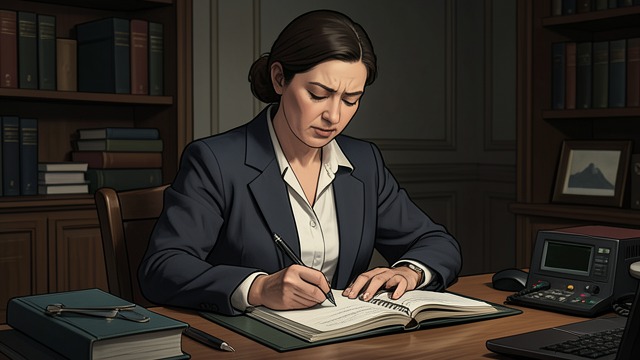
The Journal's Final Witness
A voice without an audience
The account culminates in the narrator's locked-room actions and her claim to have escaped. Her written voice retains a vivid immediacy even as her perceptions break from shared reality.
Testimony and limit
The journal lets readers see the harm that polite reassurance conceals. At the same time, its ending offers no stable recovery, only a record of a crisis that the household has failed to understand.
On the first day at the estate
After two weeks at the estate
During the middle weeks
During the later weeks at the estate
On the last day at the estate
