
Creeping and Escape
The Yellow Wall PaperThis flow traces creeping as an image that develops from the hidden woman's struggle into the narrator's final, ambiguous claim of escape.
increasing Bearing strength in each event
 decreasing
Bearing strength in each eventdecreasingCreeping Behind the Pattern
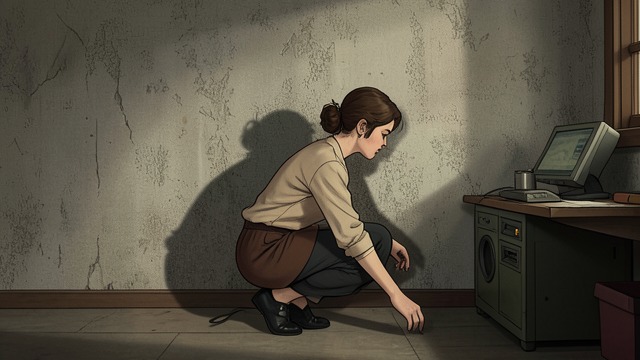
Creeping Behind the Pattern
A concealed movement
The narrator imagines the hidden woman moving behind the wallpaper's visible design. The figure is present but obscured, unable to move freely in the open.
An image of constraint
Creeping gives bodily form to the woman's struggle against a pattern that hides and restricts her. The movement begins as a feature of the wallpaper's imagined world.
Shaking the Bars
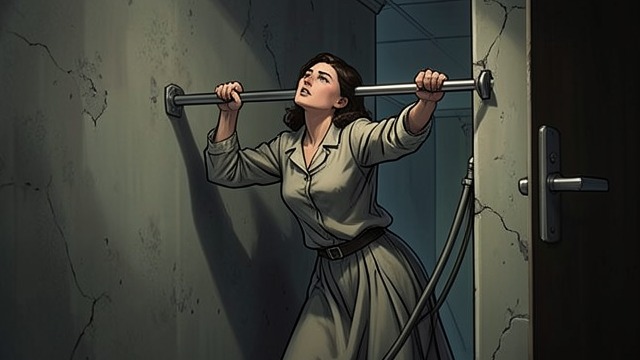
Shaking the Bars
Resistance imagined
The woman takes hold of the bars and shakes them, while the wallpaper seems to strangle those who try to pass through. The image presents escape as difficult and dangerous.
Effort without release
The narrator watches the struggle without knowing how it can end. The imagery builds tension around the desire to get free and the force that blocks it.
Creepers in Daylight
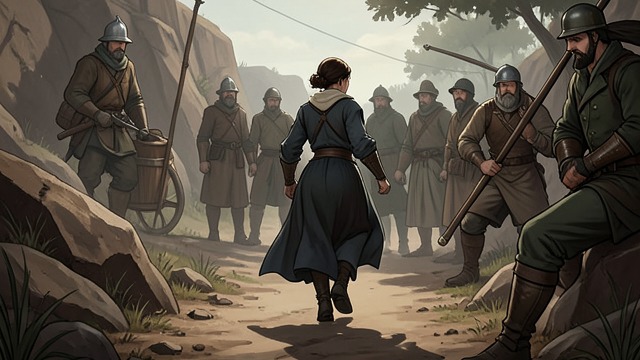
Creepers in Daylight
Movement outside
The narrator sees a woman creeping along roads and hiding when people approach. She imagines that the figure moves fast across the countryside.
Shame attached to visibility
The woman hides because being caught creeping would be humiliating. Escape from the wallpaper therefore does not remove social exposure or vulnerability.
The Narrator Joins In
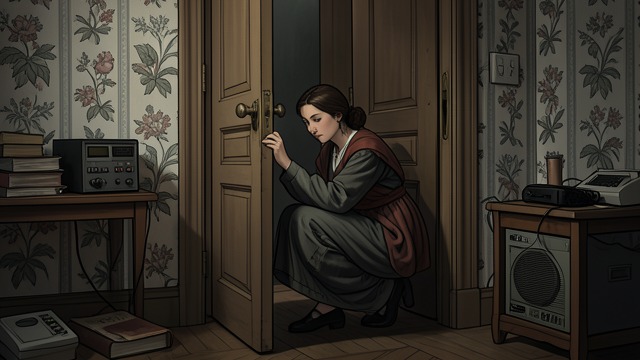
The Narrator Joins In
A shared posture
The narrator says she also creeps by daylight and locks the door when doing so. She no longer merely watches the woman but adopts the same movement and secrecy.
Identity blurred
The distinction between the captive figure and the narrator begins to dissolve. Creeping becomes the bodily expression of an identity shaped by confinement and fear.
Escape Without an Exit
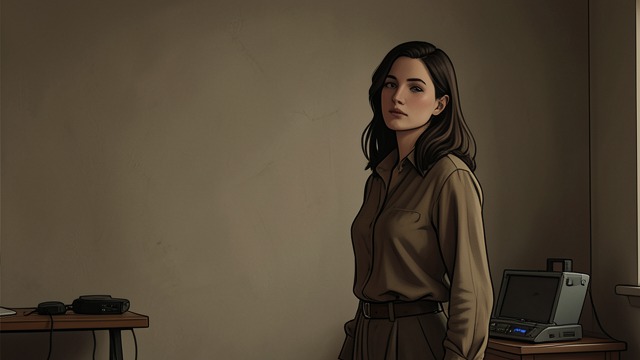
Escape Without an Exit
The claim of release
The narrator tells John that she has got out and cannot be put back. She continues creeping around the nursery after stripping away the wallpaper.
Ambiguous freedom
No physical departure is shown, and the narrator's claim arises within a breakdown. The ending makes escape both a powerful protest against confinement and a sign that the narrator has lost contact with shared reality.
Around the middle of the stay
During the later moonlit nights
During the last days before departure
Immediately before the final day
At the final confrontation
