
The Narrator's Relationship with Her Baby
The Yellow Wall PaperThis flow traces the narrator's love for her baby alongside the painful distance created by her illness and the household's arrangements.
increasing Bearing strength in each event
 decreasing
Bearing strength in each eventdecreasingA Baby in the Household

A Baby in the Household
Care delegated
The narrator says Mary is good with the baby and calls the child dear. The household has arranged for someone else to provide the daily care she cannot manage.
Love with distance
The narrator's tenderness does not erase her inability to be with the baby. That distance adds personal sorrow to a treatment plan presented as practical care.
Nervousness Near the Child

Nervousness Near the Child
Contact feels difficult
The narrator admits that being with the baby makes her nervous. She does not explain this as a lack of love; rather, it reflects the distress that constrains her ordinary life.
A painful self-image
Because she hoped to help John and care for the household, her limitations make her feel like a burden. The maternal bond is therefore marked by affection and self-reproach.
Relief About the Nursery

Relief About the Nursery
The child kept elsewhere
The narrator is relieved that the baby does not have to sleep in the nursery with the yellow wallpaper. She imagines the room as harmful to an impressionable child.
A troubling consolation
She reasons that it is fortunate John kept her in the room instead. The thought reveals how completely the nursery has become a focus of fear, while also exposing her effort to make sense of separation from her child.
The Child as John's Appeal
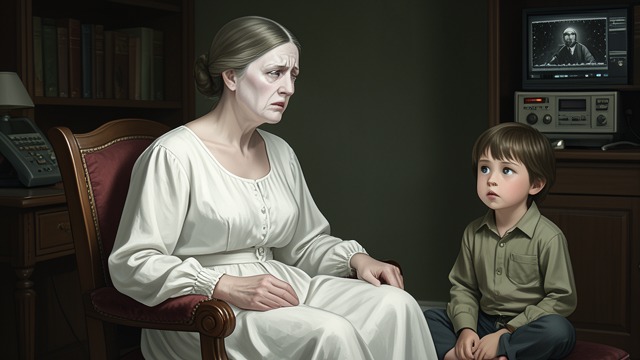
The Child as John's Appeal
A plea for compliance
When the narrator tries to discuss her condition, John asks her not to entertain a supposedly dangerous idea for his sake and for the child's. The child is invoked as a reason she should trust his judgment.
Affection under pressure
The appeal connects family love to medical obedience. The narrator's care for her baby can intensify the emotional cost of disagreeing rather than give her more control.
Maternal Absence at the End
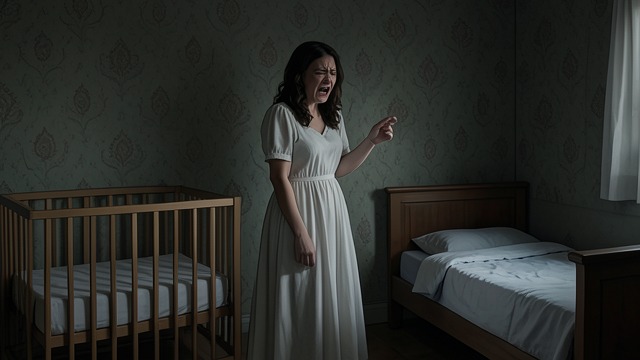
Maternal Absence at the End
The crisis isolated
The final events unfold in the nursery, far from the baby and the everyday work of care. The narrator's attention is wholly absorbed by the wallpaper and the woman she believes it contains.
Unresolved attachment
The story does not show a reunion or recovery that restores the maternal relationship. The unresolved distance remains part of the human cost of the narrator's breakdown.
Early in the summer stay
During the first weeks at the estate
During the middle weeks
During the nighttime conversation about her condition
On the final day at the estate
