
Reality Against the Wallpaper's Story
The Yellow Wall PaperThis flow traces the rising conflict between an ordinary explanation of the room and the narrator's increasingly certain interpretation of its design.
increasing Bearing strength in each event
 decreasing
Bearing strength in each eventdecreasingThe Paper as Decoration
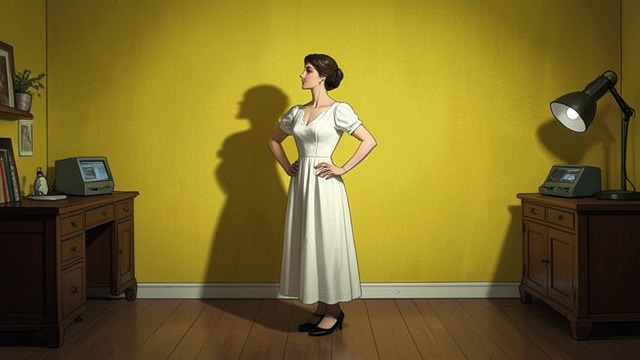
The Paper as Decoration
A disliked furnishing
The narrator describes the wallpaper as ugly and irritating, but initially treats it as a feature of a badly maintained room. John regards her complaints as a temporary fancy.
Different standards of importance
For John, the paper does not warrant action; for the narrator, it quickly becomes an unavoidable presence. Their disagreement over its significance begins quietly.
The Design Seems Alive
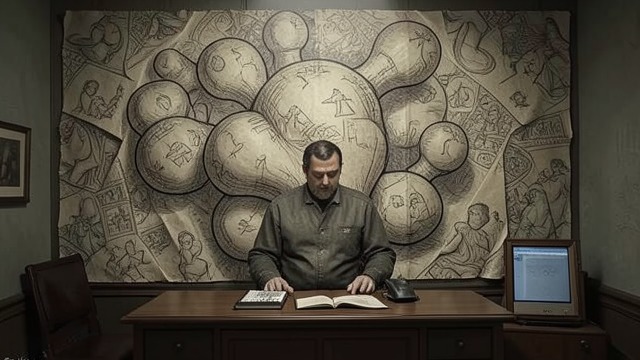
The Design Seems Alive
Forms detected
The narrator sees bulbous eyes and an indistinct shape behind the wallpaper's front design. Its shifting appearance makes the pattern seem expressive and responsive.
Attention escalates
The more she studies it, the more detail she discovers. What could be ordinary pattern becomes an active puzzle with increasing emotional force.
Movement in Moonlight
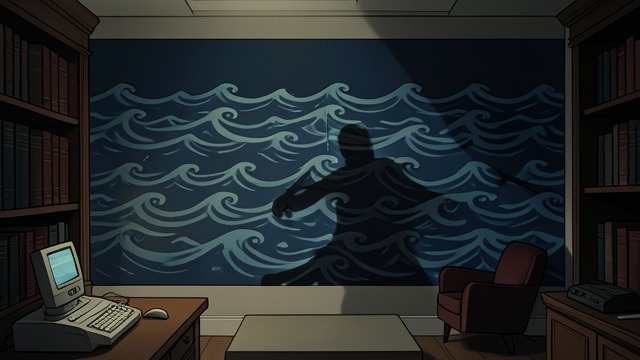
Movement in Moonlight
A theory of motion
The narrator says the hidden woman shakes the outer pattern and that the design becomes bars at night. She interprets changes in light as proof of struggle.
Certainty crowds out doubt
Her earlier speculation becomes a confident explanation. The wallpaper's apparent agency competes with the ordinary understanding that it is simply paper on a wall.
Suspicion Spreads to Others
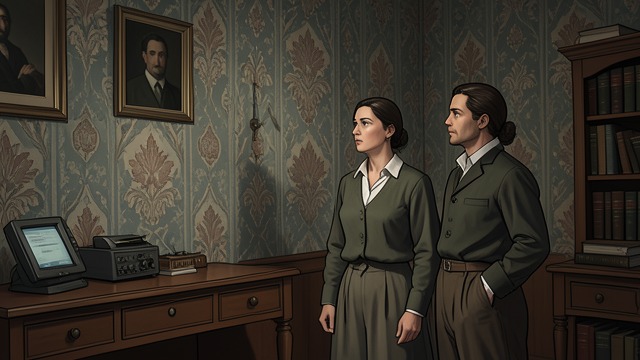
Suspicion Spreads to Others
John and Jennie watched
The narrator catches John and Jennie looking at the wallpaper and believes they are secretly affected by it. Their explanations do not ease her concern.
A private reality defended
She guards her discovery and fears that others may take the woman away. The conflict is no longer only about what the paper means, but who has the right to interpret it.
The Interpretation Takes Over
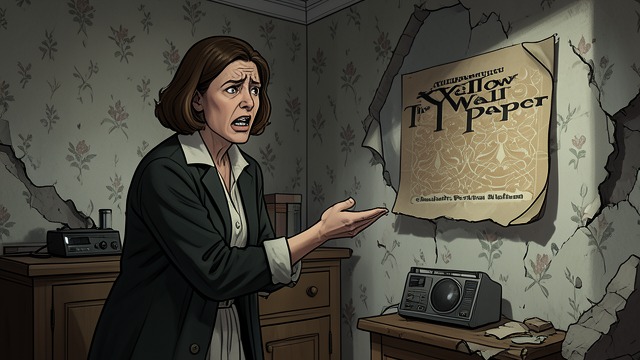
The Interpretation Takes Over
Destruction as proof
The narrator tears down the wallpaper and speaks as though the woman has escaped. Her actions follow the inner story rather than the household's plans for departure.
Reality fractured
John's fainting does not restore a shared account of events. The conflict ends not with a settled explanation but with the narrator's full identification with the figure she has imagined.
At the start of the stay
After repeated hours of watching
During the nights after the narrator's first vision
During the final week at the estate
On the final day at the estate
