
Women's Writing and Self-Expression
The Yellow Wall PaperThis flow examines how the narrator's writing moves from a hoped-for aid to a forbidden private practice and a record of a voice denied a hearing.
increasing Bearing strength in each event
 decreasing
Bearing strength in each eventdecreasingWriting as Treatment

Writing as Treatment
Work imagined as help
The narrator believes congenial work and change could relieve her condition. She understands creative activity as a possible path toward recovery.
A competing prescription
John forbids work and prescribes rest instead. The disagreement makes expression central to the story's conflict over how the narrator's health should be understood.
A Hidden Journal

A Hidden Journal
Words kept private
The narrator writes when she can avoid detection and puts her pages away when others approach. Her account becomes a protected space for thoughts she cannot voice safely.
Expression under pressure
Secrecy enables writing but also makes it tiring and isolating. The conditions surrounding the journal reveal how little room the narrator has for independent intellectual life.
No Companionship for Work
No Companionship for Work
A wish for readers
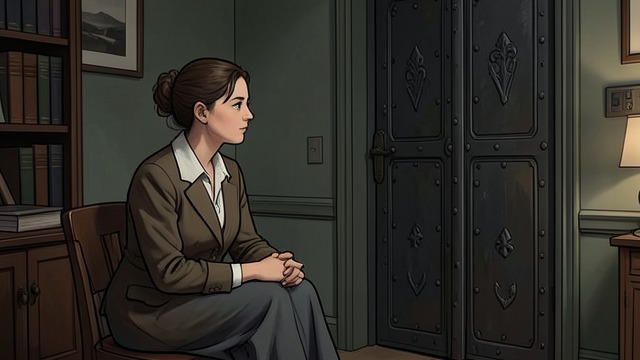
The narrator misses advice and companionship about her writing. She hopes for stimulating company, but John says such visitors would be harmful until she recovers.
A solitary voice
The restriction leaves her with no supportive exchange about her work. The story presents self-expression as a social need as well as an individual one.
Expression Redirected
Expression Redirected
Close reading replaces writing
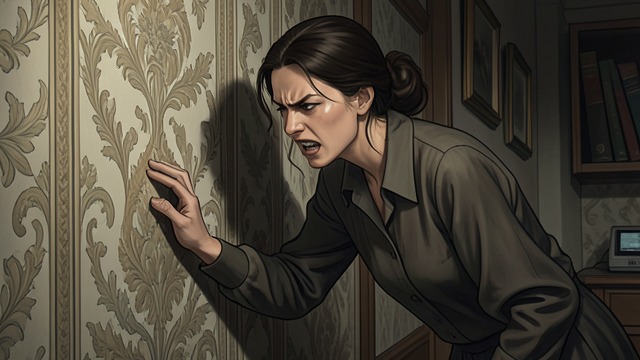
The narrator's sustained attention turns to the wallpaper and its imagined figures. She describes, interprets, and revises what she sees with an intensity that resembles creative labor.
An unstable substitute
The act of making meaning survives, but it is no longer grounded in ordinary exchange. Suppressed expression finds an outlet that increasingly entangles it with delusion.
The Account as Testimony

The Account as Testimony
A voice preserved
The narrator's written narrative records her doubts about treatment, her observations, and her final identification with the hidden woman. It gives form to experiences others have discounted.
The limits of testimony
The record makes the failure to listen visible, but it does not provide a cure or an escape from the crisis. Self-expression matters without being presented as sufficient to overcome the forces bearing down on her.
Before the estate stay
During the opening weeks
During the middle weeks
During the later weeks
At the ending
