the narrator's mental illness
The Yellow Wall PaperThe narrator’s mental illness is presented not as a condition she can describe and treat on her own terms, but as a contested experience: she reports exhaustion, distress, and worsening perceptions, while her physician husband, John, insists that she is recovering and prescribes rest and self-control. The gap between what she feels and what her household accepts as evidence shapes the illness’s course. Denied work and companionship, she secretly writes, becomes increasingly absorbed in the woman she sees behind the wallpaper, and finally tears the paper down while declaring that she has escaped. The story makes that ending at once an act of defiance and a sign of profound psychological collapse.
Diagnosis, authority, and the narrator’s account
John’s authority is both professional and domestic. He is a physician, and the narrator suspects that his occupation may be one reason she does not recover faster. More decisively, she says that he does not believe she is sick. In his account, supported by the narrator’s brother, there is no serious illness: her condition is temporary nervous depression, perhaps accompanied by a slight hysterical tendency. The narrator’s experience is thus named and limited by people with medical standing, even though she regards their understanding as inadequate.
The disagreement is not simply over a label. John’s confidence in what can be measured and seen leaves little room for the distress the narrator says he does not know how much she suffers. Because he sees no sufficient reason for her suffering, he is satisfied that it should not be treated as a grave problem. The narrator, meanwhile, measures her condition through fatigue, emotional strain, and the effort it takes to conceal her disagreement. Her first-person account supplies the suffering that the household’s reassuring diagnosis discounts.
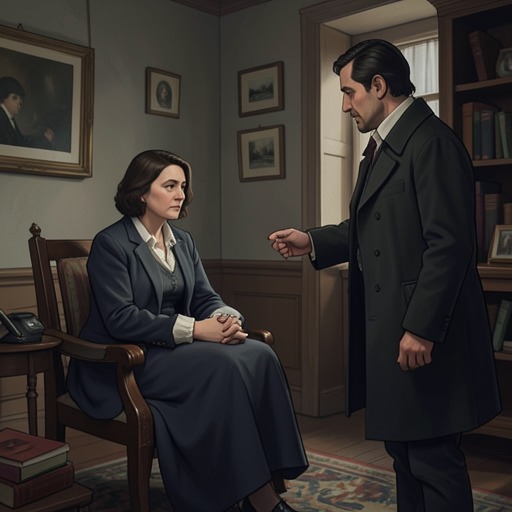
John’s apparent tenderness complicates this conflict without resolving it. He is described as careful and loving, takes responsibility for the narrator’s daily care, and believes she is getting better. Yet affection and expertise reinforce his authority to define both her condition and its treatment. When she tells him that she is not improving and asks to leave, he cites the remaining three weeks of their lease, unfinished repairs at home, and his inability to leave town. He also tells her she is gaining flesh and color and that her appetite is better. She counters that she has not gained weight and that her appetite is worse in the morning, when he is away. Their opposed observations make the difference between a doctor’s reassuring assessment and the patient’s own report concrete.
Treatment, confinement, and the loss of work
The prescribed treatment organizes the narrator’s days while reducing her control over them. She takes phosphates or phosphites, tonics, journeys, and fresh air, and is forbidden to work until she is well. John has a schedule for every hour and takes care of decisions for her. The narrator feels guilty for failing to value his care, but she also disagrees with the treatment’s central restrictions: she believes congenial work, excitement, and change would help her.
Writing becomes a measure of both the illness and the conditions imposed on it. The narrator says that writing for a while exhausts her, but specifies that secrecy contributes to the strain: she must be sly to avoid heavy opposition. She also thinks that writing might relieve the pressure of her ideas and help her rest, yet finds herself tired when she tries and discouraged by the absence of advice or companionship about her work. Rather than appearing as a simple remedy, writing is caught between a need to express herself and the physical and social costs of doing so under prohibition.
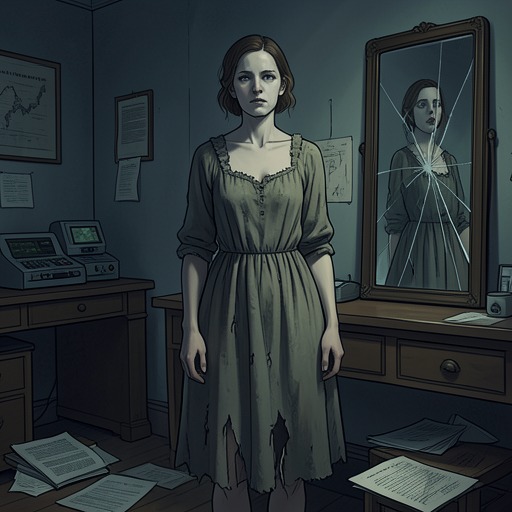
The room assigned as a place of rest makes that loss of agency spatial. The narrator wanted a downstairs room opening onto the piazza, with roses at the windows; John rejects the suggestion and chooses the large nursery on the top floor, saying it offers the air and rest she needs. Its windows are barred, and rings are set into the walls. Though airy and sunlit, it bears signs of its former use as a nursery, playroom, and gymnasium. The narrator’s treatment therefore combines open air with restriction: the room supplies the conditions John considers therapeutic, but she has neither chosen it nor control over the routine that governs her there.
The regimen also exposes the limits of reassurance as a response to worsening distress. The narrator cries frequently when alone and conceals the crying when John or someone else is present. John says that, if she fails to improve quickly enough, he will send her to Weir Mitchell in the fall; the narrator does not want to go, having heard from a friend that he is like John and her brother, only more so. Later, John insists that no one but the narrator herself can help her and urges willpower, self-control, and resistance to what he calls silly fancies. The proposed specialist and the appeal to self-control extend the same approach rather than answering her request to be taken away.
The wallpaper and the changing form of distress
The narrator’s fixation takes shape through repeated observation of the wallpaper. At first, she describes the pattern as grotesque and difficult to follow. As her attention narrows, she sees a dim shape behind it and comes to believe that the shape is a woman stooping and creeping. She wishes John would take her away, but finds it difficult to talk with him about her condition because he is both wise in her eyes and loving toward her. Her attachment to him and her distrust of the treatment occupy the same relationship; affection does not make it easier to have her account accepted.
Light changes what the narrator believes she can see. In daylight, the woman is subdued and quiet, as though the pattern holds her still. At night—in twilight, candlelight, lamplight, and especially moonlight—the outer pattern becomes bars and the figure behind it appears unmistakably to the narrator. The wallpaper thereby organizes her experience into a recurring image of confinement. Her interpretation develops over time: first a dim sub-pattern, then a woman, then a woman visibly struggling against the pattern that holds her.
The narrator next attributes movement in the wallpaper to the woman behind it. She thinks there may be many women, or only one, crawling so quickly that their movement shakes the outer pattern. In bright spots, the figure stays still; in shadow, she takes hold of the bars and shakes them. This changing account is important to the portrayal of the illness: an object that initially provokes dislike becomes the focus through which the narrator interprets struggle and confinement. The figure’s apparent movement is reported through the narrator’s perspective, not confirmed independently by another character.
Isolation, escape, and the ending
The narrator’s behavior increasingly follows the pattern she sees. She imagines the woman creeping along the road beneath the trees and hiding under blackberry vines when a carriage passes. She locks the door when she herself creeps by daylight, explaining that she cannot do so at night because John would suspect something. She does not want him to irritate her, but also does not want anyone else to free the woman at night. The distinction between a figure she observes and an action she performs has narrowed: the imagined escape becomes a private routine, hidden from the people around her.
By the final episode, the narrator has locked the door and thrown its key down into the front path. She does not want to go out or let anyone in until John arrives, and she wants to astonish him. When he reaches the room and cries out in alarm at what she is doing, she continues creeping. Most of the wallpaper has been pulled off, and she declares that she has got out despite John and Jane, and that he cannot put her back. The statement gives her conduct a triumphant logic of escape, but the scene also shows her isolated inside a room she has transformed and moving in a manner that alarms her husband.
The ending does not present the narrator’s declaration as proof that she has recovered. Rather, her identification with the woman behind the pattern culminates in a breakdown that makes the story’s conflict visible: she experiences her actions as escape, while the people who have defined her care cannot simply restore the condition that preceded them. Her illness is bound to the clash between her testimony and John’s authority, to a treatment that bars work and limits choice, and to the wallpaper image through which confinement becomes imaginable. The final act of tearing down the paper is at once resistance to being put back and the most disturbing evidence of how completely that image has taken hold.