“All you really have is now”
Thirteen Reasons Why“All you really have is now” is Hannah Baker’s brief, hard-won conclusion after she watches a man leave the house where she once lived without recognizing the connection between them. The phrase gathers the scene’s loneliness and its refusal of a wished-for return into one stark limit: the past cannot be restored, and even the listeners of Hannah’s tapes cannot return to who they were before receiving them.
The Encounter Outside the Former House
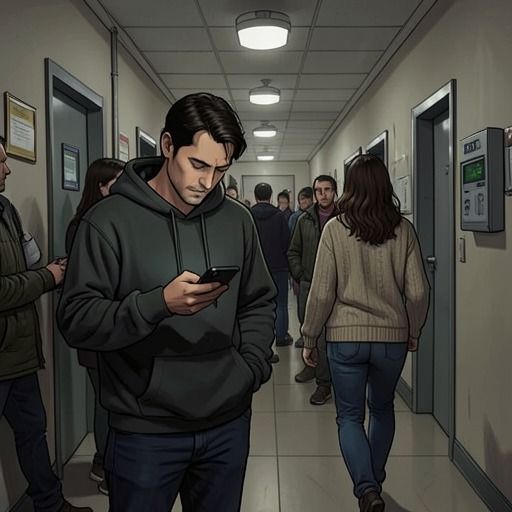
Hannah stands on the sidewalk as a garage door rises in the red glow of taillights. A man pushes the heavy door up, gets into a car, backs down the driveway, and drives away. He does not stop to ask why she is standing there or what she is doing. Hannah cannot explain his lack of response; perhaps, she suggests, he assumes she is simply waiting for him to leave.
What unsettles her is the near-contact between two people linked by one house, each unaware of that connection. The encounter is almost an event and almost nothing at all: the man leaves, and Hannah remains outside. Yet the nonincident gives the night a lasting weight. She describes the air as heavy with loneliness, and that loneliness follows her through the rest of the evening.
The Past Cannot Be Reentered
The house gives the moment its particular force. Hannah has a history there, but that history does not make her visible to the man leaving it, nor does it allow her to reclaim the life she associates with the place. His indifference reminds her that having once belonged somewhere does not restore what was there before. She recognizes that things cannot go back to how they were, or even to how she thought they were.
The phrase “All you really have…is now” follows from that recognition. Its ellipsis makes the conclusion feel less like a polished maxim than a thought reached through hesitation: first the loss of a past imagined as recoverable, then the narrower fact of the present. The line does not promise that the present is easy; it marks what remains when return is impossible.
The Tapes and Their Listeners
Hannah extends the realization beyond herself to everyone who is on the tapes. None of them can undo the moment a package arrives on a doorstep or in a mailbox. Receiving it changes them, making the tapes themselves a dividing line between before and after. The statement about the present therefore belongs not only to Hannah’s encounter with the house but also to the chain of listening she has set in motion.
She connects that shared change to her explanation for her overreaction and to her decision to send the tapes to Clay Jensen. The tapes are meant to explain and to say she is sorry. In this context, the expression is both a recognition of irreversibility and part of an attempt to address its consequences: the past cannot be revised, but Hannah can still speak to Clay Jensen in the present through the recordings.