Blue Spot Liquor
Thirteen Reasons WhyBlue Spot Liquor is a cramped neighborhood shop that becomes the setting for a pointed example of how Alex’s list turns a schoolyard joke into a license others feel entitled to use. In Hannah’s account, the store’s familiar candy counter is interrupted by a man who invokes the list as he grabs her; the episode distinguishes an excuse from permission and makes the shop a concrete site where public sexualization crosses into physical violation.
Setting and Everyday Use
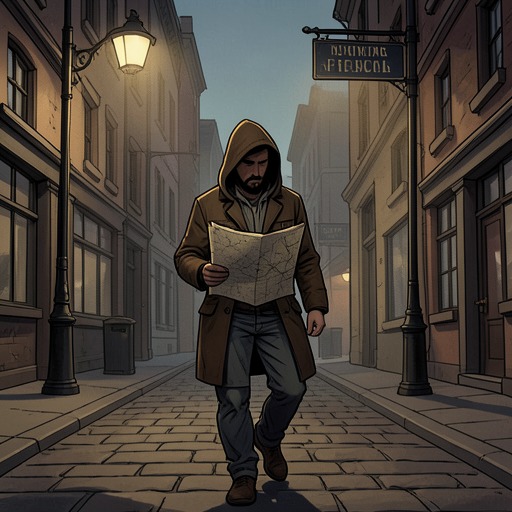
The store is only about a block from Hannah’s first house, and she used to walk there whenever she wanted something sweet—often enough, she says, to go every day. It is tiny, squeezed between two other shops that have been closed since her family moved to the area. From the sidewalk it looks grimy, its exterior resembling a posting board for cigarette and alcohol advertisements; inside, the impression is much the same.
The shop’s obscurity and near-emptiness shape the scene. Hannah estimates that it was empty ninety-five percent of the time, leaving her alone with the man behind the register. A wire rack over the counter holds the candies she likes, and the cashier rings her up as soon as she opens the door, before she has picked anything up, because he knows she will not leave without a candy bar. The routine gives the store the familiarity of an ordinary stop, not a place she enters expecting confrontation.
The Cashier and the Shop’s Routine
Hannah describes the cashier as Wally, whose face has been compared to a walnut, probably because he smokes so much. The detail belongs to the ordinary, unremarkable texture of her visits. She recalls that she cannot remember hearing him say even a greeting or a friendly grunt; the only sound she remembers him making comes in connection with Alex.
That recollection links the store’s quiet routine to the school’s social atmosphere. A location where Hannah usually buys candy and where the cashier barely speaks becomes the stage for a loud, self-conscious performance of the list. The contrast makes the incident’s intrusion legible without changing the shop itself: the familiar counter is still there, but someone has brought the school’s objectifying judgment into it.
The Grab and the List
While Hannah is at the counter with her backpack resting there, she is zipping it shut when a boy comes up just behind her shoulder. Wally’s eyes are directed down toward the area near her waist, and Hannah knows what is coming. The boy cups a hand and smacks her butt, then announces, “Best Ass in the Freshman Class, Wally. Standing right here in your store!” His words make the connection to Alex’s list explicit: he uses the ranking as the setup and punch line for touching her.
Hannah says the slap did not hurt, but makes clear that physical pain is not the measure of whether it was acceptable. The question is whether the boy had a right to touch her, and the answer is no. She does not claim that Alex’s list compelled the act; she says it supplied an excuse to someone who already needed only an excuse. Blue Spot therefore marks a distinction central to her account: a joke can circulate beyond its author’s intention and help normalize another person’s entitlement, without absolving the person who acts.
Aftermath and Significance
The episode develops beyond the initial grab. Hannah recounts that the boy grabbed her wrist, put a hand on her shoulder, and, when she was upset, became aggressive rather than apologizing. He told her to relax, then touched her shoulder as though that contact could comfort her. Hannah rejects the gesture as condescending and stresses that when a girl pushes someone away, the response should be to stop touching her, not to touch her again in the guise of reassurance.
The shop scene also gives the list’s effects a bodily consequence. Hannah says she had been grabbed before and had considered it no big deal, but this time the act was tied directly to having her name and body publicly ranked. Her account is not that a list mechanically caused the assault; it is that the list gave the perpetrator a ready-made pretext and made the reduction of a person to a body part seem available for public use. Blue Spot’s everyday setting sharpens that point: the harm is not confined to the hallway where the list circulated but follows Hannah into an ordinary neighborhood errand.