Hannah Baker’s sense of isolation
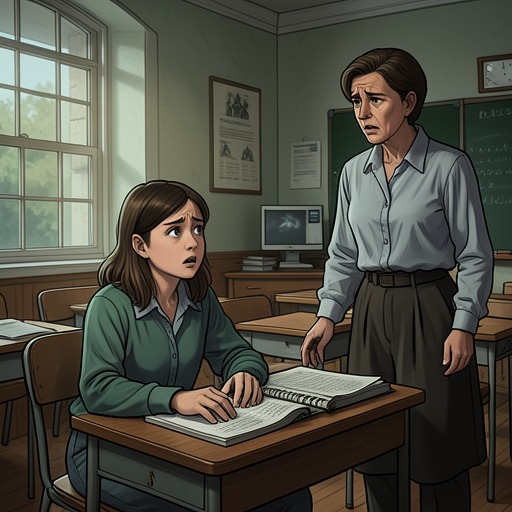
Thirteen Reasons WhyHannah Baker’s sense of isolation is not simply the absence of other people: it is the widening gap between her need to be recognized and the responses she receives when signs of distress appear. She sometimes hopes someone will identify the writer of an anonymous note and come to her rescue, but she hides her own connection to it; in class, an attempt to discuss suicide is shut down by demands for specifics. The resulting loneliness persists even in moments of connection and culminates in Hannah telling Mr. Porter that she has no friends to turn to.## Concealed hope and visible signs Hannah later considers whether her wish to discuss suicide as a group concealed a more personal hope: perhaps someone would discover who had written the note and secretly come to her rescue. The hope remains uncertain even to her, and she says she was careful never to give herself away. Her restraint is not the same as an absence of signals. The haircut and her averted eyes in the halls are recalled as small signs that could be noticed, though they do not disclose what she needs.
That tension shapes the isolation at the center of the episode. Hannah wants help without exposing herself directly, while the people around her would have to read meaning into gestures she is trying to keep inconspicuous. The possibility of being seen exists, but it depends on someone treating a partial, indirect sign as significant rather than waiting for an explicit confession.## A discussion closed to her In Mrs. Bradley’s class, a note proposes a discussion of suicide, a subject the class had never addressed. The students’ responses carry annoyance, and one girl argues that whoever wrote the note must only want attention because a serious person would have identified herself. That demand leaves Hannah with no safe way to open up in the room: the anonymity that might have enabled the discussion becomes, for her classmates, evidence against taking it seriously.
The refusal is sharpened by the class’s prior practice. Mrs. Bradley had received anonymous suggestions for discussions of abortion, family violence, and cheating, whether on partners or tests; those topics did not prompt the same insistence that the writer identify herself. Suicide is treated differently. Hannah’s wish to raise a subject others may also have considered is met not with collective inquiry but with suspicion about the unnamed person behind the note.## Connection and withdrawal At the party, Hannah’s loneliness returns even as she and another student stand together with drinks, their backs against a doorframe, laughing. The scene holds two conditions at once: she has entered with loneliness, but for the first time in a long while she feels connected to someone from school. Their shared laughter does not erase her isolation; its sudden return makes the difference between a moment of closeness and a dependable friendship painfully clear.
A related moment appears in Hannah’s recollection of Mr. Porter’s class. While girls tease her, she looks up and briefly catches the gaze of a student who is watching. He knows she has noticed him, but turns away; nobody else sees the exchange. The glance establishes that Hannah is not wholly unseen, yet the witness’s retreat leaves her alone in the moment when recognition might have become support. The significance lies in the small reversal: attention is present, but it does not become intervention.## Asking for a definition of friendship In a later conversation, Hannah asks Mr. Porter for a definition of a friend. When he describes someone a person can turn to, she answers that she has none, then identifies the conversation itself as an act of turning to him. The exchange makes her isolation concrete rather than abstract: she is seeking help from the person before her while also saying that she lacks the friendship that would ordinarily make such a request possible.
The request gives Mr. Porter an opening to respond; he tells her he is glad she is there. But the need to ask whether she has any friends shows how little confidence Hannah has that support is already available. Her question is not merely about the meaning of friendship. It tests whether turning to another person can count as friendship when she has to initiate that contact in a moment of desperation.## Recognition, responsibility, and the unanswered appeal Near the end of her account, Hannah says that no one is stepping forward to stop her. She insists that people cared, but not enough, and tells Mr. Porter that he was not very clear with her. His response asks who else she expected to help—her parents, or him—and says that she had not been clear with him. Their exchange exposes the painful mismatch between Hannah’s indirect appeals and the explicitness others say they needed in order to act.
That mismatch does not make the earlier signs disappear. The hidden hope attached to the note, the looks in the hall, the brief eye contact in class, the laughter at the party, and the direct turn toward Mr. Porter form a sequence of attempts—some withheld, some fleeting, and some overt—to make connection possible. Hannah’s isolation is therefore presented not as proof that nobody was ever near her, but as the failure of nearness and concern to become reliable help. The final conversation gives that failure its starkest form: Hannah names the need to be stopped, while the question of whether she made herself clear is left in painful tension with her belief that people cared but not enough.