Hannah Baker’s trauma and distress after sexual assault
Thirteen Reasons WhyHannah Baker’s trauma and distress after sexual assault emerge as a continuing crisis of violated agency, uncertainty, and unanswered requests for help. In her account of Bryce Walker’s assault, she explains that she did not want him and did not tell him to stop, but neither fact makes the encounter welcome; later, when Mr. Porter asks whether anything illegal happened, she says she does not know. The narrative’s emphasis falls on that uncertainty and on the support Hannah seeks but does not receive in a form she can use.
The encounter and its aftermath
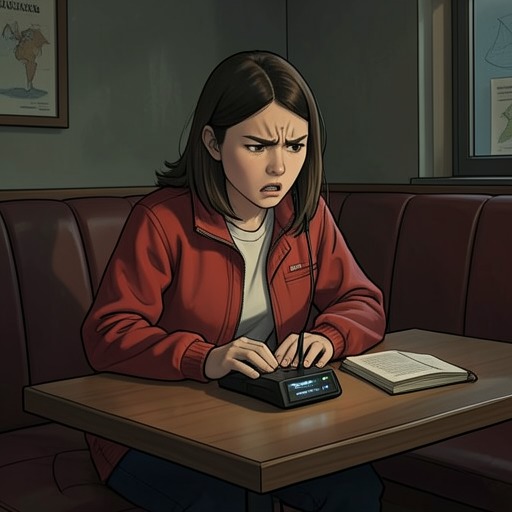
Hannah describes a moment of surrender during the encounter with Bryce Walker, while also making clear that she was not attracted to him and found him disgusting. She says she did not say no or push his hand away; instead, she turned her head, clenched her teeth, and fought back tears. Bryce told her to relax, and the assault continued. Her account distinguishes the absence of an explicit refusal from desire or consent: she says she did not want him, and describes her silence and distress rather than agreement.
Afterward, Hannah left the hot tub and walked two houses away. Her blunt statement that the night was over marks an end to the immediate encounter, not an end to its effect. When she later recounts what happened, the narration returns to her sense of having let her reputation become her, while stressing that she had previously refused people who approached her on the basis of rumors. She frames the encounter with Bryce as a departure from those refusals, but does not present that departure as attraction or willing intimacy.
Uncertainty, safety, and disclosure
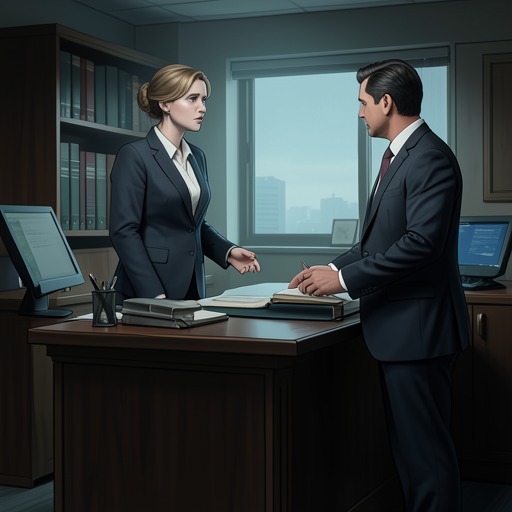
In her conversation with Mr. Porter, Hannah is asked whether anything happened with a boy that could be considered illegal. She answers that she does not think so when he asks whether she means rape, then explains that there were circumstances. Asked about alcohol, she says there may have been alcohol, but not with her. The exchange leaves her uncertainty explicit; it does not establish a legal conclusion or resolve how she understands the assault.
Hannah also struggles to predict when another threatening experience may occur. She tells Mr. Porter that she does not know who might get her next, or how, and clarifies that she does not mean a conspiracy: rather, she feels that something could suddenly emerge without warning. Her description gives the distress a continuing dimension. The concern is not limited to recounting one past event; it reaches into her expectations of what may happen next.
The narrative also places this distress beside Hannah’s difficulty confiding in others. She recalls that, in a conversation when nothing seemed off limits, she still could not tell the other person everything: some thoughts felt too frightening or incomprehensible, and the relationship felt too new. Her inability to disclose everything is not presented as evidence that nothing was wrong. Instead, the contrast between the apparent openness of the conversation and what she could not say underscores how difficult disclosure remained.
Seeking help and the response she receives
Hannah asks Mr. Porter to tell her what her options are. He offers to call Bryce in to discuss what happened at a party, or, if Hannah will not press charges or confront him, to consider moving beyond it. Hannah questions whether that second option means doing nothing and asks what she should do if moving beyond the event is not possible. Mr. Porter says he believes her and acknowledges that something happened, but the options he names leave Hannah without the clear course of action and help she is asking him to provide.
The scene makes the gap between speaking and being helped central. Hannah is not merely recounting what happened; she asks for options and challenges the suggestion that she simply move on. Her questions keep the need for assistance present even as the conversation approaches its limits. The episode therefore presents a response that recognizes her account but does not, in the exchange shown, resolve her distress or offer a path she can accept.
Distress within the wider crisis
Elsewhere, Hannah’s distress appears alongside explicit signs of a broader crisis. In class, she places a note in the paper bag Mrs. Bradley uses for anonymous feedback and discussion topics, writing that suicide is something she has been thinking about. She rewrites and discards the note repeatedly before delivering it. When the class discusses it, a student suggests the anonymous writer only wants attention; the class does not proceed to a thorough discussion, despite Mrs. Bradley’s account of local suicides and the way deaths may be reported as accidents. These scenes do not make the assault the sole cause of Hannah’s later actions. They show a plea becoming visible while the people around her fail to respond in a way that opens discussion.
Hannah’s later actions sharpen the contrast between signs and recognition. She gives Tony her bike, saying he might need a backup if his old car breaks down; he later understands it as a sign he missed. She plans to send tapes to Justin Foley and anticipates one last school day that only she will know is the last. The narrative thus situates her trauma amid isolation, suicidal thoughts, and attempts to communicate through indirect gestures and recorded testimony. Its force lies in showing both the difficulty of naming what happened and the consequences of others failing to recognize or adequately answer her bids for help.