Mr. Porter
Thirteen Reasons WhyMr. Porter is the English teacher and guidance counselor who becomes the final adult Hannah Baker turns to for help. His role is defined by a painful contrast: he recognizes the gravity of her situation and asks what they can do together, but when she leaves his office, he does not follow. In a story shaped by missed chances to intervene, his inaction makes the boundary between offering help and actually reaching someone consequential.
Identity and Introduction
Mr. Porter replaces Ms. Antilly, the guidance counselor responsible for students whose last names begin with A through G. The change was supposed to be temporary, but he remains in the position while also teaching English. The arrangement places him in two roles at school: a counselor expected to respond to students’ difficulties and a teacher Hannah sees in class.
His presence first becomes significant through Clay Jensen’s recollection of Hannah’s introduction to Jessica Davis. Years later, while hearing Hannah’s tapes, Clay connects Mr. Porter with the question of what happened to her. The name provokes a physical reaction: an icy sweat breaks across Clay’s forehead, and he grabs a sidewalk tree as the world seems to tilt. The response signals that Mr. Porter is not merely another name in Hannah’s account; Clay fears he may have been involved in what led to her death.
Awareness and Unease
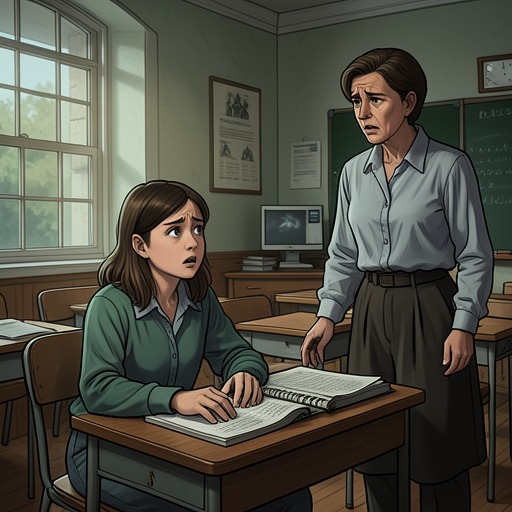
When rumors spread through school about Hannah’s unexplained absence, Mr. Porter asks a class why he keeps hearing her name in the halls. Clay remembers him as nervous, almost sick, as if he knew the answer but wanted someone to convince him otherwise. A student then whispers that someone saw an ambulance leaving Hannah’s house. The episode connects Mr. Porter to the school’s rumor-filled atmosphere while leaving his knowledge uncertain: Clay can recall his appearance and question, but cannot establish what Mr. Porter knew at that moment.
Another classroom memory intensifies that uncertainty. Mr. Porter stands staring at Hannah’s desk, seeming to look through it; no one speaks, though students look around at one another. He then walks out and does not return for a week. Clay wonders whether the expression on his face was pain or fear, and whether Mr. Porter knew because of something he had done. Those questions remain questions rather than confirmed explanations. The scene gives his silence and departure weight without supplying a definitive account of his motives.
Hannah’s Appeal for Help
Mr. Porter’s most consequential encounter with Hannah takes place in his office, where she seeks help after a traumatic experience. He asks, “What can we do to solve this problem, Hannah? Together.” The question frames the meeting as an opportunity for joint action, and he also insists that something needs to change for her. His words acknowledge the seriousness of her distress and present help as possible.
Yet the encounter turns on the gap between those words and what follows. Hannah says that it is over. Mr. Porter’s office door closes behind her and stays closed; after a pause, she understands that he is not coming. She presses her face against the bars and describes the pressure as a vise tightening against her skull. In that final image, the office’s closed door becomes more than a physical boundary: it marks the failure of the help she had hoped to receive. The narrative establishes that he does not follow her, but does not provide a fuller account of what he thought or did after she left.
The Limits of Intervention
Mr. Porter’s significance also emerges through the novel’s recurring attention to people who witness distress but do not successfully intervene. At Rosie’s Diner, Hannah looks to other customers while Marcus Cooley touches her; several glance over, then turn away, and no one asks if there is a problem. Zach Dempsey becomes the focus of Hannah’s question about whether silence was simply politeness. These scenes are not equivalent in circumstance or responsibility to the meeting with Mr. Porter, but they establish a pattern in which visible signs of distress do not necessarily produce effective help.
Hannah tells Zach that he tried to rescue her, while also insisting that this is not why he is on the tape. Her question is what it means to try and then discover that someone cannot be reached—and why that failed attempt would later be thrown back in her face. Against this troubled distinction between trying to help and actually helping, Mr. Porter’s scene carries particular force. He explicitly proposes facing Hannah’s problem together, yet the ending she records is his absence at the moment she leaves. The contrast does not erase the difference between his position as counselor and the other bystanders’ roles; it shows instead how the possibility of intervention can remain unrealized even when distress has been acknowledged.
Narrative Role and Unresolved Responsibility
Mr. Porter is presented through memories and Hannah’s recorded account rather than through an independent explanation of his inner life. Clay’s retrospective questions—whether Mr. Porter knew, and whether he knew because of something he had done—keep suspicion alive without confirming guilt or specifying prior conduct. The narration’s arrangement makes him a figure of belated recognition: the classroom image of Hannah’s empty desk and the closed office door acquire meaning as Clay listens and tries to understand what happened.
The tapes also make Mr. Porter an important threshold in Hannah’s chain of disclosure. Clay realizes that only one person stands between him and the collection: Mr. Porter. He recoils at the prospect of bringing in an adult from school, especially someone who shares first-period English with both him and Hannah. That hesitation underscores the stakes of the counselor’s role: involving him would move the private account beyond the students’ circle and toward an adult who might act. Hannah’s account instead ends with the door closed and Mr. Porter not coming. His narrative importance rests on that unresolved gap between institutional responsibility, expressed concern, and the concrete act of staying with a student in crisis.