Olly-olly-oxen-free
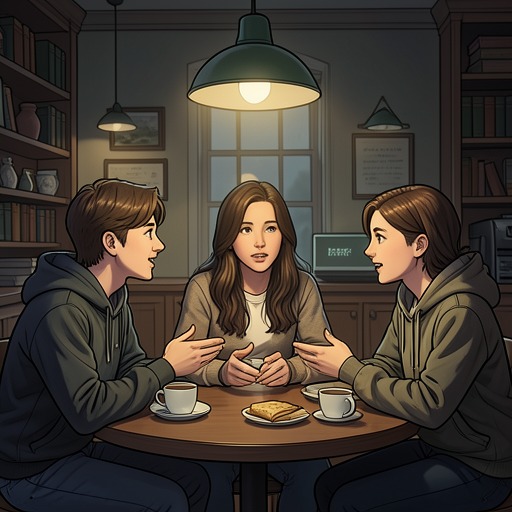
Thirteen Reasons Why“Olly-olly-oxen-free” is a phrase that turns an ordinary table, and later a classroom, into a place where someone can ask to be heard. Shared by Hannah Baker, Jessica Davis, and Alex Standall, it begins as a private ritual of welcome and refuge; when Hannah repeats it to Jessica after their friendship has frayed, the familiar call meets a painful new reality.## A Ritual at Monet’s Garden Café & Coffeehouse During the first weeks at their new school, Hannah, Jessica, and Alex did not assume they were already friends. They had talked about their former friends, how those friendships began, and what each hoped to find among new people. At Monet’s Garden Café & Coffeehouse, however, they made a small refuge together: at the far table in the garden, whichever of the three had endured the most exhausting day would put a hand in the center and say, “Olly-olly-oxen-free.” The other two would lay their hands on top and lean in.
The gesture made listening part of the expression’s meaning. The friends stayed gathered around the table and listened while sipping their drinks: Hannah and Jessica usually had hot chocolate, while Alex gradually worked his way through the whole menu. The phrase did not erase the difficulties they were facing outside the café; it gave them a repeatable way to bring those difficulties into a shared space and receive one another’s attention. Hannah calls the ritual cheesy, yet says Monet’s filled whatever void each of them needed filled at the time.
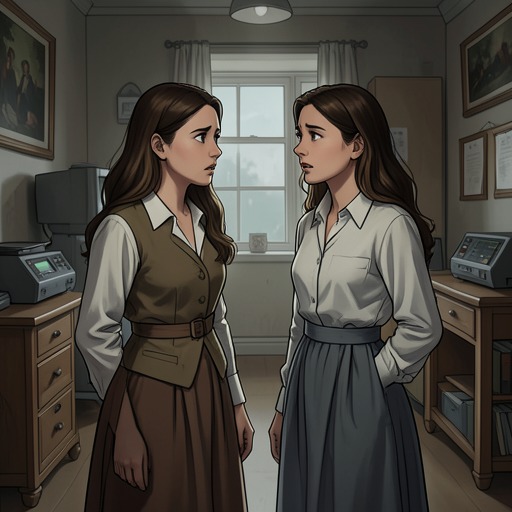
That shelter was temporary. Hannah acknowledges that the closeness did not last, and the later return of the phrase makes the change legible: what had once brought the three together can no longer guarantee that they will listen or protect one another.## The Call Repeated After the friendships had begun to separate, Hannah returned to Monet’s and found Jessica slumped in a chair. Hannah sat down and put her hand in the middle of the table, asking, “Olly-olly-oxen-free?” The gesture reproduced the old ritual at the place that had been safe for all three, but Jessica answered by slapping a paper onto the table and pushing it across to Hannah.
The paper was Alex’s “Who’s Hot / Who’s Not” list. Hannah recognized it from having first seen it upside down on Jimmy’s desk; she knew which side Alex had put her on, and understood that Jessica, seated across from her, had been assigned as her opposite. The list had turned the former friends into a ranking and comparison. At the very table that had once gathered them, Hannah’s call for their shared refuge receives no return of the old hand-stacking gesture. The contrast makes the phrase’s later use more than nostalgia: it measures the distance between the promise of being heard and the rupture now in front of them.## The Phrase Preserved A school yearbook preserves the expression beyond the friends’ changing circumstances. Looking through the freshman-year volume for something that might show Hannah differently from the ugliness of the tapes, Clay Jensen finds a September entry written in red ink: “Everyone needs an olly-olly-oxen-free.” The page bears three sets of initials, which identify its authors as Jessica Davis, Alex Standall, and Hannah Baker.
The inscription turns the spoken ritual into a compact written remembrance, retaining its claim in the plural and its suggestion that everyone sometimes needs a place of safety. Its location in the yearbook also fixes the expression to the beginning of the friends’ time together, when Monet’s Garden Café & Coffeehouse could serve as a refuge. The handwriting does not restore that refuge, but it confirms that all three had shared and recorded the idea.
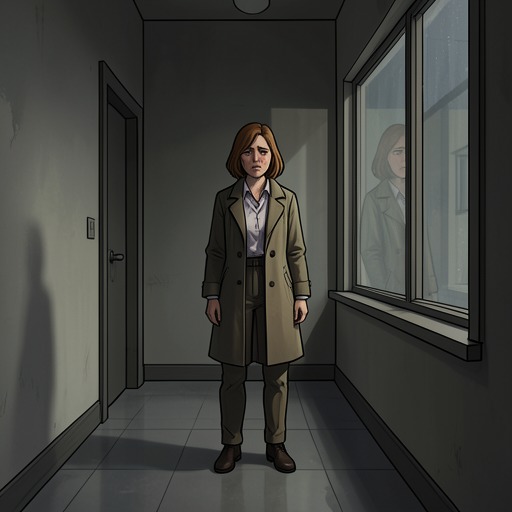
The phrase also resurfaces in Hannah’s account of Peer Communications. As she feels increasingly like an outcast, that classroom becomes her safe haven at school; each time she enters, she imagines throwing open her arms and shouting, “Olly-olly-oxen-free!” There, the expression carries the old ritual’s desire for welcome into a different setting. Hannah explains that for one period each day, no one was allowed to touch her or snicker behind her back about the latest rumor, and that Mrs. Bradley did not appreciate snickering. The phrase thus connects a friendship’s shared refuge to the more limited protection of a classroom where a teacher’s rules restrain harassment.
Across these moments, “Olly-olly-oxen-free” moves from a hand placed at the center of a café table, to a call that cannot mend a friendship, to red ink in a yearbook and an imagined cry at school. Its recurrence holds both comfort and loss: the need for a safe place persists, even as the people and circumstances that once answered the call change.