School
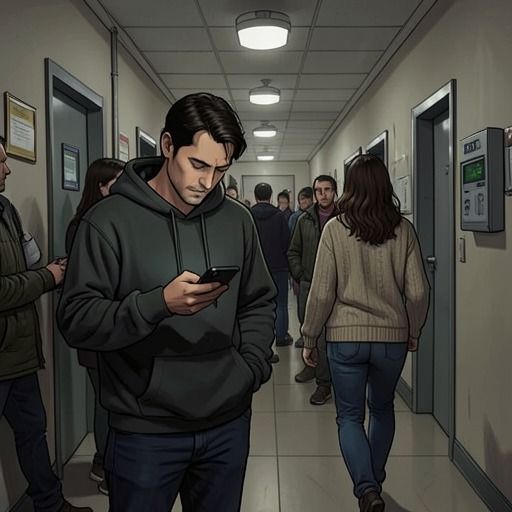
Thirteen Reasons WhyThe school is the central social landscape of Hannah Baker’s story: a place where reputations circulate, suffering can be visible yet unrecognized, and a tentative request for help is reduced to classroom speculation. It is also the point of return after the tapes, when Clay Jensen must face the people implicated in them and chooses to walk toward Skye Miller instead of letting her disappear into the crowd.
Setting and Social Climate
Hannah’s account makes the school feel unsafe before it becomes the setting for her most explicit attempt to seek help. After Tyler Down’s photographs compromise her privacy at home, she describes school not as a refuge but as a place that had already ceased to feel safe. The distinction matters: exposure follows her from the public world into the private one, leaving neither setting secure.
The school is also where one person’s action can travel through a network of reputation and consequence. Hannah tells the tape listeners that Alex Standall placed her name opposite Jessica Davis’s on a list, choosing her because Justin Foley’s earlier story had already left her with a sexualized image at school. In her account, the list is not isolated from what came before: it takes hold because a reputation has already been made available for others to use. She calls this a snowball, a small act gathering force as it rolls onward.
That accumulating structure receives its clearest image in Hannah’s description of a party as the point where the separate stories knot together. The school’s connections do not stop at its doors; people and histories formed there carry into other places, and events outside school feed back into how its students see one another. The school therefore functions less as a sealed backdrop than as a hub in a chain of relationships, rumors, and consequences.
The Note System and a Failed Appeal
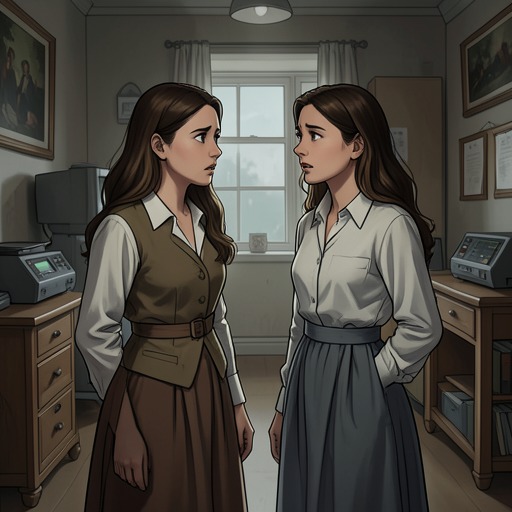
At the back of a class, Mrs. Bradley keeps a paper bag on the spinning bookrack alongside the students’ bags. Students may use it to comment on her teaching or suggest topics for future discussions, and she encourages them to do so. The ordinary classroom device becomes a possible channel for a disclosure that Hannah cannot bring herself to make aloud.
Hannah writes that suicide is something she has been thinking about, though not too seriously. The act of writing is itself difficult: she drafts the note repeatedly, throws versions away, and crumples others before delivering it. Its careful preparation contrasts with the anonymity that follows. The message reaches the classroom, but its author does not become visible to the people who might have helped her.
The discussion that follows closes rather than opens that channel. Students speculate about the note and respond with irritation; one girl suggests that its writer only wants attention because a serious person would have identified herself. Hannah hears that response as confirmation that she cannot open up in the class. The bag has carried her words into the room, but the room interprets concealment as evidence against the writer instead of as a sign of vulnerability.
Reputation, Absence, and the Tapes
The school’s social judgments also shape the background against which Hannah’s story is heard. In her explanation of Alex’s list, she connects the choice of her name to the image left by Justin’s earlier story. The list’s joking intent does not erase its effect: a public label makes her an easy target for further stories, and each new account inherits the damage of the last. The school is where that reputational sequence becomes legible, even when those involved do not understand what their actions will set in motion.
Hannah’s tapes make that chain into a route through places. She tells listeners that she will mention locations around town and invites them to go to the marked spots for additional insight; Clay Jensen still has her map crushed beneath the books and notebooks in his backpack. The route links testimony to physical places, while the school remains the shared social world through which many of the stories connect. The tapes’ prescribed passage from one listener to the next gives that network a deliberate form: what students did or failed to notice is carried forward rather than left as private memory.
The school becomes a place of absence as well as circulation. After hearing the tapes, Clay returns to a campus he has passed for years, now arriving later than ever before. In Mr. Porter’s classroom, one desk has been empty for two weeks and will remain empty for the rest of the year; Clay’s own desk is empty for one day. The contrast makes loss present in the ordinary arrangement of the room. Faces recognize him, but recognition does not mean they see everything he carries.
Return and a Different Response
The final school scene turns the problem of seeing and failing to see into an immediate choice. Clay notices Skye walking along the same stretch of hall where he watched Hannah slip away two weeks earlier. Hannah disappeared into a crowd there, leaving the tapes to say goodbye in her place; now Clay hears Skye’s footsteps seeming to weaken as she moves farther away.
He begins walking toward her. The gesture does not undo the school’s earlier failures, nor does the narrative claim that he knows what Skye needs. Its significance is narrower and more concrete: after confronting the consequences of missed signals and unanswered distress, Clay does not simply turn away. The school remains a place marked by an empty desk and by people who recognize one another without seeing the whole story, but the ending gives that familiar corridor a new possibility—a decision to approach rather than let another person recede alone.