Soul Alone
Thirteen Reasons Why“Soul Alone” is a poem by Hannah Baker about the difference between being looked at and being known. Ryan Shaver takes it from her notebook and publishes it anonymously in the Lost-N-Found; teachers and students then circulate, interpret, and parody it without knowing its author. Its history turns the poem’s plea for recognition into a record of how Hannah’s expression is removed from her control and made public entertainment.
Origin and Publication
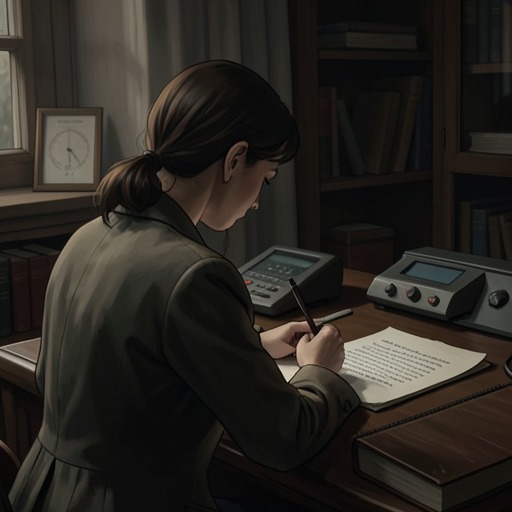
Hannah writes the poem on the same day students become angry over an unsigned request for help concerning suicide. The poem is anonymous, like that note, but its anonymity does not make it ownerless. Ryan takes it from her notebook and prints it in his collection of found material. Hannah makes the distinction explicit: it was never a lost poem, and Ryan did not find it. The apparent coincidence between an unsigned plea and an unsigned poem therefore carries an important difference: the poem’s lack of a name is not permission to claim it.
Ryan’s magazine is made by gathering several pages of quirky material, printing fifty copies, stapling them together, and leaving them in changing locations around the school, including restrooms, locker rooms, and the track. He considers the shifting drop-off spots appropriate for a collection of things people happen upon. That method gives “Soul Alone” a circulation of its own: its readers encounter it unexpectedly, but the chance manner of distribution disguises the prior act of taking it from Hannah’s notebook. The poem appears to have entered public space by accident; Hannah’s account insists that its removal was not an act of discovery.
A Plea to Be Seen
The poem contrasts outward appearance with inward personhood. Its speaker addresses someone who does not see her, barely responds when she says hello, and may or may not be a kindred spirit. It then turns to the speaker’s mother, who carried her but now sees only what she wears. The repeated appeal is to look beyond visible appearance and know the speaker’s soul, rather than reducing her to what can be seen.
This theme also shapes Hannah’s discussion of the poem with Ryan. When she asks what he thinks it means, he reads it as saying that no boy overlooks her more than she overlooks herself, while also sensing that it goes deeper than his interpretation can reach. Hannah later confirms that Ryan was right about that depth, but sets his interpretive sensitivity against his decision to take the notebook and publish the poem. Recognizing that the writing may carry more meaning does not amount to respecting the person who wrote it.
Classroom Interpretation and Exposure
After publication, teachers bring the poem into class, and students search it for meaning. Mr. Porter presents it as comparable to a classic poem by a dead poet: in either case, the author cannot be asked to explain the work. He waits to see whether a student will admit to writing it, but no one does. The comparison makes the poem available for classroom analysis while leaving Hannah’s authorship unacknowledged; her silence is treated as an interpretive condition, not as a boundary around private work.
Hannah says the class failed to understand the poem, including Mr. Porter, even though its members believed their readings were correct. Some students nevertheless suspected she had written it, and Ryan may have told someone, proud that his collection had found its way into the curriculum. When confronted, Hannah neither confirms nor denies authorship, which angers some of them. Her refusal does not stop the poem’s public life; it leaves her surrounded by interpretations she cannot control and by readers who want confirmation from her without having first respected her privacy.
Parody and Aftermath
The response grows more openly cruel when students write parodies and recite them to Hannah in the hope of getting under her skin. She sees two girls perform a version in Mr. Porter’s class before the bell. For a week, students bring new poems each day. Hannah tries to ignore them, pretending to read while she waits for class to begin. The repetition turns a single act of unauthorized publication into an ongoing classroom ritual: the poem is not merely discussed but repeatedly used to target its author.
The episode’s central irony is that “Soul Alone” asks readers to see beyond the visible surface, while the people who handle it treat Hannah’s words as a surface they can cut up, reinterpret, and imitate. The poem’s journey—from her notebook, to Ryan’s collection, to classroom lessons and daily parodies—makes that mismatch concrete. Its publication does not deliver the understanding its speaker seeks; instead, it exposes how easily the school’s public reading of a girl’s words can become another form of disregard.