Tony
Thirteen Reasons WhyTony is a longtime acquaintance of Clay Jensen who becomes the keeper and quiet enforcer of Hannah Baker’s cassette chain. His old Mustang, tape-compatible stereo, and yellow Walkman connect the recorded story to its listeners, while his careful method of locating the next recipient gives him a practical role in carrying out Hannah’s instructions. Beneath that competence lies regret: Tony recalls that Hannah came to his house, and that he recognized signs only after the chance to help had passed.
Identity and Everyday Life
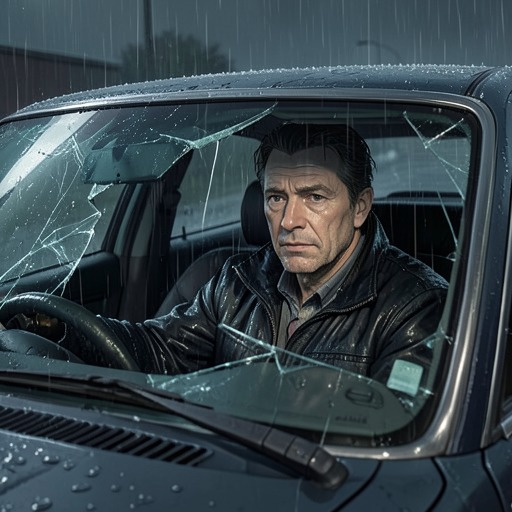
Tony’s attachment to his old Mustang is part of his recognizable presence at school. The car has passed through his family, from his brother to his father and apparently through earlier generations, and Tony is known for caring about it. His loyalty to the vehicle has even cost him relationships, as girls have dumped him over car envy. The detail makes the Mustang more than transport: it is a prized inheritance and an extension of the independence Tony guards.
That independence shapes his approach to music. Tony has never upgraded the car stereo because it plays cassette tapes and lets him control what is heard. When passengers bring their own music, he can dismiss the request by saying, “The format’s not compatible,” a joke that turns an obsolete format into a rule of access. The old stereo’s continued usefulness gives Tony an advantage when Hannah’s recordings begin circulating: where newer equipment might not play them, his car remains ready for tapes.
Tony also owns a yellow Walkman with a narrow plastic headset. He and Clay are not close confidants at the outset, but they have worked together on assignments, and Clay knows where Tony lives. The Walkman’s portability makes it especially useful: Clay can borrow it and take a few tapes along while walking through Hannah’s old neighborhood, only about a block from Tony’s house. Tony’s ordinary possessions thus become the equipment through which Clay can listen privately and continue the sequence.
Role in the Tape Chain
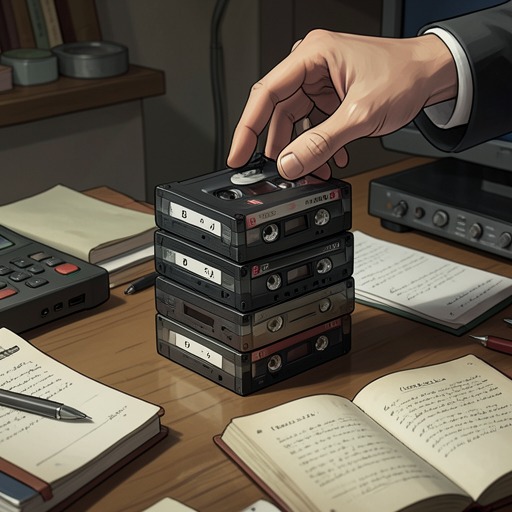
Hannah’s instructions turn the tapes into a controlled relay. Each side has a number, with the sequence running across seven tapes and ending at side thirteen; listeners are told to hear all thirteen sides, rewind them, return them to the box, and pass them to the person who follows. Hannah also warns that copies will be released publicly if the package fails to reach everyone. Tony is not identified as a maker of those recordings or copies, but his actions help the original tapes travel according to Hannah’s rules.
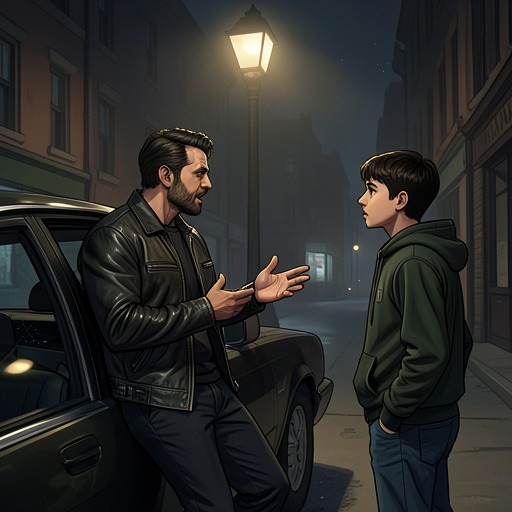
His old Mustang becomes a meeting place for the chain’s transfer. Rather than directly asking people whether they have the tapes—an approach likely to be denied—Tony waits until he believes the previous listener has finished, then looks for the next person near the school’s front lawn. He calls that person over and presents a tape as though he has a song to play. Their reaction tells him whether they recognize it. The tactic is discreet and observant: he uses the tapes themselves as a test, allowing a listener’s response to disclose their place in the sequence without forcing an admission in public.
Tony’s role is therefore both practical and ethically charged. Hannah’s copying threat makes the chain difficult to ignore, but moving the tapes also means helping her testimony reach the people she selected. Tony’s procedure protects the order she established, and the numbers on the tapes make that order tangible. When Clay opens the Walkman and identifies the fifth tape by its dark blue number nine, he realizes that he is number nine in the sequence. The recorded story’s numbered sides assign listeners not just a turn, but a place in Hannah’s account.
Relationship with Clay Jensen
Before the tapes bring them into closer contact, Clay and Tony have known each other for years through school projects and jokes after class, without ever having a deep conversation. Their familiarity is real but limited: Clay knows Tony’s habits and address, yet initially does not approach him as someone with whom he can share what the recordings are doing to him. That gap gives their later encounters a subdued intimacy. Tony is near enough to help, but the friendship has not previously required either boy to speak openly.
Clay’s first visit to Tony’s house catches him working with his father on the Mustang. Tony holds a flashlight while his father reaches into the engine with a wrench; when Clay asks whether the car has broken down or whether the repair is just for fun, Tony turns, startled, and drops the flashlight into the engine. The moment places their reunion inside Tony’s established world of car and family, while Clay arrives carrying a very different burden: the tape story has ended for the moment, but he still needs somewhere to listen and breathe.
The Walkman becomes a small breach in their ordinary boundaries. Tony later finds Clay listening and puts a finger on the Pause button, asking whether the player is his. Clay does not answer; he has taken it, and he cannot read Tony’s expression. Tony’s intervention makes the hidden borrowing visible, but it does not become a rupture between them. Later, Tony explains that Clay was easy to identify because he had stolen the Walkman. When they laugh about it, the admission brings relief rather than punishment. Their humor does not erase the seriousness of the tapes; it briefly gives them a way to be together outside the weight of what they have heard.
Hannah and Tony’s Regret
Tony’s personal connection to Hannah emerges in a stark sentence: she came to his house, and he saw it as his chance. When Clay asks what he means, Tony answers that the signs were all there. The exchange establishes that Tony had an opportunity to respond to Hannah’s distress and later understood the visit as a moment when he might have acted. The evidence does not specify exactly what happened during that visit or what intervention Tony contemplated, so the importance of the admission lies in the chance he believes he missed.
That memory changes the meaning of Tony’s careful work with the tapes. He is not simply an efficient courier who happens to own equipment suited to an outdated medium. His vigilance about who has listened and who comes next stands alongside the knowledge that he did not act when Hannah was still able to come to him in person. The chain offers a concrete task after the fact: preserve the order, notice each recipient, and make sure the testimony reaches its destination. It cannot undo the missed opportunity, but it keeps Hannah’s account from being casually discarded.
Narrative Significance
Tony’s presence is built through objects that are old, usable, and insistently material. The car stereo’s refusal to accommodate newer music, the Walkman’s narrow headset, and the tapes’ hand-marked dark blue numbers all limit how the story can be heard. The recordings have thirteen numbered sides, not an open-ended stream: listeners must follow the order, rewind the tapes, and pass them on. When a side ends, the cassette clicks over and continues playing, and the slight static beneath Hannah’s voice becomes more noticeable in the silence. The medium shapes the experience through sequence, interruption, portability, and the possibility of replay.
Tony connects these constraints to a human network. He lends the Walkman to Clay, notices when it has been borrowed, and uses a staged offer of music to identify later listeners. His method makes a concealed chain legible through small reactions rather than public declarations. In a story concerned with who is heard, who notices, and who responds, Tony occupies an uneasy middle position: he helps Hannah’s voice continue beyond her, yet his recollection of her visit is inseparable from the question of what he failed to recognize in time. The tapes can be passed along; the moment he remembers cannot.