Tony's recorder
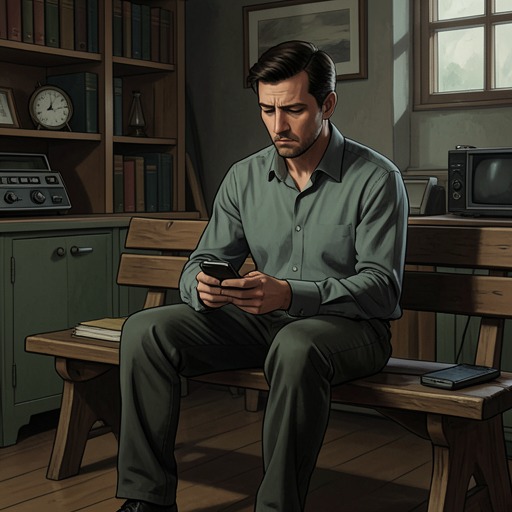
Thirteen Reasons WhyTony’s recorder is the practical instrument that makes Hannah Baker’s testimony possible, and the link that draws Tony into the path of the tapes. Hannah asks him for a portable device that can record voices; he lends it without asking why. Later, he understands that the gift may be why she trusted him with a role in ensuring the recordings were heard. The recorder thus matters not only as equipment, but as the material beginning of Tony’s involvement in a story whose voices are numbered, copied, and passed on.
Identity and Use
Tony recalls that his father owned an old tape recorder, which he used to make tapes for his car. Hannah asked him about the recordings he played there, then asked whether he had anything that could capture voices. Her request was specific: she wanted a handheld recorder she could carry around, one that did not have to be plugged in. Tony said he would get one and asked her to wait while he fetched it.
The device is identified through Tony’s recollection rather than a description of its make or appearance. The evidence establishes its portability and voice-recording function, but not its model, its recording medium, or the exact circumstances in which Hannah used it. What is clear is that it answered a practical need: it could accompany her and record voices without being connected to an outlet.
The Loan and Its Uncertainty
Tony remembers giving Hannah the recorder, but stresses that he did not know what she planned to do with it. He had not asked why she wanted a device for recording voices, and, in retrospect, he doubts she would have explained even if he had. His account leaves a deliberate gap between the ordinary act of lending equipment and the purpose it eventually served. The recorder passes from Tony’s hands to Hannah’s without a stated agreement about its use.
That gap also shapes Tony’s later understanding of the request. He tells Clay Jensen that he can only think Hannah gave him a role because he supplied the recorder: she may have believed he had a stake in the tapes and would help make sure they reached their listeners. Tony presents this as his interpretation, not as something Hannah told him. The object therefore creates a connection, but does not settle what Hannah intended when she asked for it.
From Recorder to Tape Chain
The recordings made with the device take material form as seven tapes marked with dark-blue numbers across their sides: the sequence runs from one through thirteen, with the final tape numbered on only one side. Hannah’s instructions make the tapes a controlled chain of listening and delivery. Listeners are told to hear all thirteen sides, rewind the tapes, return them to the box, and pass them to whoever comes next. She also warns that copies exist and will be released publicly if the package fails to reach everyone in turn.
The recorder and the later playback equipment have distinct roles. Tony’s recorder supplies the means to capture voices; the numbered tapes and a Walkman carry those voices into the listeners’ hands and ears. When Clay recognizes that a dark-blue nine marks his tape, the numbering identifies his place in the sequence. At the end of the seventh tape, its second side clicks over and continues playing, while the static beneath Hannah’s recorded voice becomes more noticeable. The change from recorded speech to the tape’s underlying hum makes the physical medium audible in its own right: a voice preserved on tape is also a sequence of sides, spools, pauses, and playback.
Tony’s Involvement and Significance
Tony is not presented as one of the people recorded on the tapes, but Clay points out that he is still part of the story. Tony’s explanation is that Hannah may have counted on his connection to the recordings because he gave her the recorder. His practical assistance thus becomes a form of responsibility, even though the evidence does not show that he knew the purpose of the device when he handed it over.
The recorder’s importance rests in this contrast between limited knowledge and lasting consequence. Tony’s action is small and concrete: he fetches a portable recorder after Hannah asks for one. Its later significance exceeds what he understood at the time, as that device enables the recorded voices whose ordered circulation implicates listeners one after another. The object does not explain Hannah’s reasons or erase the uncertainty surrounding Tony’s choice; it marks the point where an ordinary loan becomes part of the tapes’ material and ethical chain.