Tony's Walkman
Thirteen Reasons WhyTony’s Walkman is the portable device through which Clay listens to Hannah’s tapes. More than a playback tool, it gives the recordings a physical sequence and a private setting: Clay takes the yellow player from Tony’s car, loads Hannah’s numbered cassettes, and carries her voice with him. Its small mechanisms—the wrapped headphone cord, the open deck, the pressed Play button, the changing tape sides—make listening a material action, subject to order, interruption, and continuation.
Identity and Acquisition
Tony owns an old yellow Walkman with a narrow plastic headset. Though Tony is not a close friend of Clay, they have worked together on assignments, and Clay knows where he lives. Clay realizes that the player will let him hear the tapes while walking through Hannah’s old neighborhood, a short distance from Tony’s home; he also considers finding somewhere private because he cannot listen comfortably at home.
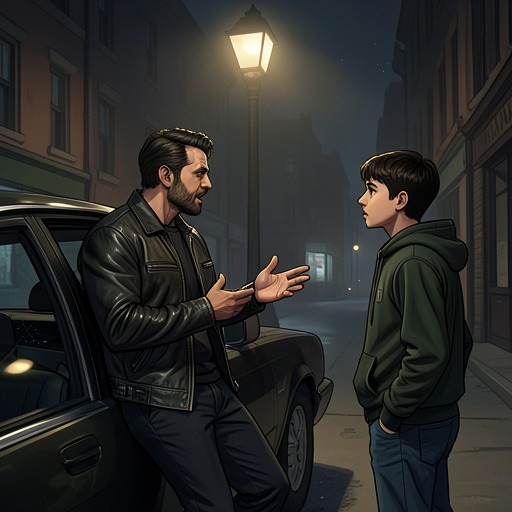
When Clay sees the Walkman on the floor behind the passenger seat, its headphone cord wrapped tightly around it, he hesitates over how to ask for it. During a brief moment when Tony and his father exchange a wrench and flashlight, Clay takes the player without asking, slips it into an open pocket of his backpack, and zips the bag. He then leaves. The acquisition is impulsive and furtive, not the straightforward borrowing he had anticipated.
Playback and Sequence
After walking away from Tony’s car, Clay sets his backpack on the sidewalk, unwraps the cord, and fits the yellow headphones into his ears. He has brought the first four tapes and left the remainder at home. From the backpack’s smallest pocket he takes the first cassette and inserts it with side B facing out, beginning not with the first numbered side but with the side the sequence calls for.
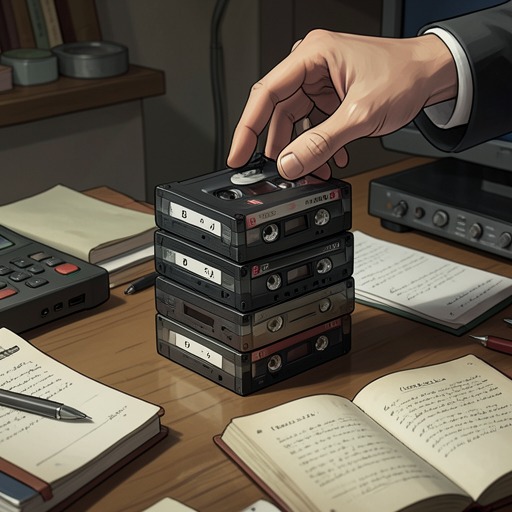
The cassette order is built into the recordings themselves. Hannah’s seven tapes carry thirteen numbered sides: the first tape contains sides one and two, successive tapes continue the numbering, and the final tape has a number on only one side. Her instructions require listeners to hear all thirteen sides, rewind the tapes, return them to the box, and pass them on. The Walkman therefore makes the chain of listening portable while its single-cassette deck keeps the experience physically sequential: Clay must remove one tape and load another to proceed.
At a later transition, Clay opens the Walkman and pulls out the first tape before taking the next cassette, marked with a blue number three, from his backpack. The device’s opening and closing mark an audible story’s end and the next installment’s beginning. Its controls do not merely accompany the sequence; they are the actions by which Clay advances through it.
Listening in Private
The Walkman offers Clay a way to hear Hannah away from the household stereo and other people. Later, while listening at a table, he looks down and notices that the player is still on Play even though no sound is coming through. He wonders whether the tape has failed to lock into place, presses Stop, and then presses Play again. The pause makes the device briefly conspicuous: listening depends on a cassette seated correctly and on a small mechanical intervention before Hannah’s voice can resume.
The player also lets Clay carry the tapes into different surroundings. At one point, he removes a cassette marked with the dark-blue number nine, recognizes that it is his own tape, and closes the Walkman while holding it in both hands. The numbered recording and the player meet in a moment of recognition: the sequence he has been following has reached his place in it.
Material Form and Narrative Function
The Walkman’s limits give the recordings their pace and shape. Clay handles tapes one at a time, changes them as the numbered sides progress, and encounters the spoken account through headphones rather than as a single uninterrupted text. At the end of the final side, the tape clicks over and continues playing. The slight static that has accompanied Hannah’s voice across seven tapes and thirteen stories becomes more noticeable when her voice falls silent, making the recording medium itself newly audible.
That steady background hum links the player’s ordinary operation to the experience of listening: Hannah’s words are present through a physical recording, but they are never separated entirely from the tape’s noise and mechanics. The Walkman enables Clay to receive the story, yet its sequence also binds reception to Hannah’s rules of rewinding and passing the tapes onward. A familiar personal device thus becomes the means by which a private act of listening enters a prescribed chain of responsibility.