Tyler Down's house
Thirteen Reasons WhyTyler Down's house is both the site of Tyler Down's invasion of Hannah Baker's privacy and a later focus of retaliation after that secret is made public. Its bedroom window anchors the contrast: first a boundary Tyler violates while Hannah is alone, then a damaged surface that prompts Clay Jensen to confront Marcus Cooley about who broke it and why.
Setting and First Exposure
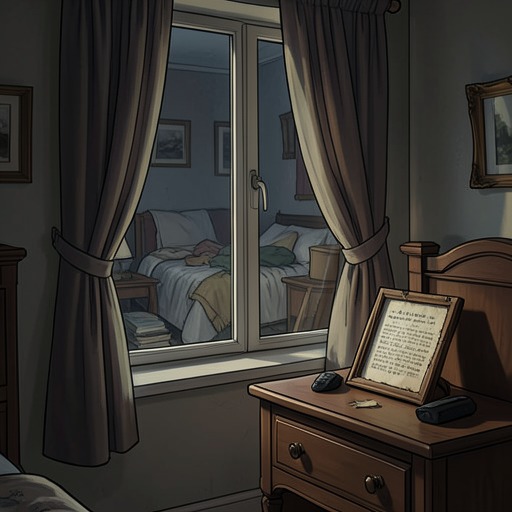
Hannah identifies her position outside Tyler Down's bedroom window on her map, marking it A-4. Tyler is away, but his parents are home; a tall, thick bush beneath the window gives Hannah cover. From there, she can see into the house, where camera equipment lies in the hallway. Among Tyler's collection is a night-vision lens, associated with a photograph that won first place in a statewide humor contest. The house is therefore presented not simply as a residence but as the concealed working space behind Tyler's photography and his capacity to watch others.
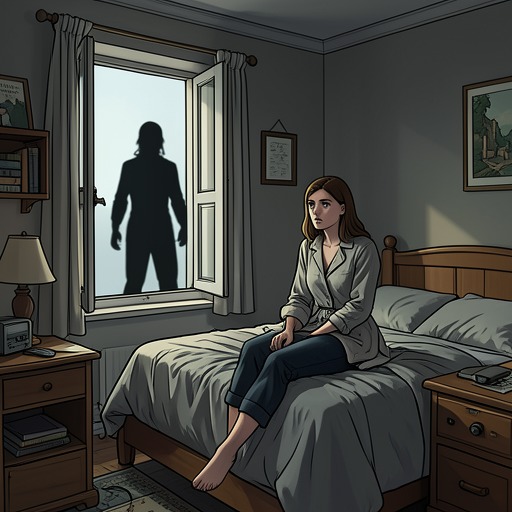
Hannah recounts an earlier moment when, after going into her own room, she heard a camera click. She usually left her window open an inch or two for fresh air, and the sound made her realize someone was outside. At first, she denied what she suspected, telling herself that she was frightening herself because it was the first night of her parents' vacation. The later view into Tyler's house resolves that uncertainty: Tyler had been outside her window, and the equipment inside his home gives concrete form to the secret she had tried to dismiss.
The House as a Scene of Surveillance
Hannah's narration returns to the house in the present of the tape. She says she is outside Tyler's window again, having walked away to finish his story before coming back; his bedroom light has been off for some time. The pause and rustling leaves before her knock intensify the unsettling proximity between the recorded voice and the place she describes. The house, ordinarily private, becomes the point from which Tyler is addressed and made to imagine himself watched in turn.
The reversal is sharpened by the disparity in knowledge. Tyler is not home during Hannah's first account, and his parents are inside; Hannah watches the room without being seen. Later, her tape tells him that she has returned to the window. The scene does not erase the original violation or equate the two acts; rather, it makes his hidden conduct legible by placing him on the receiving end of the fear and exposure associated with being watched.
Damage and Retaliation
After hearing Hannah's tapes, Clay sees Tyler's bedroom light on and the bamboo shutters down. A spiderweb of silver duct tape holds the fractured window together. He wonders whether a rock was thrown and whether the person responsible knew about Tyler's place on the tapes. The window's damage is visible, but its cause is not established at first; the questions register Clay's uncertainty rather than confirm who did it.
When Marcus approaches Clay and urges him to leave, Clay looks at the taped window and asks whether Marcus caused the damage. Marcus does not answer directly, but Clay reads his expression as an absence of shame. Marcus justifies the broken window by calling Tyler a peeping tom and a freak, arguing that because Tyler looked into Hannah's window, breaking his was warranted. Clay challenges that retaliatory logic by asking what Marcus himself did. The house thus becomes the setting for a confrontation not only over the broken glass but over whether one person's wrongdoing licenses another's.
Privacy, Evidence, and Consequence
The window joins two forms of exposure. Tyler used a camera and the opening of Hannah's window to cross a boundary she could not safely monitor; later, Hannah's recorded account names his conduct, and the damaged window makes the retaliatory response physically apparent. The house's interior also contains the camera equipment that connects Tyler's private collection to his secret behavior. These details make privacy a material question of windows, sightlines, equipment, and who can see without being seen.
The account leaves some facts open. Clay initially wonders who threw the rock, and Marcus's evasive response implies responsibility without supplying a full account of how the window was broken. Nor does the house itself resolve the broader question of what should follow Tyler's violation. Instead, the taped fracture holds the conflict in view: exposure has brought consequences, but those consequences include retaliatory damage rather than a clear or just resolution.