Valentine’s Day
Thirteen Reasons WhyValentine’s Day in the novel is organized around Oh My Dollar Valentine, a school fundraiser that packages romantic compatibility as a computer-generated match. Students describe themselves, answer questions about their interests, and pay for ranked results; the system’s playful promise of finding a soul mate sits uneasily beside the doubts and expectations surrounding its predictions.
The Fundraiser and Its Promise
Students fill out surveys that a computer analyzes and cross-references against other students’ responses. For one dollar, a participant receives the name and phone number of a supposed soul mate; five dollars buys the top five matches. The proceeds go to Cheer Camp, giving the matchmaking scheme a charitable purpose as well as a price tag.
The sales pitch makes romance appear measurable and readily available: answer questions, let the computer calculate compatibility, and receive a match. The narrator’s recollection registers both amusement and apprehension, asking how many students remember the activity and how many would prefer to forget it. The event is therefore remembered not simply as lighthearted entertainment but as an experience whose significance changed for some of its participants.
What the Survey Measures
The questionnaire has roughly twenty questions and is divided into two parts. Students first describe their appearance, including hair color, eye color, height, and body type, and name favorite kinds of music and movies. They then select their three preferred weekend activities.
The questionnaire’s categories reveal the limits of its design. Its list of weekend choices leaves out drinking and sex, which the narrator regards as especially accurate descriptions of much of the student body. The mismatch between the survey’s tidy menu and the lives it claims to represent makes its calculations seem less authoritative than the fundraiser’s promise suggests.
The narrator also concludes from the names on the resulting match list that not everyone answered honestly. The computer may cross-reference the submitted information, but its results depend on participants supplying truthful answers. Its appearance of objectivity thus rests on choices the program cannot verify.
Matchmaking and Encounter
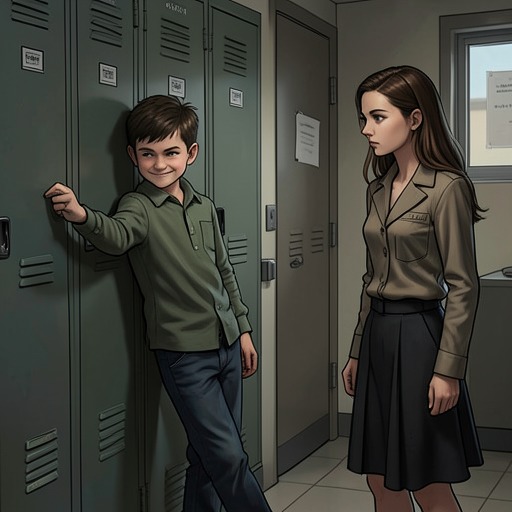
During the Valentine’s Day call, the caller asks what the narrator is doing for the holiday. The answer is conditional: it depends on who the caller is. The caller does not identify himself, but the narrator sees Marcus Cooley standing outside the office window. His presence supplies the identity the caller has withheld and connects the survey’s matchmaking process to a specific, immediate encounter.
That turn sharpens the contrast between the survey’s impersonal method and the personal stakes of meeting someone. A computer can sort answers into a list, but it cannot remove the uncertainty of who is calling or what the encounter will mean. Valentine’s Day consequently functions as both a school fundraiser and the occasion on which a supposedly playful match gives way to an unexpected confrontation with a person known to the narrator.