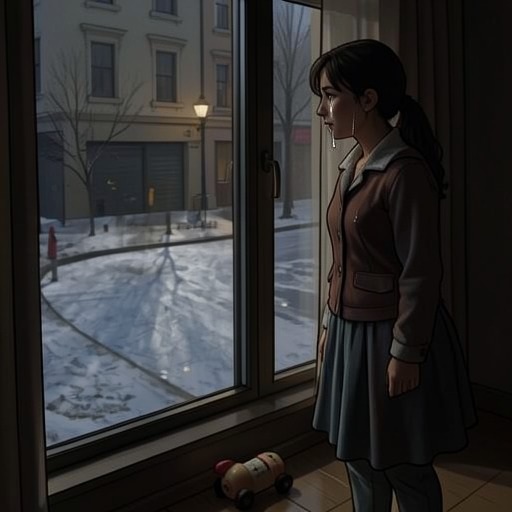
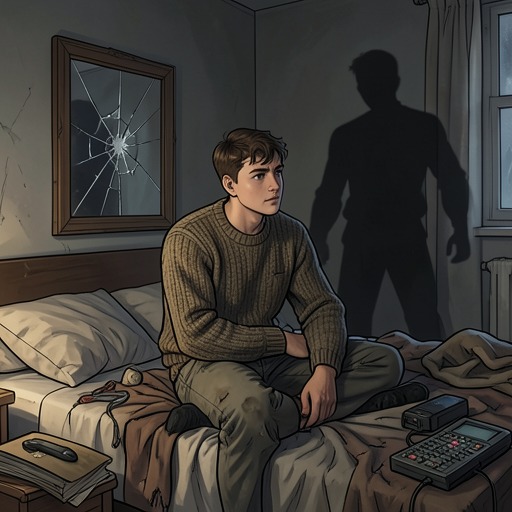
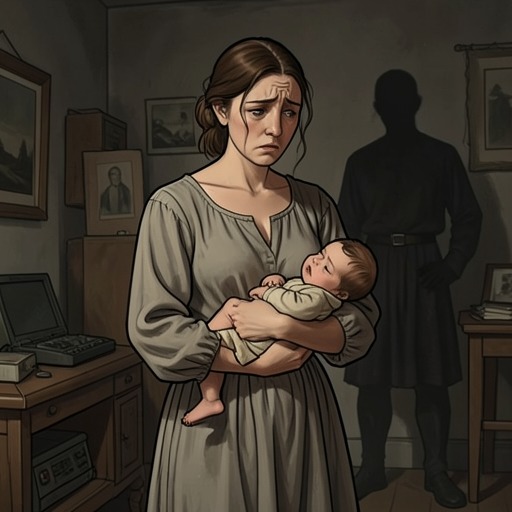
Event 1
Cheryl Strayed’s mother dies
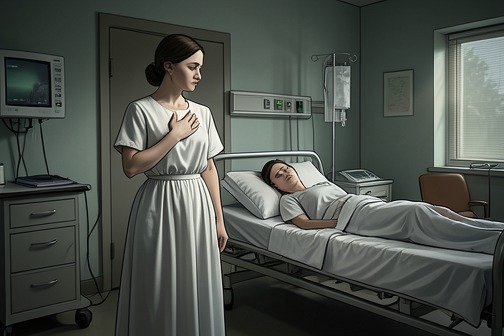
[Cheryl Strayed’s mother dies](entity:event-recall-event-cheryl-strayed-7e9bbfdd236d) alone in a hospital room, but the event’s lasting force lies in the final exchange that precedes her death and the years of grief that follow. In [Sugar](entity:character-recall-character-sugar-53232c1743f8)’s recollection, a single word survives the silence around that loss: her mother’s last word to her was “love,” an incomplete sentence that became both an intimate memory and a foundation for the way she answers others’ questions about love and bereavement.
## The Last Visit
By the time of the final visit, [Cheryl Strayed’s mother](entity:character-recall-character-cheryl-strayed-5e852c33542b) was so sick, weak, and out of her head that she could not muster the words “I” or “you.” Her daughter bent to kiss her, but her mother said, “Please, no,” because physical contact had become too painful to bear. The refusal did not erase their closeness; it set the terms of their last encounter, in which care had to be expressed without the touch the daughter wanted to offer.
Cheryl Strayed explained that she would return in the morning. Her mother barely nodded. As her daughter put on her coat and reached the door, she said, “I love you.” Her mother remained silent until Cheryl Strayed was almost out of the room, then called after her, “love.” She returned the next morning and found her mother still lying in the bed, now dead. That sequence—an attempted kiss refused because of pain, a promise to come back, a quiet goodbye, and the single answering word—became the final thing that happened between them.
## An Absence That Cannot Be Repaired
Cheryl Strayed was not with her mother when she died; no one was. Her mother died alone in the hospital room. For years, the daughter repeatedly replayed the sequence of events and choices that had kept her from being present in those last hours. The recollection did not resolve into an explanation or a corrective action. She describes the mental revisiting as an apparently bottomless ordeal, while its bodily consequence was a feeling that three-quarters of her insides had frozen solid.
The irreversibility is central to the memory. Her mother would not be alive again, and her daughter would never be beside her at the moment of death. The final encounter could not be revised after the fact: the mother’s pain, the barely perceptible nod, the daughter’s promise, and the delayed “love” remained fixed. Cheryl Strayed later describes that last word as clanking inside her like an iron bell, repeating in her mind. Its repetition carries both comfort and hurt: the word confirms love, but it also returns her to the departure that preceded her mother’s death.
## [Grief](entity:state-recall-state-grief-8f5be11e2213) in Objects and Across the Years
Several months after the death, while clearing the house she had thought of as home, Cheryl Strayed found a glass jar of stones tucked away in her mother’s bedroom closet. Holding its cold weight gave her a fleeting sense that she was holding her mother. The stones had been gathered by Cheryl Strayed and her siblings as children from beaches, trails, and grassy patches beside parking lots, then pressed into their mother’s hands as things worth keeping. Sitting on the bedroom floor, she emptied the jar and ran her fingers over the mostly smooth, black stones, many smaller than a potato chip. Her mother had called them worry stones and said rubbing them could soothe the mind.
The jar offered a physical point of contact with the past, but it could not restore the person who had kept the stones. Cheryl Strayed looked for her mother in familiar belongings, including the objects left in her car and bedroom, and recognized that no possession contained her or could make the death all right. The memory of the jar therefore holds two truths at once: an object can briefly make a lost person feel near, and it cannot reverse the loss.
More than twenty years after her mother’s death, Cheryl Strayed writes that the search for a code to crack is over. The stones she and her siblings once gave their mother have scattered; the stones now given to her by her own children have taken their place. She keeps the best ones in her pockets, sometimes carrying one for weeks and finding it with her hand. The gesture echoes her mother’s practice of rubbing stones for comfort, while also marking a change in the direction of care: the daughter who once placed stones in her mother’s palms now receives them from her children.
## What the Death Means in Sugar’s Replies
The memory is presented not only as private bereavement but as the beginning of Sugar’s way of speaking to people in pain. In answering Johnny, who had written that he did not know the definition of love, Cheryl Strayed explains that the memory of her mother’s last word had been circling in her mind. She calls the death and the word that followed it Sugar’s genesis story, making the bedside scene a source for her reflections on love’s many forms and costs.
In a later response to a man whose mother also died when he was young, Cheryl Strayed recalls a friend’s blunt assertion: “It will never be okay that our mothers are dead.” She connects that truth to the continuing absence of mothers at graduations, weddings, book publications, and the births of children. She and her friend could be happy and fortunate while still experiencing those milestones through grief. The death is thus not represented as a wound that disappears once ordinary life resumes. Its absence remains present at each new stage.
That understanding also shapes Cheryl Strayed’s counsel to a bereaved father elsewhere in the book. She identifies her enduring love for her mother, and the way she carries her within her, as small things that have helped her survive; she contrasts the magnitude of grief with the greater size of love. The final word in the hospital room does not redeem the fact that Cheryl Strayed’s mother died alone, nor does it release her daughter from sorrow. It persists instead as a continuing bond: an echo that makes the loss impossible to undo and helps give grief a language.
Event 2
Cheryl Strayed’s parents divorce
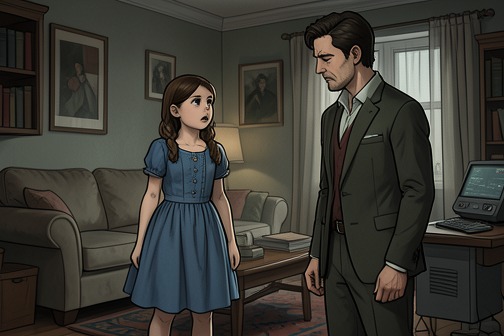
[Cheryl Strayed’s parents divorce](entity:event-recall-event-cheryl-strayed-95fdbf4b37ac) when she is six, a decisive separation that protects the children from a destructive family life while leaving Cheryl Strayed without the father she had hoped to keep. Recalled as both a necessary escape and a profound loss, the event shapes her childhood and her later understanding of what a parent can give a child: not control over the other parent, but a way to hold love and injury together without making the child choose between them.
## Causes and Family Background
Cheryl Strayed’s parents’ marriage began under pressure rather than deep affection. [Cheryl Strayed’s father](entity:character-recall-character-cheryl-strayed-bb71db7fc846) got her mother pregnant when both were nineteen. Abortion was illegal, and [Cheryl Strayed’s mother](entity:character-recall-character-cheryl-strayed-5e852c33542b) was unwilling to enter a home for wayward girls and give the baby to someone else, so the two married in a quick wedding. Over the next nine years they had three children. Cheryl Strayed later describes the years with her father as difficult and identifies him as often violent and mean; she does not recount the worst incidents in detail here, directing attention instead to what the separation meant to a child who still loved him.
The marriage ended when Cheryl Strayed was six, after her mother found the courage to leave. Looking back across the moves, decisions, transitions, and events of her life, Cheryl Strayed calls her mother’s decision probably the single best thing that happened to her. That judgment does not erase the cost. The divorce was at once a necessary break from a harmful household and the end of the family arrangement through which Cheryl Strayed had understood herself to have a father.
## The Child’s Loss and the Father’s Absence
Cheryl Strayed loved her father with a force that exceeded her fear and sorrow. She hated what he did to her mother and siblings, and the strain appeared in her childhood distress: she wept, hid, and experienced headaches and bed-wetting beyond the age when those responses would ordinarily be expected. Yet the possibility of no longer having a father was unbearable. When her mother left, Cheryl Strayed begged her to return, fearing that the end of the marriage would mean losing her father as well. In that respect, her fear proved accurate: after the divorce, she says, she no longer had a dad.
The relationship did not disappear through a single clean break, but neither did it develop into sustained fatherhood. Cheryl Strayed saw her father three times in brief visits, which she recalls as sad and unsettling. For much of her childhood, his absence became an everyday condition. She lived in inexpensive apartment buildings alongside other children of single mothers, many of whom also had little contact with their fathers. The setting made clear that her family’s separation was not an isolated arrangement, even though its particular emotional cost remained hers.
A few times a year, letters addressed to Cheryl Strayed and her siblings arrived in their father’s handwriting. The children would open them eagerly after school, while their mother was at work, hoping for contact from him. Instead, the letters attacked their mother and included threats that he would take the children and make her suffer. Their names on the envelopes offered the promise of a relationship; the contents turned that promise toward conflict between their parents. The letters show how the divorce’s aftermath continued to reach the children, even when their father was not present in their daily lives.
## Cheryl Strayed’s Mother and the Children’s Freedom to Love
Cheryl Strayed’s mother did not speak ill of her former husband to the children. This restraint was not a denial of what had happened: mother and children spoke honestly about the difficult things they had witnessed and suffered. But Cheryl Strayed’s mother did not reduce their father to a monster. She presented him as human, flawed, complicated, and capable of change. In doing so, she left room for Cheryl Strayed to love a father who was absent and had caused harm, rather than requiring her to prove loyalty to her mother by condemning him.
That approach persisted as Cheryl Strayed grew older. When Cheryl Strayed asked what had first made her mother fall in love with her father, her mother found things to tell her, even though she could no longer clearly remember the reasons. During a teenage argument about her mother’s refusal to condemn him, her mother said she was grateful to him because without him she would not have had her children. These responses neither restore the marriage nor excuse the father’s conduct. They show Cheryl Strayed’s mother keeping the children’s relationship to their father distinct from her own reasons for leaving him.
When Cheryl Strayed was barely becoming a woman and her mother knew she was going to die, her mother told her she could reach out to her father again. She described openness to forgiveness, reconciliation, and change as no betrayal of her, but as evidence of the woman she had raised. The moment extends the mother’s earlier refusal to dictate what the children should feel: even as death approached, she did not make her own suffering the final rule governing Cheryl Strayed’s relationship with her father.
## Aftermath and Narrative Significance
Cheryl Strayed recognizes that her mother had to be unusually generous toward a man who had treated her unkindly. As a single mother without shared custody or co-parenting, Cheryl Strayed’s mother carried responsibility alone and, in Cheryl Strayed’s account, had to be her best self more often than could reasonably be expected. She was not perfect and made mistakes; the significance lies in the repeated effort, not in an idealized claim of faultlessness. Cheryl Strayed identifies that effort as a gift that shaped her life.
The gift’s consequence became clearest after her mother’s death. Long afterward, it was her mother’s words and conduct that formed a bridge across which Cheryl Strayed could begin healing the wounds her father had made. The divorce therefore has a double legacy in the account: it ended Cheryl Strayed’s daily family life with her father, but her mother’s way of handling the separation preserved the possibility of a more complicated future relationship. The event is not presented as reconciliation achieved or harm undone. Its lasting meaning is the space Cheryl Strayed’s mother created for honest knowledge, continuing love, and the possibility of change without sacrificing the child’s bond to either parent.
Event 3
Emma’s brain tumor surgery
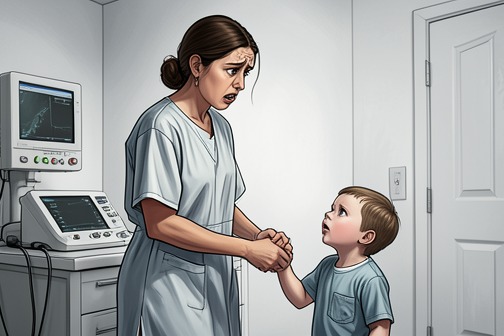
[Emma’s brain tumor surgery](entity:event-recall-event-emma-b14eede5738e) is the turning point in a mother’s account of fear, relief, and unresolved faith. The operation addresses the tumor discovered when Emma was six months old; its apparently successful outcome gives the family hope without making the diagnosis or its future consequences entirely certain.
## Before the operation
Writing from the pediatric intensive care unit at [Egleston Children's Hospital](entity:location-recall-location-egleston-children-s-47eac7294711) in Atlanta, Emma’s mother describes the prospect of surgery the next day. She fears losing her daughter, as well as the possibilities that Emma could be paralyzed, face developmental difficulties, or need chemotherapy if the tumor proved cancerous. The family had not imagined finding itself confronting such a serious medical crisis.
The mother says that other people have offered thoughts and prayers, but that the emergency has intensified her doubts about God. She asks [Sugar](entity:character-recall-character-sugar-53232c1743f8) and the column’s readers to pray for Emma, while acknowledging that she is unsure whether she believes in the God to whom those prayers are directed. Her immediate hope is that her husband and daughter will get through the crisis and that the family can eventually look back on it with relief.
## The operation and recovery
In a follow-up letter, the mother reports that the surgery went well and that the doctors think the tumor is benign. They left a very small portion behind because it was attached to a blood vessel; attempting to remove it could have left Emma permanently paralyzed. The decision leaves an unresolved medical detail alongside the encouraging initial assessment.
Emma recovers so well that even the doctors seem surprised, and the family expects to go home the following day. The operation therefore changes the immediate outlook from fear of a life-threatening outcome to guarded relief, while the remaining tumor tissue and the hope that it will not return keep the future open.
## Prayer, hope, and uncertainty
After the operation, Emma’s mother hopes that God exists and that prayer helped keep her daughter safe. She says people across the country prayed for the family and asks that they continue praying for Emma’s recovery and for other children facing serious illness. Yet the good news does not settle her belief: she wants to treat the outcome as a sign of God’s existence, but also recognizes that it could be coincidence.
The letters preserve that uncertainty rather than turning recovery into proof. The mother continues to pray while remaining unsure whether God is present or prayer works; her hope rests both on Emma’s immediate improvement and on the possibility that the tumor will not return.
Event 4
Ian’s suicide
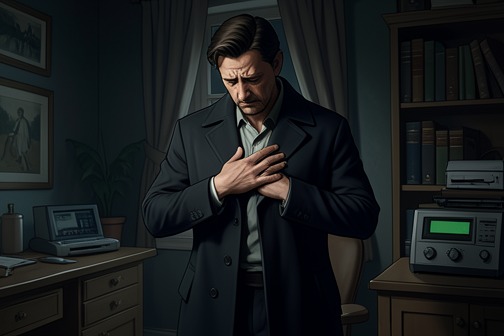
[Ian’s suicide](entity:event-recall-event-ian-41e5c78609d6) is recalled by [Sugar](entity:character-recall-character-sugar-53232c1743f8) as a sudden death that resists a neat explanation, and as the center of her reply about whether a person can allow romantic love into their life. Rather than treating the event as the inevitable consequence of one earlier injury, she uses the uncertainty surrounding it to challenge the correspondent not to give up on love.
## Recollection and Circumstances
Sugar places Ian’s death amid the uneven, changeable course of his life: he could be generous or manipulative, reconcile with people he loved or become estranged from them, and move between drinking and sobriety. Against that history, his death arrives abruptly. He was forty-four, and died by suicide a week before [Christmas](entity:time-recall-time-christmas-a573265d0167), less than a month after the events Sugar has just recalled. He left no note, so the account offers no final explanation from Ian himself.
## The Question of Cause
Sugar considers whether Ian’s death can be traced to the match he had said he wished he could undo. The accident had made him feel like a monster and, in Sugar’s account, unfit for romantic love; it had also made him rich, an outcome she describes as a source of happiness. That combination makes the match seem like a powerful, almost fable-like explanation. But Sugar resists making it the cause of his death: its symbolic force does not establish that it explains what happened.
## Meaning in Sugar’s Reply
Sugar offers a different interpretation, locating the deeper danger in Ian’s decision to shut himself off from romantic love because of his appearance. She presents that as her considered view, not as a certainty confirmed by Ian, whose silence leaves the question open. The recollection then turns toward the letter writer: Sugar distinguishes the wish to be loved from the capacity to let another person love you. Ian’s death becomes a warning against foreclosing that possibility, and grounds her insistence that the correspondent keep seeking the love they want and need rather than giving up.
Event 5
Sugar’s mother dies of cancer
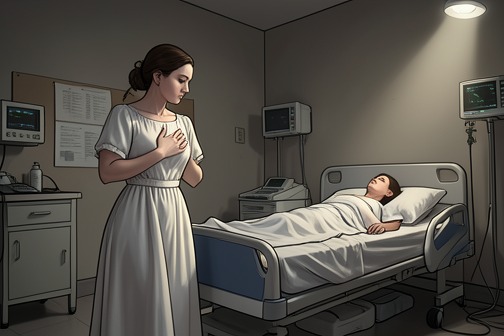
[Sugar’s mother dies of cancer](entity:event-recall-event-sugar-52f578d29785) at forty-five, before either she or [Sugar](entity:character-recall-character-sugar-53232c1743f8) can complete the college graduation they had expected to share. The death is not only a loss but an unfinished parting: Sugar leaves her mother’s hospital room believing she will return in the morning, and finds her dead when she comes back. The memory returns through the mother’s final word, the objects left behind, and the love Sugar continues to carry into adult life.
## The Final Visit
When Sugar learns that her mother is going to die, she is furious at the prospect of losing her. Although she does not believe in God, she feels that some power ought to have shown her mercy; the expectation that this particular loss might be spared her makes its arrival all the more devastating.
Sugar is not beside her mother when she dies. On her last visit, she bends to kiss her, but her mother asks her not to come closer because the pain of being touched has become too much. Sugar says she will return in the morning, tells her she loves her, and leaves. Her mother is silent until Sugar is nearly out the door, then calls out the one word she can manage: love. Sugar returns the next morning to find her still in bed, but dead. The word becomes the last thing her mother ever says to her, and the brief interval between leaving and returning becomes an irreparable boundary in the story of their relationship.
## An Interrupted Future
Her mother had gone to college at forty and spent the final years of her life as a student, believing that she was beginning a new era. She died a couple of months before she and Sugar were due to graduate from different schools. At her memorial service, her favorite professor granted her an honorary PhD, publicly recognizing an ambition she had pursued but could not finish.
The loss also changed Sugar’s practical circumstances. Her mother died three months before Sugar’s own college graduation, and Sugar’s inheritance was an old, rusted Toyota. She sold it to a man named Guy for five hundred dollars. The stark contrast between the inheritance Sugar wished for and the car she actually received underscores how bereavement arrived alongside ordinary financial realities, rather than resolving them.
## The House and the Stones
Several months after the death, Sugar finds a glass jar of stones in the far reaches of her mother’s bedroom closet while clearing her belongings from the house she had thought of as home. The work of emptying it feels brutal in its clarity, but the jar’s cold, heavy weight briefly gives her the sensation of holding her mother. The stones had been gathered by Sugar, her brother, and her sister as children—found on beaches, trails, and grassy edges of parking lots, then placed in their mother’s hands as things worth keeping.
Sugar pours them onto the bedroom floor and runs her fingers over the small, mostly smooth black stones. Her mother had called them worry stones, saying that rubbing one in the palm could soothe the mind. Yet the jar cannot restore the person Sugar hopes to find in it; nor can the other objects she remembers, from her mother’s moccasins and reading glasses to the shirts she sewed. The stones offer a moment of contact, not a way to undo the death.
## [Grief](entity:state-recall-state-grief-8f5be11e2213) Carried Forward
Years later, a friend who had also lost her mother tells Sugar that it will never be okay that their mothers are dead. The truth unsteadies her, even though both women have children, careers, good relationships, and lives they can describe as happy. Their grief persists not only as occasional weeping but as an absence at graduations, weddings, first-book publications, and the births of their children. The mother who is missing from those occasions remains part of how each occasion is experienced.
More than twenty years after the death, Sugar no longer believes there is a code to crack or a final explanation that will make the loss acceptable. The stones she once gave her mother have given way to stones her own children give to her. She keeps the best in her pockets and sometimes carries one for weeks, finding it with her hand and rubbing its black curve. Her grief remains, but so does her mother’s love: Sugar describes that love as something she carries within her, larger than the bitterness of the death. The continuing exchange of stones does not replace the lost mother; it makes the bond part of the life [Sugar and her children](entity:relation-recall-relation-sugar-12cb5dd9c694) go on living.
Event 6
Sugar divorces her first husband
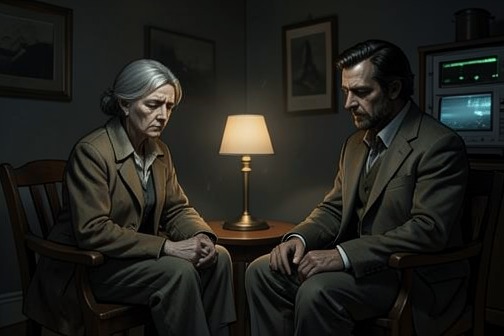
[Sugar](entity:character-recall-character-sugar-53232c1743f8)’s divorce from her first husband was both one of the most painful decisions of her life and, in retrospect, one of the wisest. Her account resists an easy verdict: love and remorse were real, but so was her need to leave, and ending the marriage ultimately offered a better future to both partners.
## The Decision to Leave
Sugar describes a drawn-out struggle to admit that she wanted the marriage to end. She tried to be good, then bad; she was sad, frightened, ill, self-sacrificing, and ultimately self-destructive. Rather than make a clean break, she had sexual relationships outside the marriage because she lacked the courage to tell her husband directly that she wanted out. She loved him, but that love did not resolve the conflict or make remaining together the right choice.
## The Separation
After confessing, [Sugar and her former husband](entity:relation-recall-relation-sugar-8260e5dd3886) spent about a year disentangling their lives. She remembers the period as wall-to-wall pain, but not as a simple contest between two opponents: they struggled together through the consequences of the marriage’s collapse. The divorce was, by her account, the most excruciating decision she had ever made. Its difficulty did not mean it was mistaken; the pain belonged to the process of separating, not proof that the separation should not happen.
## Consequences and Retrospective Meaning
Sugar later judged the divorce wise, and believed that both lives were better because it happened. Her former husband deserved a partner who did not remain haunted by the desire to leave. Ending the marriage could therefore be understood as a kindness, even though it had not felt like one at the time. The episode distinguishes compassion from staying: Sugar’s remorse over hurting him did not cancel the truth that the relationship had to end.
Event 7
Sugar becomes a mother
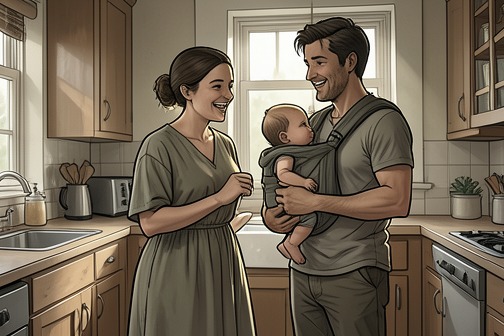
[Sugar becomes a mother](entity:event-recall-event-sugar-893472fcbae9) through a decision made without certainty, not through a sudden conviction that motherhood is what she wants. As she recalls it, the choice was shaped by a narrowing fertility window, a desire that only barely exceeded her doubts, and a willingness to accept that either possible life would involve loss.
## The Decision Amid Uncertainty
In her mid-thirties, [Sugar](entity:character-recall-character-sugar-53232c1743f8) had two children in close succession. Before becoming a mother, she had assumed she would one day simply know whether she wanted a child. Instead, as she approached the final years of her fertility, she decided to become pregnant while still ambivalent. Her desire to experience motherhood was just stronger than her doubts, not strong enough to silence them.
The choice meant leaving behind a life she valued. [Sugar and Mr. Sugar](entity:relation-recall-relation-sugar-mr-sugar-c4d5ff095b7b) enjoyed sex, unscheduled naps, long stretches of uninterrupted work on their art, and reading in silence on facing couches. They also liked wandering through foreign countries and spending weeks backpacking in the wilderness. The prospect of a baby threatened to make many of these pleasures difficult or impossible, and neither partner greeted that prospect with uncomplicated excitement.
## Pregnancy and Shared Apprehension
During the pregnancy, Sugar and Mr. Sugar often wondered whether they had made a dreadful mistake. Their conversations returned to the possibility that they might love the baby less than they were expected to, or find the child boring, annoying, or off-putting. They could still imagine riding bicycles across Iceland or hiking around Mongolia, and recognized that these ambitions belonged to the freer life they might lose.
Their uncertainty was shared rather than confined to Sugar. [Mr. Sugar](entity:character-recall-character-mr-sugar-b0f32b179d7d) was generally pleased that they were having a baby, but he was also deeply alarmed; the couple were in accord about their lack of clarity. Sugar’s account therefore resists the expectation that a prospective parent must feel a confident, unmistakable desire. In her experience, the absence of that feeling did not settle the decision.
## Motherhood and the Life Not Chosen
After the birth, Sugar’s son’s body against hers gave her a clarity she had not possessed while deciding. During the first weeks of his life, she felt rattled by how close she had come to choosing a childless future. Becoming his mother felt both like the ending of her former life and the beginning of another. Despite her fears, she did not regret having a baby; looking back, she says she would make the same choice immediately.
That conviction does not make the alternative life disappear. Sugar continues to wonder whom she might have nurtured, what creative or practical work her love might have gathered around, and what she might have written if she had not been catching her children at the bottoms of slides, steadying them on low brick walls, or pushing them on swings. She also considers what motherhood enabled her to write. The questions leave both possibilities open: she cannot know what she would have experienced by traveling or working without children, just as she cannot know what those years would have meant had she chosen otherwise.
The event’s significance lies in that coexistence of commitment and imagined loss. Motherhood retrospectively supplied a certainty that did not precede the choice, but it did not allow Sugar to know the life she had foregone. Her story presents the decision not as a puzzle resolved by finding perfect clarity, but as a consequential choice between futures whose costs and meanings cannot be fully known in advance.
Event 8
Sugar’s mother’s sudden death
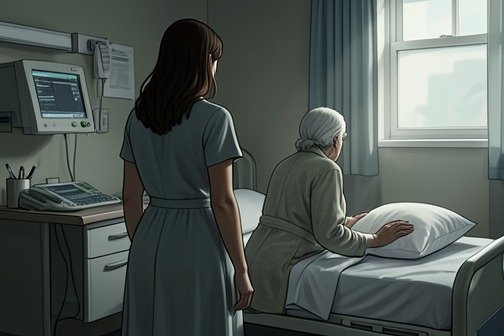
[Sugar’s mother’s sudden death](entity:event-recall-event-sugar-3fd09782c91e), when [Sugar](entity:character-recall-character-sugar-53232c1743f8) was twenty-two, is the defining loss around which her later reflections on grief, family, and survival gather. Sugar is not beside her mother when she dies, and the unfinished goodbye becomes inseparable from the continuing love Sugar carries for her. Over the years, the loss returns through ordinary objects and absent milestones, while its meaning shifts from a search for what might have been to an acceptance of the life her mother actually lived.
## The Last Goodbye
At the end of her life, [Sugar’s mother](entity:character-recall-character-sugar-c7b518454973) is gravely ill, weak, and confused. Sugar bends to kiss her, but her mother says, “Please, no,” because physical contact has become too painful. Sugar explains that she will return in the morning, and her mother gives only the faintest nod. At the door, Sugar says, “I love you”; her mother remains silent until Sugar is almost gone, then manages the single word “love.” Too sick to say either “I” or “you,” she nevertheless leaves Sugar with a final word that stands on its own.
Sugar is not there when her mother dies. Her mother dies alone in a hospital room, and Sugar returns the next morning to find her still in bed, now dead. For years, Sugar repeatedly turns over the choices and circumstances that kept her from being present in those last hours. The replay offers no remedy: her mother will not come back, and the last exchange between them cannot be changed. The memory holds both tenderness and pain—the attempted kiss, the promise to return, the final word, and the morning when return came too late.
## The Loss Afterward
Several months later, while clearing the house Sugar had thought of as home, she finds a glass jar of stones in the far reaches of her mother’s bedroom closet. The weight of it briefly makes her feel as if she is holding her mother. The stones are not keepsakes her mother collected alone: Sugar and her siblings had found them as children on beaches, trails, and grassy strips beside parking lots, then pressed them into their mother’s hands. Their mother had called the smooth, mostly black stones “worry stones,” saying that rubbing them could soothe the mind.
Sugar empties the jar onto the bedroom floor and runs her fingers over the stones, hoping to find her mother in them. She does not. Nor does she find her in the half-empty peppermint Tic Tacs from the car, the moccasins that still carry the shape of her mother’s size-six feet, her reading glasses, or the many other household objects left behind. The jar can summon a momentary sense of closeness, but no object can restore the person. That distinction gives the keepsakes their double force: they offer contact with memory while making absence unmistakable.
## [Grief](entity:state-recall-state-grief-8f5be11e2213) and the Life That Continues
More than twenty years after the death, Sugar describes having stopped searching for a code that might explain it or make it feel right. Her mother’s life lasted forty-five years; the other ages Sugar once imagined for her mother—sixty-three or eighty-nine—were expectations, not lives that ever existed. Accepting the life that did occur does not make the death fair or painless. It loosens the hold of an imagined future without requiring Sugar to stop loving the person who is gone.
A conversation with another woman who lost her mother young sharpens this understanding. The woman tells Sugar that it will never be okay that their mothers are dead. By then both women are adults with children, fulfilling work, and good relationships, yet the truth of the loss undoes Sugar. Their grief is not constant public weeping; it is also the unspoken absence at college graduations, weddings, first-book publications, and the births of their children. They can be happy and fortunate while still carrying the fact that their mothers were not there and never will be. Sugar’s account refuses to treat those conditions as contradictions: a life can become good without making the loss acceptable.
## A Continuing Bond
The stones return in a changed form as Sugar grows older. The stones she once gave her mother have scattered, but [Sugar’s children](entity:character-recall-character-sugar-64ebc0294902) now give stones to her. She keeps the best ones in her pockets; sometimes she carries one for weeks, finding it with her hand and rubbing its black curve. The object that once let Sugar imagine holding her mother becomes part of a practice through which her children’s gifts accompany her in daily life. The bond persists, not as proof that grief has ended, but as a changed rhythm of touch, memory, and care.
The death also shapes Sugar’s efforts to reckon with her father. After her mother dies, Sugar writes to him that the loss has occurred and that she has always hoped they might someday have a relationship; she asks him to explain his past actions before they can try. Rather than respond with care, he gets drunk and calls her a liar, accusing her mother of turning the children against him. Much later, Sugar writes again in a generous attempt to make contact. His angry reply tells her never to contact him and says he is glad to be rid of her. The bereavement does not resolve this family history, but it exposes the possibility Sugar once hoped her father might take—and the rejection she must face instead.
## Memory, Inheritance, and Acceptance
The loss also returns through a small gift from the last [Christmas](entity:time-recall-time-christmas-a573265d0167) Sugar’s mother was alive. In the early part of [Sugar’s twenties](entity:time-recall-time-sugar-286d1a35b26e), her mother gives her a warm coat she had saved for months to buy. Sugar responds skeptically, pointing out that it is longer, puffier, and possibly warmer than she likes. Her mother dies by spring, and the coat remains the last gift she gave Sugar. Sugar later recognizes how the small response she wishes she had offered—gratitude—has become a lasting regret. The scene makes the scale of bereavement intimate: a life-altering death can lodge itself in a single exchange about an ordinary coat.
In later reflections, Sugar finds some consolation in the thought that her mother would be proud of the person she has become. Her grief remains tremendous, but she describes her love as bigger; carrying her mother within her becomes part of how she lives and how she understands her own work. The death is therefore neither redeemed nor made acceptable by what follows. It remains wrong and irreversible, while the relationship continues in memory, in the stones Sugar carries, and in the values she seeks to embody.
Event 9
Sugar and Mr. Sugar’s affair and reconciliation
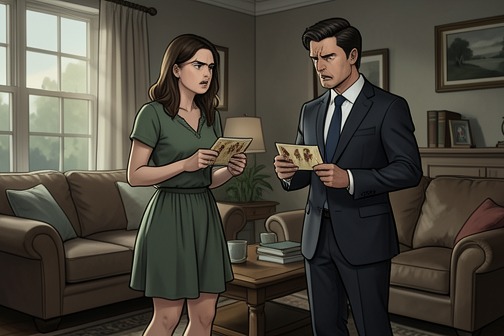
[Sugar and Mr. Sugar’s affair and reconciliation](entity:event-recall-event-sugar-mr-sugar-bbc3cb462bb1) begins with a concealed betrayal that threatens the couple’s idealized sense of being uniquely suited to one another. [Sugar](entity:character-recall-character-sugar-53232c1743f8) learns that [Mr. Sugar](entity:character-recall-character-mr-sugar-b0f32b179d7d) has slept with a woman who had sent him a postcard; after a furious confrontation, she hears his account, considers her own capacity for imperfection, and chooses to continue the relationship. Recounted retrospectively as advice to a correspondent imagining a perfect marriage, the episode becomes not a promise that love will be free of damage but an account of how a couple can face damage together.
## Discovery and the threatened ideal
About a year after [Sugar and Mr. Sugar](entity:relation-recall-relation-sugar-mr-sugar-c4d5ff095b7b) moved in together, a woman called their home and asked to speak to him. He was away, so Sugar offered to take a message. The caller hesitated before giving her name. Sugar recognized it, although the two women had never met: the caller lived thousands of miles away, in a city Mr. Sugar sometimes visited for work. A few weeks earlier, Sugar had found the woman’s postcard in their mailbox and asked Mr. Sugar about her. He had described her as an acquaintance rather than a friend, an answer Sugar had accepted outwardly.
The call unsettled Sugar even as she reminded herself that she had no reason to feel suspicious. She and Mr. Sugar were, in her account, intensely in love and understood by themselves and others as a perfect couple. Their shared life seemed to confirm a sense of rare, almost effortless destiny. That confidence makes Sugar’s bodily alarm consequential: before she has any evidence, something in the caller’s pause makes her ask, in a calm voice, whether the woman knows who she is. The woman identifies Sugar as Mr. Sugar’s girlfriend. Sugar then asks directly whether the caller has slept with him.
The woman answers yes without delay. She says that Mr. Sugar visited her apartment on a work trip the previous month and describes their sexual attraction as intense; she also says she is sorry if the disclosure hurts Sugar. Sugar thanks her, meaning it. Once she hangs up, the knowledge changes the meaning of the postcard and of Mr. Sugar’s earlier explanation. The relationship’s apparent exclusivity was not what Sugar had believed, and the betrayal had taken place without her knowledge.
## Confrontation in the living room
The discovery is set against the couple’s sparse home and their intimate early routines. Their living room contains only two worn, matching hand-me-down couches, positioned along opposite walls and nicknamed the dueling couches. Sugar and Mr. Sugar often spent hours on them, sometimes reading separately and often reading whole books aloud to one another. In memory, this shared ritual embodies the tenderness and closeness that Sugar now feels have been spoiled. She collapses onto one couch, furious that Mr. Sugar’s decision and silence have damaged her trust, their innocence, and her belief that she was the only woman he could desire.
Mr. Sugar returns about an hour after the call. When Sugar tells him what she has learned, he sinks onto the opposite couch, and the couple begins what she later calls the duel of their lives. Sugar tells him the relationship is over and calls him selfish and dishonest; he cries, apologizes, and asks her to stay. She sees continuing together as potentially humiliating and initially believes that surviving the betrayal might itself be unhealthy. The scene’s opposing couches, formerly a setting for shared reading, now hold the two people facing the consequences of a broken agreement.
They talk for a long time. After an hour or so, Sugar’s anger and sorrow recede enough for her to listen while Mr. Sugar explains what happened with the woman, what each relationship means to him, and why he loves Sugar. He acknowledges that he has never been faithful to a woman in his life, but says that he wants to become faithful to Sugar despite having already failed. He also recognizes that his difficulties with sex, deception, intimacy, and trust are larger than this single act and rooted in his past. He says he wants to understand those problems and change, and that knowing Sugar has made him believe he can become a better partner.
## Choosing to stay
Sugar does not describe his explanation as an easy absolution. As he speaks, she moves between sympathy and anger, still loving him while recognizing that he has behaved badly. She also sees a difficult point of connection: she has had sex for similarly casual reasons, and she understands what he means when he says the affair was not about her, even though it ultimately affected their relationship profoundly. His remorse and declarations of love feel more truthful to her than what he has told anyone before. The possibility of understanding him therefore coexists with her knowledge of the harm he has caused.
Sugar stays and works through the betrayal rather than treating the relationship as automatically finished. In later reflection, she identifies this as one of the best decisions of her life. Her judgment is not that the affair was harmless, or that Mr. Sugar’s apology erased it. Rather, she becomes grateful that it happened because confronting it opened an ongoing conversation about sex, desire, and commitment. That conversation gave them resources to draw on when they encountered other challenges. The couple’s later strength is thus linked not to the absence of conflict but to having faced a serious rupture and learned how to address it together.
## Retrospective meaning
Sugar places the episode in a letter to someone she addresses as Happily Ever After, a correspondent who seems to expect a lasting marriage to proceed without the complications that make real relationships difficult. The affair is narrated as a past event, but its meaning comes from the difference between Sugar’s immediate response and her later understanding. At first, the betrayal destroys the idea of the perfect couple; years later, Sugar sees that the couple had not yet become ready for one another during the very period when their love seemed most pure. The confrontation forced them to build capacities that their early happiness had not required.
That retrospective structure does not turn infidelity into a general prescription or claim that every couple should remain together after betrayal. Sugar presents her decision as particular to her relationship and emphasizes the difficult work that followed. The lasting change is a more grounded form of partnership: not perfect innocence, but the ability to have a duel when one is needed. The affair therefore serves both as a crisis in Sugar and Mr. Sugar’s shared life and as the origin of a practical understanding of love, in which honesty, conflict, and the possibility of growth matter more than the fantasy of an untouched union.
Event 10
Sugar’s failed attempt to reconcile with her father
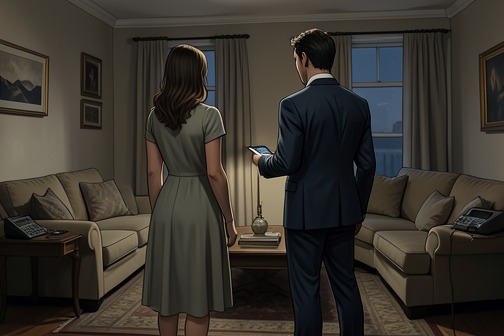
[Sugar’s failed attempt to reconcile with her father](entity:event-recall-event-sugar-9bff6d974b15) is a story of contact renewed and then refused: after seventeen years of estrangement, she offers him a way back that depends on honesty, and he rejects it. The encounter does not restore their relationship. Instead, it brings [Sugar](entity:character-recall-character-sugar-53232c1743f8) to a hard-won recognition that she can stop carrying the unanswered hope of being accepted as his daughter.
## Estrangement and the Long Delay
After her mother died, Sugar imagined her father receiving the news with tenderness and recognizing that his three children needed him. In her imagined version, he would understand that it was not too late to be their father. The actual call brought no such repair: he had been drinking, called her a “lying bitch,” and accused her mother of turning the children against him. Sugar hung up without saying goodbye.
Seventeen years passed before her father’s name appeared on the small screen of her telephone. Sugar’s first thought was that he had died, and she assumed his third wife was calling to tell her. She did not answer. When she listened to the message a few minutes later, she heard that it was her father himself, identifying himself by name, giving his number, and asking her to call. The possibility of contact arrived first as a possible death announcement, then as a request from the man she had spent years trying to leave behind.
## A Conversation Without the Past
Sugar waited a week before calling. By then she felt finished with the relationship: she describes having repeatedly filled the empty bowl of her father and having carried it without letting anything spill. She says she no longer loved him, only remembered having loved him long ago. Still, when she called, his voice was familiar. Sugar identified herself in turn, giving her first and last name in case he did not know who his daughter was.
The conversation that followed was ordinary in subject and extraordinary in its evasion. Her father asked whether she watched Rachael Ray; they spoke about low-fat recipes, poodles, cataracts, and sunscreen. He spoke as if they talked every week, as if nothing had happened and her childhood did not exist. Sugar came away bewildered: he was not delusional or ill, but behaving as he always had, as though his daughterly relationship with her were already his to claim. The casual talk made the silence around their shared past more conspicuous, not less.
## The Condition for Reconciliation
Afterward, her father sent a chatty email. Sugar replied that she would consider having a relationship with him only after they spoke honestly about their shared past. His answer asked what she “wanted to know.” The exchange clarified the terms of the possible reunion: Sugar was prepared to listen and wanted to hear his perspective, but she could not pretend that a relationship existed if he would not acknowledge their life together.
Sugar was no longer writing from the same place as the daughter who had waited for him to become the father she needed. She had accepted the facts of her life, was happy, and had two children and a partner she loved. She was not angry and did not want to hurt him. Even so, she needed the past named rather than erased. Her willingness to hear him was genuine, as was her hope that he might have become a different man. She wrote what she describes as the most generous, loving, true, fearless, painful, mature, and forgiving letter she could manage, then sent it by email.
The reply came so quickly that Sugar doubted he could have read the whole letter. In angry words, he told her never to contact him again and said he was glad to be finally rid of her. The rejection ended the possibility she had carefully left open. It also answered, in its way, whether he would meet her condition: he would not enter an honest conversation about their shared past.
## The Empty Bowl and Its Last Filling
Sugar did not cry. She put on her running shoes, walked through her neighborhood to a park, climbed a hill, and sat on a bench overlooking the city. It was the week before her thirty-ninth birthday, a time when she habitually thought about her parents and imagined how they must have loved her when she was born. That tender image of their hope for a better life collided with the father who had just rejected her. On the bench, she felt happiness, sadness, anger, gratitude, acceptance, and dismay all at once; she recognizes that mixture, rather than a clean or perfect resolution, as part of healing.
She understood the visit to the past as filling her father’s empty bowl one last time. Sitting on the bench, she thought that he was finally rid of her. The thought reverses the old wish that he would claim her: after offering a truthful opening and receiving his refusal, she could accept that the relationship would not be repaired and stop making her own life depend on his response.
The ending echoes, without resolving, Sugar’s grief for her mother. Her mother’s last word to her was “love,” spoken when she was too sick and weak to say more; Sugar also remembers not being present when her mother died and how long that absence froze her. Years later, finding a jar of stones the children had given their mother briefly felt like holding her, though the stones could not bring her back. Sugar’s later account of keeping stones given by her own children shows love continuing through changed forms. Against that enduring bond, the failed attempt with her father remains a different kind of loss: not a death to be mourned as inevitable, but a relationship Sugar offered to rebuild and could not make reciprocal.
Event 11
The thrift-stall encounter over the red velvet toddler dress
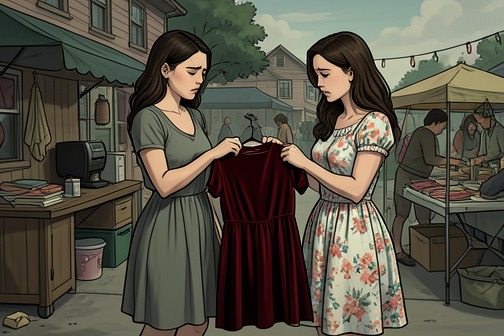
[The thrift-stall encounter over the red velvet toddler dress](entity:event-recall-event-04de89420788) is a small scene with a meaning that arrives decades after it happens. At eighteen, Cheryl Strayed / [Sugar](entity:character-recall-character-sugar-53232c1743f8) insists that she will not become a mother; her mother buys the dress anyway, asking her to keep it for some possible future. Hidden in a cedar chest, the dress outlasts the mother who chose it. When Cheryl Strayed / Sugar’s daughter eventually wears it, an ordinary garment becomes tangible evidence of both an irreparable absence and a love that has continued beyond its giver’s life.
## The Yard Sale and Its Moment in Time
The encounter takes place in August, during the last stretch of the summer Cheryl Strayed / Sugar spends living with [Cheryl Strayed’s mother](entity:character-recall-character-cheryl-strayed-5e852c33542b). She has completed her first year of college and returned to her rural home for a job in a nearby town. In a few weeks she will go back to college, though she does not know that she will never again live in the place she calls home. The setting carries this unrecognized threshold: she is on the verge of leaving, while the scene itself appears to be only a brief excursion with her mother.
Driving along a country road lined with trees, fields, and wildflowers, they pass a yard sale at a large house. The elderly woman who lives there is alone; her husband is dead and her children are grown and gone. She never comes out to greet the visitors, but waves to them from a window. Cheryl Strayed / Sugar turns the car around at her mother’s suggestion, and the two women are the only people browsing the sale.
Most of what is offered seems unpromising: old cooking pots, worn-out board games, incomplete sets of faded dishes, and polyester pants. As Cheryl Strayed / Sugar is about to leave, she notices a red velvet dress trimmed with white lace, sized for a toddler. She shows it to her mother, then sets it down. The contrast between the dress’s delicate promise and the jumble of unwanted household goods gives the object its first quiet distinction, though its lasting importance is not yet apparent.
## A Purchase for an Uncertain Future
Cheryl Strayed / Sugar is nearly nineteen and certain she will not have children. She thinks children are cute but ultimately annoying, and wants more from life. Her mother nevertheless asks whether she wants the dress, then offers a reason that reaches beyond the daughter’s present plans: “For someday,” she says. Cheryl Strayed / Sugar objects that she is not going to have children. Her mother’s answer is practical rather than insistent: “You can put it in a box,” she says, “Then you’ll have it, no matter what you do.”
The daughter has no money to buy it. Her mother says, “I do,” and reaches for the dress. The purchase is not a prediction that Cheryl Strayed / Sugar must become a parent, nor does the scene suggest that she is persuaded to change her mind. Instead, the mother makes room for a future that her daughter cannot imagine without demanding that it arrive. The dress can be kept whatever happens. That modest gesture—buying the garment and allowing its meaning to remain undecided—becomes the scene’s defining act.
The next stages of life acquire their force in retrospect. In a month Cheryl Strayed / Sugar will be nineteen; in a year she will be married; in three years she will stand in a meadow near the yard sale with her mother’s ashes in her palms. At the time of the purchase, she does not know that the summer is her last living at home with her mother, or that her mother will never meet the granddaughter for whom she has bought the dress.
## The Dress Kept in the Cedar Chest
Cheryl Strayed / Sugar places the dress in a box inside a cedar chest that belonged to her mother. She carries it through her twenties and into her thirties, but keeps it secret, buried among her mother’s best things. After having a son and then a daughter, she finally uncovers it. The discovery produces contradictory sensations at once: it feels like being slapped and kissed, as if the volume were being turned both up and down. The dress has survived, but the person who bought it has not; the object’s return makes that absence newly present.
Its meaning depends on facts unavailable at the yard sale. Cheryl Strayed / Sugar describes her mother’s purchase as being for the granddaughter she will never know. When her daughter wears the dress on the second [Christmas](entity:time-recall-time-christmas-a573265d0167) of her life, the garment is no longer merely a kept possibility. It is a dress bought by her grandmother for her, although the grandmother died before they could meet. Cheryl Strayed / Sugar stresses that her mother lives in her son as brightly as in her daughter; the girl’s wearing of the dress does not make her a stronger connection to their grandmother. Its particular force comes from the direct history held in the cloth: the child is wearing something her grandmother selected and bought.
## [Grief](entity:state-recall-state-grief-8f5be11e2213), Continuance, and the Ordinary Miraculous
The dress is both material evidence of loss and evidence that her mother’s love has carried Cheryl Strayed / Sugar forward. Its significance is not innate or immediately legible. The meaning is made by the later combination of her mother’s death and her daughter’s birth, a connection that could not have been known when the dress first caught her eye. The encounter’s narrative turns on this delay: a casual purchase becomes legible only after the lives and losses that gather around it.
Elsewhere, Cheryl Strayed / Sugar recalls that the last word her mother ever said to her was “love.” Her mother was too sick to manage the rest of the sentence, and died alone in a hospital room after Cheryl Strayed / Sugar had left, intending to return the next morning. That final exchange could not be changed by thinking it through again. The dress offers no repair or reversal of that death, and it does not make the loss okay. It offers something different: an object through which a past act of care remains available to the living.
That continuing bond also appears in the stones Cheryl Strayed / Sugar finds in her mother’s closet months after the death. Her mother and her siblings had received stones from the children, gathered on beaches, trails, and grassy edges of parking lots. Holding the jar briefly feels like holding her mother, though the stones cannot restore her. More than twenty years after the death, Cheryl Strayed / Sugar no longer searches for a code to crack; the stones her own children give her have taken the place of those she once gave her mother, and she keeps the best ones in her pockets. The dress and the stones do not cancel grief. They show love continuing through objects, altered by time and handed forward.
The dress’s final significance lies in the scale of the event itself. A grandmother buying a child’s garment at a yard sale would ordinarily seem unremarkable. For Cheryl Strayed / Sugar, its ordinary quality is exactly what makes it extraordinary: her daughter wears a dress chosen for her by a grandmother she never knew. The scene’s meaning cannot be forced into view in advance. Its quiet instruction is to keep faith with what has not yet become intelligible, and to recognize the smallest things when, later, they reveal the life and love they have carried.
Event 12
The fatal car crash that killed Living Dead Dad’s son

[The fatal car crash that killed Living Dead Dad’s son](entity:event-recall-event-living-dead-dad-2da20ca4011f) is the irreversible loss at the center of his letter to [Sugar](entity:character-recall-character-sugar-53232c1743f8): a drunk driver ran a red light and struck his twenty-two-year-old son, who died before paramedics arrived. The crash ended the life of his only child and left his father struggling to reconcile ongoing love with the fact that his son’s future had stopped. In Sugar’s reply, the event becomes not only the cause of his grief but the boundary against which he must remake his life.
## Causes and Circumstances
Nearly four years before writing, Living Dead Dad’s son was killed by a driver so inebriated that he drove through a red light. He hit the young man at full speed. The letter gives no further account of the collision, but establishes its decisive facts: the driver’s impairment, the traffic violation, and the abruptness of the death. The son was already dead by the time paramedics reached him.
The victim was twenty-two and his father’s only child. Those details give the loss a particular shape: the crash took not only a beloved son but also the person around whom his father had imagined the years ahead. Living Dead Dad later describes thinking about what his son would be doing if he were alive, alongside memories of their time together when the boy was young. The event thus divides his experience between a remembered life and a future he can picture but cannot share with his son.
## The Father’s Account and Immediate Aftermath
Living Dead Dad writes as a fifty-eight-year-old father whose grief has not followed the outward appearance of adjustment. He has a job, good health, supportive friends, a loving extended family, and a girlfriend he loves and respects. He also sees a psychologist regularly and says he is neither clinically depressed nor taking medication. These facts coexist with what he calls a private hell: at times the pain leaves him lying in bed and wailing. His letter makes clear that the presence of support and the continuation of ordinary responsibilities do not undo the loss.
The crash also shapes his relationship with the driver. Living Dead Dad hates the man who killed his son. The driver was incarcerated for eighteen months and then released; he sent an apology, which the father barely read before tearing it up and throwing it away. The letter presents the apology and its rejection without suggesting that either can reverse the event or settle the father’s anger. The driver’s punishment had ended, while the bereaved father’s life remained organized around a loss that could not be repaired.
The death also brought Living Dead Dad and his ex-wife closer. They had been cold toward each other since their divorce, when their son was fifteen, but became close friends again after his death. Their renewed closeness is one consequence of the crash, not a resolution of it: they share care for their son and are again connected, while both remain unable to accept an invitation to meet his former boyfriend’s new serious partner. The letter says they declined by claiming other engagements; in truth, neither could bear the meeting. The son’s absence remains present in a relationship that once again includes both parents.
## [Grief](entity:state-recall-state-grief-8f5be11e2213), Memory, and the Lost Future
The father’s account moves between recollection and counterfactual thought. He remembers the boy’s younger years and imagines the activities and experiences that might have followed had he lived. He also returns to something he wishes he could change: when his son came out as gay at seventeen, he responded with a negative question because he did not understand or quite believe him. He says he soon embraced his son, believes the boy knew he loved him, and believes he wanted him to be happy, but regrets never apologizing for that initial reaction. In grief, this remembered exchange becomes one of several sources of torment, even though the father believes his son knew he was loved.
The crash also makes the son’s romantic life part of the father’s continuing bereavement. His former boyfriend has stayed in touch with both parents, and they care for him. When he invites them to meet his new boyfriend, the invitation confronts them with a life continuing beyond their son’s death. Their refusal shows how a future relationship can register as painful even when it belongs to someone they still care about. Sugar later suggests that the son would have wanted his father to welcome this new partner, but frames that as a way of imagining the son’s wishes, not as a reunion or a change to the facts of the loss.
## Meaning and Consequences
In replying, Sugar refuses to treat consolation as a remedy for the crash. She acknowledges that no accumulation of sympathetic words can bring the son back or undo the driver’s actions. Instead, she distinguishes the father’s unalterable loss from the love that survives it. His grief, in her account, is inseparable from having loved his son; the death’s unfairness remains real even as the father’s love offers something that the crash cannot take away.
Sugar’s response asks Living Dead Dad to relinquish imagined futures and recognize his son as the person he actually was: a twenty-two-year-old who loved his father and whose life ended at the red light. She connects that acceptance to the father’s regret about his reaction to his son’s coming out, suggesting that the son had long ago forgiven him. She also turns the declined invitation into a possible future act of care, proposing that welcoming the former boyfriend’s new partner would honor what the son might have wanted. These are counsel and interpretation, not claims that grief has been resolved.
The event’s narrative frame is retrospective: Living Dead Dad recounts the crash in a letter written years afterward, and Sugar answers from within the ongoing aftermath. Her reply gives particular weight to the son’s actual age and rejects the imagined years that his father keeps supplying. The crash remains wrong and irreversible; the proposed movement is not forgetting or excusing it, but learning to live without replacing the son’s real life with a longer one that never occurred. Sugar closes by urging his father to receive what his son’s life and death have taught him and to create something from his grief. The event therefore marks both a rupture in the father’s life and the starting point of the difficult, unfinished work of carrying his son’s memory forward.
Event 13
Brandon’s father dies of a heroin overdose
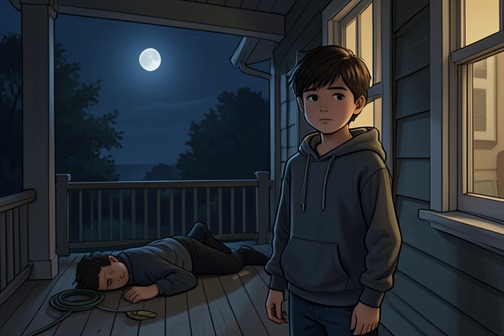
[Brandon’s father dies of a heroin overdose](entity:event-recall-event-brandon-1c91eaa618c2) in a childhood memory that explains the roots of [Brandon](entity:character-recall-character-brandon-6869190e3394)’s anger: as a sixth grader, he finds his father dead at home, cannot bring himself to call the police, and waits through the night for a mother who does not come.
## The Discovery
Two years before Cheryl Strayed / [Sugar](entity:character-recall-character-sugar-53232c1743f8) encountered Brandon as an eighth grader, he returned from school one afternoon and found himself locked out of the house. He banged on the door without getting an answer, then peered through a window and saw his father lying dead on the living-room floor, having overdosed on heroin. The discovery came without an adult beside him to explain what had happened or take charge of what came next.
## A Night on the Porch
Brandon believed he could not call the police because he did not regard them as his friends. Instead, he waited on the porch for his mother to return. She did not come: she was also addicted to drugs and worked as a prostitute, and Brandon was her only child. He spent the night huddled in his coat on the porch. In the morning, he walked back to school and told a teacher that his father was dead.
## Aftermath and Significance
The account links this discovery and the night alone directly to Brandon’s lasting anger: he had been angry ever since. When Cheryl Strayed / Sugar later learned his history from the social workers, it helped explain why she had been especially watchful of him and initially afraid of him. His father’s death is therefore not only a family loss in the narrative; it is the early event behind the anger that shapes how Brandon is first seen.
Event 14
Brandon’s mother is arrested on the night of the program’s closing dinner
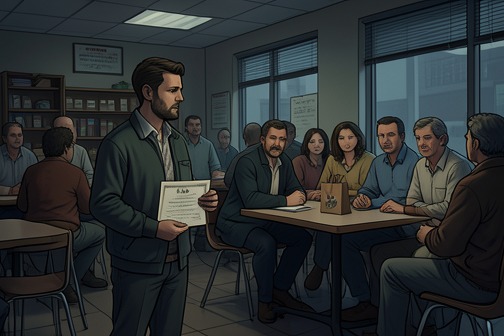
[Brandon’s mother is arrested on the night of the program’s closing dinner](entity:event-recall-event-brandon-f328319249b5), turning a carefully prepared family celebration into a painful test of what [Brandon](entity:character-recall-character-brandon-6869190e3394) has learned about anger and what [Sugar](entity:character-recall-character-sugar-53232c1743f8) believes parents owe their children. The news arrives after the room has filled, when his mother is missing and he is waiting alone; by the end of the evening, he has accepted his family’s certificate and goodie bag, eaten cake, and joined the group again. The episode holds two realities together: his mother’s failure to appear and Brandon’s effort to manage the hurt that her absence brings.
## The closing dinner
The arrest occurs on the last Tuesday of a program in which Sugar has worked with boys she describes not as angry at their core, but as hurt, with anger serving as the safest expression of sorrow. Brandon has been the angriest of the boys, but also, in Sugar’s view, the sweetest. He takes pride in being her assistant and stays after school on Tuesdays to talk with her and help prepare the cafeteria for dinner. Unlike the other boys, who go home and return with their families, Brandon remains at the school, making the evening’s family gathering part of his own work as well as his anticipation.
For the final meeting, Brandon and Sugar tape streamers along the tables. The celebration includes graduation certificates, donated goodie bags containing items such as toothbrushes, board games, and glassware, and a large cake inscribed, “Congratulations Families! We’re Stronger Together!” The decorations and the message make the evening’s promise plain: families are meant to arrive together and be recognized together. Brandon stakes out the best table for himself, his mother, and her boyfriend, arranges the silverware, and waits for them.
The absence first becomes unmistakable only once the cafeteria is buzzing with people. Brandon’s mother and her boyfriend have not arrived. While the other boys draw discussion cards from a bowl and split into groups, Brandon goes to stand by the school’s front door as the sky darkens. The dinner continues around him, but his attention is fixed on the entrance and on the family expected at his table. The delay stretches the gap between the evening’s cheerful preparations and the uncertainty of whether his mother will come.
## The news and Brandon’s response
About half an hour later, a social worker knocks on Sugar’s classroom door and asks her to step into the hall with Brandon. The social worker reports that his mother has been arrested downtown, for prostitution or drugs or both, and will not be released from jail until at least the following day. Her account does not specify which charge or charges led to the arrest. Brandon’s mother’s boyfriend, the social worker says, will come as soon as he can and stay with Brandon until his mother returns.
Brandon only nods at the news. When Sugar puts a hand on his arm, he jerks away so violently that she thinks he might punch her. He storms down the hall as Sugar calls after him, first asking him to come back and then calling more sharply because she fears he may run from the school. The social worker reminds him that they are responsible for him. Behind the classroom door, nine other boys and their siblings are waiting, and Sugar can feel them simmering. The moment places Brandon’s distress alongside the practical responsibility of keeping the youth group going, without making his reaction into a simple lesson for the adults around him.
Brandon turns and walks back toward Sugar, yelling, “I’m not doing anything wrong.” Sugar recognizes that he is right: he is not leaving, and he had not intended to. What she sees instead is a boy acting against the most visceral and reasonable impulses of the moment, taking deep breaths and walking. The return down the hallway marks a shift in the scene. The arrest and his mother’s absence remain unchanged, but Brandon has begun to exercise control over the rage that might otherwise direct his actions. Sugar names this plainly: he is an angry boy controlling his rage.
## A lesson about failure and responsibility
Sugar reads Brandon’s pacing as evidence that helplessness need not dictate what happens next. She sets his response against the example of a mother who failed to appear for a dinner with her son, and against her own recognition that she and the person she is addressing have failed too. She does not claim to know what compelled Brandon’s mother to miss the event or what led to her arrest. Instead, her unanswered questions about the night—what she was unable to forgive herself for, or what she believed herself helpless to do—preserve the limits of what the scene reveals. The arrest exposes an absence and its consequences, not the mother’s motives.
From that uncertainty, Sugar draws a parental obligation rather than a verdict: when children depend on adults, parents cannot afford to surrender to despair. Her point is not that every failure can be prevented, but that people remain responsible for what they do after events they cannot undo. Brandon’s measured walking becomes the episode’s concrete counter-image to helplessness. Sugar contrasts the possibility of throwing a child into the grass with the possibility of breathing deeply and walking up and down a hallway, returning the immediate scene to her wider argument about how adults respond when they fail.
## The evening’s ending
By the time the youth group ends, Brandon has stopped pacing. He alone accepts the graduation certificate and goodie bag on behalf of his family, eats a piece of cake, and stands in the circle to sing the song the social workers have made up. His mother’s boyfriend arrives while they are singing. That arrival supplies Brandon with an adult who can stay with him, as the social worker had promised, but it does not undo his mother’s arrest or her absence from the dinner. The family celebration is therefore completed in altered form: Brandon receives its tokens without the person he had been waiting for.
The group’s final “rain” exercise takes on unusual force that night. Their hands rub together more vigorously; they snap, clap, and stomp loudly, then return to the storm instead of quieting it, continuing until they raise their arms in surrender and acknowledge that the rain is gone. The sequence gives the evening a collective ending after Brandon’s private crisis: the group moves through sound and movement together, and eventually stops. Sugar presents this release as joyful, not as a solution to the arrest. The scene closes with the program’s shared ritual, while the facts of the night remain intact: Brandon’s mother has been taken away, Brandon has controlled his anger, and the adults and children have carried on together.
Event 15
Torn’s wife relapses into heroin use after childbirth
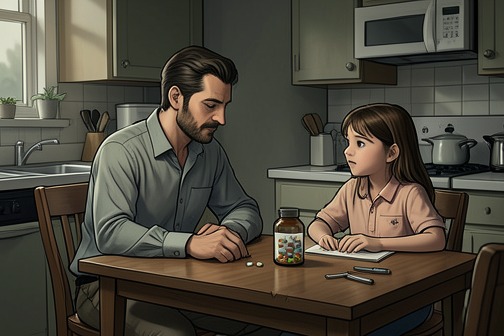
[Torn’s wife relapses into heroin use after childbirth](entity:event-recall-event-torn-25f128120857), turning a troubled marriage and a prospective move into an immediate crisis of trust, recovery, and parental responsibility. The episode is presented through her husband’s letter to [Sugar](entity:character-recall-character-sugar-53232c1743f8): he loves his wife and daughter, but cannot treat the relapse or the concealed treatment as private matters when their eighteen-month-old child depends on both parents. Sugar’s response shifts the question from which adult’s plans should prevail to what their daughter needs while her mother is struggling to recover.
## Background and the relapse
The letter describes a marriage that had been rocky for years before the relapse. Torn’s wife had been in recovery for seven years, but after the birth of their daughter she returned to heroin use. She breastfed while snorting opioids, continuing until Torn caught her. The account makes the danger concrete through the collision between infant care and active addiction: the relapse was not removed from family life but took place while she was nursing their child.
The crisis also sits within a longer family history of addiction. Torn says that both of his parents’ families have three generations of addiction. He himself became sober as a teenager, while living at a boys’ home that he still partly regards as home. He now works there as a drug counselor, serving [Los Angeles](entity:location-recall-location-los-angeles-11eff639bdf5) street kids whose experiences resemble his own. His recovery and work give him a strong sense of purpose, but they also make the breakdown of trust with his wife especially painful: he had been supportive and had been asking her for connection after the relapse.
## Concealed methadone and divided loyalties
Shortly before the job opportunity arose, Torn’s wife told him that she had been taking methadone prescribed by her doctor for the previous three months to come off her heavy addiction. She had not told him while taking it. Torn says this omission felt more like a betrayal than the relapse itself—not because the treatment was prescribed, but because he wanted openness and connection between them. The distinction sharpens the conflict: an effort directed toward recovery was also kept from the person who had been asking to be let in.
A possible job in his wife’s Southern hometown gives the couple another decision to confront. She has family and support there, and after a second interview she is likely to receive the offer. The city matters to Torn as well: he met his wife there, and the place helped heal him after his mother died while he was living there. Yet his professional life is gaining momentum in Los Angeles. He is halfway through a master’s degree in social work, feels called to his work at the boys’ home, and has written a novel that has become the most frequently stolen book at the home.
The choice is therefore not simply between a promising job and a settled career. Torn wants his wife to be happy and near her family, especially because he cannot offer her family support of his own. At the same time, he cannot bear the thought of being separated from their daughter, and fears becoming like his own father. He asks whether he should follow his wife and child or remain in Los Angeles with the work and community he loves. His uncertainty is intensified by the fact that the move would be made in the middle of a relapse and a breach of trust, before the couple has established what recovery and parenting can safely look like.
## Sugar’s response: protect the child first
Sugar reframes the dilemma around the daughter rather than the adults’ competing attachments. She treats protecting the child as Torn’s first parental obligation and warns against allowing her to move across the country without him while her mother is still struggling with addiction. The presence of the wife’s relatives nearby, Sugar argues, does not by itself resolve the concern. In her assessment, until the wife is clean and strong in recovery, she should not be the child’s primary caregiver. Sugar does not deny the mother’s love for her daughter; she distinguishes that love from the capacity to care safely while addiction is active.
The advice does not present a new town or a job as a cure. Sugar recognizes that either could eventually contribute to the wife’s recovery, but says recovery depends on her desire to stay clean and on exploring the underlying issues connected to her addiction. That distinction resists the tempting idea that relocation will settle the crisis by changing its surroundings. The immediate task, in Sugar’s account, is to understand what support and resources the wife needs and what role Torn can and will play in helping her recover.
## Questions left unresolved
Sugar asks the couple to pause the excitement around the possible offer and face the addiction crisis before deciding where to build their life. The questions she identifies include whether the marriage can be repaired, how trust and connection could be re-established, what city would serve them professionally and personally, and how they would proceed with love and care if the marriage could not be saved. If separation becomes necessary, custody of their daughter would also have to be negotiated. These are presented as matters to address, not as decisions already made.
The episode ends without disclosing whether Torn’s wife gets the job, whether the family moves, or whether the marriage survives. Sugar’s immediate recommendation is narrower and more urgent: do not decide that the wife and daughter should move without Torn while recovery, trust, and the child’s care remain unsettled. Other jobs and opportunities may arise for either adult; the difficult questions can be revisited later. In the letter’s framing, postponement is not denial but a way to stop repeating an old story long enough to understand what this one requires.