“Children don’t forget”
To the Lighthouse“Children don’t forget” names Mrs Ramsay’s recognition that childhood experience endures beyond the moment in which it occurs. The thought begins with James’s disappointment at not going to the Lighthouse, but its recurrence reaches beyond that family scene: the narrative places it beside private solitude and the recurring light, then sets memory against wartime death, bereavement, and the house’s decay. The phrase is both a mother’s warning about the weight of everyday conduct and a measure of how loss persists.
The phrase and James’s postponed trip
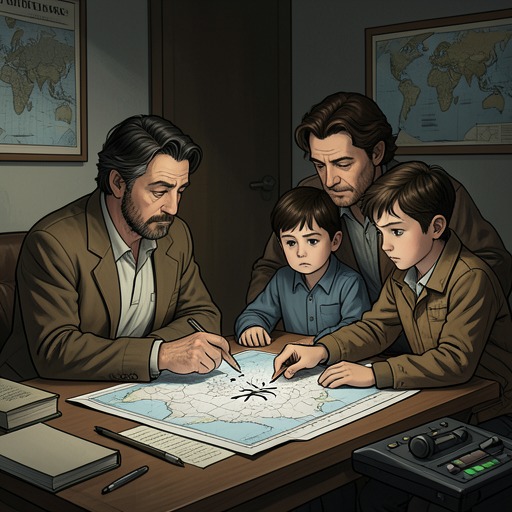
After finishing a story for James, Mrs Ramsay sees the Lighthouse beam crossing the bay and anticipates his question about whether they will go there the next day. She knows she must tell him no because his father has said they will not. Mildred’s arrival interrupts the moment, but James looks back as he is carried away; Mrs Ramsay believes he is thinking of the cancelled trip and that he will remember it all his life. The phrase’s first force is specific: a child may carry a small domestic disappointment long after the conversation has ended.
The thought develops into a principle of care. Watching James’s cut-out pictures—a refrigerator, a mowing machine, and a gentleman in evening dress—Mrs Ramsay reflects that children never forget, and concludes that what adults say and do therefore matters. The objects are ordinary, yet their presence gives the reflection a domestic setting: childhood memory is made from daily life, not only from exceptional events. Her relief when the children go to bed also reveals the cost of that attentiveness. Only then can she stop thinking about others and be alone.
Solitude, repetition, and the Lighthouse beam
In solitude, Mrs Ramsay experiences herself as a private, invisible self, apart from the visible roles and activities through which other people know her. Her knitting continues while her sense of self contracts to a “wedge-shaped core of darkness,” a condition she associates with freedom from hurry and social demands. In that stillness, experience seems to open out rather than diminish. The phrase about children’s memory rises again in her mind while she watches the Lighthouse, linking the particular concern for James to her broader reflections on what endures beneath outward appearances.
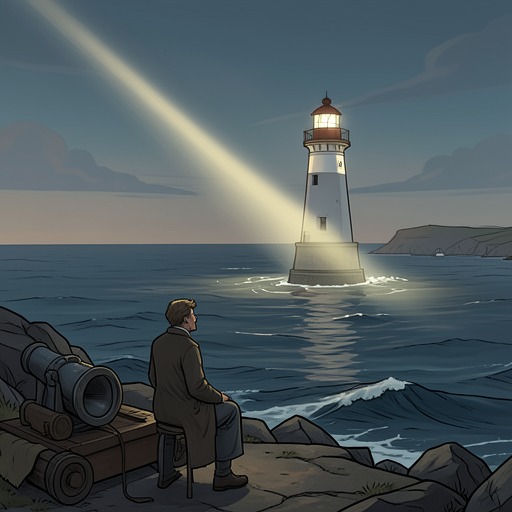
The light gives that inward reflection a visible rhythm. Its first strokes cross the waves quickly, and the last is long and steady; Mrs Ramsay identifies herself with that final stroke, watching until she feels herself become the thing she sees. The repeated words about children not forgetting are followed by thoughts of endings and continuance, before she says that people are in the hands of the Lord and immediately rejects the statement as something she does not truly believe. The episode complicates the phrase’s consoling potential: repetition does not settle grief or uncertainty, and the light’s constancy offers an image for contemplation rather than an answer.
War, death, and the broken landscape
The phrase’s later significance is sharpened by the novel’s passage through wartime and family loss. The house’s summer quiet is interrupted by repeated, hammer-like sounds and falling objects; the narration then reports that a shell killed twenty or thirty young men in France, including Andrew Ramsay, whose death was instantaneous. The move from the deteriorating rooms to Andrew’s death makes loss enter the family story without staging it as an extended battlefield scene. The domestic world and the distant war are connected by absence and consequence.
The seascape also ceases to sustain easy consolation. Alongside sunsets, dawn, moonlight, boats, and children playing, observers encounter a silent ashen-coloured ship and a purplish mark on the water. These signs make it difficult to treat natural beauty as a reflection of inward beauty or as evidence that nature completes human hopes. The prospect of sharing and finding an answer in solitude on the beach breaks down; the mirror is broken. Against that rupture, “Children don’t forget” carries a severe implication: experience persists, but persistence does not make suffering intelligible or repair what has been lost.
The phrase among the survivors
Later, Lily Briscoe thinks of Augustus Carmichael’s changed life after Andrew’s death. Carmichael’s poetry has found unexpected success during the war, while Lily recalls that he had lost interest in life on hearing of Andrew’s death. She does not know precisely what he did or felt; she understands him through his outline and a sense that something in him has changed. The recollection extends the book’s concern with memory beyond the parent-child scene: grief may be recognized without being fully known or put into words.
Mrs McNab’s account of the neglected house supplies a further, material form of remembrance. She recalls that Mrs Ramsay is dead, remembers her in the grey gardening cloak, and finds clothes and personal things still left in the bedrooms and dressing-table drawers. These objects make the past seem close without undoing the death or the years of separation. The children’s memory, the survivors’ partial knowledge, and the household objects all resist simple disappearance; together they give the recurring phrase its lasting significance as a statement about the consequences of lived experience.