Andrew Ramsay’s death in action
To the LighthouseAndrew Ramsay’s death in action is a sudden wartime loss whose force reaches far beyond its spare announcement. A shell explosion in France kills him instantaneously, but the novel relocates attention from the battlefield to an empty family house, a scarred landscape, and the changed inner lives of survivors. The death becomes both a fact of war and an absence that alters how ordinary time and beauty can be experienced.
The Death and Its Narrative Form
The account gives no extended battle scene: a shell explodes, killing twenty or thirty young men in France, including Andrew. His death is instantaneous. The concise report places an immense personal loss within a collective one, naming the number killed while marking Andrew as one of them. The brevity does not diminish the consequence; instead, the abruptness makes the death arrive as a rupture in the novel’s narration.
War Enters the Empty House
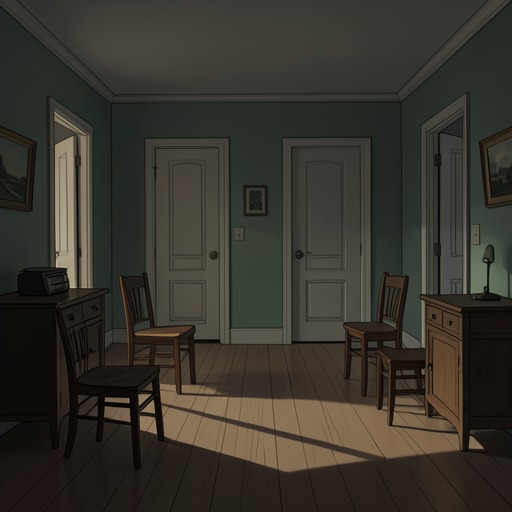
The novel registers the war through the house’s sounds and objects as well as through the announcement of Andrew’s death. After the summer’s quieter movements, ominous, repeated blows seem to loosen a shawl further and crack teacups; glass vibrates in a cupboard, and the silence is interrupted by the thud of something falling. The passage links domestic damage to distant violence without turning the house into a literal battlefield. Its sounds make war perceptible in a space emptied of the family and unable to explain what has happened.
Landscape and the Limits of Consolation
The sea and sky continue to offer familiar signs of beauty, but wartime traces interrupt the expectation that nature will supply meaning or comfort. Walkers encounter the silent appearance and disappearance of an ashen-coloured ship and a purplish stain on the sea. These sights resist being absorbed into an otherwise serene landscape. The narration questions whether nature completes human hopes or responds to misery and suffering with indifference; the possibility that solitary contemplation might yield an answer breaks down. Andrew’s death thus changes the terms on which beauty can be regarded: it remains present, but can no longer straightforwardly console.
Memory and the Survivors
The death also enters the novel belatedly through what others remember and cannot fully know. Years later, Lily recalls hearing that Augustus Carmichael lost all interest in life when he learned Andrew had been killed by a shell. She does not know precisely what Carmichael did or felt at the time; she senses the change in him without possessing its details. Their acquaintance consists largely of brief exchanges, and her reflection makes that limited knowledge part of the loss’s afterlife: grief is registered in another person while remaining partly inaccessible.
The empty house holds a different record of bereavement. Mrs McNab finds Mrs Ramsay’s clothes still in the cupboards, including her old grey gardening cloak, alongside boots, shoes, a brush, a comb, handkerchiefs, and ribbons. She understands that Mrs Ramsay is dead and remembers seeing her come up the drive with a child beside her. These domestic remnants do not describe Andrew’s death, but they place his loss within a household marked by deaths and absences. Across the war’s distant event, the damaged rooms, and the survivors’ partial recollections, the novel presents bereavement as something that continues to shape ordinary surroundings after the moment of death has passed.