Lily Briscoe and Charles Tansley’s Relationship
To the LighthouseLily Briscoe and Charles Tansley’s Relationship moves from gendered antagonism toward a more complicated recognition, shaped by a brief beachside friendship and Lily’s later reconsideration of her own judgments. Tansley’s insistence that women cannot paint or write wounds Lily as an artist; yet, years afterward, she can remember them throwing stones together and see how Mrs Ramsay made that moment endure. Their uneasy connection becomes a test of how prejudice, perspective, and memory shape the image one person keeps of another.
The Artistic Conflict
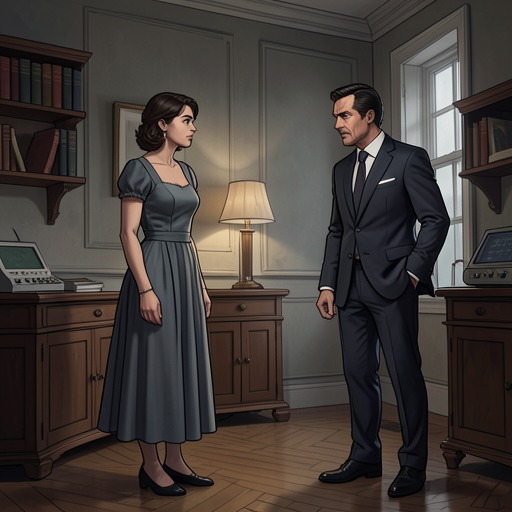
Tansley’s presence beside Lily as she paints is an early source of irritation. He stands close behind her on the very spot where she is working and repeats the claim that women cannot paint or write. His condescension arrives alongside the signs of identity he displays: he carries a purple book, presents his poverty and principles through his talk of shag tobacco costing fivepence an ounce, and sits at dinner in the middle of the view. Lily remembers these details as part of the oppressive scene around her canvas, where his judgments intrude on her work and on her confidence as a painter.
The hostility is not simply a disagreement about artistic ability. Lily recalls that Tansley seemed to want women’s exclusion from art even more than he believed the claim himself. His words make a social prohibition feel personal: he had made it his business to tell her what women could not do while she was trying to paint. Later, when she hears him preaching brotherly love during the war, the old insult returns with force. From her seat in a half-empty hall, she wonders how he can love people who cannot distinguish one picture from another, when he had stood behind her smoking and belittling her work.
The Beach and a Moment of Ease
Lily’s memory also preserves an episode that resists the fixed picture of Tansley as nothing but an adversary. On a windy morning at the beach, Mrs Ramsay sits by a rock writing letters while Lily and Tansley go down to the shore. When Mrs Ramsay looks up and asks whether something floating in the sea is a lobster pot or an overturned boat, her short sight prevents her from seeing clearly. Tansley responds by becoming as nice as he can: he plays ducks and drakes with Lily, and together they choose small, flat black stones and send them skipping over the waves.
Mrs Ramsay watches them over her spectacles and laughs. Lily cannot recall what she and Tansley said, but remembers the scene’s essential change: the two of them, previously squabbling and sparring, suddenly getting on well. Their ease depends in part on Mrs Ramsay’s presence. She writes innumerable letters, and when the wind carries pages toward the sea, she and Tansley save one from the water. The practical gesture and the shared game interrupt Lily’s habitual antagonism; they leave her with a memory of companionship that survives long after the morning itself.
Lily’s Changing Judgment
The remembered friendship does not erase Tansley’s earlier behavior, but it makes Lily question the completeness of her own portrait of him. During the war, she sees him lean, red, and raucous as he denounces and condemns from a platform while preaching brotherly love. The spectacle initially sharpens her irony: his public language of love seems at odds with the man who disparaged her painting. Yet the beach scene returns in the middle of that recollection, bringing back Mrs Ramsay, the lost spectacle case, and Tansley’s charming smile when Mrs Ramsay tells him not to bother searching because she loses thousands of cases every summer.
Lily then recalls that Mrs Ramsay had said Tansley was educating his little sister. That fact complicates Lily’s contempt. She admits to herself that her idea of him is grotesque and that half of one’s notions of other people may be grotesque because they serve one’s own private purposes. Tansley, she recognizes, had served as her whipping-boy: when she was out of temper, she could direct her anger at him. To take him seriously, she must try to see him through Mrs Ramsay’s eyes, rather than accept her own most convenient caricature as the whole person.
Mrs Ramsay’s Mediation and the Work of Memory
Mrs Ramsay is central to the change in Lily and Tansley’s relationship, not because she resolves their conflict through an explicit intervention, but because her presence gathers separate and even discordant details into a scene Lily can preserve. At the beach she writes under the rock, looks up from her letters, laughs at the pair, and helps retrieve a page from the wind. Lily later understands that this woman’s presence made their irritation fall away and brought their quarrelling selves into a temporary moment of liking. The memory becomes more than evidence that Tansley could be kind: it changes what their relationship can mean to Lily.
Looking from her canvas to the drawing-room steps and back, Lily calls the remembered scene something like a work of art. Mrs Ramsay’s capacity to bring people and incidents together has made an ephemeral moment hold its shape across the years. Lily’s recognition connects the beach memory to her own effort to make something permanent in painting. In the middle of her work, she recalls Mrs Ramsay’s words, “Life stand still here,” and sees the remembered companionship as a small revelation: not a final explanation of life, but one of the daily illuminations through which passing experience acquires form. She acknowledges that she owes this understanding to Mrs Ramsay.
The Relationship’s Significance
The relationship remains unresolved in the sense that the evidence offers no reconciliation between Lily and Tansley and no withdrawal of the injury his prejudice caused. Instead, its change occurs in Lily’s perception. The same man who once crowded her at the canvas and declared women incapable of art is also the companion who skips stones with her, saves a letter with Mrs Ramsay, and smiles at Mrs Ramsay’s self-deprecating joke. Holding both versions in view, Lily becomes more alert to how little one person’s private judgment can contain another.
That revised perception also reframes the gendered conflict at the heart of their connection. Tansley’s assertion restricts women’s artistic possibility, while Lily’s active painting and later reflection refuse to let his judgment dictate the meaning of her work or of their shared past. The beach memory does not cancel the prohibition; rather, it shows how a moment of human connection can exceed the antagonism through which Lily first understood him. By turning that moment into material for her painting and thought, Lily preserves neither a simple portrait of Tansley nor a sentimental resolution, but a more complex relationship shaped by injury, temporary ease, and the revising power of memory.