Mrs McNab
To the LighthouseMrs McNab is the aging domestic worker who keeps the Ramsay house from disappearing during the family’s long absence. Bent by labor and sorrow, she first moves through the silent rooms as their caretaker; later, with Mrs Bast and her son George, she cleans and repairs the neglected house so it can receive the family again. Her work is undramatic and physically taxing, but it interrupts the house’s slide toward ruin and makes domestic survival visible as labor rather than as a natural condition.
Caretaker in an Empty House
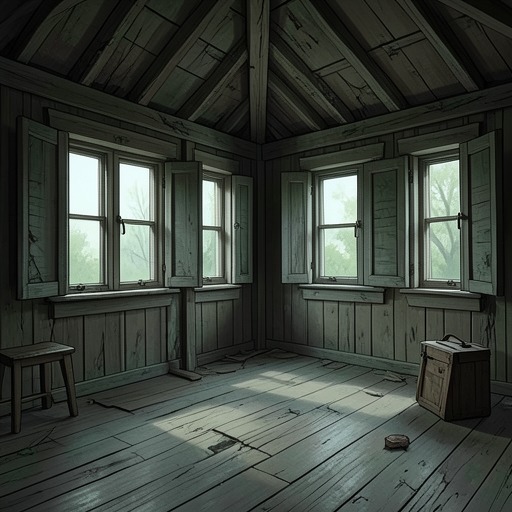
When the Ramsays are away, the house stands empty, its rooms and furnishings wrapped in silence. Mrs McNab is directed to open the windows and dust the bedrooms, entering a stillness that has accumulated the sounds of birds, ships, fields, and the sea. The narration gives the room an almost self-contained life: a board springs once on the landing, and a fold of a shawl loosens and swings before quiet returns. Mrs McNab’s arrival breaks that suspended atmosphere with the material signs of work—hands shaped by the wash-tub and boots that have crunched over shingle. The house’s preservation depends not on stillness alone, but on someone coming in to care for it.
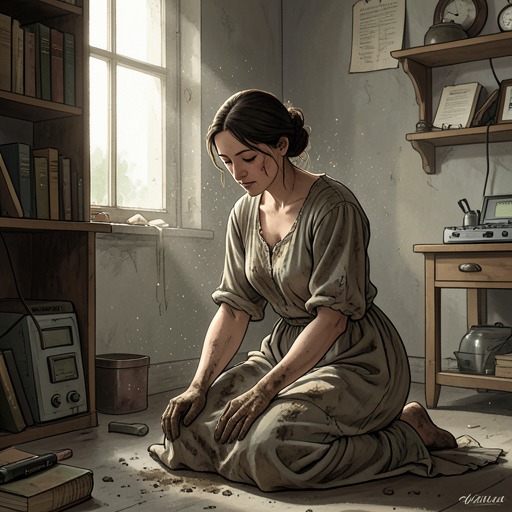
Her body registers the cost of that service. She lurches and rolls as she climbs, clutches the banisters, and moves from room to room with a sidelong gaze. As she rubs the looking-glass and sees her own swinging figure, she sings a tune whose earlier gaiety has been worn down into a sound of persistence. The account links her routine of dusting and wiping with the repeated burdens of daily life: getting up, going to bed, bringing things out, and putting them away. Her question about how long the world will endure rises from this weary labor, but it does not end her work. She gets up again, takes up the mats and china, and resumes the old round, carrying both fatigue and some uncertain consolation.
Memory and Material Traces
The rooms hold the evidence of the absent family in objects that remain where they were left. Mrs McNab remembers Mrs Ramsay in a grey gardening cloak, coming up the drive with the washing and a child beside her. Clothes hang in the cupboards; boots and shoes remain; a brush and comb lie on the dressing-table, and its drawers still contain handkerchiefs and scraps of ribbon. These things make the house feel poised for an imminent return, although Mrs McNab knows that Mrs Ramsay has died, years earlier in London. She fingers the cloak while recalling its owner, so that housekeeping and remembrance meet in a single gesture.
Her account of the family’s absence is also shaped by neglect and distance. The family had once planned to come, but the war and difficult travel delayed them; in the intervening years, they sent money but did not write or visit. Mrs McNab sees the expectation that the rooms will be found unchanged as incompatible with what has happened to them. The books and belongings are mouldy, plaster has fallen in the hall, and the rain-pipe above the study is blocked. Outside, the garden has run wild, with rabbits among the beds. The house is not a sealed store of memory: without repeated attention, its contents decay and its remembered life becomes harder to recover.
Labor Against Decay
At first, Mrs McNab thinks the work is beyond one person’s strength. The house may be sold, and she is too old, with painful legs, to set everything right alone. But when a young woman writes in haste asking whether the house can be made ready for the summer, Mrs McNab and Mrs Bast come with brooms and pails. The restoration begins not as a dignified ceremony but as a strenuous, piecemeal effort by two aging women. They mop and scour, moving from upstairs to the cellars amid the creak of hinges and the bang of swollen woodwork.
Their achievements are specific and incomplete, which gives the work its measure. They recover a basin and a cupboard from the advancing disorder; one morning they bring the Waverley novels and a tea-set into the open, and in the afternoon they restore a brass fender and steel fire-irons. Mrs Bast’s son George catches the rats and cuts the grass, while builders are brought in to help. The women conquer the taps and bath more fully than they can the rows of damaged books, once black but now stained white, with pale mushrooms and spiders among them. The house can be made usable again, but its repair cannot reverse every mark of abandonment.
Completion and Narrative Significance
After days of work inside and cutting and digging outside, the dusters are shaken from the windows, the windows are shut, and keys are turned throughout the house. The front door is banged: the cleaning and restoration are finished. That closure marks a practical change from exposure and disorder to a house secured for the family’s possible return. Yet it does not make time stop. In the evening, the work’s sounds give way to an irregular music of barking, bleating, insects, cut grass, and a squeaking wheel, never quite gathered into harmony before silence falls again.
Mrs McNab’s role gives the house’s survival a social and bodily foundation. The Ramsays’ domestic world persists in part because working women undertake the uncelebrated tasks of airing, scrubbing, mending the effects of neglect, and preparing rooms for others. Her memories do not restore Mrs Ramsay to life, nor does her labor make the house as it was; instead, the cloak, the forgotten clothes, and the cleaned rooms hold together the difference between a family’s past presence and its uncertain return. Against the quiet pressure of decay, Mrs McNab offers no grand victory—only exhausted, repeated work that rescues particular objects and rooms from oblivion.