The Passage of Time and the Impermanence of Life
To the LighthouseThe Passage of Time and the Impermanence of Life shapes both what the Ramsays experience and how the novel tells their story. Time is at once a child’s anticipation of the next day, a mother’s awareness that her children must grow up, and the seasons moving through a house after its inhabitants have gone. Against death and historical violence, moments of care and remembered connection offer a fragile form of continuity, not a way to stop change.
Childhood, Expectation, and the Passing Moment
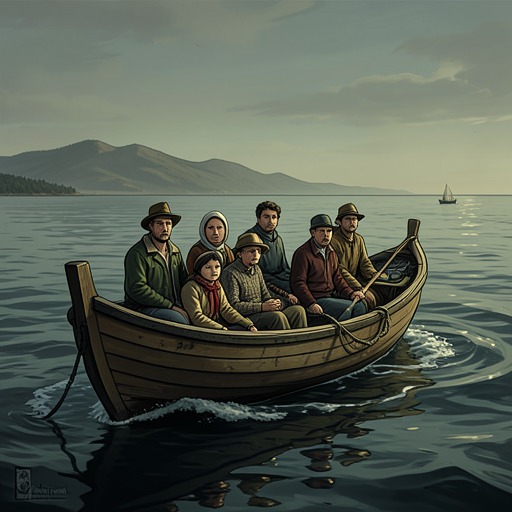
For six-year-old James Ramsay, the prospect of a possible trip to The Lighthouse transforms an ordinary afternoon. Mrs Ramsay says that the family can go if the weather is fine, and James experiences the expedition as nearly assured: the imagined future colours the present. Even a refrigerator picture that he cuts from the Army and Navy Stores catalogue seems fringed with joy. The scene makes time palpable as anticipation, showing how a promise can charge familiar objects and sensations with meaning before anything has happened.
Mr Ramsay’s forecast that the weather will be bad abruptly interrupts that happiness. James’s anger at his father arises not simply from a disagreement about the weather but from the collapse of a future he had already begun to inhabit. Mrs Ramsay tries to keep possibility alive, and her care for the lighthouse keeper’s family gives that hope a practical form: she knits a stocking for his son, who has a tuberculous hip, and gathers magazines and tobacco for the isolated keepers. Her preparations acknowledge that other people’s days can be constrained by illness, weather, and isolation even as she tries to make their circumstances more bearable.
The scene also places childhood within a larger, more difficult sense of time. Mrs Ramsay knows that James will remember the disappointment, and later reflects that children do not forget what adults say and do. Yet her wish to keep James and Cam as they are cannot prevail over their growing up. The small daily pleasures of childhood—the children’s stories, play, and treasures—are vivid precisely because they cannot be held in place. The future that delights James and the future Mrs Ramsay fears are two sides of the same passage of time.
Private Life and the Limits of Consolation
Mrs Ramsay’s awareness of impermanence extends beyond her children. She thinks of life as a private transaction between herself and something difficult, even hostile, marked by suffering, death, and poverty. The knowledge that a woman is dying of cancer, and that a young servant’s father has cancer of the throat, makes mortality part of ordinary domestic life rather than a distant abstraction. Her charitable concern for the lighthouse keepers and her wishes for a hospital and a model dairy likewise respond to vulnerable lives in a place without adequate public provision.
Alongside her outward activity, Mrs Ramsay needs moments in which she can be alone. Once the children have gone to bed, the work and social self she presents to others seems to fall away; she imagines herself as a hidden, wedge-shaped core of darkness, beyond the familiar roles by which others know her. This inward stillness does not remove her from time so much as alter her relation to it. In such moments the ordinary pressure of doing recedes, and experience seems to open into a range that is not measured by household tasks.
The Lighthouse beam gives that inward experience a recurring image. Mrs Ramsay watches its long, steady stroke and feels herself drawn into what she sees; a phrase in her mind can return and gather force as she sits with her knitting. The light does not arrest the passing hours, but its recurrence offers a temporary point of steadiness within them. Her private respite and her outward responsibilities coexist, making care neither a cure for anxiety nor a complete substitute for solitude.
Seasons, Death, and Historical Time
The passage of time becomes most stark after Mrs Ramsay’s death. Night gives way to dawn, but the movement of the natural world offers no restoration: Mr Ramsay reaches out in the dark and finds her absent. The narration moves quickly from this intimate loss into a broader account of nights and seasons, making a private bereavement part of a world that continues without regard for it. Wind, waves, and weather recur, but recurrence is not consolation; it can also make the human wish for an answer seem powerless.
The novel marks later deaths in compressed, abrupt notices. Prue Ramsay, recently married and praised for her beauty, dies that summer in an illness connected with childbirth. Andrew Ramsay is killed in France when a shell explodes; his death is instantaneous. The sharp contrast between the promise attached to Prue’s marriage and her early death, and between the ongoing domestic world and Andrew’s wartime death, exposes the gulf between human expectation and what actually follows. The briefness of these notices also makes the losses register as interruptions: lives that cannot be recovered by the routines or seasons that continue around them.
The natural landscape does not supply a moral explanation for these events. A calm sea and a beautiful view can seem to promise a correspondence between outward beauty and inner life, but that expectation breaks when a ship appears as an ashen presence and a purplish stain marks the water. The scene makes war and its consequences difficult to overlook within a landscape that might otherwise invite peaceful contemplation. Nature, the novel insists, witnesses human misery without completing or redeeming it; beauty may console, but it does not guarantee justice.
The House as a Measure of Change
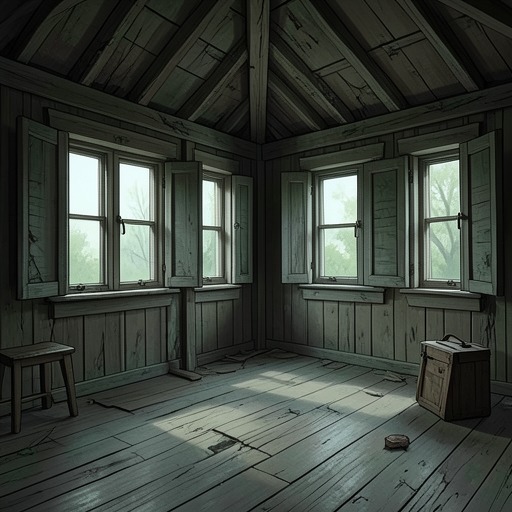
After the family leaves, the summer house records time through physical change. Wind enters its empty rooms; objects decay, animals and plants take possession, and the shawl left behind moves in the draughts. The house is not merely a backdrop to absence: its deteriorating rooms make the duration of absence visible. Where family life once involved hands at work and children moving through the rooms, silence and weather now leave marks of their own.
This transformation is neither instantaneous nor a simple victory of nature over human life. The house passes through repeated stages of neglect, and the Lighthouse beam continues to cross its rooms without distinguishing between human objects and the weeds, swallows, and rats that now share the space. The recurring light connects the abandoned house to the earlier domestic world, but does not restore that world. Its regular passage emphasizes the contrast between a repeated natural rhythm and the particular lives that have disappeared.
The house does not finally fall into ruin. When Mrs McNab and Mrs Bast are told that the family may return, the two older women begin the slow, difficult work of cleaning and repair. With brooms and pails they recover household objects from decay; Mrs Bast’s son catches rats and cuts the grass, and builders are brought in. Their efforts preserve parts of the house from being lost, but the labor is partial and arduous. Restoration counters oblivion without reversing the time in which the family was absent or replacing those who have died.
Memory, Art, and What Endures
Mr Ramsay’s private reflections offer another scale for measuring a human life. He imagines intellectual work as movement through the alphabet: reaching Q is an achievement, but the next step, R, eludes him, while Z stands for a distant culmination few ever attain. The metaphor makes limitation part of his struggle. He considers the brief duration of fame beside the long span of history and the endurance of ordinary stone, then squares his shoulders as if he could still shape how he will be remembered. His imagined heroic posture does not defeat mortality; it reveals the wish to give finite effort and a finite life a form that outlasts the moment.
Mrs Ramsay’s remembered moments offer a different kind of endurance. In the later recollection of a beach scene, Lily Briscoe remembers throwing stones with Charles Tansley and the friendship that emerged from their earlier friction. She sees Mrs Ramsay’s presence as the force that brought the moment into a shape that could survive in memory, and compares that transformation to a work of art. What endures is not the original scene intact, but a remembered composition: particular people, gestures, and feelings gathered into a form that can be revisited.
The novel’s treatment of time thus refuses both easy consolation and total erasure. A child’s expectation, a mother’s act of care, the beam crossing an empty room, and a memory reshaped by painting belong to different kinds of duration. None can cancel death, war, or change. Together, however, they show how temporary human experience can acquire a measure of persistence through attention, remembrance, and art.