The Prohibition: “Women Can’t Paint or Write”
To the LighthouseThe Prohibition: “Women Can’t Paint or Write” is the sexist verdict that Charles Tansley directs at Lily Briscoe and that persists in her memory as she paints. Its significance lies not only in the words’ direct challenge to her artistic agency, but in how the novel traces their afterlife: Lily recalls the injury, revises her judgment of the man who voiced it, and continues painting.
The Saying and Its Setting
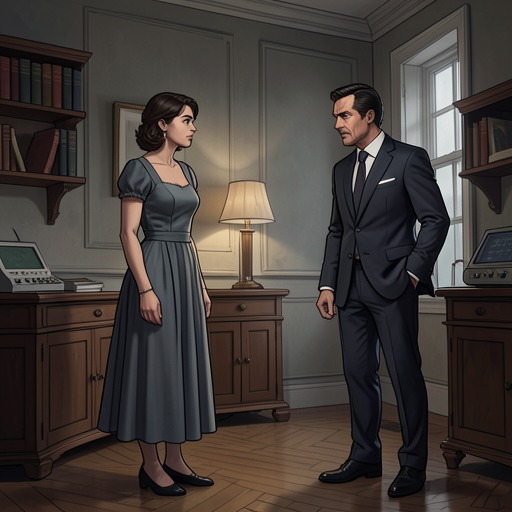
Lily remembers Tansley declaring that women cannot paint or write while he stood close behind her on the very spot where she is now working. His physical proximity makes the pronouncement part of the scene of painting itself: the artist is not merely confronting a discouraging idea, but remembering an intrusion into her space as she tries to work. She also recalls his performance of poverty and principle, including his remark about shag tobacco costing fivepence an ounce, and his habit of carrying a purple book and sitting in the sunlight with it.
The remembered sentence returns as Lily faces the difficult white space of her canvas. She murmurs that she cannot paint or write while considering how to proceed, then begins moving her brush among the blues and umbers. The recalled prohibition and her present act of painting occupy the same moment: the phrase is a pressure on her, but it does not prevent her from working.
Mrs Ramsay and a Memory Recast
Lily’s memory of Tansley is not limited to his humiliating remarks. She recalls a windy morning on the beach when Mrs Ramsay sat beneath a rock writing letters, while Lily and Tansley threw flat black stones so that they skipped across the waves. Mrs Ramsay looked up over her spectacles and laughed at them. When she could not see an object floating in the sea, Tansley became as nice as he could possibly be; the remembered scene gives Lily a counterexample to her fixed image of him as only antagonistic.
The letters Mrs Ramsay wrote matter to Lily’s understanding of the scene. The wind sometimes carried a page away, and Mrs Ramsay and Tansley saved it from the sea. In retrospect, Lily sees Mrs Ramsay’s presence as gathering their irritations and squabbling into a moment of friendship that survived for years. That memory, Lily thinks, remains in the mind almost like a work of art. Mrs Ramsay’s example thus becomes a means of re-seeing Tansley, not a denial that his words wounded her.
Tansley Reconsidered
Years later, Lily remembers hearing Tansley speak in a hall during the war. He denounced and condemned, yet preached brotherly love. The contrast stirs her resentment: she recalls the man who had stood behind her smoking shag and telling her that women could not write or paint, and wonders how he could love people unable to distinguish one picture from another. Her memory holds his public appeal to love against his earlier belittling of her artistic capacity.
Lily also recognizes that her own picture of Tansley has been distorted by private feeling. She has treated him as a whipping-boy, taking out her bad temper on him in imagination. To think seriously about him, she decides, she must borrow Mrs Ramsay’s sayings and try to see him through Mrs Ramsay’s eyes. The prohibition remains a real injury, but Lily’s recollection refuses to make it the whole truth about either Tansley or their past.
Artistic and Narrative Significance
The saying’s recurrence links a social judgment about women’s capacity to create with Lily’s immediate struggle to make a painting. Yet the narrative places the judgment inside a stream of recollection rather than presenting it as an unquestioned truth: Lily remembers the insult, the beach scene that complicates her hostility, and Tansley’s later public performance in the same ongoing act of painting. Her brush continues among the blues and umbers as memories rise over the blank space.
The prohibition therefore operates both as an obstacle and as a remembered voice that Lily can examine. The novel does not suggest that a moment of kindness erases Tansley’s belittling words; instead, Lily’s changing perception makes room for their history to be more complicated than the insult alone. Against a categorical claim that women cannot paint or write, the scene places Lily’s sustained artistic labor and her power to shape, reconsider, and preserve experience.