The Ramsays’ trip to the lighthouse
To the LighthouseThe Ramsays’ trip to the lighthouse is the long-delayed fulfillment of a family expedition once postponed, but it is no simple recovery of an earlier hope. Years later, Mr Ramsay takes Cam and James across the water despite their reluctance. The voyage moves from anger and a silent pact of resistance toward a small, hard-won reconciliation: Mr Ramsay praises James’s steering, and the party reaches the lighthouse with parcels for its keepers. Through Lily Briscoe’s distant watch and the children’s divided experience inside the boat, the crossing makes its destination less a triumphant answer than a changed encounter among the living and the absent.
Background and Departure
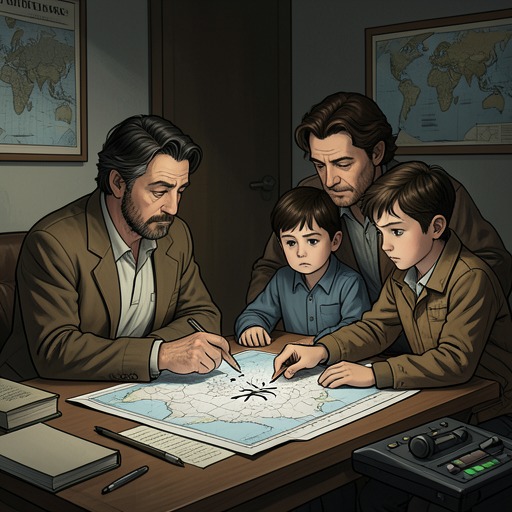
On the morning of the voyage, Lily is back at the breakfast table after arriving the previous night, alone in the house before eight. The expedition is already under pressure: Mr Ramsay, Cam, and James should have left to catch the tide, but the children are not ready and Nancy has forgotten to order sandwiches. Mr Ramsay loses his temper, bangs out of the room, and storms that there is no use going now. The practical disorder gives the delayed journey an uneasy beginning rather than the celebratory air of a long-awaited family outing.
Nancy has vanished, then returns in a state of half-dazed desperation to ask what one sends to the lighthouse. Her question belongs to the immediate work of making the trip possible, while Mr Ramsay marches angrily on the terrace and the house seems full of slamming doors and calling voices. The parcels that Nancy prepares will eventually travel with the party; before that, they mark how domestic labor has to gather itself around the expedition even as tempers threaten to undo it.
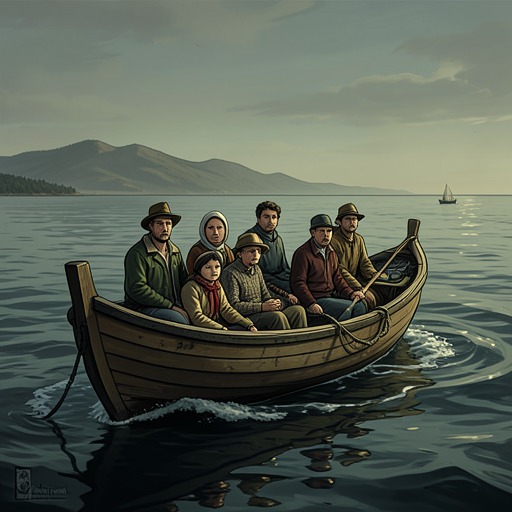
Lily sees the boat from a distance. Among the other small craft, one lies apart; its sail is hoisted, and, after a pause, it moves deliberately out to sea. Lily identifies the distant passengers as Mr Ramsay, Cam, and James. The quiet, measured departure contrasts with the disturbance inside the house, while her separation from the boat makes the trip an event she watches and imagines as well as one the family physically undertakes.
Resistance Aboard
Inside the boat, the journey initially continues the conflict that marked the departure. James steers, Cam sits alone in the bow, and Mr Ramsay occupies the middle. The sails flap, the water laps at the boat, and it remains nearly motionless in the calm. Mr Ramsay, who cannot bear to hang about, soon speaks sharply to Macalister’s boy, who takes out the oars and begins to row. Cam and James expect their father to keep fidgeting, looking for a breeze, and muttering in a way that makes both Macalister and his boy uncomfortable.
The children understand the expedition not as a choice but as an order. They feel that Mr Ramsay has made them come and forced them to come against their wills. On the walk to the beach they have lagged behind him, carrying the brown-paper parcels, and have silently vowed to stand together and resist tyranny to the death. Aboard, their alliance persists: they sit at opposite ends of the boat, say nothing, watch their father, and hope that the calm will thwart him and force the party to turn back.
That resistance holds even when the sea and the passage of time make the children’s thoughts drift. Cam grows tired of looking at the water; James and Cam continue to watch their father, who reads on, apparently unconscious of their opposition. Cam sees reading as a way Mr Ramsay escapes beyond the reach of those who might try to lay hands on him. Her perception complicates the children’s anger: he is the authority they oppose, yet also someone who withdraws into his book, inaccessible to them.
The Crossing and the Turn
The turning point comes when Mr Ramsay suddenly shuts his book and tells them to come on. Cam wakes with a start, imagining some extraordinary adventure or a landing somewhere to climb. Instead, Mr Ramsay says he is hungry and that it is time for lunch; he points out that the lighthouse is almost there. The bluntness of this ordinary explanation deflates the moment’s suspense even as the destination becomes visible. The journey advances not through a grand revelation but through a practical announcement and the boat’s approach.
James’s steering changes the emotional balance. After the boat has tacked and is sailing swiftly beside the reef, Mr Ramsay tells him, “Well done!” and praises him as a born sailor. James has wanted his father’s approval; Cam recognizes that he is pleased, though he keeps his expression sulky and refuses to share his satisfaction with anyone. The praise does not erase the earlier coercion or the children’s pact, but it gives James the acknowledgment he has long desired. His silence now guards pleasure rather than simply expressing opposition.
The sea around them offers no simple confirmation of human feeling. The boat travels over long, rocking waves beside rocks that show brown through thinning green water. Waves repeatedly break against a higher rock, and the water’s slap and hiss make the waves seem to sport freely, indifferent to the people crossing among them. Mr Ramsay scatters sandwich crumbs over the water and treats the prospect of drowning as an ordinary fact: men are naturally drowned in storms, and the sea’s depths are only water. Against the children’s anxiety about his anger and their own longing for approval, the natural world continues on its own scale.
Landing and Significance
At the end of the crossing, Mr Ramsay puts on his hat and tells the children to bring the parcels Nancy has prepared for the lighthouse men. He rises straight and tall in the bow, then springs lightly onto the rock with his parcel. James sees in his posture an almost defiant figure, while Cam imagines him leaping into space; the children rise and follow. The landing completes the practical purpose of the expedition, but it also brings the children into action with their father after a voyage defined by their wish to resist him.
Lily, watching from the lawn, can scarcely see the lighthouse through the blue haze. The effort of looking toward it and imagining Mr Ramsay landing seems to exhaust her body and mind. She says that he must have reached it, then understands that whatever she had wanted to give him when he left her that morning, she has given at last. When she says that he has landed and that it is finished, the words register not only the physical arrival but the end of the inward effort of accompanying the voyage from afar.
The trip gathers together incompatible experiences rather than resolving them into a single family feeling. For the children, it begins under compulsion and carries a stubborn private compact; for James, his father’s praise creates a guarded moment of satisfaction; for Lily, watching the landing brings relief and a sense of completion. The journey finally reaches the lighthouse, but its meaning lies in these changes along the way—in a reluctant crossing that allows recognition without undoing conflict, and in an arrival whose emotional significance is perceived differently by those aboard and the solitary observer on shore.