William Bankes
To the LighthouseWilliam Bankes is a widowed botanist, a friend of Mr Ramsay from before the latter’s marriage, and one of Lily Briscoe’s closest companions. Scrupulous in manner and habit, he is at once a scientific observer and a quietly affectionate presence: he judges art, studies people, and attends to the natural world without reducing any of them to a single meaning. Through him, the novel makes friendship a form of durable but changing attachment, and shows how looking carefully can become its own kind of care.
Identity and Background
Bankes is older than Lily Briscoe and Mr Ramsay’s children, a widower, and childless. He has rooms in the village, and his regular comings and goings have made him and Lily allies. She knows him as clean and orderly, up early and out painting alone; he notices her practical shoes and the discipline of her working routine. His habits can also seem exacting: he dislikes dogs on chairs, has brought a valet to the summer house, and talks at length about such domestic matters as salt in vegetables and English cooking. The portrait is not of an abstract ideal of reason, but of a particular man whose scrupulousness coexists with fastidious preferences and social ease.
His professional identity is that of a botanist and scientist. He has spent much time in laboratories, and Lily imagines the world dazzling him when he emerges into it: walking slowly, shading his eyes, pausing to breathe the air. His interests include plants, architecture, perspective, and scientific questions. To Lily, his attention to the world is both an intellectual habit and a source of tenderness: he can stop at a tree or a view, and he admires children despite having no daughter of his own.
Friendship with Mr Ramsay
Bankes’s friendship with Mr Ramsay began many years earlier, but he remembers its emotional turning point as a walk on a road in Westmorland. Mr Ramsay stopped to watch a hen spreading its wings over its chicks and said, “Pretty — pretty.” Bankes took the moment as an illumination of Ramsay’s sympathy with humble things. Yet he also remembers that the friendship seemed to cease on that road. After Mr Ramsay married, their lives diverged; when they met, repetition gradually displaced the freshness of earlier intimacy. Bankes cannot assign blame, and insists inwardly that his affection has not diminished, even while recognizing that the friendship’s former immediacy belongs to the past.
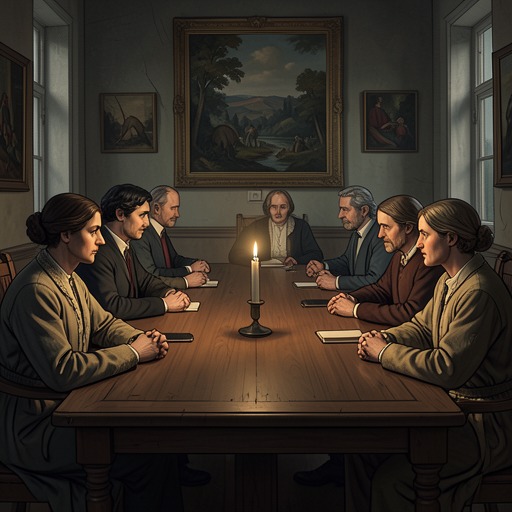
The contrast between the two men appears in their different relation to intellectual reputation. Bankes believes Mr Ramsay made a definite contribution to philosophy in a small book written when he was twenty-five, but that much of his later work repeats or amplifies what came before. He regards such lasting contributions as rare. At dinner, when discussion turns to whether books endure, Bankes declines to make the question a test of his own importance. He says that people should enjoy what they enjoy and that no one can know what will last. Mr Ramsay, by contrast, becomes uneasy about the endurance of his work and responds irritably. Bankes’s composure offers a contrast to that need for reassurance, without making him indifferent to intellectual achievement.
Lily Briscoe and Artistic Attention
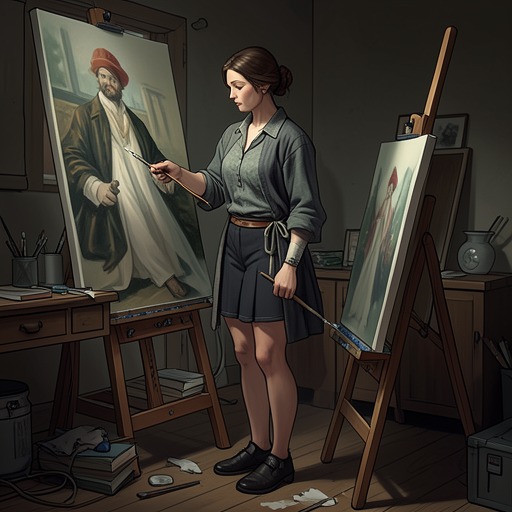
Bankes and Lily’s friendship is built partly from ordinary companionship: shared lodgings in the village, brief exchanges about soup and the children, and their repeated conversations and walks. When he stands beside her easel, she does not turn her canvas away as she might from someone more intrusive. His steady presence makes it possible for her to endure the exposure of having her work examined, an experience that feels to her like letting another person see the accumulated record of her life.
Bankes asks what Lily means by the triangular purple shape in her painting. She explains that it represents Mrs Ramsay reading to James, while clarifying that she has not tried to reproduce a recognizable human likeness. The painting works through a relation of light and darkness: a shadow in one place answers a light in another. Bankes takes the question seriously and in good faith, though his own taste has not prepared him to think of a mother and child as a purple shadow. His willingness to consider her account matters. Lily can discuss painting seriously with him, and his scientific temperament becomes a resource for understanding rather than a barrier to artistic vision.
Their long friendship is also marked by what remains unspoken. Lily recalls their visits to Hampton Court, where Bankes gives her time to wash her hands while he strolls by the river, and their walks through courtyards as they admire proportions and flowers. He tells her about perspective and architecture; she sometimes accompanies him to buy a carpet for the staircase. Their ease does not depend on constant disclosure. Its repeated gestures and shared attention make it one of the pleasures of Lily’s life, and she recognizes that she loves him without suggesting that their bond must become marriage.
Admiration for Mrs Ramsay
Bankes’s regard for Mrs Ramsay is revealed in a scene Lily watches from beside her canvas. He sees Mrs Ramsay reading a fairy tale to James and contemplates the sight with an intensity Lily understands as love, though it is neither youthful courtship nor an attempt to possess its object. For Bankes, the quiet scene has an order and completeness comparable to a scientific result: contemplating it, he feels that chaos has been subdued. Lily is moved by the scale of his response, especially because he is an older, self-contained man whose admiration seems distilled into attention.
That admiration is also connected to his memory of Mrs Ramsay’s beauty. He once told Lily that she was astonishingly beautiful when he first saw her in a grey hat, at nineteen or twenty. Years later at Hampton Court, he looks down the avenue as if he can still see her among the fountains. His recollection helps Lily picture Mrs Ramsay, but also prompts her to resist the smoothing effect of beauty. A beautiful image can make a person seem still and complete, while the small changes of expression and movement that make her particular disappear. Bankes preserves one aspect of Mrs Ramsay; Lily recognizes that no single image can contain the whole person.
Narrative Role and Significance
Bankes repeatedly occupies the position of an observer who makes room for complexity. His memories of Mr Ramsay hold affection and disappointment together; his scientific judgment recognizes both the early force and later repetition of Ramsay’s work. His response to Lily’s painting respects its visual logic without insisting that it imitate ordinary appearances. His admiration for Mrs Ramsay, meanwhile, is intense but non-possessive, and enables Lily to see the scene of mother and child as more than a domestic image.
His importance is therefore relational rather than spectacular. Bankes cannot restore the old closeness of his friendship with Mr Ramsay, and his own life as a widower without children remains distinct from the crowded family world of the summer house. Yet he brings forms of attention that connect people across those differences: scientific scrutiny, remembered affection, and the patient looking that lets another person’s work be taken seriously. His friendship with Lily demonstrates that intimacy need not require marriage or complete knowledge; it can endure in shared walks, careful conversation, and the freedom to leave some things unsaid.