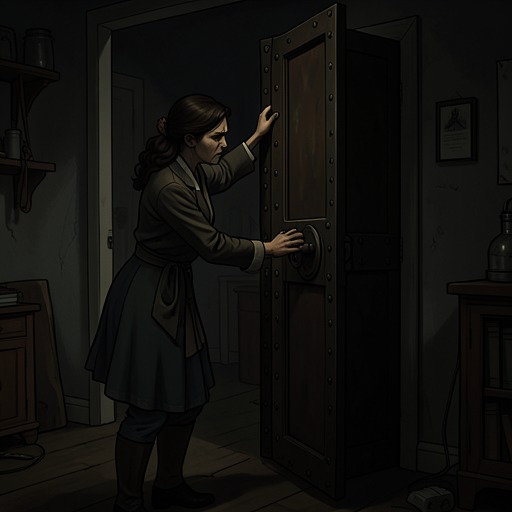
“He that is unjust, let him be unjust still”
Uncle SilasThe expression “He that is unjust, let him be unjust still” supplies the stark moral endpoint of the narrator’s reflection on Silas Ruthyn: a person’s character may harden until it retains the form in which it has settled. Paired with the biblical image of work revealed and tried by fire, the line makes judgment feel less like a future possibility than the exposure of what a life has already become.
Biblical Context and Wording
The expression follows a passage about building on a foundation with materials ranging from gold and precious stones to wood, hay, and stubble. Each person’s work will be made manifest, the text says, and tested by fire. The accompanying declaration, “He which is filthy, let him be filthy still,” extends that image from the quality of a person’s work to the condition of the person himself. The words turn the passage toward finality: injustice and moral filth are presented not as passing errors but as states that may persist.
The Narrator’s Use of the Expression
The narrator invokes the line while trying to assess Silas Ruthyn’s religion and moral history. She cannot decide whether his faith was wholly hypocritical or retained some sincerity, and wonders whether he once believed himself righteous. Her uncertainty does not excuse his conduct: she describes a succession of temptations and says he sought both the hope of heaven and escape from hell while coveting and fearing more immediate things. Against that unsettled account of motive, the verse offers a severe measure of what repeated choices can leave behind.
Age, Character, and Judgment
The narrator connects the biblical wording to her image of old age: the heart, she says, eventually ceases to be fusible or malleable and must keep the form in which it has cooled. The metaphor makes moral hardening a process rather than a single decision. Read alongside the phrase about remaining unjust, it suggests that judgment may consist in the final disclosure of an already-set character. The passage does not resolve whether Silas ever possessed sincere faith; instead, it places that ambiguity beside the possibility that, by the end, the shape of his conduct could no longer be changed.