Elverston
Uncle SilasElverston, the country home of Monica Knollys, offers a sustained contrast to the restrictions and isolation of Bartram-Haugh. Its comfortable domestic setting, active visiting life, and Monica’s hospitality provide Maud and Milly with a temporary refuge, while their stay gives the novel a measure of social ease and personal development. When Maud finally escapes Bartram, Elverston is also the destination toward which her rescuers drive her, and Monica’s embrace marks her return to safety.
Setting and first arrival
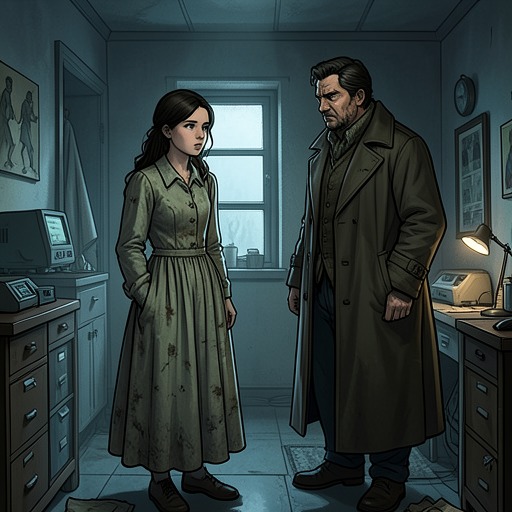
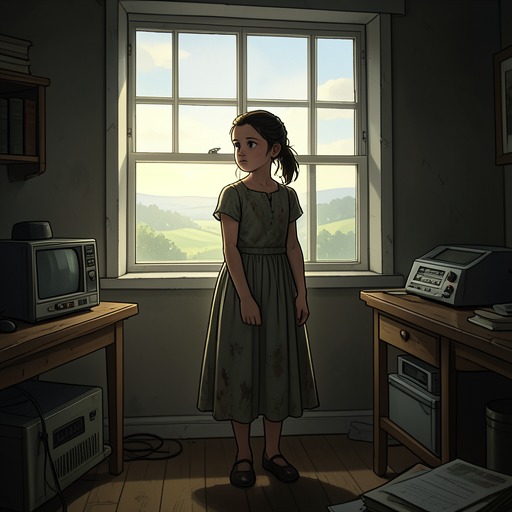
Maud first sees the contrast between the two households as she arrives at Bartram-Haugh. Bartram’s large, ornate house appears neglected and deserted, its grass-grown grounds and fallen trees setting grandeur against decay. Its interior, too, contains locked rooms, restricted passages, and neglected spaces. Elverston, by contrast, comes into view as a pretty, gabled house in a wooded hollow, its old timber and air of shelter suggesting a home shaped by welcome and continuity. Maud imagines the house as having received generations of family and friends, with their celebrations and sorrows, and as offering its visitors a warm respite from life’s hardships.
The distinction is not simply architectural. Bartram-Haugh’s physical scale is accompanied by rules that limit movement: Maud and Milly encounter locked hatches across galleries and corridors, while a house order discourages disturbing rooms and windows. The first evidence of Elverston’s importance, by contrast, is that it is somewhere Monica can invite them to visit. The sisters’ departure still depends on Silas’s permission, but the invitation opens a temporary interval outside his immediate household authority.
Monica’s hospitality and the visit
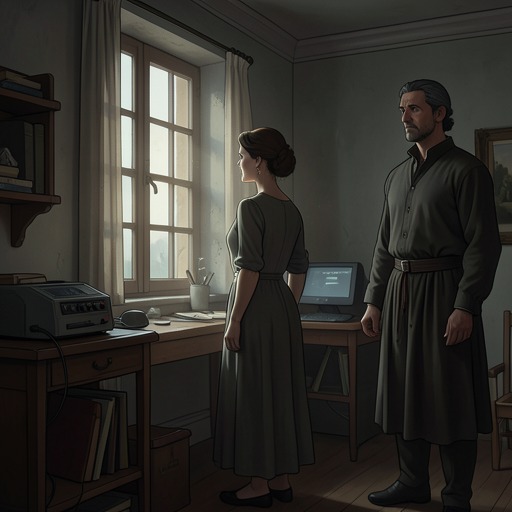
When Monica returns to her country house, she uses correspondence to reopen friendly relations between Elverston and Bartram. She then appears at Bartram and asks whether Maud and Milly can be ready to leave with her within an hour or two, if Silas allows it. Maud welcomes the prospect immediately; Milly is more anxious, in part because her wardrobe is modest. Monica’s invitation makes the visit an act of personal care, not merely a change of scenery.
The drive to Elverston passes through a wooded glen and over the Derbyshire moors. Maud admires the landscape, and Milly shares her pleasure in it. Their arrival at Monica’s house is described through its old-fashioned appearance and sense of shelter, in marked contrast with the desolate grandeur of Bartram-Haugh. The visit gives Maud and Milly access to company, conversation, excursions, music, reading, and visitors from the neighborhood. These ordinary activities matter because Bartram’s daily routine has been shaped by confinement and uncertainty; at Elverston, the sisters can participate in a wider social life.
The stay also benefits Milly. Maud observes that she improves rapidly amid Monica’s lively and kindly company. Milly’s social development is not treated as a sudden transformation: it grows through repeated participation in conversation and shared outings. The visit therefore functions both as a respite and as an informal education in the forms of social life from which Milly has largely been excluded.
A refuge with limits
Elverston offers real relief, but the sisters’ freedom there remains conditional. Maud and Milly wait anxiously for Bartram’s answer to Monica’s request to extend their stay. Silas agrees to another week, but not a fortnight, and arranges for the horses to collect them on a specified Tuesday. His letter presents the decision as consistent with a belief in young people’s liberty and self-education, even as his control over the length of their visit demonstrates the practical limit of that liberty. Monica’s home can shelter them, but it cannot yet free them from the authority that governs their return.
Within that interval, Elverston’s social life gives Maud and Milly a sense of ordinary companionship. Maud recalls evenings with visitors and neighbors, music, reading, conversation, and excursions around the county. Local stories and traditions, including accounts of old crimes and reported apparitions, make the house part of a wider community’s memory. This sociability contrasts with Bartram’s enclosed spaces and secrecy: Elverston connects its residents to other people and to the surrounding region.
The visit also clarifies Maud’s relationship with Captain Oakley. At Bartram, she can talk with him and receive his attentions without renewing the affection she once felt. She explains that the loneliness of the household makes civilized company valuable, while her coolness allows her to recognize that Oakley may regard her as a prospective means of gaining property. The social ease of Elverston has helped give Maud a perspective from which she can distinguish companionship from romantic attachment and assess the interests that may lie behind an admirer’s manner.
From recalled refuge to destination
After returning to Bartram, Maud looks back on the Elverston visit as having been of immense use to both her and Milly. Later, when Meg Hawkes tells Maud that the estate gates are locked and escape is difficult, she proposes sending a note to Monica at Elverston. Meg offers a specific plan: Maud is to meet her and Tom Brice near the mill, bringing Mary Quince, so that they can help her leave. In this moment Elverston is no longer only a place of hospitality remembered from a happier interval; it is the reachable destination that gives the escape plan direction.
Monica’s letter further confirms her wish to care for Maud. She tells Maud that Silas has raised the possibility that Monica should eventually take responsibility for her, and that Silas wants Monica to see Maud before Maud is sent to France. The letter describes a proposed change in Maud’s care, not an accomplished transfer: Silas remains in control of the arrangements, and the proposed visit has yet to take place. Even so, Elverston represents a possible alternative to continued life under Silas’s guardianship.
During Maud’s escape, Meg pursues the carriage and catches up with it at the stile, where she joins Maud and Tom. They continue toward Elverston. When they arrive, Maud is so overcome that she cannot speak; she runs into Monica’s arms. The house thus completes a movement that began with a temporary visit: it changes from an inviting country home into the concrete endpoint of Maud’s flight and the place where she is received by a trusted relative.
Narrative significance
Elverston’s significance rests on what its domestic life makes possible. It offers Maud and Milly companionship, access to visitors and the surrounding community, and a period in which Milly can grow through social experience. Its welcome also sharpens the contrast with Bartram-Haugh, where architecture and household rules restrict access and movement. The difference between the homes is therefore both emotional and practical: one permits a temporary widening of the sisters’ world, while the other retains power to call them back.
The house’s role develops across the plot. First it is the setting of Monica’s kindness and the sisters’ welcome interval; later it becomes a place associated with possible guardianship and, through Meg’s plan, the destination of escape. The contrast between its remembered hospitality and Maud’s final, urgent arrival gives the setting a narrative arc of its own. Elverston cannot prevent the dangers Maud faces at Bartram, but its open household and Monica’s presence provide the human refuge toward which the escape is directed.