Hidden-hinged window
Uncle SilasThe Hidden-hinged window is a concealed architectural device that converts a seemingly secure window into an entrance. Its importance reaches across two mysteries: it lets Dudley Ruthyn enter Maud’s bedroom, and the later discovery of the same mechanism in Mr. Charke’s room explains how the earlier murder could have occurred despite the apparent impossibility of access.
Appearance and Function
When Maud finds herself confined in a bedroom, she discovers iron bars firmly fixed into the wooden window-frame and windows screwed shut. The room’s protections seem to make escape impossible. Looking more closely, however, she notices what appear to be recent chisel marks and new screws, with their traces disguised by a coating of coloured material. The window’s ordinary appearance conceals evidence of alteration.
The mechanism is revealed when Dudley descends to the window from above on a rope. The barred assembly swings open as one piece, admitting him into the room. The opening is not the result of breaking the bars or forcing the fastened window: the concealed construction makes the apparent barrier itself movable.
Entry into Maud’s Room
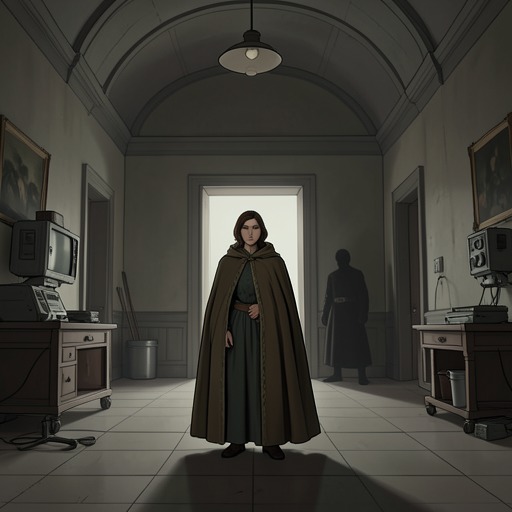
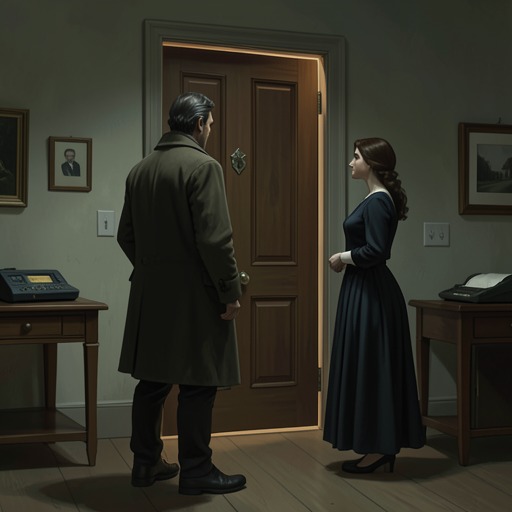
Dudley enters silently through the window while Maud is inside, having believed the bedroom secured. The hidden opening gives him access that the visible bars and screws seem to deny. Maud’s discovery that her room has been made into a prison is thus paired with the revelation that its security is deceptive: its restrictions trap her, while a concealed route remains available to someone acting against her.
The window’s architectural trick also helps explain how Dudley could enter without using the door. What looks like a fixed boundary between the room and the outside is, in fact, a covert point of access. The contrast between the conspicuous bars and the invisible means of opening them makes the device central to the scene’s threat.
Connection to the Charke Mystery
Mr. Charke’s death had seemed to present an impossible locked-room case. The window of his third-floor room was reportedly fastened from within; the door was locked on the inside with its key in the lock; the chimney was blocked by an iron bar; and investigators found no footprints beneath the window. A later search, including removal of the wainscoting, had revealed no concealed passage. These observations supported the conclusion that no one could have entered, and the inquest attributed his death to his own hand, although one juryman questioned that explanation.
After learning how Dudley entered Maud’s room, Doctor Bryerly examines the windows of the room where Mr. Charke had slept. He finds that one is fitted with powerful steel hinges, craftily sunk into the frame’s timber and secured by an iron pin on the outside. Removing the pin lets the window swing open. It is the same room into which Maud had been placed, and the same concealed arrangement accounts for the otherwise unexplained means of entry.
Significance
The Hidden-hinged window makes the house’s apparent evidence of security unreliable. The locked door, the bars, and the screwed-down panes are not false observations; they are incomplete ones. The mechanism concealed in the frame changes what those visible facts mean, turning an apparently sealed room into a room that could be entered by a route the investigation had missed.
Its delayed identification also gives the two episodes a consequential relation. The device first exposes the danger inside Maud’s confinement, then supplies the missing explanation for Mr. Charke’s death. Doctor Bryerly’s inspection resolves the old locked-room problem: the window could be opened from outside after its pin was removed, despite the room’s seemingly secure condition.