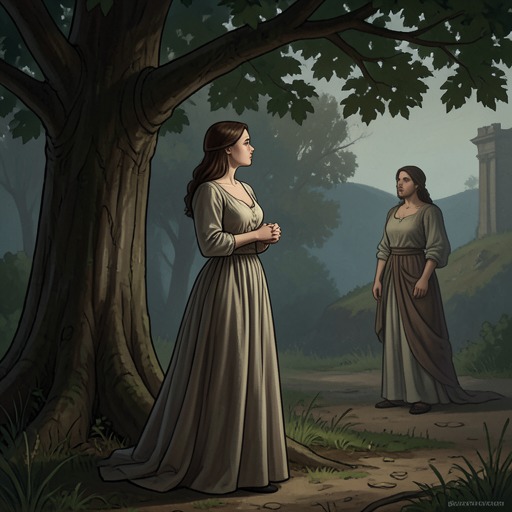
Lord Ilbury
Uncle SilasLord Ilbury is introduced to Maud Ruthyn under the name Mr. Carysbroke, but is later revealed as the brother of Lady Mary Carysbroke. A trustee of Maud’s inheritance and a considerate presence in her isolated life, he offers practical help without pressing his own wishes; the retrospective ending confirms that Maud eventually becomes his wife.
Identity and Introduction
Lord Ilbury first appears as a slight gentleman in morning dress, carefully crossing a precarious, ruined bridge toward Maud and Millicent at Bartram-Haugh. The unusual visit stands out because he lives privately at The Grange, has taken it for a year, and is the only gentleman to have visited Bartram for a long time. His permission to cross the grounds accounts for his return visits, while the estate’s lack of hospitality makes it an unlikely place to meet county society.
Introducing himself as Carysbroke, he apologizes for approaching Maud and recalls having known her father when he was a child. He says that Austin Ruthyn had shown him kindness, and speaks warmly of Lady Knollys, whom he identifies as his friend. Maud answers with unguarded affection for her cousin; Lord Ilbury responds with a kind smile. The scene establishes his courtesy and his connection to Maud’s family before his title or place among the trustees is disclosed.
Trustee and Neighbour
The revelation comes during a visit to Elverston, when Lady Knollys tells Maud and Millicent that the gentleman they know as Mr. Carysbroke is Lord Ilbury, Lady Mary’s brother. The disclosure corrects Maud’s mistaken understanding of their guest without changing the friendly impression he has made. The household becomes more intimate after the explanation, and his visits thereafter link Maud’s restricted life at Bartram to a more welcoming social circle.
Lord Ilbury is one of the four trustees named in Austin’s will, alongside Lord Ilbury, Mr. Penrose Creswell, Sir William Aylmer, and Hans Emmanuel Bryerly; the narrator’s later account of the trustees’ work confirms his active involvement in the estate’s affairs. The will places Austin’s property in trust for Maud, while providing Silas with a legacy and the use of Bartram-Haugh and adjoining lands for life. Lord Ilbury therefore occupies a position that is at once familial and formal: he is a friendly visitor, but also a representative of the arrangements governing Maud’s fortune.
Practical Concern for Maud and Millicent
When Lord Ilbury visits Bartram after Silas has recovered enough to receive callers, he goes to see Silas first and plans to return with a message from his sister for Maud and Millicent. His coat and walking stick left in their sitting room become a small assurance that he will come back. The objects matter in the girls’ homely surroundings: his visits bring the prospect of company and connection beyond the strained household.
Lord Ilbury reports that Silas seems much weaker, though possibly gaining strength. He has postponed an unwelcome item of business and offers, if Maud agrees, to ask Doctor Bryerly to defer their discussion. Maud accepts. Lord Ilbury explains that the trustees are constrained by the will and that she cannot simply release them from their obligations; his tact does not obscure the legal limits of her control over her own inheritance.
He also invites Maud and Millicent to visit The Grange with Lady Knollys and his sister. The invitation promises familiar company in a new setting, and he remembers Maud’s interest in the Spanish engravings and Venetian missals he has described. Because she had complained of having too few books, he offers to share his sister’s new volumes and exchange them after she has read them. The welcome chest of books arrives soon afterward, making his attention materially useful as well as socially kind.
Support Amid Financial Conflict
As Silas’s financial difficulties become more urgent, Lord Ilbury remains involved in the trustees’ response. When Doctor Bryerly challenges Silas over his handling of the estate, he argues that Silas is exercising a power he does not lawfully possess and thereby diminishing Maud’s property. The dispute places Lord Ilbury among those concerned with the financial interests protected by the will, though the available account does not make him the speaker in that confrontation.
Silas refuses Maud’s offer of financial help, presenting his refusal as a matter of conscience and concern about how accepting it might be interpreted. He says that an execution may reach the house within three weeks and insists that he must not expose himself to the suspicion of having influenced his young ward. Lord Ilbury’s earlier explanation that the trustees cannot disregard the will clarifies the distinction between Maud’s considerable beneficial interest and her practical inability to direct the trust’s decisions.
After Doctor Bryerly leaves, Maud fears the loss of an active and trusted friend. She finds reassurance in the continued presence of Lady Knollys and Lord Ilbury. Within a week, Lady Mary sends an invitation for Maud and Millicent to visit The Grange and meet Lady Knollys; the invitation is accompanied by Lord Ilbury’s note to Silas in support of the request. His assistance here is quiet and procedural, but it helps sustain the possibility of Maud seeing her cousin.
Alliance, Marriage, and Narrative Significance
In a letter to Maud, Lady Knollys reports that Silas has written to her in a changed and unusually frank manner. She understands from Lord Ilbury that Silas has explained his financial situation and hopes that Lady Knollys will eventually take responsibility for Maud. Lady Knollys also says Silas wants her to visit Bartram before Maud is due to leave for a short stay in France. Lord Ilbury is thus a source of information as well as a supporter of the family’s efforts to arrange safer care for Maud.
Lady Knollys’s account of her conversation with Silas includes his proposal that she come to Bartram on Tuesday, after Lady Mary and Lord Ilbury leave. She reports that Silas expects to learn more about his enemies’ plans and fears that an execution could arrive, though his attorney thinks one unlikely within three weeks. This reported exchange locates Lord Ilbury among the visitors whose departure shapes the timing of Silas’s invitation, without establishing that he knows the full extent of the danger Maud faces.
The novel’s final retrospective identifies Maud as Lady Ilbury, married to a beloved and noble-hearted husband. That ending gives a later significance to Lord Ilbury’s early patience and consideration, while leaving the courtship itself outside the scenes represented here. In a narrative where guardianship, property, and access to trustworthy adults repeatedly constrain Maud, his importance rests on a consistent pattern of practical solicitude: he respects formal obligations, offers books and invitations, and supports efforts to maintain her ties with Lady Knollys.