Mary Quince
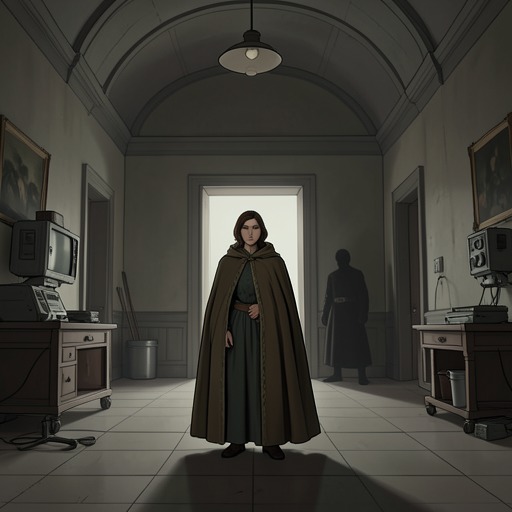
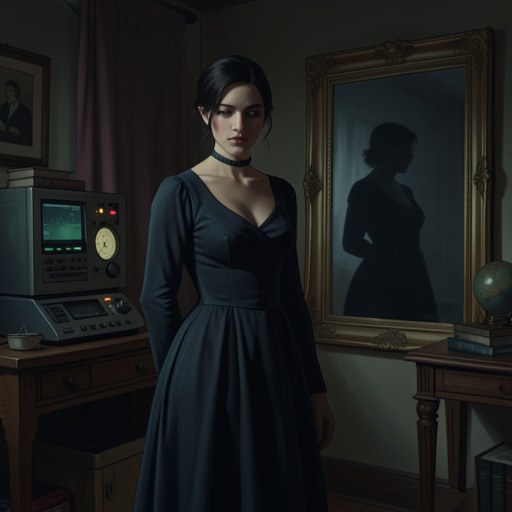
Uncle SilasMary Quince, Maud Ruthyn’s longtime maid, is one of the steady human ties linking Maud’s life at Knowl to her ordeals at Bartram-Haugh and her later recovery. Not a grand strategist, she is a constant companion: she shares ordinary conversation and grief, observes what is happening around her, and stands by Maud through separation, confinement, and escape.
Identity and Background
At Knowl, Mary Quince is described as Maud’s somewhat ancient maid, a familiar presence in a life otherwise marked by her father’s unusual habits and their intense private conversations. Maud says that alongside talks with Mrs. Rusk and occasional visits with neighbours, she enjoyed pleasant conversations with Mary. The contrast matters: although Maud’s relationship with Austin Ruthyn could sometimes feel singular or even awful, her confidence in his affection kept those encounters from depressing or agitating her; Mary’s everyday companionship belonged to a different, more ordinary register of comfort.
Mary’s manner is characterized by plain talk, prattle, and occasional silence rather than psychological analysis. In the immediate aftermath of Austin’s death, she is the companion Maud has until tea-time. Maud values her ability to recall familiar gossip about the dead—their ways, looks, and likings—with simple affection rather than critical scrutiny. In this account, Mary’s limited refinement is not a deficiency in care: her unexamined faith and love make her especially suited to the common, intimate work of mourning.
Companion at Knowl
Mary is present in both ordinary domestic scenes and moments of alarm. When a dreadful crash and Mrs. Rusk’s screams wake Maud, Mary is sleeping in the same room; Maud calls to her for help and asks what has happened. The episode places Mary within the household’s close routine, but also shows Maud turning to her when the safety of that routine is abruptly unsettled.
She also shares Maud’s efforts to understand the adults around them. After Maud wonders whether Madame de la Rougierre knew something, she turns to Mary with the question. Later, Maud talks over another troubling matter with her. These brief references establish a pattern: Mary is not merely a servant present in the background but a confidante to whom Maud brings uncertainty and apprehension.
The reading of Austin’s will changes the practical terms of their relationship. The will leaves the estate to trustees for Maud’s benefit, grants Silas Aylmer Ruthyn a legacy and use of Bartram-Haugh for life under specified conditions, and appoints him Maud’s sole guardian until she reaches twenty-one. Maud must live under his care and authority at Bartram-Haugh, with the trustees directed to pay him £2,000 yearly for her maintenance, education, and expenses. Austin’s accompanying explanation says he intended this arrangement as an ordeal to answer the slander against Silas. Mary does not shape the legal decision, but she is part of the personal continuity Maud carries into the life it imposes.
From Knowl to Bartram-Haugh
As Knowl is prepared for Maud’s departure, the household is dismantled. The grounds and gardens are to be let, Mrs. Rusk is to care for the house, and most of the staff are to leave. Mary is specifically retained to accompany Maud to Bartram-Haugh as her maid. Her presence is thus not incidental: amid the transfer of household authority to Silas, she remains the familiar companion assigned to Maud.
On Maud’s last morning at Knowl, the house is largely emptied, doors are locked, and the servants have departed apart from Mrs. Rusk and Branston. Mary is with Maud as she looks back at the house and prepares to leave. Their journey marks more than a change of residence: it takes Maud from her father’s home to a place where the guardian named in the will controls her person and daily circumstances. Mary accompanies her across that threshold.
At Bartram-Haugh, Mary continues to attend Maud in the rooms assigned to her and Millicent Ruthyn. On one evening, Maud goes downstairs to seek a book, with Mary accompanying her. That routine places Mary close at hand when Maud encounters signs of an unexplained presence in the sitting room. In the dangers that develop at Bartram, ordinary attendance repeatedly becomes a form of watchfulness.
Mary also notices traces that others might overlook. She tells Maud that, while awake with toothache around two in the morning, she went downstairs for red pepper and heard a horse snorting and people speaking quietly. Looking from a window in the long gallery, she saw two horses attached to a chaise, a man lifting a box onto it, luggage being brought out, and Wyat speaking with the driver. Her account does not establish who had arrived or why, but it gives Maud a concrete report of a secret nocturnal departure or arrival and demonstrates Mary’s attention to activity within the household.
Care, Separation, and Loyalty
Mary’s loyalty is expressed through presence as much as through speech. When Maud watches Millicent’s carriage disappear from view on the road, Mary stands beside her as she turns back toward Bartram-Haugh with tears in her eyes. The moment makes Mary a witness to another painful separation: she cannot prevent Millicent’s departure, but she remains beside Maud as its consequence settles in.
Her service also places her in the path of the household’s strained authority. Doctor Bryerly challenges Silas over his handling of estate powers, arguing that the result impoverishes the estate and wrongs Maud. Silas answers Lady Knollys’s request to allow Maud and Millicent to accept an invitation with a categorical refusal, declaring that he will take measures to prevent further attempts to undermine his authority. These disputes define the atmosphere in which Mary continues to care for Maud: Silas’s formal guardianship is increasingly used to restrict her contact with others, while Mary remains a dependable presence within the household.
When Silas arranges to send Maud to France to join Millicent, he dictates a plan involving Madame de la Rougierre, a night in London, and departure from Dover. He also requires Maud to write letters whose contents and dispatch he will control, explaining that secrecy is important to his safety. Mary is part of this imposed journey: Silas says that she will follow him, either with him or alone after a week. At the door, however, Maud’s beloved old friend is waiting for her. The juxtaposition of a tightly managed itinerary and Mary’s familiar presence underscores how valuable that relationship is to Maud amid a plan that leaves little room for her independent choice.
Bartram-Haugh and the Escape
Mary’s later appearances keep her associated with the domestic spaces in which danger gathers. On Maud’s return to Bartram-Haugh, she is at the top of the great staircase with a candle, greeting the arrivals with small courtesies and a haggard, pallid smile. The welcome is affectionate but also registers the strain of the household. In a later night scene, Maud sees Madame de la Rougierre talking by the hearth while Dickon Hawkes supports a removed window frame and Dudley Ruthyn stands nearby with tools. Mary is not identified as a participant in this activity; the scene instead places Maud within a perilous conspiracy operating in rooms where she and Mary have been living.
When Maud is held at Bartram-Haugh, she is told that the gates are locked and that dogs and bloodhounds make escape impossible. In the preparations that eventually take Maud out through a gate in the paling, she reaches the cover of a thicket near Chestnut Hollow and reasons that the person she suspects is Dudley is concealing himself rather than pursuing her. Mary’s evidence does not assign her a specific role in that passage through the gate, so her importance lies in the broader record of loyal attendance rather than in an unsupported claim that she organized the escape.
The closing account confirms that Mary’s companionship endures beyond the immediate danger. Mary Quince and Mrs. Rusk are both growing old, but they live with Maud and are happy. Maud’s later life thus preserves the household bonds that had supported her through bereavement and confinement. Mary’s arc is not a transformation from servant to rescuer; it is the persistence of care across changed homes and circumstances, a quiet counterweight to the coercive use of guardianship and domestic authority.