Meg Hawkes
Uncle SilasMeg Hawkes is introduced as the watchful daughter of Pegtop, but her guarded manner conceals a loyal and courageous ally. At Bartram-Haugh, kindness from Maud Ruthyn creates a bond that Meg repays by warning Maud about Dudley Ruthyn, uncovering the men’s secret plans, and helping her escape. Her movement from wary observer to active rescuer gives her a distinctive role in the novel’s chain of danger and deliverance.
Identity and first impressions
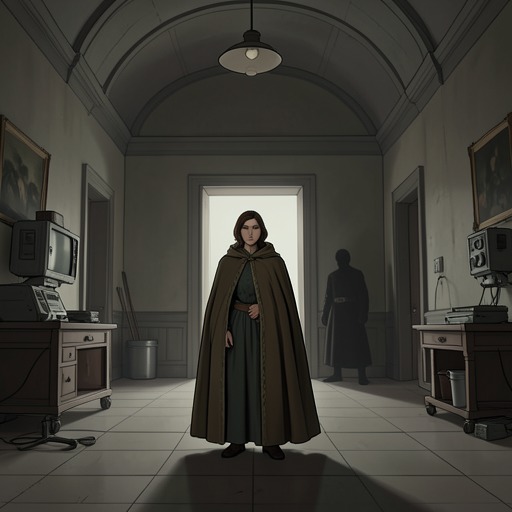
Meg first appears beside a strong wooden gate in a high paling, blocking the way into a wooded valley. Maud describes her as neither tall nor short, with a solid build, dark hair and eyes, a short, swarthy face, and white teeth. Her red petticoat and worn green jacket make her a striking figure, while her stillness and watchful, sullen gaze suggest someone accustomed to keeping her thoughts to herself.
Milly explains that the girl is Pegtop’s daughter. She calls her Beauty, in contrast to the nickname Beast she once gave her father; the names capture the difference between Meg’s appearance and the mistrustful, difficult circumstances in which she lives. The early encounter establishes her not as a conventional, immediately welcoming companion but as a guarded presence whose silence leaves room for a more complicated character to emerge.
Illness, kindness, and trust
When Meg becomes seriously ill, Maud and Milly visit her and arrange practical care. They help make her comfortable and continue calling on her, though Meg often does not answer or acknowledge their efforts. Her dark, sunken eyes sometimes turn toward Maud with an expression of troubled attention. The contrast between Meg’s reserve and Maud’s persistence matters: trust begins not through easy conversation, but through care offered without assurance of gratitude.
As Meg recovers, Maud asks her to thank Milly. Meg refuses, but then takes the tip of Maud’s finger, draws the hand beneath the bedclothes, and clings to it while weeping and kissing it. The gesture reveals an affection she cannot readily express in words. When she later explains why she must not be seen talking freely with Maud, she says her father would suspect her of telling tales and might try to make money from Maud; he would spend it on drink, while Meg and her mother already had what they needed. She fears the renewed arguments and punishment that friendliness might bring. Even so, she promises that she may be able to do Maud a good turn one day.
Warnings and the secret at the windmill
Meg’s loyalty first takes the form of a warning. In Windmill Wood, while her father is nearby, she tells Maud not to be alone with Dudley anywhere. She gives no explanation then, and her silence leaves Maud to worry over what Meg might know. The warning gains meaning later, when Meg finds Maud again among the underwood and reveals that Dudley is secretly meeting Pegtop in the mill.
Meg has learned about those meetings through Tom Brice, who knows Dudley is there. She has pieced together that the conversations are secret and connected to Maud, though she does not claim to know their full purpose. The information changes the warning from vague alarm into actionable knowledge: Dudley is not merely an unwelcome presence, but part of a concealed arrangement with Pegtop. Meg also asks Maud to keep secret that she has discovered Dudley’s presence, since Pegtop does not know she has found him out.
Loyalty under threat
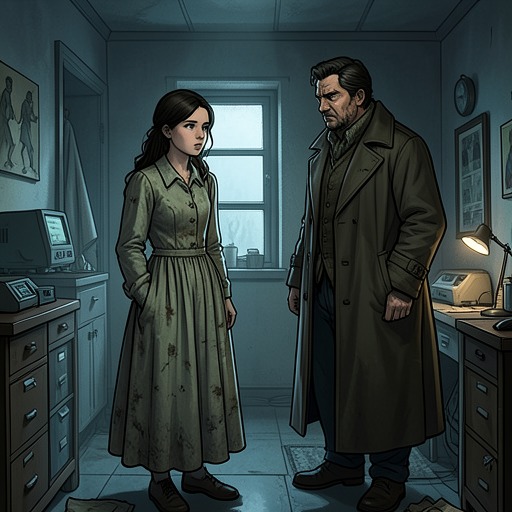
When Maud is confined and suspects that she may be harmed, Meg risks approaching her. She brings a piece of coarse bread and warns her not to eat or drink anything except the clean spring water in the jug. She explains that the men believe she does not pay attention when they talk, but she listens and puts details together. Meg fears they will try to dispose of Maud, and promises to go after dark to Maud’s friends at Elverston and bring help back.
Meg’s plan combines caution with resolve. She tells Maud not to attempt an escape alone, believing that an attempt would lead to Maud being killed, and says the danger is not expected to come to a head until the early hours of the morning. She embraces Maud and declares her readiness to give her life for her. This is the culmination of the bond formed during Meg’s illness: Maud’s earlier kindness is not simply repaid with gratitude, but with an organized effort to secure outside help and protect Maud from a threat Meg only partly understands.
Meg reaches Maud and Tom Brice during their flight. As they travel in a carriage, Maud sees someone pursuing them and urges Brice to drive on, fearing capture. Brice stops instead, and Meg appears at the carriage door, having caught up with them. Maud welcomes her inside. The encounter turns Meg’s earlier promise into a concrete part of the escape, and reunites the allies at the moment when pursuit threatens to undo their flight.
Marriage and later life
A few months after these events, Meg marries Tom Brice. Both wish to emigrate, and Maud gives them the capital to do so. Meg’s later life is described through the outcome of that decision: she is reported to be likely to become prosperous, and Maud hears from her often. The girl first seen standing apart at a gate thus ends the story with a chosen companion, a new life abroad, and a continuing connection to Maud.
Meg’s development depends less on a change in her underlying character than on what her actions gradually disclose. Her silence, suspicion, and reluctance to be seen with Maud are responses to the risks posed by her father and the men around her. Beneath them is a capacity for observation and practical courage: she listens, draws conclusions, warns Maud, provides food, and seeks help. The contrast makes her loyalty persuasive because it is demonstrated under pressure rather than announced in safety.