Millicent Ruthyn
Uncle SilasMillicent Ruthyn, known as Milly, is Silas Ruthyn’s daughter and Maud Ruthyn’s cousin, companion, and emotional ally. Her boisterous manner and lack of polish first mark her as a comic contrast to Maud’s sheltered refinement, but the relationship deepens into a sustaining bond: Milly tells Maud that she loves her better than Bartram-Haugh, and their enforced separation becomes one of the household’s most painful ruptures. Her later marriage to the clergyman Sprigge Biddlepen and Maud’s practical assistance give her story a settled, affectionate ending beyond her father’s control.
Identity and First Impressions
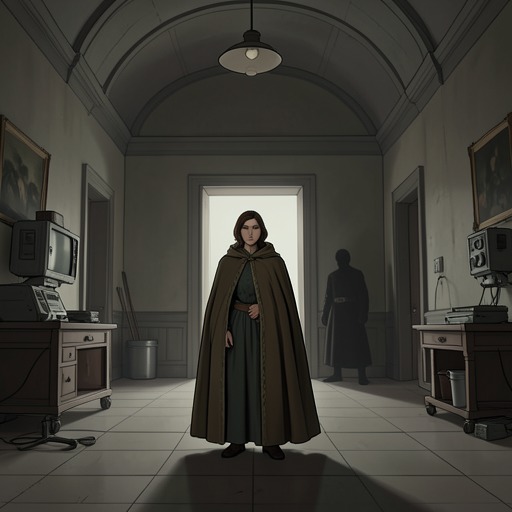
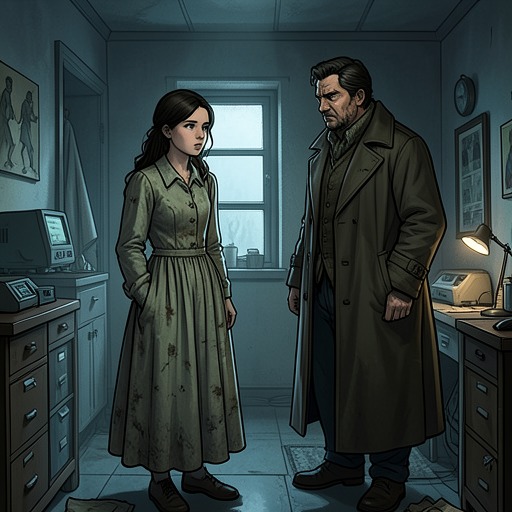
When Maud first meets her, Milly is a young woman who looks younger than her years, with light hair, blue eyes, a sturdy figure, and an assertive, swaggering walk. Maud finds her good-looking, but also notices her loud voice, ringing laugh, and saucy, imperious yet honest expression. Her black mourning dress is conspicuously short, and her thick-soled boots and sunburnt hands set her apart from conventional ideas of a fashionable young lady. The description establishes a character shaped less by genteel performance than by an unselfconscious, physical ease.
Milly’s father, Silas, introduces her through the literary image of a rustic Miranda suited to the company of Caliban rather than a sick old Prospero. The comparison reveals his sarcastic habit of making her the object of judgment, while Milly’s plain admission that she does not know the characters refuses to pretend to a learning she does not possess. Her lack of education is not simply a personal quirk: her life has been solitary, and she has had little opportunity for schooling or social contact.
Life at Bartram-Haugh
Milly lives under Silas’s authority at Bartram-Haugh, where her father’s treatment of her is not kind. Even so, she remains connected to him through habit and family relation, and Maud observes that Milly feels his danger deeply when he becomes seriously ill. Maud, more nervous and impetuous, responds to the crisis by insisting that they go to see him; the difference between their temperaments does not divide them, but makes their shared concern visible in distinct ways.
Milly is also outspoken in resisting the rough treatment of Meg Hawkes. During an exchange about a wooden leg, she recalls that it was Winny, not a horse, who broke it with a kick, and adds that the man had been laid up while a carpenter made a replacement. Her matter-of-fact correction and laughter give the scene an irreverent domestic energy. More broadly, her readiness to speak plainly contrasts with the guarded, coercive atmosphere that grows around the household.
Her cousin Monica reports that Lord Ilbury had visited Bartram to see Silas and had met Milly before Maud arrived. Because Ilbury was one of the trustees of Austin Ruthyn’s estate, his visit belongs to the wider network of family and legal responsibility surrounding Bartram; Milly’s presence there precedes Maud’s arrival and confirms that her life is already established within her father’s household.
Relationship with Maud
Milly and Maud are both solitary young women, and their companionship quickly becomes more than a family convenience. Maud imagines that they will share walks, reading, confidences, and daydreams when the will’s guardianship arrangements bring her to live at Bartram-Haugh. In practice, Milly’s warm, direct manner offers a counterweight to Silas’s control and the growing isolation of the estate. Maud comes to understand the importance of their bond most sharply when it is threatened.
When Silas announces that Milly is to go to France, Milly clings to Maud and says she has never been away from home apart from their short stay at Elverston. She tells Maud that she loves her better than Bartram-Haugh and fears she will die if she is taken away. The scene makes the separation a measure of their attachment, not merely a change of address: Milly’s distress is bound to leaving both her familiar home and the cousin who has become her closest companion. The two weep together for an hour, holding one another, before a note from Silas falls from Milly’s hand.
The letter Maud later receives from Monica offers a brief prospect of reunion. Monica says that Silas wants her to assume responsibility for Maud and hopes to see Maud before her short stay in France; she also observes that Silas expects Maud to leave within a fortnight. The proposed journey is framed as a way for Maud to see Milly, but Silas directs that Maud travel to the school in France accompanied by Madame de la Rougierre. His careful instructions about letters and the family’s address make clear that the arrangement is not simply an open visit between cousins: it remains under his supervision and tied to the concealment of his affairs.
Separation and Change
Milly’s removal to France is one part of Silas’s wider exercise of authority over the young women in his household. For Maud, the prospect is particularly distressing because she fears remaining alone at Bartram-Haugh without Milly. Yet the forced distance also clarifies how much she loves her cousin: on the eve of departure, Maud feels the separation has made that love more vivid than she had understood before. Even as Maud herself is prepared for a journey, she thinks of joining Milly and takes comfort in the belief that their separation will not last.
The story does not detail Milly’s schooling or the course of her life in France. It does establish that the separation is not permanent. In the conclusion, Milly is happily married to Sprigge Biddlepen, described as a good little clergyman. Maud has been able to help the couple and promises him the next presentation to Dawling. This concrete act of support turns the earlier promise of companionship into an adult relationship in which Maud can assist Milly’s independent future.
Narrative Role and Significance
Milly’s characterization combines comic candour with genuine vulnerability. Her blunt response to Silas’s learned allusions and her laughter in the exchange about Winny’s kick make her resistant to embarrassment and pretension; her anguish at leaving Maud, in turn, shows how deeply she depends on their companionship. These qualities prevent her from serving merely as a rustic foil. She is affectionate and loyal, but also a person whose lack of education and social freedom reflects the restricted life her father has allowed her.
Her separation from Maud brings the domestic cost of Silas’s authority into intimate focus. The move to France removes a trusted companion at the same time that Maud is increasingly isolated at Bartram-Haugh. The narrative does not give Milly a detailed account of her time away, but the conclusion supplies a significant change of circumstance: she has married, and Maud can materially assist the couple. Milly’s ending therefore balances the earlier confinement and separation with a later life of affection, practical support, and greater independence from her father.