Silas Ruthyn’s social ostracism
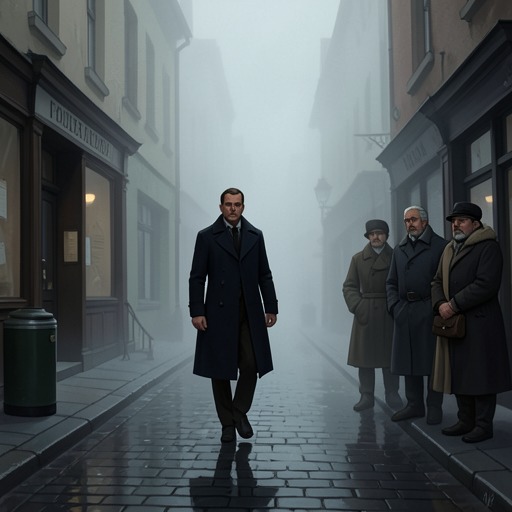
Uncle SilasSilas Ruthyn’s social ostracism is the long aftermath of a public suspicion that was never legally resolved and a reputation already weakened by debt, scandal, and an unpopular marriage. The county treated the unexplained death of Tom Charke at Bartram-Haugh as grounds to condemn Silas, despite the absence of conclusive evidence against him; Austin’s defense and eventual testamentary vindication could not restore his standing. The result was a life of exclusion that shaped both the family’s finances and Maud’s dangerous guardianship.
Reputation Before the Scandal
Silas’s disgrace did not begin with Tom Charke’s death. As a younger son, he had an income of little more than a thousand a year, but he gambled, lost money, and depended for a long time on Austin’s payments. Monica Knollys describes him as having been extravagant and dissolute in youth, while acknowledging that she did not know all the details. His marriage compounded the family’s difficulties: it attracted unpleasant reports, was not socially accepted, and helped bring about a complete estrangement between the brothers.
Austin eventually resumed relations with Silas, but the reconciliation did not mean that the wider county accepted him. The two brothers’ positions were sharply different: Austin was wealthy and influential, while Silas’s conduct and marriage had made him vulnerable to public disapproval. Austin reportedly set a limit on the support he would provide, continuing an allowance of five hundred pounds a year and permitting Silas to remain at Bartram-Haugh. The estate itself was said to be wild and neglected. This restricted support kept Silas housed but did not repair either his reputation or his precarious finances.
Tom Charke’s Death and Public Suspicion
The death of Tom Charke transformed existing dislike into a lasting scandal. Charke was found in a room that appeared sealed from within: the window was fastened by an interior screw, the room was on the third floor, and there was no usable ladder; the door was locked from the inside with its key in the lock. The inquest’s apparent conclusion was that Charke had died by his own hand. Yet details surrounding the death gave hostile observers room to keep suspicion alive. Charke had been drinking and noisy before bed, the fingers of his left hand were cut, and his betting memorandum book was missing.
At the inquest, juryman Manwaring was the only juror Monica recalls as entertaining the possibility that Charke had died through someone else’s actions. He questioned how an intruder could have entered a room that seemed inaccessible. The fireplace was barred, the small inner courtyard showed no footprints despite damp ground, and a later search found no concealed access in the walls or wainscoting. The apparent impossibility of entry did not settle the matter socially: it became part of the mystery around which insinuation could persist.
There was no suspicion at the inquest that Silas was involved beyond Manwaring’s questions, which offended him. But the public did not require a proven case to make the death damaging. Silas and Charke had been seen together at the racecourse, and the county was already disposed to believe ill of Silas. Stories that Charke had hinted at mysterious troubles in London added uncertainty, not proof. Monica’s account distinguishes the inquest’s evidence from the later public story: although the circumstances could support the conclusion that Charke had died by his own hand, an unresolved puzzle allowed people to imply what they could not establish.
Austin’s Defense and the Limits of Influence
Austin responded to the accusations with force. He directed his attorney to prosecute people who had attacked Silas’s character, but the lawyers opposed pursuing the cases wholesale, and Silas’s attempts to fight his accusers foundered when they would not meet him. Austin also used his political influence to seek public recognition for his brother, including a county appointment. The strength of local feeling defeated that effort. An alternative position in the colonies was offered, but Austin rejected it as a form of banishment; he also refused a peerage proposed as compensation and broke with the political party involved.
Austin’s loyalty did not reverse the county’s judgment. Monica says local opinion was unanimously against Silas, in part because of pre-existing hostility and in part because Silas had published a bitter attack portraying himself as the victim of political conspiracy. He also declared that he had abandoned the turf and its associated pursuits after the catastrophe at Bartram-Haugh. Some people interpreted his withdrawal cynically, as if he had left before he could be expelled; to Silas, the change marked a break with his former life. In time, he became religious and, as Monica sees it, had little else left to occupy him. He was poor, indebted, isolated, and regarded as an outcast.
Years passed without fresh evidence that could resolve the scandal. Some of those who had taken part in the denunciation died, but no new light had been shed on Charke’s death. Silas’s change of habits and religious profession did not secure his return to society. Monica doubts that Austin’s faith in self-assertion could have overcome the effects of being publicly discredited: once the county had rejected Silas, she suggests, an individual’s claim to justice was not enough to win acceptance again.
The Will as Vindication and Risk
Austin made his defense of Silas part of his will. He entrusted his estate to four trustees for Maud’s benefit, left Silas a bequest of fifteen thousand pounds and the use of Bartram-Haugh for life at a rent of five shillings a year, and appointed him Maud’s sole guardian until she reached twenty-one. The trustees were to pay Silas two thousand pounds annually during the guardianship for Maud’s maintenance, education, and expenses. These arrangements joined material provision, family reputation, and legal authority: Silas received a home and an official parental role, while Maud was required to live under his care.
In a letter to the trustees, Austin explained the appointment as a public defense of his brother. He wanted the world, or at least future generations of the family, to know that the brother who knew Silas best trusted him. He called the accusation a politically motivated slander and framed Maud’s guardianship as an ordeal that could purify Silas’s reputation. If Maud died before twenty-one, the property would pass to Silas, adding a serious financial consequence to the arrangement. Doctor Bryerly and Lady Knollys therefore regarded the trust as dangerous, not merely unusual: Silas controlled Maud’s person, while her death would redirect the estate to him.
The will could declare Austin’s confidence, but it could not compel the county to share it. Lady Knollys warns that Bartram-Haugh and its household were avoided, and that Maud’s residence there would not rehabilitate Silas in local society. She believes Austin’s long isolation had led him to overestimate the power of a public family gesture, and suspects that he had begun to doubt the provision himself. The testament thus becomes both a vindication of Silas and a means by which Maud is placed within the very household around which the old scandal persists.
Reassessment and the Mystery’s Resolution
The final account changes the meaning of the sealed-room evidence that had helped sustain suspicion. After Dudley Ruthyn entered Maud’s room through a window equipped with concealed hinges, Doctor Bryerly examined the windows in Charke’s former room at Bartram-Haugh. He found powerful steel hinges craftily sunk into the frame; when an exterior iron pin was removed, the window could swing open. The room had not been as inaccessible as it appeared. That discovery solved the problem of how someone could have entered and reinterpreted the apparent impossibility on which the old mystery had rested.
The solution clarifies the mechanism of entry; it does not itself establish Silas’s guilt or innocence. The scandal’s persistence had rested on suspicion, local antagonism, and a concealed means of access that investigators had failed to find. Separately, nearly a year after the events at Bartram-Haugh, Dickon Hawkes was arrested for an older crime committed in Lancashire. After his conviction, he disclosed the circumstances of the Frenchwoman’s death and indicated where her body was buried in Bartram-Haugh’s inner court. Her remains were recovered and, after a legal inquiry, buried in the churchyard at Feltram. This disclosure concerns a separate death and crime; it should not be confused with proof about Silas’s role in Charke’s death.
Silas’s social ostracism therefore remains a condition produced by an accusation that outlasted its evidentiary basis. The concealed window explains how the room could have been entered, while the will shows Austin trying to answer public disgrace with private trust and family authority. Neither gesture could simply erase the consequences: Silas remained marked as an outcast, and Maud bore the risk of Austin’s attempt to make his faith in his brother visible.