Spirits
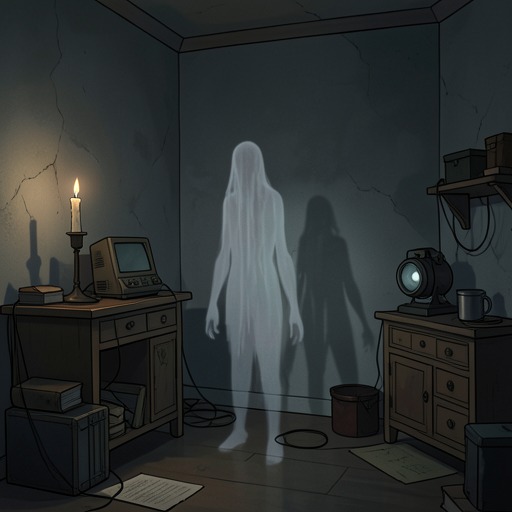
Uncle SilasSpirits are central to the novel’s uncertain boundary between earthly life and the afterlife: they are presented through Swedenborgian belief, the bereaved characters’ fears, and Uncle Silas’s claims about spiritual perception. Rather than confirming supernatural communication, the narrative shows how belief in spirits can console, unsettle, and lend authority to people whose motives remain in question.
Swedenborgian belief and the afterlife
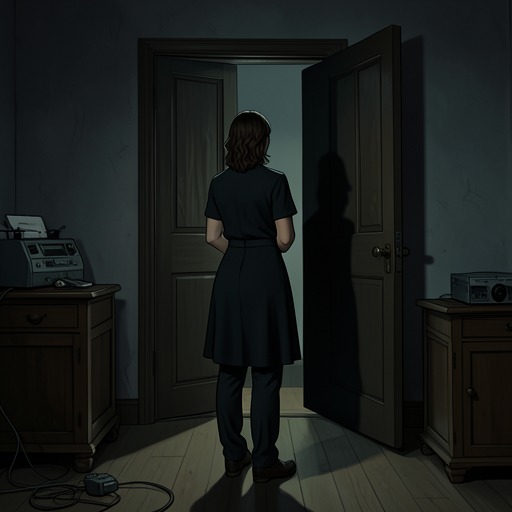
When Maud is a child, her father invokes Swedenborg as someone able to see beyond a wall separating the living from the dead. He tells her that her mother is not there, prompting Maud to fear that she has been taken away. The scene makes spiritual knowledge both a promise of access to what ordinary sight cannot reach and a source of alarm for a child confronting loss.
Her father later describes death as passage through a “gate of death,” which everyone approaches in time. The image frames the afterlife as a destination reached through death, not as a place the living can simply visit. Spirits thus belong to a religious account of separation and eventual passage, even as the child’s questions reveal how difficult that account is to grasp.
Faith, fear, and bereavement
After Austin Ruthyn’s death, Maud’s grief becomes entangled with anxiety about the Swedenborgians around him. She wonders whether their beliefs are true or heretical, and fears that Doctor Bryerly exercised a mysterious influence over her father. Her suspicions arise in part because Bryerly’s visits coincide with Austin’s distress, but the narrative does not establish that the doctor used supernatural powers or that spirits caused Austin’s condition.
At the funeral, Uncle Silas speaks as though spirits are continually present and insists that the spirit matters more than the flesh. His interpretation gives the dead man’s body a place within a spiritual order, but it frightens Mrs. Rusk as he approaches the corpse. The contrast between Silas’s confidence and the attendant’s fear makes spiritual language emotionally unstable: it may express faith, yet it does not necessarily comfort those who hear it.
Spirits as a contested explanation
Monica Knollys also uses spiritual belief to console Maud, distinguishing the departed spirit from the body left behind. Yet her imagery turns toward the living world when she imagines Uncle Silas as an enchanter sending familiar spirits on the wind to carry news of the household. The description is presented as fancy, not evidence that spirits actually serve Silas. Its force lies in the way Maud’s bereavement and fear make the distant Bartram-Haugh seem capable of reaching into her present life.
Silas later intertwines Swedenborgian study with religious symbolism, speaking of washing and sprinkling before turning to Doctor Bryerly’s management of Maud’s property. His spirituality sits alongside worldly accusations and financial concerns, complicating any simple distinction between religious conviction and self-interest. Maud ultimately cannot decide whether Silas’s religion contained genuine sincerity. Spirits and the afterlife remain part of the novel’s unresolved religious vocabulary: meaningful to its characters, but insufficient to settle the truth about their faith or conduct.