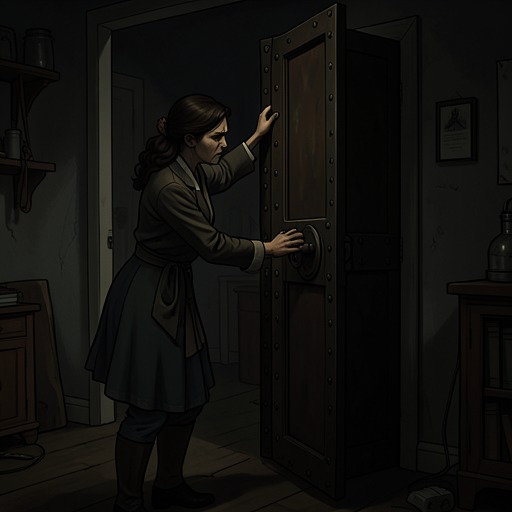
The gate of death
Uncle SilasThe gate of death is a metaphor for the passage from mortal life into a promised state of spiritual refreshment. A Swedenborgian explains it to the young Maud as a door that will open for each person in time; remembered later, the image lends the moonlit wood a ghostly, sorrowful significance and colors Maud’s thoughts about her father’s expected visitor.
The Image and Its Explanation
The phrase arises during a walk in the wood. When Maud asks where the gate is, her companion describes no visible entrance: sooner or later, as with Hagar in the wilderness, each person will see a door open and enter to be refreshed. The image makes death both inevitable and merciful, not an abrupt disappearance but a threshold toward relief.
The explanation depends on biblical language and Swedenborgian belief. Maud’s later account says that her father accepted Swedenborgian ideas because she understood them to confirm and interpret the Bible rather than challenge its authority. The metaphor therefore joins an unfamiliar visionary theology to a scriptural scene of deliverance.
The Wood as a Landscape of Memory
The conversation unsettles Maud. Afterward, Mrs. Rusk condemns the walk and fears that its companion might have frightened the child with the devil. Maud herself remains nervous, and the wood becomes associated not simply with the doctrinal explanation but with the possibility of supernatural danger.
Later, while looking at the solemn wood in moonlight, Maud imagines that the gate of death lies hidden there behind a strange glamour, beside a dazzling land of ghosts. The image has shifted: what was offered as a promise of refreshment now belongs to a shadowy, ghost-filled landscape. Maud connects these early associations to the wilder and sadder cast of her reverie about her father’s coming visitor.
Narrative Significance
The gate is never presented as a literal portal. Its force lies in the way a remembered religious image changes the atmosphere of a place and the mood through which Maud interprets what may come. The consoling promise of an opened door persists alongside Mrs. Rusk’s fearful response and Maud’s ghostly imagination, leaving the image suspended between spiritual hope and Gothic unease.