Tom Charke
Uncle SilasTom Charke is a London man of the turf whose death at Bartram-Haugh becomes both a public scandal and a locked-room mystery. The inquest’s suicide verdict rests on a room that appeared inaccessible, but the missing record of his bets and evidence of a large debt owed by Silas Ruthyn leave suspicion unresolved. The later discovery of a concealed opening in the window frame of the very room where Charke died finally supplies a means of entry and recasts the earlier mystery.
Identity and Visit
Charke belongs to the racing world around the Matlock races and is described by Lady Knollys as a man admitted to fashionable company through money and his association with horses and gambling, rather than birth or breeding. Although people in that sporting circle knew him and invited him to tavern dinners, he was not ordinarily received in the homes where ladies were present. Silas nevertheless invited him to Bartram-Haugh after the races, a choice Lady Knollys regarded as an unusual distinction for a visitor of his social standing.
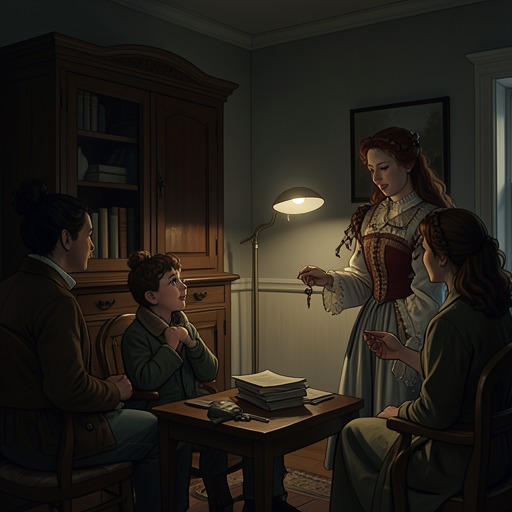
Charke’s visit took place amid Silas’s troubled domestic circumstances. Lady Knollys recalled that Silas’s wife was seldom seen at the house and was often intoxicated in her bedroom. She also associated Charke’s death with the broader distress and scandal surrounding life at Bartram-Haugh, though her account distinguishes what she knew directly from what she had heard. She had visited the house for a year or two, but stopped when the situation deteriorated.
Death and the Sealed-Room Evidence
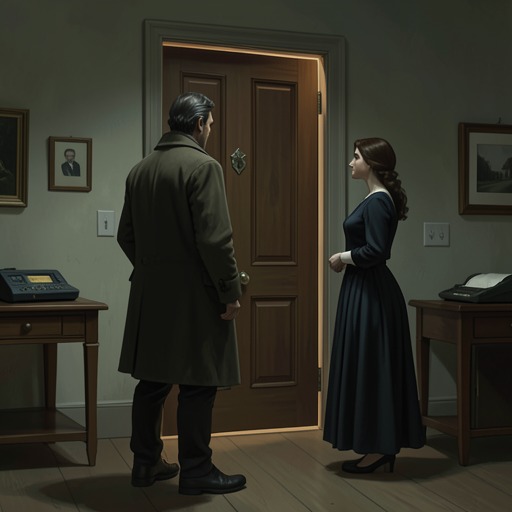
On the second night after the races, Charke and Silas remained alone in a parlour until between two and three in the morning. Charke’s servant, staying at the Stag’s Head Inn in Feltram, could offer no account of what occurred during the night. He arrived at Charke’s chamber early the next morning, having been summoned by his master, but could not wake him. The door was locked from within, with the key still in the lock; once it was forced open, Charke was found dead beside the bed.
The room initially seemed to exclude an intruder. Its window had been secured from inside with a screw, as it had been when a chambermaid attended it the previous evening. It was on the third storey, high above the ground, and opened onto a narrow inner courtyard. The courtyard had only one door, which showed no sign of recent use, while the chamber door was also locked from the inside. Investigators found an iron bar across the chimney flue and no trace of an approach across the damp ground beneath the window. When the walls and wainscoting were later examined, no concealed passage or other access was discovered.
Silas, acting as a justice of the peace, arranged for the coroner to be summoned and took the servant’s deposition while events were still fresh. At the inquest, only one juryman, Mr. Manwaring, appeared to entertain the possibility that Charke had died by another person’s hand. Manwaring’s suspicion did not overcome the apparent physical barriers to entry, and the inquest concluded that Charke had died by suicide.
Doubts, Debt, and Public Scandal
Despite that verdict, several details complicated the suicide explanation. Charke had reportedly gone to bed intoxicated and had been heard singing and making noise, circumstances that Lady Knollys considered inconsistent with someone preparing to end his life. His betting memorandum book could not be found, although his keys and the chain to which they were attached remained. His left-hand fingers were also cut, a fact that added to the uncertainty around the death.
The most consequential evidence came from letters attributed to Charke and written to an agent on the evening of his death. As Lady Knollys recounted them, they said that Charke had made a profitable visit to Bartram-Haugh and held Silas’s IOUs for a very large sum. The letters alleged that Silas owed the money and suggested he had a reason to kill Charke and take his money. They also said that Charke had kept the debt secret at Silas’s request, and that repayment might depend on Silas obtaining money from his wealthy brother, Austin Ruthyn. The reported amount was not specified in Lady Knollys’s recollection, but she remembered it as extraordinarily large.
The letters intensified public suspicion because they presented Charke as writing in high spirits on the last day of his life, rather than as someone contemplating suicide. Silas answered through a pamphlet printed as a letter. He called the letters forgeries, argued that Charke was known to boast and exaggerate about gambling transactions, and maintained that apparent good spirits did not rule out suicide. He also invoked his family’s character and insisted that the accusation was physically impossible given the room’s apparent security. Lady Knollys recalled that the pamphlet was admired for its speed, force, and ingenuity. The contrast between the persuasive public defence and the unresolved physical puzzle kept the case alive as a source of scandal, without establishing Silas’s guilt.
The Later Discovery
Long after Charke’s death, the room acquired a second significance when Maud was imprisoned in it at Bartram-Haugh. Dudley Ruthyn entered her room through a window mechanism that was hidden in the timber frame. Maud witnessed his arrival and the concealed opening as part of his attempted attack, exposing a practical weakness in what had seemed to be an impassable room.
After Lady Knollys described Dudley’s entry, Doctor Bryerly examined the windows of the chamber where Charke had slept. He found that one had powerful steel hinges craftily concealed in the frame. An iron pin on the outside secured the window; once removed, the hinged section could swing open. It was the same room in which Maud had been placed, and Doctor Bryerly identified this concealed window as the means by which the room could have been entered on the night of Charke’s death. The discovery solved the sealed-room problem by revealing that the apparent security of the window had been misleading.
The retrospective solution does not itself establish who entered Charke’s room or prove who killed him. It does, however, undo the central physical premise behind the suicide verdict: the chamber had not been as hermetically sealed as the original inquiry supposed. Charke’s death therefore remains bound to two distinct questions—the official conclusion and the suspicion raised by the debt letters—while the hidden hinges answer the narrower question of how entry could have been made.
Narrative Significance
Charke is important less for an extended presence in the narrative than for the mystery his death leaves behind. His visit links the social world of racing and gambling to Silas’s financial vulnerability, while the missing betting book and reported IOUs make money part of the case’s uncertain evidentiary record. The story presents competing forms of knowledge: the inquest’s observations of the locked doors and windows, the contested letters, Lady Knollys’s later recollection, and the eventual examination of the window itself.
The delayed explanation also connects the old scandal to the danger Maud faces. The concealed hinges are first encountered as part of an intrusion into her room; Doctor Bryerly’s later inspection turns that present threat into evidence about Charke’s past. The same hidden architectural feature that undermines Maud’s sense of security corrects the earlier investigators’ confidence in the sealed-room explanation. Charke’s death thus remains a crime whose method becomes intelligible only when a later episode reveals the house’s concealed means of access.