the ordeal
Uncle Silas“The ordeal” is Austin Ruthyn’s name for an undefined test meant to answer a slander against Silas Ruthyn and vindicate the Ruthyn family name. It is at once a moral appeal and a legal arrangement: Austin asks Maud Ruthyn to accept a possible sacrifice, then makes her a minor ward living under Silas’s authority, with the estate ultimately at stake if she dies before coming of age. The phrase thus carries two incompatible weights—purification through trust, and the danger created by trusting the person whose reputation is under question.
A test framed as restitution
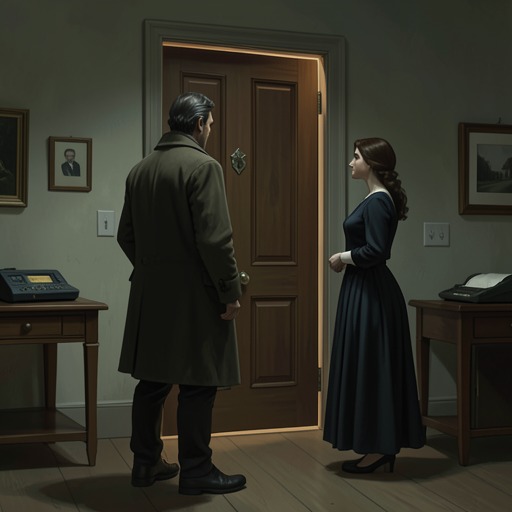
Austin introduces the ordeal as a chance for Maud to contribute to the restitution of the family name. He insists that he is not asking her to sacrifice her fortune, but asks whether there is any other honourable sacrifice she would shrink from making. When he presses her to suppose there is a risk, Maud still assents; he praises her as worthy of her blood and tells her the ordeal will come soon, perhaps within a few months, and will not last long.
The language of the proposal makes courage a condition of participation. Austin warns Maud not to let Monica Knollys frighten her and says that, if she allows others to possess her with their fears, she should withdraw before it is too late. Their fears, he suggests, could make the ordeal as terrible as hell itself. He asks whether Maud has zeal and nerve; she believes that in such a cause she has nerve for anything. Yet he does not tell her what the trial entails. His assurance that it will be brief sits beside his warning that it may become frightful and intolerable if her courage fails.
The will turns the appeal into a legal risk
The will gives the ordeal its concrete stakes. Austin leaves his property to four trustees, in trust for Maud, while making separate bequests of £15,000 to his brother Silas and £3,500 to each of Silas’s two children. He also grants Silas the use of Bartram-Haugh and adjoining lands for life at an annual rent of five shillings, subject to conditions against waste. The estate is therefore not simply handed over to Silas, but its use, administration, and future benefit are divided among trustees, a minor beneficiary, and her guardian.
A separate provision appoints Silas Maud’s sole guardian, with full parental authority until she is twenty-one. During that period she must reside under his care at Bartram-Haugh, and the trustees are to pay him £2,000 each year for her maintenance, education, and expenses. The arrangement makes the personal and financial sides of the test distinct but closely connected: the trustees hold the property for Maud, while Silas controls her daily life and receives the funds intended for her care.
Doctor Bryerly points out the starkest contingency. If Maud dies before reaching twenty-one, the entire property will go to Silas, who meanwhile has custody of her person. His warning makes explicit what Austin’s language of filial confidence leaves in the background: the ordeal places Maud’s life and dependence inside a structure that gives her guardian a powerful financial interest in its outcome.
Austin’s stated purpose and Maud’s response
Austin’s sealed letters explain that he deliberately chose this guardianship as a public vindication of his brother. He calls Silas oppressed and unhappy, describes the accusation against him as a cowardly slander born of political malice, and says that the best way to silence it is an “ordeal of purification.” By making Silas guardian of his beloved child, Austin means to show the world—and, failing that, future generations of the family—that the brother who knew Silas best trusted him implicitly and believed that trust deserved.
The letters also confirm that the inheritance clause is part of the intended test: all Austin possesses is to go to Silas if Maud dies under age. Austin declares that he entrusts Maud to Silas because she is as safe with him as she could have been under Austin’s own care. For Austin, then, the provision is an argument about Silas’s character expressed through legal acts. The arrangement is intended not merely to assert confidence but to make that confidence visible and consequential.
Maud initially welcomes the challenge, drawn by the prospect of helping her family and by her acceptance of Austin’s judgment. But once the ordeal remains unexplained, her assent turns into apprehension. She wonders what the trial could be and whether she ought to retreat while she still can. She describes herself as possessing more spirit than courage: her will resists her constitutional timidity, but does not make the fear disappear. When she later reads the letters, she feels that she has broken faith with her dead father by withdrawing from the task he had entrusted to her. The test thus operates in her conscience before its practical nature is known.
Purification under contested guardianship
The ordeal’s central contradiction is that Austin aims to clear Silas through an arrangement that exposes Maud to the consequences of Silas’s authority. Its language of family honour and trust offers a powerful ethical reason for Maud to accept the guardianship; its terms also make her legally dependent on the man being vindicated. The test is not an abstract proof of character but a domestic and financial arrangement, administered through trustees and enforced through residence, parental authority, and an annual maintenance payment.
That contradiction becomes sharper when Doctor Bryerly later challenges Silas’s handling of the estate. Bryerly says that Silas is exercising a power he does not lawfully possess and that the effect is to impoverish the estate and, to that extent, wrong Maud. Silas rejects the accusation and insists that he is not the man he once was. The confrontation does not itself settle the dispute, but it shows how readily the proposed vindication meets a practical question of authority: whether the guardian is using his powers for the ward or to her detriment.
“The ordeal” therefore names both Austin’s intended demonstration of confidence and the troubling structure through which he attempts it. Its promise is that Silas’s innocence can be affirmed by giving him the care of the person most precious to Austin. Its danger lies in asking Maud to bear the consequences of that confidence while she is too young to control the property, residence, or guardianship on which her security depends. The word promises purification; the will makes the test materially real before its terms have even been disclosed to her.