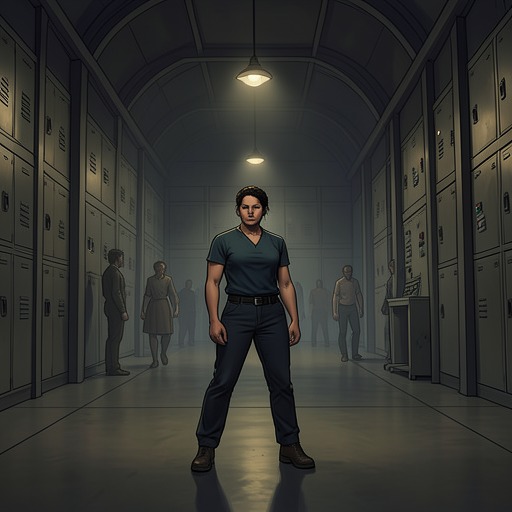
Those fallen from Heaven
UnforgivenThose fallen from Heaven are angels whose lives after the Fall are shaped by allegiance, accumulated choices, and the possibility of return. Their wings make that history visible, while their long struggle over Lucinda shows how even a conflict played out across millennia can be unsettled by a single change in her fate.
Identity and Allegiances
For six millennia, the fallen angels Cam, Roland, and Molly belonged to the side seeking to draw Lucinda toward Lucifer. Opposing them were Arriane and Gabbe, with Annabelle sometimes joining them, working to bring Lucinda back into Heaven’s fold. The factions repeated this contest whenever Lucinda turned seventeen, but neither side came close to winning her over. The pattern was disrupted not by a victory for either faction, but when Lucinda met Daniel, as she always did, and their love eclipsed the angels’ competing claims. Their encounters repeatedly ended in Lucinda’s fiery death until Daniel kissed her at Sword & Cross Reform School and she survived. For the first time, she would be allowed to choose.
This history gives the fallen angels a defined place in a larger celestial conflict, but not a uniform destiny. The story distinguishes those still aligned with Lucifer from those who have returned to Heaven; allegiance is consequential, yet it can change. The recurring struggle over Lucinda also exposes the limits of factional influence: across thousands of years, the angels’ repeated interventions could not displace her bond with Daniel.
Wings as a Record of Choice
Before the Fall, angels’ wings were made of empyreal light: perfect and indistinguishable from one another. In the era after it, wings became expressive, bearing the marks of individual personalities, mistakes, and impulses. Their appearance therefore operates as more than a sign of species. It records the history an angel has made through choice and allegiance.
Those who gave their allegiance to Lucifer bore golden wings; those who returned to Heaven bore the Throne’s hint of silver within their fibers. Lucinda’s wings stood apart from both groups: they remained purely white, as did Daniel’s. Their unspoiled whiteness marks a distinction from the choices that altered the wings of the others, and makes their appearance a visible reminder that the Fall’s consequences are not identical for every angel.
Limits and Perils of the Fallen
The fallen angels are barred from entering God’s sanctuaries. Crossing a sanctuary threshold would cause the whole place to erupt in flames and incinerate every mortal inside. Yet the rule depends on a place retaining its sacred status: the chapel where Cam joins Arriane and Roland had been desanctified after Miss Sophia moved in. Cam can therefore enter through its broken window without triggering the destruction that would follow entry into a sanctuary.
The episode makes the danger of the rule concrete while showing how the boundary can be altered. The building’s appearance as a chapel does not protect it once it has been desanctified; its status, not merely its form, determines whether the fallen may cross the threshold. The restriction places their presence in human spaces under a threat of catastrophic consequence, even as this particular chapel provides an exception.
Cam’s Fall and Restoration
Cam’s allegiance to Lucifer is also bound up with his betrayal of Lilith. Lucifer traps Lilith in successive, bespoke Hells, returning her after each death to a place where she is reminded of Cam’s betrayal before sending her into another torment. With fifteen days left in Lilith’s current Hell, Lucifer wagers that Cam cannot cleanse her hatred and make her love him again. The wager turns Cam’s past allegiance and betrayal into an immediate test: Lucifer offers to end Lilith’s customized Hells if Cam succeeds.
At the climax, as the stage shakes and the crater’s edge approaches, Cam refuses the role of Lucifer’s second-in-command and offers a different bargain: he will remain in exile and take Lilith’s place as Lucifer’s subject if Lilith is freed. His offer does not erase the earlier betrayal; it answers it with a willingness to accept the suffering meant for her. Soon afterward, his wings begin to change. Their charred, leathery pieces slough away as strong new filaments grow, and white spreads beneath the damaged surface until his wings are restored to their original incandescence. Their return links his changed allegiance and willingness to sacrifice himself with the story’s visual language of the Fall: the golden identity associated with service to Lucifer gives way to white wings once more.