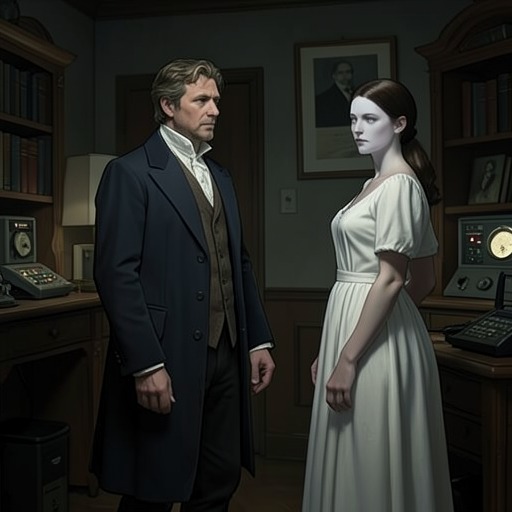
Goran Attacks Elena and Blake Rescues Her
VenomGoran Attacks Elena and Blake Rescues Her is a remembered life-or-death encounter whose importance extends beyond the rescue itself: Blake’s intervention becomes a point of dispute over whether he cares for Elena, while the wound Goran inflicted remains a stark measure of danger in her later thoughts. The book does not reconstruct the mission blow by blow; instead, it lets the rescue surface in argument and lets the attack’s physical consequence return in Elena’s dream.
Background and the Rescue
The mission is recalled through its aftermath rather than described as a continuous action scene. When Elena accuses Blake of caring only about himself, he counters by asking who saved her on that mission. His response establishes the central fact of the encounter: Blake saved Elena’s life. It also turns the rescue into a challenge to her accusation. For Blake, his action is evidence that her judgment of him is incomplete; for Elena, the rescue does not settle what his concern means.
The danger behind that intervention is made concrete later, when Elena’s dream invokes Goran’s knife passing through her stomach. She measures the dream’s pain against that remembered wound, treating the knife thrust as an experience of extreme physical suffering. The dream does not add a new attack or change the mission’s outcome; it shows how sharply the earlier violence remains available to her as a bodily point of comparison.
The Rescue Recalled in Conflict
Blake’s reminder does not end the disagreement. Elena’s accusation and his appeal to the mission expose a tension between an action she cannot deny and a motive she does not accept. The rescue is real, but its meaning remains contested: saving her could demonstrate personal concern, or—as Elena argues later—be consistent with Blake saving anyone in that situation. The book preserves that distinction instead of making the act a simple proof of romance or devotion.
The first exchange also unfolds amid unwanted public attention. After Blake brings up the mission, Elena notices several Cammys pointed in her direction. Without a hoodie, she tries to hide her face and runs back inside. She tells Becky that she needs to leave because people are trying to photograph her. The rescue is thus recalled in a moment when Elena is already exposed to scrutiny; a private act of survival becomes part of a public dispute, and the attention around her gives her another reason to retreat.
Later Reinterpretation and Aftermath
Later, Blake again asks why she thinks he saved her life. Elena answers with the explanation he had given her the last time she wanted to thank him: he would have done the same for anybody else on the mission. The exchange keeps both accounts in play. Blake’s knowing smile suggests that he is inviting her to reconsider, but Elena’s answer shows that she still understands the rescue through his earlier claim of general, rather than particular, responsibility. Her immediate realization that she has described herself as the last person Blake would have saved underscores the uncertainty she feels about their relationship, not a settled conclusion about his motive.
The rescue also haunts Elena in a dream during the camping trip. In it, she kisses Blake, and a pain that she describes as stronger than Goran’s knife thrust tears through her before she wakes inside the tent. Sammy is nearby in her sleeping bag. The dream is not evidence that the mission’s events recur; it brings together Blake, the remembered attack, and an intensity Elena cannot readily explain. Awake, she feels guilty about the dream because she has Lucian and does not see Blake that way, despite recognizing his beauty and disliking his arrogance. Blake ignores her for the rest of the trip. The rescue has saved her life, but it has not resolved the emotional distance or ambiguity that follows it.
Significance
The event’s narrative force lies in the gap between what Blake did and what Elena believes the act proves. His rescue gives him a concrete answer when she accuses him of selfishness, yet Elena’s account of his earlier explanation allows her to resist treating it as evidence of special attachment. The remembered wound supplies the counterweight to this argument: whatever the rescue means emotionally, the threat was physical and severe. By returning to the mission in disputes and dreams rather than offering a full action sequence, the narrative makes the rescue consequential both as an act of survival and as an unresolved question between them.