
Main Story Flow
Why Nations Fail: The Origins of Power, Prosperity, and PovertyMajor events ordered chronologically by story time.
increasing Bearing strength in each event
 decreasing
Bearing strength in each eventdecreasingJasmine Revolution
The Jasmine Revolution was the Tunisian uprising that began in December 2010 and forced President Zine El Abidine Ben Ali, in power since 1987, to step down on January 14, 2011. In the book’s account, it became a signal event in the Arab Spring: a public revolt whose economic grievances were inseparable from political exclusion and the rule of privileged elites.
Spark and Political Crisis
The immediate catalyst was public outrage following the self-immolation of street vendor Mohamed Bouazizi on December 17, 2010. The protests that followed gathered force against Ben Ali’s government, and his departure did not extinguish revolutionary fervor. The book describes opposition to privileged rule in Tunisia as intensifying and spreading beyond the country, while the eventual fate of regimes elsewhere in the region remained uncertain as the preface was written.
The uprising unfolded amid a wider crisis of political legitimacy. In the book’s account of the period, Tunisians and Egyptians alike understood their economic difficulties as rooted in political conditions: repression, the absence of social justice, and the denial of peaceful channels through which change could be pursued. This framing connected an immediate outburst of public anger to a deeper challenge to the way power was exercised.
Grievances and Demands
The protests in Tahrir Square in Egypt give the book a comparative view of the Arab Spring’s political language. Protesters there spoke of government corruption, failures to provide public services, unequal opportunity, repression, and the absence of political rights. Their first twelve immediate demands, posted by blogger Wael Khalil, focused on political change; raising the minimum wage appeared only among later transitional demands. The contrast illustrates the book’s central point about the uprisings: protesters treated political power and rights as fundamental to addressing economic hardship, rather than treating poverty as an isolated problem.
The preface summarizes the same connection through a statement by Mohamed ElBaradei about Tunisia: repression, the absence of social justice, and the denial of peaceful change together made the situation explosive. The Jasmine Revolution thus appears not as a revolt with a single economic demand, but as a challenge to a political order that restricted participation and peaceful avenues for reform.
Wider Significance
The revolution’s reach is presented through the spread of revolutionary fervor against privileged elites beyond Tunisia, including the upheaval in Egypt, where Hosni Mubarak was ousted on February 11, 2011 after nearly thirty years in power. The book does not treat these events as proof that the region’s political future was settled; at the time of writing, the fates of regimes in Bahrain, Libya, Syria, and Yemen were still unknown.
The book’s broader analysis places the uprising within a recurring historical pattern: political change can open a critical juncture, but its outcome is uncertain. Inclusive institutions do not arise automatically; they emerge from conflict between entrenched elites and groups seeking broader political and economic participation. The Jasmine Revolution’s significance in this account lies in how clearly it exposed the political roots of popular discontent and made the question of who holds power central to the debate over prosperity and reform.
Arab Spring

The Arab Spring was a wave of protests against entrenched political power that began with Tunisia’s Jasmine Revolution and spread through the Middle East in late 2010 and early 2011. In the book’s account, its decisive significance lies in the protesters’ understanding that poverty and blocked opportunity were bound to political exclusion: removing a ruler would matter only if people could change the institutions that concentrated power and protected a narrow elite.
Origins and Political Grievances
The immediate spark in Tunisia was the self-immolation of street vendor Mohamed Bouazizi on December 17, 2010, which provoked public outrage. By January 14, 2011, President Zine El Abidine Ben Ali, in power since 1987, had stepped down. The revolutionary fervor did not subside with his departure; it intensified and spread beyond Tunisia. In Egypt, Hosni Mubarak, who had ruled for almost thirty years, was ousted on February 11, 2011. As the book was being completed, the futures of the regimes in Bahrain, Libya, Syria, and Yemen remained uncertain.
The grievances were rooted in sharply unequal living conditions. The average Egyptian’s income was about 12 percent of the average income in the United States, life expectancy was ten years shorter, and one-fifth of the population lived in dire poverty. Yet the book emphasizes that Egypt’s poverty was not simply a matter of low income. Protesters identified a corrupt government, inadequate public services, unequal opportunity, repression, and the absence of political rights as connected features of the system. Their account made political power—not poverty as an isolated condition—the central issue.
The protesters in Tahrir Square expressed this diagnosis collectively. Noha Hamed, a 24-year-old advertising-agency worker, described corruption, oppression, poor education, and a corrupt system that had to change. Pharmacy student Mosaab El Shami, aged 20, hoped for an elected government, universal freedoms, and an end to corruption. Their statements gave specific form to a broader complaint: people could not make use of their talent, ambition, ingenuity, or education within institutions organized to serve a privileged elite.
From Protest to a Program for Change
The movement’s demands reinforced the political character of its grievances. When software engineer and blogger Wael Khalil, who emerged as one of the Egyptian protest movement’s leaders, set out immediate demands, his first twelve proposals focused on political change. Raising the minimum wage appeared only among demands designated for a later transitional stage. The ordering mattered: economic improvement was not dismissed, but the protesters treated political reform as the necessary first step toward it.
In the book’s interpretation, this was a recognition that economic barriers followed from the way political power was exercised and monopolized in Egypt. An ineffective and corrupt state restricted public provision, while a society denied political rights had few effective channels for changing the rules. The protests therefore challenged more than particular abuses or policies. They called into question the institutions that allowed a narrow group to determine economic opportunities and preserve its own position.
Digital media formed part of the movement’s means of communication and coordination. The book places blogs, anonymous chats, Facebook, and Twitter among the newer information technologies that helped opposition movements circulate information and organize collective demands. It notes their role both in protests in Iran after the disputed 2009 election and in the ongoing Arab Spring mobilizations. The point is not that technology alone created political change, but that communication networks could help a broad public learn of abuses and act together in response.
Egypt’s Political Economy Before the Uprising
The uprising followed decades in which Egypt’s political and economic arrangements changed without becoming broadly inclusive. After the 1954 military coup removed the monarchy, Egypt was governed as a quasi-socialist society, with the state central to the economy and many sectors dominated by state-owned enterprises. Over time, socialist rhetoric receded, markets opened, and private business expanded. But the resulting markets were controlled by the state and a small group of businessmen allied with the ruling National Democratic Party, rather than being open to broad participation.
Under Mubarak, the relationship between business and government became increasingly close. Major business figures were appointed to ministries connected to their commercial interests: Rasheed Mohamed Rasheed, formerly president of Unilever AMET, became minister of foreign trade and industry; Mohamed Zoheir Wahid Garana, who owned and managed Garana Travel Company, became minister of tourism; and Amin Ahmed Mohamed Osman Abaza, founder of the Nile Cotton Trade Company, became minister of agriculture. These appointments linked economic interests directly to the institutions that governed them.
Political connections also helped restrict entry into important sectors, including media, iron and steel, automobiles, alcoholic beverages, and cement. Regulation and high entry barriers protected concentrated businesses and politically connected firms. Ahmed Ezz, who headed Ezz Steel, served as a senior National Democratic Party figure and chaired the People’s Assembly Budget and Planning Committee; his company produced 70 percent of Egypt’s steel. The Sawiris family and Mohamed Nosseir likewise received state protection, government contracts, and large bank loans without collateral. The pattern shows how control of political institutions could shape markets to favor a small circle rather than create equal economic opportunity.
Nosseir’s business history illustrates that access could depend on political favor and could later be lost. In 1993 he bought the privatized El Nasr Bottling Company, which held monopoly rights to bottle and sell Coca-Cola in Egypt, in a transaction made possible by his relationship with Atef Ebeid, then minister of the public business sector. Two years later, Nosseir sold the company for more than three times its purchase price. In the late 1990s, political connections similarly narrowed the field of private operators in the state cinema industry: only two families were allowed to bid, including the Sawiris family. These examples show market opening occurring on terms set by political access, not by an inclusive system of competition.
A Regime’s Roots and Its Collapse
The book traces Egypt’s extractive institutions to a longer history. In the nineteenth century, Muhammad Ali initiated institutional change and economic modernization, generating a period of extractive economic growth, but the effort was curtailed when Egypt was effectively annexed to the British Empire. Institutions formed under British rule persisted after the military took power in 1954. Economic growth and investment in education occurred, but most people still had few economic opportunities, while a new elite benefited from ties to government.
The Nasser period combined extractive political institutions with some more inclusive features of economic life: the state expanded education and opened opportunities that had not existed under King Farouk. The book regards this as an unstable combination. During Mubarak’s rule, economic institutions became more extractive, reflecting the distribution of political power. The narrowing of opportunity and the growing role of regime-linked business interests thus formed part of the background against which popular unrest gathered strength.
Mubarak also planned a political dynasty, grooming his son Gamal to succeed him. That plan ended with the collapse of the regime in early 2011, as widespread demonstrations and unrest forced Mubarak from power, with the military also involved in his removal. In this account, the ousting was a consequential break in political leadership, but not proof that the institutions beneath the leadership had been transformed. Egypt’s earlier revolutions had often changed who held the reins without changing the structure of power.
Collective Action and the Uncertain Aftermath
The book presents broad-based organization as a crucial condition for lasting institutional change. It compares the Egyptian protests with historical transformations in England, France, and the United States, and with political change in Japan, Botswana, and Brazil. In these cases, critical junctures weakened the hold of established elites and strengthened their opponents, creating an opening for more pluralistic institutions. But the result was never guaranteed: political conflict could produce a broader distribution of power, or allow a different elite to take control and reproduce exclusion.
The composition of the protest movement in Egypt suggested the possibility of a coalition reaching across social divisions. Reda Metwaly, another protester in Tahrir Square, pointed to Muslims and Christians, old and young, wanting the same thing. The book presents such breadth as significant because political transformations elsewhere involved groups joining together against established power. Yet breadth at the moment of protest was not itself a durable institutional settlement; the key question was whether shared demands could become lasting political capacity and accountable rules.
The contrast with Brazil clarifies the distinction between mobilization and transformation. From the late 1970s, Brazilian labor organizing broadened into a coalition of trade unions, intellectuals, opposition politicians, churches, students, and social movements. The Workers’ Party was conceived as a vehicle for wage earners and the poor more generally, and its development helped connect grassroots empowerment to national political change and the transition from military rule to democracy. The book uses this comparison to argue that broad organization can make a political transition more inclusive, while warning that democracy by itself does not guarantee pluralism.
Accordingly, the Arab Spring is presented as a critical juncture rather than a completed institutional transformation. Mubarak’s fall demonstrated the capacity of popular protest to dislodge a long-standing ruler; the book’s larger question was whether this movement would produce institutions capable of expanding opportunity and prosperity for ordinary Egyptians. The historical record offered grounds for hope as well as caution: inclusive institutions can persist and widen once established, but revolutions can also install a new elite without altering the rules. The event’s significance therefore rests in the unresolved contest between collective empowerment and the reproduction of concentrated power.
Spanish conquest of Peru
The Spanish conquest of Peru was not only a military seizure but the imposition of a colonial system for extracting people’s labor and the region’s wealth. Its decisive early episodes—the capture and execution of Atahualpa, the seizure of Cusco, and the organization of labor for the silver mines—show how conquest joined political domination to economic extraction. In the book’s broader account, the institutions created by such conquests help explain how elites could concentrate power and resources at the expense of the wider population.
Expedition and Capture at Cajamarca
The Spanish approach to Peru followed a strategy already used elsewhere in the Americas. The methods perfected in Mexico were adopted across the Spanish Empire, and the campaign led by Francisco Pizarro became one of their most effective applications. Pizarro arrived in 1531 with the intention of imitating the tactics used by other Spanish adventurers. He began on the coast near Tumbes and marched south.
On November 15, 1532, Pizarro reached Cajamarca, where the Inca emperor Atahualpa was encamped with his army. The political situation was unsettled: Atahualpa had recently defeated his brother Huáscar in a struggle to succeed their deceased father, Huayna Capac. Atahualpa was also angered by reports of Spanish abuses, including the violation of a temple dedicated to Inti, the Sun God.
The following day, Atahualpa came with his retinue to the Spanish camp. The Spaniards set a trap, killed his guards and attendants—possibly as many as two thousand people—and captured him. The encounter transformed a Spanish expedition into a campaign directed at the ruler and wealth of the Inca Empire.
Ransom, Execution, and the Seizure of Cusco
To secure his freedom, Atahualpa promised to fill one room with gold and two rooms of the same size with silver. He fulfilled the demand, but the Spaniards broke their promise and strangled him in July 1533. The ransom therefore did not restore his freedom: it converted the emperor’s captivity into an opportunity to collect precious metal before eliminating him.
In November 1533, the Spaniards captured Cusco, the Inca capital. Members of the Inca aristocracy were imprisoned and pressed to produce gold and silver. When they failed to meet Spanish demands, they were burned alive. The city’s artistic and religious wealth was also targeted: the gold was stripped from treasures such as the Temple of the Sun and melted into ingots. The conquest thus attacked political authority and cultural wealth together, turning objects of great artistic significance into portable bullion.
From Conquest to Encomienda
After focusing on the Inca ruler and aristocracy, the Spaniards turned their attention to the people of the empire. As in Mexico, they divided Indigenous communities into encomiendas, assigning one to each of the conquistadors who had accompanied Pizarro. The encomienda became the principal institution for organizing and controlling labor in the early colonial period.
The conquest’s economic structure reflected a wider relationship between political and economic power. In the book’s analysis, extractive political institutions allow a narrow elite to shape economic arrangements with few constraints; those arrangements then transfer resources to the elite and help sustain its political dominance. In Spanish America, colonists used political power to impose institutions that enriched them at the expense of the rest of the population. The account of Peru illustrates this connection through the progression from military capture to control of communities and their labor.
Potosí and the Mita
The encomienda soon faced a major rival in the organization of colonial labor. In 1545, an Indigenous man named Diego Gualpa was searching for a shrine high in the Andes in what is now Bolivia when a sudden gust of wind threw him to the ground and exposed silver ore. The discovery formed part of a vast mountain that the Spaniards named El Cerro Rico, or “The Rich Hill.” A city grew around the silver deposit; at its height in 1650, Potosí had 160,000 inhabitants, a population larger than Lisbon’s or Venice’s at the time.
Extracting the silver required a large workforce. Francisco de Toledo, the new viceroy and chief Spanish colonial official, arrived in Peru in 1569 with the task of addressing the labor shortage. He spent five years traveling through the territory and commissioned a broad survey of its adult population. He then moved almost the entire Indigenous population into newly established towns called reducciones, concentrating people in settlements that would make their labor easier for the Spanish Crown to exploit.
De Toledo also revived and adapted the Inca mita, a system whose name in Quechua means “a turn.” Under Inca rule, the mita had supplied forced labor for plantations that produced food for temples, the aristocracy, and the army; the Inca elite, in return, provided famine relief and security. In the colonial version, especially at Potosí, this inherited institution became what the book describes as the largest and most onerous labor-exploitation scheme of the Spanish colonial period.
The Potosí mita drew workers from an area of roughly 200,000 square miles, extending from central Peru across much of present-day Bolivia. One-seventh of the male inhabitants in this catchment area were required to work in the mines. The region overlapped the former heartland of the Inca Empire, including Cusco, and the system endured through the colonial period until its abolition in 1825.
Institutional Consequences and Historical Significance
The conquest’s significance in the book extends beyond the campaign itself. It is an example of how political control can be converted into economic extraction: military force secured rulers and cities, colonial institutions organized communities and labor, and the resulting wealth strengthened the position of those who controlled the system. More generally, extractive political and economic institutions reinforce one another. Political power enables elites to impose economic rules that benefit them; the wealth those rules generate can then help consolidate their dominance and protect the institutions that produced it.
The account does not present this historical pattern as inevitable. Its broader framework emphasizes the interaction of inherited institutions and critical junctures, events that disrupt an existing balance of political and economic power. The Spanish conquest was one such disruption for the societies it transformed, but its consequences depended on the institutions established in its wake. In Peru, the transition from capture and tribute demands to encomienda and the Potosí mita reveals the durable machinery of colonial rule: domination was not confined to the moment of military victory but organized into systems that compelled labor and carried wealth away.
Battle of Cajamarca
The Battle of Cajamarca was the Spanish ambush of the Inca emperor Atahualpa on November 16, 1532, during Francisco Pizarro’s conquest of Peru. The capture turned a meeting between the Spanish and the Inca ruler into a means of extracting immense wealth and advancing Spanish control; the subsequent killing of Atahualpa despite his ransom made the encounter a defining episode in the conquest.
Background and Participants
Pizarro had begun his advance on the Peruvian coast near Tumbes and marched south. On November 15, 1532, he reached Cajamarca, a mountain town where Atahualpa was encamped with his army. Atahualpa had recently defeated his brother Huáscar in a struggle over succession after their father, Huayna Capac, died.
News of Spanish atrocities had already reached Atahualpa, including the violation of a temple dedicated to the Sun God Inti. The emperor came the following day with his retinue to the Spanish camp. The book presents this meeting against the broader pattern of Spanish conquest: methods developed in Mexico were adopted elsewhere in the empire, and Pizarro set out to follow the strategies used by other Spanish adventurers.
Ambush and Ransom
The Spanish laid a trap and sprang it when Atahualpa arrived. They killed his guards and retainers and captured the emperor; the account estimates that as many as two thousand people may have been killed. The capture made Atahualpa’s freedom a matter of negotiation with his captors.
To secure his release, Atahualpa promised to fill one room with gold and two rooms of the same size with silver. He fulfilled the demand, but the Spanish did not honor their promise. In July 1533, they strangled him. The sequence—from capture, to a ransom on an enormous scale, to execution after payment—shows how the encounter was used not simply to defeat the Inca ruler but to obtain wealth from him before eliminating him.
Conquest and Plunder After Cajamarca
The Spanish captured Cusco, the Inca capital, in November 1533. There, members of the Inca aristocracy were imprisoned until they produced gold and silver; when their contributions failed to meet Spanish demands, they were burned alive. The city’s artistic treasures were also taken: gold was stripped from the Temple of the Sun and melted into ingots.
Spanish control then extended to the people of the Inca Empire. As in Mexico, the population was divided into encomiendas, with each assigned to one of the conquistadors who had accompanied Pizarro. The encomienda became the main institution for controlling and organizing labor in the early colonial period, linking the military conquest initiated at Cajamarca to the continuing exploitation of the conquered population.
Historical Significance
Cajamarca belongs to the book’s account of conquest as a process in which political seizure and economic extraction reinforced each other. The capture of Atahualpa led to demands for precious metals; the taking of Cusco and its treasures extended that extraction beyond the ransom; and the encomienda organized labor under Spanish rule. The episode thus marks both a decisive reversal in the Inca ruler’s position and an early stage in the institutional organization of Spanish colonial exploitation.
Defeat of the Spanish Armada
The Defeat of the Spanish Armada in 1588 was a fortunate English victory that nevertheless signaled a larger change: England was beginning to assert itself at sea. The defeat sent political shockwaves across Europe and helped make possible England’s entry into the colonial contest, a development that soon led toward the settlement of Jamestown in a part of the Americas the earlier empires had largely left behind.
Background: A Latecomer to Empire
When Spain began conquering the Americas in the 1490s, England was a minor European power still recovering from the devastating Wars of the Roses. It lacked the position to join the scramble for wealth and the exploitation of Indigenous peoples. Nearly a century later, the Armada’s defeat changed the strategic picture: England’s victory was lucky, but it also revealed a growing capacity to act at sea.
The Defeat and Its Significance
Philip II of Spain sent the Armada in an attempt to invade England. Its defeat in 1588 reverberated across Europe. The book treats the outcome not simply as a military reversal for Spain, but as a sign that English assertiveness on the seas was growing—and that England could now begin to take part in the pursuit of colonial empire.
From Naval Opening to North American Settlement
England began colonizing North America at roughly the same time that its maritime ambitions were advancing. It did not choose the region because it was the most promising prize: the more desirable parts of the Americas, with abundant Indigenous populations to exploit and gold and silver mines, had already been occupied. England was left with what remained. Arthur Young later illustrated the economic disadvantage of these northern settlements by comparing colonial staple production per person: 8 pounds, 12 shillings, and 1 penny in the West Indies, against just 2 shillings and 6 pence in the northern settlements.
The first English attempt to establish a colony, at Roanoke in North Carolina between 1585 and 1587, failed completely. In 1607 England tried again. Three ships—the Susan Constant, the Godspeed, and the Discovery—sailed under Christopher Newport, carrying colonists sponsored by the Virginia Company. They entered Chesapeake Bay, proceeded up the James River, and founded Jamestown on May 14. The settlement’s founding was not the Armada’s immediate consequence, but it belonged to the colonial expansion that England’s growing maritime power had helped make possible.
Jamestown Starving Time

The Jamestown Starving Time was the winter of 1609–1610, when Jamestown’s colonists faced famine after the Virginia Company replaced its ruling council with a single-governor system and John Smith returned to England. As Wahunsunacock throttled the food supply, the settlement’s new regime proved unable to keep its workers alive: of five hundred people who entered the winter, only sixty remained by March, and some resorted to cannibalism. The catastrophe revealed the distance between a company’s ambition to extract wealth and its ability to sustain the people expected to produce it.
Causes and Background
The Virginia Company had been established as a moneymaking enterprise, but after two disastrous years the colony showed no sign of profit. The company responded by changing its government, replacing the ruling council with a single governor. Sir Thomas Gates was appointed to the new position. John Smith, whose resourcefulness had helped Jamestown survive, had already warned the company that Virginia could not be made profitable through a quick extraction of precious metals or by forcing Indigenous people to provide food and labor. He argued instead for sending skilled workers. The new system, however, left no place for him, and he returned to England in autumn 1609, before the worst of the famine.
The crisis unfolded amid a tightening food supply. Without Smith’s capacity to negotiate and obtain provisions, and with Wahunsunacock restricting food, the colonists entered the winter exposed to hunger. The book connects the disaster to this combination of leadership change and pressure on supplies, rather than presenting it as an isolated misfortune.
The Company’s Work Regime
Gates and his deputy, Sir Thomas Dale, imposed a severe labor system on English settlers. Dale propagated the rules known as the Lawes Divine, Morall and Martiall, which threatened death for running away to Indigenous communities and for stealing food such as corn. The rules also forbade colonists from selling or giving colonial commodities to sailors for private transport out of the settlement, again under penalty of death.
The company’s broader model placed all land under its ownership. Men lived in barracks, received rations determined by the company, and worked in gangs overseen by company agents. Execution was treated as a first resort in enforcing discipline. The prohibition on flight reflected a practical problem beneath the severity: under company control, life on company rations was harsh enough that escape to live with local people—or to establish an independent life beyond the company’s reach—could appear preferable.
Famine and Collapse
The new regime could not make the colonists work reliably at subsistence rations, and it could not overcome the loss of Smith’s leadership or the pressure on food. Jamestown entered the winter with five hundred people. By March, only sixty were alive. The survivors’ resort to cannibalism marks the crisis’s extremity: famine had carried the settlement beyond ordinary scarcity into the violation of a fundamental social boundary.
The scale of death makes the winter a decisive turning point in the colony’s early history. The company’s change in governance did not secure the settlement; instead, the period associated with the new order became a near-destruction of the population it was meant to govern.
Significance and Limits of Company Power
The Starving Time exposed the limits of treating English settlers as an exploitable labor force. The Virginia Company could claim ownership of land, control rations, organize work gangs, and threaten death for disobedience, but its authority could not ensure that settlers would accept hard labor in exchange for subsistence. The possibility of flight—to Indigenous communities or beyond the company’s jurisdiction—constrained the company’s power even as it tried to enforce it through martial discipline.
The disaster also underscored how different Virginia was from the densely populated regions conquered by Spain. Outside a few pockets, the estimated population density of what became the United States was at most three-quarters of a person per square mile; central Mexico and Andean Peru could reach four hundred people per square mile. The conditions that had made extraction on a vast scale possible in Mexico or Peru could not simply be reproduced in Virginia. Jamestown’s famine therefore stands as evidence not only of a failed winter, but of the failure of the company’s initial assumptions about how colonial wealth could be obtained.
American Revolution

The American Revolution was the culmination of a long institutional development in which colonial assemblies claimed authority over their own membership and taxation. In the book’s account, that history—beginning with the General Assembly in Jamestown in 1619—helped make possible the United States’ later adoption and enforcement of a constitution grounded in democratic principles, limits on political power, and its broad distribution. The transformation was significant, but the political participation on which it rested remained sharply bounded: women, enslaved people, and people without property could not vote.
Colonial Assemblies and Political Rights
By the 1720s, all thirteen colonies that would become the United States had similar governmental structures: each had a governor and an assembly elected on a franchise limited to male property holders. These were not democracies, but the book emphasizes that political rights were comparatively broad for the period. The assemblies and their leaders later coalesced in the First Continental Congress in 1774, a prelude to independence.
The assemblies’ central claims concerned who could make decisions for the colonies. They asserted the right to determine their own membership and to decide on taxation. Those claims created a conflict with the English colonial government, setting a constitutional issue at the heart of the developing break: whether authority over colonial political representation and revenue would rest with local institutions or with imperial power.
A Constitutional Process Before Independence
The book places the American Revolution within a longer process rather than treating constitutional government as an invention made at a single moment. It traces that process to the formation of the General Assembly in Jamestown in 1619, whose institutional legacy culminated in the document drafted by delegates in Philadelphia in May 1787. The constitution that followed, in this account, did not emerge in isolation: it built on generations of colonial experience with assemblies and claims to political authority.
That lineage is presented as a major point of contrast with Mexico. The book argues that the United States adopted and enforced a constitution that espoused democratic principles, limited the use of political power, and distributed power broadly in society. The comparison is not framed as a difference in leaders’ knowledge or good intentions, but as the result of contrasting institutional histories and constraints.
The Spanish Constitutional Crisis as a Contrast
The crisis in Spanish America began with the French invasion of Spain in February 1808. By May, French armies had taken Madrid; by September, Ferdinand VII had been captured and abdicated. The Junta Central took his place in the struggle against the French, moving south as the armies advanced before establishing itself in besieged Cádiz. There it formed the Cortes, which produced the Cádiz Constitution in 1812.
The Cádiz Constitution called for a constitutional monarchy based on popular sovereignty, an end to special privileges, and equality before the law. The book stresses that these demands were unacceptable to South American elites whose authority rested on institutions shaped by the encomienda, forced labor, and colonial state power. The collapse of the Spanish state thus produced a constitutional crisis across colonial Latin America: disputes over whether to recognize the Junta Central encouraged the formation of local juntas and, in time, the possibility of independence. The first declaration came in La Paz in 1809, but Spanish troops sent from Peru quickly crushed it. In Mexico, elite political attitudes were also shaped by the Hidalgo Revolt of 1810, which the book describes as an episode of class or ethnic conflict.
Innovation and the Institutional Legacy
The account connects the political institutions that developed in the United States with a comparatively open environment for innovation. Between 1820 and 1845, only 19 percent of American patentees had parents who were professionals or belonged to recognizable major landowning families; 40 percent had only primary schooling or less. Many used patents to establish firms. The book treats this broad social reach of patenting as a counterpart to the country’s comparatively broad political rights and as important to its later economic innovation.
Access to a patent alone did not guarantee that an inventor could turn an idea into a business. Selling a patent could provide capital, while starting a firm required access to bank loans. The rapid expansion of American banking helped supply that finance: the number of banks grew from 338 in 1818, with total assets of $160 million, to 27,864 in 1914, with assets of $27.3 billion. This later economic development is not itself part of the Revolution, but it extends the book’s account of how institutions that widened access to political participation and economic opportunity could shape the country’s subsequent path.
Constitutional Convention

The Constitutional Convention, which assembled in Philadelphia in May 1787, turned a long history of colonial political development into a national constitutional order. Its significance lay in establishing a framework that constrained political power and distributed it across institutions, but the settlement was not democratic by modern standards: it protected slavery and left political inclusion sharply limited. The compromises that helped make the Constitution possible contained rather than resolved the conflict over slavery.
Colonial Foundations
The Convention was the culmination of a process that the book traces to the formation of the Virginia General Assembly at Jamestown in 1619. By the 1720s, all thirteen colonies that would become the United States had similar governmental structures: each had a governor and an assembly elected through a franchise limited to male property holders. Women, enslaved people, and people without property could not vote. Even so, political rights in the colonies were comparatively broad, and their assemblies gave colonial leaders practical experience in collective political action.
The assemblies claimed authority over their own membership and over taxation. Their resistance to English colonial government helped draw them together: in 1774, their leaders formed the First Continental Congress, a step on the path to independence. The Convention inherited this accumulated history of representative institutions and disputes over who could exercise political power. In the book’s account, the Constitution was not simply a document drafted in one moment; it was the outcome of institutional development extending across generations.
Constitutional Aims and Limits
The delegates who met in Philadelphia in May 1787 produced a constitution that espoused democratic principles, limited the use of political power, and distributed that power broadly in society. Yet the Constitution did not establish democracy by modern standards. It left the determination of voting rights to the individual states. Northern states moved relatively quickly toward enfranchising white men regardless of income or property, while southern states did so more gradually. No state enfranchised women or enslaved people; as property restrictions on white men were lifted, racial restrictions explicitly disenfranchising Black men were introduced.
Slavery was deemed constitutional in the settlement. The dispute over how to allocate seats in the House of Representatives exposed the political bargain at its center. Seats were to be apportioned according to population, and southern representatives demanded that enslaved people be included in the count. Northerners objected. The compromise counted an enslaved person as three-fifths of a free person for purposes of representation. The rule converted the enslaved population into a basis for allocating political power to states that denied those people political rights themselves.
Compromise and Unresolved Conflict
The three-fifths rule was one of several accommodations through which the constitutional process repressed conflict between North and South. Later, the Missouri Compromise sought to preserve the balance between proslavery and antislavery interests in the Senate by admitting one state of each kind together. Such arrangements helped political institutions operate peacefully for a time, but they did not settle the underlying conflict over slavery; they managed its political consequences while preserving the institution.
The contrast between the Constitution’s limits on government and its protection of slavery is central to the book’s assessment of the Convention. The new framework constrained the use of political power and widened its distribution among political actors, yet its protections and representation were not universal. Its compromises enabled an enduring constitutional system while leaving a profound conflict embedded within it.
Aftermath and Historical Significance
The compromises kept the United States’ political institutions working peacefully until the Civil War. The war, fought from 1860 to 1865, was bloody and destructive and ultimately resolved the conflict in favor of the North. The book contrasts those five years of instability with Mexico’s almost continuous political instability during its first fifty years of independence, while noting that the United States had substantial economic opportunities for a large fraction of its population, especially in the North and West, both before and after the war.
The Convention’s significance therefore rests in a double inheritance. It helped create a constitutional order grounded in political constraints and broad distribution of power, but the bargains that secured that order also preserved slavery and deferred the confrontation between North and South. The Civil War revealed the limits of those compromises: the constitutional settlement had sustained political peace, but it had not reconciled the interests it held in tension.
French invasion of Spain
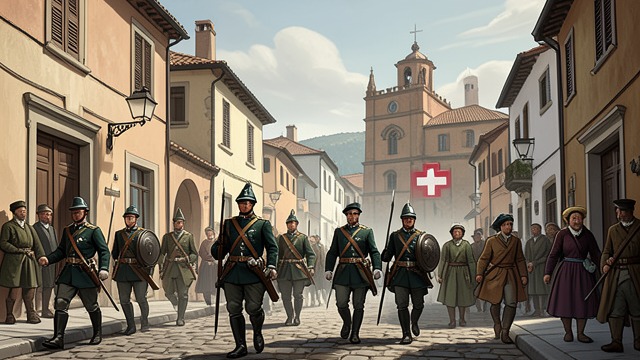
The French invasion of Spain in 1808 destabilized the Spanish monarchy and opened a constitutional crisis across its American colonies. In Mexico, the crisis did not simply produce a contest for independence: it exposed a deeper conflict over who would hold political power and whether popular participation would threaten the privileges of colonial elites. The book presents that struggle as a decisive contrast with the constitutional process that had developed in the United States.
Invasion and Constitutional Crisis
In February 1808, French armies invaded Spain, and by May they had taken Madrid. By September, Spain’s king, Ferdinand VII, had been captured and had abdicated. A national junta, the Junta Central, took up resistance to the French. Forced south by the advancing armies, it eventually reached Cádiz, a port city under siege that continued to hold out. There the Junta established a parliament, the Cortes.
In 1812, the Cortes produced a constitution calling for a constitutional monarchy based on popular sovereignty. It also called for an end to special privileges and equality before the law. These principles challenged an American colonial order shaped by the encomienda, forced labor, and extensive power held by colonial elites and the state. The invasion therefore mattered beyond Spain: the collapse of royal authority made the source and legitimacy of political rule an urgent question throughout colonial Latin America.
The Mexican Response
The crisis prompted disputes over whether the colonies should recognize the Junta Central. Many Latin Americans began forming their own juntas, and the prospect of independence increasingly came into view. The first declaration of independence took place in La Paz, Bolivia, in 1809, but Spanish troops sent from Peru quickly suppressed it.
In Mexico, elite attitudes had also been shaped by the 1810 Hidalgo Revolt. Led by Father Miguel Hidalgo, the revolt took on a character that the book describes as closer to class or ethnic warfare than to a conventional independence movement. After Hidalgo’s army sacked Guanajuato on September 23, it killed the senior colonial official and then killed white people indiscriminately. The episode united elites in opposition. Because they feared that independence could bring popular participation in politics, Mexican elites rejected not only the revolt but also the legitimacy of the Cádiz Constitution, which had opened a path toward such participation.
From Constitutional Restoration to Independence
In 1815, as Napoleon’s European empire collapsed, Ferdinand VII returned to power and abrogated the Cádiz Constitution. The Crown began trying to reclaim its American colonies, but Mexico remained loyal. That position changed in 1820, when a Spanish army assembled in Cádiz to sail to the Americas and restore Spanish authority mutinied against Ferdinand. Army units elsewhere in Spain joined the revolt, forcing the king to restore the constitution and recall the Cortes.
The recalled Cortes was more radical than the body that had drafted the 1812 constitution. It proposed abolishing all forms of labor coercion and challenged privileges such as the military’s right to try its own members in separate courts. Faced with the prospect that these measures would be imposed in Mexico, the elites decided that separation from Spain better protected their position. The invasion’s constitutional aftermath had thus helped turn Mexican loyalty into a movement for independence—not because elites had embraced popular sovereignty, but because they feared the reforms associated with it.
Independence and Its Political Stakes
The independence movement was led by Agustín de Iturbide, a former Spanish army officer. On February 24, 1821, he published the Plan de Iguala, which envisioned an independent Mexico as a constitutional monarchy headed by a Mexican emperor. The plan removed provisions of the Cádiz Constitution that Mexican elites considered threatening to their status and privileges. It won immediate support, and Spain soon recognized that it could not prevent Mexican independence.
Independence also created a power vacuum that Iturbide used to secure his own elevation: backed by the military, he had himself declared emperor. The book contrasts this outcome with the United States, where the constitution written in Philadelphia in 1787 emerged from a longer political process beginning with the formation of the General Assembly in Jamestown in 1619. Its central point is that the two constitutional paths were shaped by different struggles over political power: in Mexico, independence preserved elite privileges and enabled an emperor, while the American constitutional process established democratic principles, limits on political power, and a broader distribution of authority.
Promulgation of the Constitution of Cádiz

The Promulgation of the Constitution of Cádiz was a constitutional response to the collapse of Spanish authority under French invasion, but its promise of popular sovereignty and legal equality also sharpened conflict in Spain’s American colonies. In Mexico, the prospect that the constitution would limit elite privileges helped turn a Spanish constitutional crisis into a decision for independence.
Invasion and Constitutional Crisis
In February 1808, French armies invaded Spain; by May they had taken Madrid, and by September King Ferdinand VII had been captured and abdicated. The Junta Central assumed the struggle against the French, moving from Aranjuez toward Cádiz as the invading forces advanced. Although besieged, the port held out, and the Junta established a parliament there, the Cortes. In 1812, the Cortes produced a constitution proposing a constitutional monarchy founded on popular sovereignty.
Principles and Colonial Resistance
The constitution also called for ending special privileges and establishing equality before the law. Those principles directly threatened the colonial order in which South American elites exercised authority through institutions shaped by the encomienda, forced labor, and extensive power vested in elites and the colonial state. The constitutional project therefore did not present itself to those elites as a neutral reform: it challenged the privileges on which their authority rested.
The Spanish state’s collapse created a wider crisis over who had the right to rule in the colonies. Disputes about whether to recognize the Junta Central prompted many Latin Americans to form their own juntas, making separation from Spain increasingly conceivable. In Mexico, elite attitudes were also shaped by the 1810 Hidalgo Revolt. After Father Miguel Hidalgo’s army sacked Guanajuato on September 23, it killed the senior colonial official and then killed white residents indiscriminately. The episode appeared more like class or ethnic conflict than a movement capable of reassuring the elite, and it united elites against the possibility of popular political participation. They consequently viewed the Cádiz Constitution with extreme skepticism and refused to recognize its legitimacy.
Restoration and Renewed Imposition
In 1815, after Napoleon’s European empire collapsed, Ferdinand VII returned to power and the constitution was abrogated. The Spanish Crown then sought to recover its American colonies, but loyalist Mexico did not initially pose a problem. The situation changed in 1820, when an army assembled in Cádiz to sail to the Americas mutinied against Ferdinand. Army units elsewhere in Spain joined the revolt, compelling the king to restore the constitution and recall the Cortes.
The recalled Cortes was more radical than the body that had written the 1812 constitution. It proposed abolishing all forms of labor coercion and attacked special privileges, including the military’s right to try its members in separate courts. Once this constitutional program faced imposition in Mexico, local elites chose separation rather than accept changes they considered threatening to their position. The constitution thus became a catalyst for independence not simply because it proposed popular sovereignty, but because its renewed enforcement brought its challenges to elite privilege into immediate focus.
Legacy and Institutional Contrast
The Mexican response illustrates the book’s broader distinction between formal constitutional principles and the interests and constraints that determine whether they are accepted. In this account, the Cádiz Constitution’s commitments to participation and equality could not overcome the opposition of elites whose power depended on the colonial order. Their rejection helped direct independence toward a settlement that would preserve elite status rather than open politics broadly.
The episode also contrasts with the longer constitutional process in the United States, which the book traces from the formation of the Virginia General Assembly in Jamestown in 1619 to the drafting of the U.S. Constitution in Philadelphia in 1787. The comparison treats political institutions, rather than constitutional language alone, as decisive: a constitution’s effect depends on who can shape and enforce it, and on whether those holding power are constrained by it. In Mexico, the Cádiz Constitution’s return exposed the limits of constitutional reform when its principles threatened entrenched interests and helped precipitate independence on terms designed to protect them.
Hidalgo Revolt
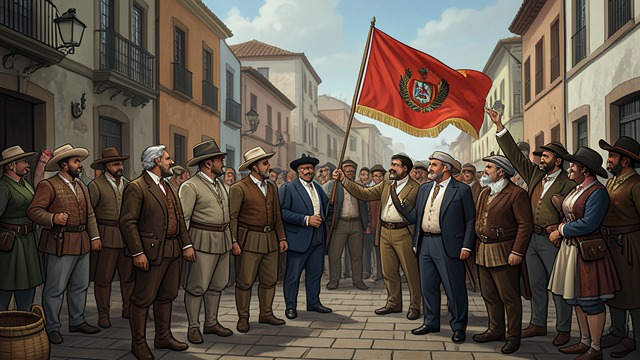
The Hidalgo Revolt was a 1810 uprising led by the priest Father Miguel Hidalgo whose course shaped elite opposition to both constitutional reform and independence in Mexico. After Hidalgo’s forces sacked Guanajuato and killed its senior colonial official, they began killing white residents indiscriminately; the revolt thus appeared to local elites less as a movement for independence than as class or ethnic warfare, uniting them against popular participation in politics.
Background and Course
The revolt unfolded amid the crisis caused by Napoleon’s invasion of Spain and the collapse of Spanish authority. As disputes spread over whether to recognize the Junta Central, Latin Americans began forming their own governing juntas, and the possibility of independence came into view. The first declaration, in La Paz in 1809, was quickly suppressed by Spanish troops sent from Peru. In Mexico, meanwhile, elite political attitudes had been shaped by Hidalgo’s uprising in 1810.
On September 23, Hidalgo’s army sacked Guanajuato, killed the intendant, the senior colonial official there, and then began killing white people indiscriminately. The book emphasizes the consequences of this course for how the revolt was understood: it looked more like class or ethnic warfare than an independence movement. The violence therefore did not draw Mexican elites toward a broader struggle against Spain; it helped consolidate their opposition to political change that might include popular participation.
Elite Opposition and Constitutional Change
The Cádiz Constitution, produced by the Cortes in 1812, proposed a constitutional monarchy based on popular sovereignty, the end of special privileges, and equality before the law. These measures threatened an order shaped by the encomienda, forced labor, and authority concentrated in colonial elites and the state. In the aftermath of the Hidalgo Revolt, Mexican elites regarded the constitution with particular skepticism: if independence opened politics to ordinary people, they opposed it, not only Spanish rule.
The sequence later turned on renewed constitutional pressure. Ferdinand VII abrogated the Cádiz Constitution after returning to power in 1815. In 1820, however, an army assembled to sail to the Americas mutinied against him, prompting the king to restore the constitution and recall the Cortes. This Cortes proposed abolishing all forms of labor coercion and challenged special privileges, including the military’s right to try crimes in its own courts. Faced with the prospect of the more radical constitution being imposed in Mexico, the elites chose to declare independence rather than accept it. The revolt’s significance thus lies partly in the reaction it helped produce: fear of popular politics made elite opposition to constitutional reform a force in the eventual break with Spain.
Significance in the Book’s Argument
The book presents the revolt as an example of how political outcomes emerge from conflict rather than following an inevitable route. The wider argument is that critical junctures can unsettle existing balances of power, but their outcomes depend on the institutions and social forces already in place. The Hidalgo Revolt shows that an uprising associated with independence could also strengthen elite resistance to inclusive politics when its course seemed to threaten established groups.
This distinction between mobilization and lasting empowerment recurs in the book’s discussion of later political change. It contrasts the revolt’s effect on Mexican elites with Brazil’s labor movement and social coalitions in the 1970s, which helped build grassroots participation and support a transition to democracy. In the broader account, a revolt or crisis does not by itself guarantee pluralism: the decisive question is whether political conflict weakens elite control and broadens participation, or instead unites elites against it.
Spanish Revolution of 1820
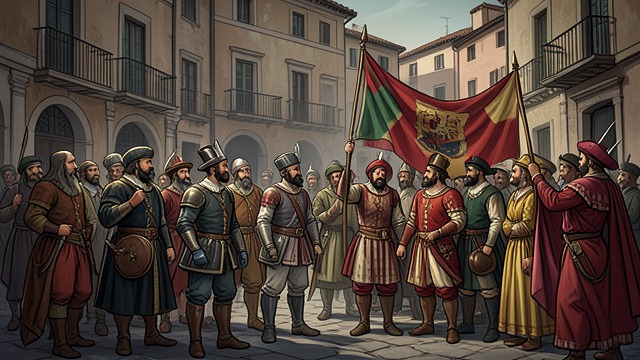
The Spanish Revolution of 1820 was a military mutiny that compelled Ferdinand VII to restore the Cádiz Constitution, reopening a constitutional crisis across Spain’s American colonies. In Mexico, the renewed constitutional settlement helped persuade elites who had resisted popular political participation to pursue independence on terms designed to protect their own privileges.
Crisis in the Spanish Empire
The revolution arose from the upheaval caused by Napoleon’s invasion of Spain. After the Spanish state collapsed into crisis, colonial authorities and residents disputed whether to recognize the Junta Central, and many Latin Americans formed their own juntas. The possibility of independence grew out of this uncertainty. In 1809, La Paz declared independence, but Spanish troops sent from Peru quickly crushed the movement.
Mexico’s elites had already been shaped by the Hidalgo Revolt of 1810. After Father Miguel Hidalgo’s army sacked Guanajuato and killed the senior colonial official, violence against white residents helped unite elites against the prospect of popular political participation. The episode appeared less like an independence movement to those elites than a class or ethnic conflict. Their opposition to the Cádiz Constitution was therefore rooted not only in loyalty to Spain: they also feared that its opening to popular participation would threaten local power.
The Mutiny and the Restored Constitution
In 1815, as Napoleon’s European empire collapsed, Ferdinand VII returned to power and the Cádiz Constitution was abrogated. The Spanish Crown began trying to reclaim its American colonies, but Mexico remained loyal. The turning point came in 1820, when a Spanish army assembled at Cádiz to sail to the Americas mutinied against Ferdinand. Army units across Spain joined the revolt, forcing the king to restore the constitution and recall the Cortes.
The recalled Cortes was more radical than the assembly that had written the original constitution. It proposed abolishing all forms of labor coercion and challenged special privileges, including the military’s right to try its own members for crimes. For Mexican elites, the prospect of having this program imposed was more threatening than separation from Spain. The revolution thus helped reverse their earlier position: an independent Mexico became a means of avoiding reforms that might unsettle the existing order.
Independence on Elite Terms
Agustín de Iturbide, a former officer in the Spanish army, led the independence movement. On February 24, 1821, he published the Plan de Iguala, which proposed an independent Mexico under a constitutional monarchy headed by a Mexican emperor. Its terms removed the provisions of the Cádiz Constitution that Mexican elites considered dangerous to their status and privileges. The plan won immediate support, and Spain soon recognized that it could not prevent Mexican independence.
Iturbide’s course also exposed the gap between constitutional language and the concentration of power. With military backing and a political vacuum at hand, he had himself declared emperor. Simón Bolívar described the basis of his authority as “by the grace of God and of bayonets.” By October 1822, Iturbide had dismissed the constitutionally sanctioned congress and replaced it with a junta of his choosing. His rule did not last long, but the account presents this sequence—independence followed by personal dictatorship—as a pattern that would recur in nineteenth-century Mexico.
A Revolution with Uneven Consequences
The Spanish Revolution of 1820 was not itself Mexico’s declaration of independence. Its importance lay in forcing the restoration of a constitution whose proposals made continued loyalty less attractive to Mexican elites. The ensuing independence movement retained monarchy and elite privilege rather than embracing the Cádiz Constitution’s broader challenge to them.
The episode illustrates how political upheaval can open a path to institutional change without determining who will benefit from it. In the broader account, inclusive institutions emerge through conflict, but outcomes remain contingent; mobilization and constitutional rupture do not guarantee pluralism. In Mexico, the immediate consequence of the restored constitutional program was not its acceptance but elite-led secession, followed by Iturbide’s seizure of power and the dismissal of congress.
French invasion of Egypt
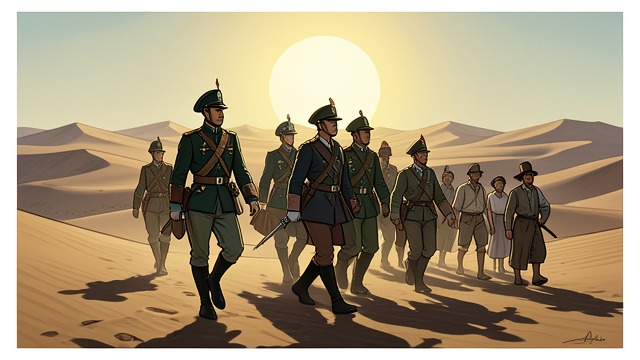
The French invasion of Egypt in 1798 overthrew Ottoman rule, but it did not set Egypt on a lasting path toward broadly shared prosperity. The book treats the invasion as one turn in a longer succession of outside control and elite rule: after the French departure, British colonialism followed, and later revolutions changed who governed without fundamentally changing the political and economic structure of Egyptian society.
Background and Invasion
Before 1798, Egypt was under the Ottoman Empire, whose rule, the book argues, did not foster the spread of the technologies and opportunities associated with the Industrial Revolution. The invasion by Napoleon Bonaparte ended Ottoman control, but the change in authority did not itself establish institutions that would enable ordinary Egyptians to share in economic opportunity.
From French Withdrawal to Muhammad Ali
After French forces withdrew, Muhammad Ali exploited the weakness of Ottoman control and seized power in 1805. He founded a dynasty that, in one form or another, remained in power until the Egyptian Revolution of 1952. The period from 1805 to 1848 under Muhammad Ali is presented as an important exception to the broader pattern of external domination: Egypt could pursue rapid economic change while temporarily outside the effective hold of the Ottoman Empire and European powers.
Muhammad Ali’s reforms were coercive, but they modernized the state bureaucracy, army, and tax system, while agriculture and industry grew. This episode complicates explanations that attribute Middle Eastern poverty chiefly to religion or fixed national culture. The book instead emphasizes how political control and institutional arrangements shaped the region’s economic trajectory.
The Return of External Influence
The growth associated with Muhammad Ali’s modernization did not last. After his death, Egypt fell under European influence, and British colonialism followed the earlier Ottoman rule. In the book’s account, neither empire had a strong interest in promoting prosperity for ordinary Egyptians; the invasion therefore marks a transition between governing powers, not a decisive break with the institutions that constrained broad-based development.
Revolutions and Institutional Continuity
Egypt later shook off Ottoman and British rule and overthrew its monarchy in 1952. Yet these upheavals, the book argues, were unlike England’s 1688 revolution: they did not fundamentally transform political institutions. Instead, a new elite took power while the basic social structure persisted, leaving ordinary people with little more ability to shape political decisions or seize economic opportunities. Egypt’s continued poverty is presented as a consequence of that institutional continuity, rather than proof that political change had never occurred.
The French invasion thus forms part of the book’s larger comparison between revolutions that replace rulers and political transformations that redistribute power more broadly. Its significance lies in the contrast between the regime change of 1798 and the limited institutional change that followed, set against the temporary economic shifts under Muhammad Ali and the longer pattern of externally shaped rule.
Mexican–American War
The Mexican–American War marked a major territorial loss for Mexico amid decades of political instability. In the book’s account, the defeat—along with the loss of Texas—belongs to a longer divergence: a weakened Mexican state and extractive economic institutions contrasted with the greater opportunities and industrial growth taking shape in the United States.
Political Instability and Santa Ana
The war is placed within Mexico’s unstable first decades as an independent country. While the United States experienced five years of political instability between 1860 and 1865, Mexico experienced almost continuous instability during its first fifty years of independence. The career of Antonio López de Santa Anna serves as the book’s illustration of this pattern.
Santa Anna, the son of a colonial official in Veracruz, first rose to prominence as a soldier fighting for Spain in the independence wars. In 1821 he changed sides and joined Agustín de Iturbide. He became president for the first time in May 1833, but exercised power for less than a month, preferring to let Valentín Gómez Farías serve as president. Gómez Farías’s presidency lasted fifteen days before Santa Anna returned to power. Santa Anna was soon replaced by Gómez Farías again, and their repeated changes of office continued until 1835.
Santa Anna returned to the presidency in 1839, 1841, 1844, and 1847, and again from 1853 to 1855. In all, he held the office eleven times. The book associates his presidencies with the loss of the Alamo and Texas, the Mexican–American War, and the subsequent loss of territory that became New Mexico and Arizona. The account uses this succession not as a detailed military narrative, but as evidence of a political order in which authority repeatedly changed hands.
Defeat and Territorial Loss
The war’s central consequence in the evidence is Mexico’s disastrous defeat and the loss of territory. The book names Texas, New Mexico, and Arizona as the lands lost in the broader sequence of events surrounding Santa Anna’s repeated returns to power. It does not describe battles, military operations, or the terms of a treaty; its emphasis is on what the territorial losses reveal about the instability of the Mexican state.
Between 1824 and 1867, Mexico had fifty-two presidents, few of whom assumed power through constitutionally sanctioned procedures. Set against that turnover, the territorial losses appear as more than an isolated military outcome: they form part of a period in which governments struggled to establish durable authority over the country.
State Weakness and Economic Consequences
The book links Mexico’s political instability to insecure property rights and a severe weakening of the state. The government had little authority and limited ability to raise taxes or provide public services. Even while Santa Anna was president, large parts of the country were beyond his control; the text connects this weakness to the United States’ annexation of Texas.
The account also situates the war within the legacy of colonial economic institutions. Mexico’s declaration of independence, it argues, was motivated in part by a desire to protect institutions developed during the colonial period. Those arrangements rested on the exploitation of Indigenous people and the creation of monopolies, limiting economic incentives and initiative for much of the population. As the United States began to experience the Industrial Revolution in the first half of the nineteenth century, Mexico became poorer.
Place in the Book’s Comparison
The Mexican–American War is therefore presented as one element in a comparative argument about political institutions and economic divergence, not as a self-contained account of the conflict. Mexico’s instability, weak state authority, and insecure property rights are contrasted with economic opportunities available to a large fraction of the population in the United States, particularly in its North and West.
The contrast does not make the war itself a complete explanation for the countries’ different paths. Instead, the book places territorial loss within a wider institutional pattern: political disorder weakened the Mexican state, while inherited economic arrangements restricted opportunity for the majority. The war’s significance in this account lies in how it illustrates the consequences of that instability and accompanies Mexico’s growing divergence from the industrializing United States.
Mexican Revolution
The Mexican Revolution began in 1910 and brought down Porfirio Díaz after more than three decades in power. In the book’s account, the upheaval was rooted in a durable institutional order: political authority was weakly constrained, land and business privileges could be allocated to supporters, and banking served the already wealthy. The revolution is therefore presented both as the end of Díaz’s rule and as part of a larger history of instability in which groups fought over the benefits of political power.
Political Background
The political order that preceded the revolution took shape through repeated contests over who could govern Mexico and on what terms. After the era of Antonio López de Santa Anna came an unsuccessful French effort to establish a colonial regime under Emperor Maximilian, from 1864 to 1867. The French were expelled, and a new constitution was written. The governments formed first by Benito Juárez and, after his death, by Sebastián Lerdo de Tejada were then challenged by Díaz, a young military commander who had won distinction in the war against the French and aspired to power.
In November 1876, Díaz formed a rebel army and defeated the government’s forces at the Battle of Tecoac. The following May, he had himself elected president. His rule continued more or less uninterrupted until the revolution began thirty-four years later, becoming increasingly authoritarian over time. This chronology makes the path to the revolution a story of armed victory followed by a long concentration of executive power, rather than a sudden crisis without political antecedents.
Power, Property, and Banking
The book contrasts Mexico’s political constraints with those in the United States. Both countries knew military commanders who entered politics, but the comparison turns on what happened after they gained office. George Washington, Ulysses S. Grant, and Dwight D. Eisenhower held the U.S. presidency after military careers; unlike Díaz and earlier Mexican leaders, they did not use force to obtain power or to avoid relinquishing it, and they abided by the Constitution. Nineteenth-century Mexican constitutions, by contrast, imposed few effective constraints on leaders such as Díaz. They could be removed only by the kind of force through which they had attained power.
Díaz violated property rights, facilitated the expropriation of large amounts of land, and granted monopolies and favors to his supporters across business, including banking. The book presents this as a continuation of a familiar pattern, comparing Díaz’s conduct with that of the Spanish conquistadors and Santa Anna. The beneficiaries were politically connected elites; the costs fell on people whose rights were insecure and who had little ability to check the use of state power.
The banking system shows how those political arrangements shaped economic opportunity. In 1910, the year the revolution began, Mexico had only forty-two banks, and two controlled 60 percent of the country’s banking assets. Competition among banks was practically absent. They could charge high interest rates and generally restricted loans to the privileged and already wealthy, who used access to credit to strengthen their control over different sectors of the economy. In the United States, by contrast, the nineteenth-century expansion of banking and competition made capital more accessible to potential inventors and business founders. The contrast is not explained by different motives among bankers: profit seeking existed in both countries, but institutions and political constraints channeled it differently.
Díaz’s Model and Its Costs
Díaz dismantled some colonial institutional legacies that had restricted international trade, anticipating that greater trade could enrich him and his supporters. But the model of development described in the book was not broad-based prosperity. It resembled the arrangements associated with Hernán Cortés, Pizarro, and de Toledo: elites could make great fortunes while the rest of society remained excluded. Investment might produce some economic growth, but the benefits were limited and came at the expense of people without secure rights.
The Yaqui people of Sonora illustrate that human cost. Between 1900 and 1910, possibly 30,000 Yaqui were deported and sent to work on the henequen plantations of Yucatán. Henequen fiber was a valuable export because it could be used to make rope and twine. The episode connects Díaz’s emphasis on export wealth with coercive dispossession and labor: economic activity expanded, but not on terms that protected all those involved in producing it.
Revolution and Regional Aftermath
Díaz finally lost power to revolutionary forces in 1910. The book treats the revolution as one instance of a wider pattern in Latin America, where extractive political and economic institutions persisted into the twentieth century and were associated with stagnation, instability, civil wars, and coups as groups struggled for the advantages of power. Revolutions followed in Bolivia in 1952, Cuba in 1959, and Nicaragua in 1979; meanwhile, prolonged civil wars took place in Colombia, El Salvador, Guatemala, and Peru.
The wider pattern also included the expropriation, or threat of expropriation, of assets and major agrarian reforms or attempted reforms in Bolivia, Brazil, Chile, Colombia, Guatemala, Peru, and Venezuela. These contests unfolded alongside military governments and different forms of dictatorship. Political rights gradually expanded, but the book notes that most Latin American countries did not become democracies until the 1990s and that instability persisted even afterward. The Mexican Revolution thus marks the overthrow of a long-standing authoritarian ruler while also introducing a recurring regional problem: removing a regime did not, by itself, settle the conflict over who held power or how the economy’s gains and losses would be distributed.
Interpretation and Significance
The book rejects the idea that Mexico chose institutions that enriched elites because its leaders simply lacked knowledge of better economic policies. Its comparison of Mexico and the United States argues that institutional constraints, rather than differences in intelligence or intentions, shaped political and economic choices. Where citizens could hold politicians accountable through elections and remove them from office, attempts to establish banking monopolies were harder to sustain. In Mexico, constitutions placed few comparable limits on Díaz, and political power could be secured and lost through force.
That distinction explains why the revolution matters in the book’s argument. Díaz’s fall was a decisive rupture in government, but the deeper significance lies in the institutional pattern that preceded it: insecure property rights, concentrated banking, favoritism, and weak checks on executive power. The revolution is situated not as a simple story of bad economic advice corrected by upheaval, but as an episode in a longer struggle over political authority and the distribution of wealth.
Battle of Tecoac
The Battle of Tecoac was the November 1876 military victory through which Porfirio Díaz defeated the Mexican government’s army and cleared the way to the presidency. Its significance lay not only in the outcome of a single battle: it marked the forceful resolution of a political challenge and the beginning of Díaz’s long, increasingly authoritarian rule, illustrating how weak constitutional constraints left power in Mexico vulnerable to seizure by force.
Political Background
After Mexico’s post-independence upheavals and an abortive French attempt to establish a colonial regime under Emperor Maximilian from 1864 to 1867, the French were expelled and a new constitution was written. The government first formed by Benito Juárez and, after his death, continued under Sebastián Lerdo de Tejada. It was challenged by Díaz, a young military figure who had emerged as a victorious general in the war against the French and developed political ambitions.
Díaz organized a rebel army rather than relying on constitutional procedures to take power. In November 1876, his forces defeated the government’s army at Tecoac. The evidence identifies the result and its political setting, but does not describe the battle’s tactics, duration, or casualties.
From Victory to the Presidency
The victory at Tecoac was followed by Díaz’s election as president in May 1877. The sequence—military defeat of the incumbent government followed by an election—made the battle the crucial opening in Díaz’s rise, though the account does not detail the election itself or the precise political arrangements surrounding it.
Díaz then ruled Mexico in a more or less unbroken and increasingly authoritarian fashion until his overthrow at the outbreak of the Mexican Revolution, thirty-four years later. The battle therefore stands at the start of a prolonged period of rule, rather than as an isolated military episode with only immediate consequences.
Force and Constitutional Constraint
Díaz’s path to power is placed alongside that of Agustín de Iturbide and Antonio López de Santa Anna, who also began as military commanders and became political rulers. Military careers were not inherently incompatible with constitutional government: George Washington, Ulysses S. Grant, and Dwight D. Eisenhower also moved from military leadership to the American presidency. The contrast in the account is that those American generals did not use force to seize power or to avoid relinquishing it, and they abided by the Constitution.
Mexico had constitutions too, but they imposed few effective constraints on Iturbide, Santa Anna, or Díaz. As the account’s comparison makes clear, the decisive issue was not simply whether a constitution existed, but whether it could limit rulers and govern their accession to and departure from office. These leaders, the book argues, could be removed only by the same means through which they had attained power: force. Tecoac thus exemplifies the wider institutional weakness that made political authority vulnerable to armed contest.
Historical Significance
The battle’s place in the narrative connects Díaz’s rise to a broader argument about institutions and economic outcomes. The account rejects explanations of Mexico’s later divergence from the United States based simply on differences in leaders’ knowledge or intentions. Instead, it emphasizes the institutional constraints facing presidents and elites, and the way political arrangements shaped economic institutions and the distribution of power.
That framework makes Tecoac consequential beyond the battlefield: it begins a presidency that the book characterizes as increasingly authoritarian and locates Díaz’s accession within a political order in which constitutional limits offered little protection against rule by force. The evidence establishes this sequence and interpretation; it does not attribute any particular later policy or economic decision directly to the battle itself.
Independence of the Belgian Congo
The Independence of the Belgian Congo in 1960 ended Belgian colonial rule without breaking the institutional pattern that had concentrated power and wealth in a narrow elite. In the account, independence is a decisive political transition, but not an economic or institutional reset: extractive arrangements persisted, while a state assembled from many precolonial societies struggled to exercise authority across its territory.
Colonial rule and the inherited order
The story of postcolonial Congo is set against a longer history of concentrated power. Under the precolonial Kingdom of Kongo, the king and elite benefited from slavery and plantations. Reforming economic institutions to protect individual property rights would have threatened the wealth those arrangements generated; meaningful reform would also have required limiting the king’s political power. The example of the king’s five hundred musketeers underscores why a promise to abolish slavery could not, by itself, guarantee that the promise would endure.
European rule deepened insecurity of human and property rights in the Congo basin. During the late nineteenth-century Scramble for Africa, colonial rule reproduced extractive institutions and political absolutism, empowering a few at the expense of the majority. Belgian colonialists, most notably King Leopold II, became the beneficiaries of this order. Independence therefore arrived after a colonial period that had not established secure rights or broad-based economic institutions.
Independence and the persistence of extraction
When the Congo became independent in 1960, its economic institutions, incentives, and performance reproduced the earlier pattern. Extractive economic institutions remained supported by extractive political institutions; independence changed the formal political status of the country without, in this account, changing the way power and economic gains were distributed.
That continuity is not presented as inevitable simply because the country was poor or its citizens and politicians lacked knowledge. The explanation instead turns on political power: elites had little incentive to secure property rights, provide basic public services, or encourage economic progress when their interests lay in extracting income and sustaining their authority. The institutional legacy of colonial rule thus outlasted the transfer of sovereignty.
A state with limited reach
The colonial creation of Congo as a single polity brought together many precolonial states and societies. The national government, run from Kinshasa, had little control over much of this large and diverse territory. The resulting lack of political centralization was a distinct problem alongside elite extraction: the state could be used to enrich those close to power, yet remain weak in its reach across the country.
In the 1960s, the provinces of Katanga and Kasai threatened to secede, and the central government had to appeal for foreign assistance to stop them. The episode illustrates the tension between a state whose rulers could exploit public authority for private gain and a state that lacked the authority to govern its constituent regions. The account places this weakness close to the point of state collapse and identifies it as a feature Congo shared with much of sub-Saharan Africa.
Mobutu and the post-independence pattern
The post-independence order continued under Joseph Mobutu, who ruled from 1965 to 1997. Congo experienced almost unbroken economic decline and mounting poverty during his rule, and the decline continued after he was overthrown by Laurent Kabila. Mobutu built highly extractive economic institutions, leaving citizens impoverished while he and the elite around him, known as Les Grosses Legumes, accumulated great wealth.
Mobutu’s palace at Gbadolite, his birthplace in the north of the country, made that inequality concrete. Its airport was large enough for a supersonic Concord jet, which he frequently rented from Air France for trips to Europe; there he bought castles and owned large tracts of Brussels. These details sharpen the contrast between the poverty of the population and the riches of the ruling circle. In 1973, Mobutu’s Zairianization program involved the mass expropriation of foreign economic interests, but he presided over a state that remained weakly centralized and had to rely on outside help against provincial secession.
Historical significance
The account uses Congo to show why independence alone need not produce prosperity. Extractive institutions can survive a change in who formally rules, especially when political power remains concentrated among people who benefit from extraction. Building a more prosperous society would require institutions that protect rights and provide services, but those changes would also threaten the economic and political position of the ruling elite.
The independence of 1960 is therefore presented as a critical transition within a longer institutional history, rather than as a clean break from it. The persistence of concentrated power, insecure rights, and limited central authority helps explain why Congo remained poor; the account locates the cause not in geography, culture, or popular ignorance, but in institutions that continued to serve the interests of those with power.
Partition of Korea

The Partition of Korea divided a formerly united country into U.S.- and Soviet-administered spheres at the 38th parallel in 1945. In the book’s account, that line became more than a geopolitical boundary: it marked the beginning of sharply different institutional paths, whose cumulative consequences were visible in the contrasting prosperity, health, and everyday lives of North and South Koreans.
Division and Divergent Systems
As the Second World War drew to a close, Japan’s colonial rule in Korea began to collapse. Within a month of Japan’s unconditional surrender on August 15, 1945, the peninsula was divided at the 38th parallel. The United States administered the South and Russia the North. The partition thus established separate political settings before either society’s later economic trajectory had taken shape.
The book emphasizes that the stark disparity that followed did not exist before the end of the war. In the South, Syngman Rhee, educated at Harvard and Princeton and firmly anticommunist, was elected president in 1948 with significant U.S. support. The country was not democratic: Rhee and his successor, General Park Chung-Hee, were authoritarian presidents. Yet both governed a market economy that recognized private property. After 1961, Park directed state credit and subsidies toward firms that succeeded, while investment in education helped produce high literacy and schooling. Businesses used that relatively educated workforce, investment and industrialization policies, export opportunities, and technology transfer to fuel rapid growth.
North of the line, Kim Il-Sung established himself as dictator by 1947 and, with Soviet assistance, introduced a rigid centrally planned economy under the Juche system. Private property was outlawed and markets banned. Freedoms were restricted not only in economic life but across other spheres, with exceptions for the small ruling elite around Kim and, later, his son and successor Kim Jong-Il. In the book’s comparison, the divide was therefore not simply between two levels of wealth: the governments on either side organized economic life and access to opportunity in fundamentally different ways.
War, Separation, and Reunion
The uneasy Cold War peace shattered in June 1950, when the North Korean army invaded the South. North Korean forces made major gains and captured Seoul, but by autumn they were in retreat. Amid that reversal, Hwang Pyŏng-Wŏn and his brother were separated. Hwang avoided conscription by hiding, remained in the South, and worked as a pharmacist. His brother, a doctor treating wounded South Korean soldiers in Seoul, was taken north as the North Korean army withdrew.
The brothers met again in Seoul in 2000, after fifty years apart, when the two governments agreed to a limited family-reunification program. Their reunion brings the national division into the intimate scale of family life: the political boundary had not only separated administrations but had kept brothers apart for half a century.
Their conversation made the distance between the two systems tangible. Hwang had a car; his brother did not. Asked whether he had a telephone, the brother said no, although his daughter, who worked at the Foreign Ministry, had one—and could not make calls without knowing the code. Hwang recalled that people from the North at the reunion were asking for money, and offered some to his brother. His brother refused, fearing that the government would demand the money if he returned with it.
A threadbare coat carried the same institutional constraint in a quieter form. Hwang suggested that his brother leave the worn coat behind and travel back wearing a better one. His brother explained that the coat belonged to the government and had only been lent to him for the visit. At their parting, he seemed uneasy and repeatedly nervous, as if someone might be listening. He said that he lived well, but Hwang thought he looked awful and was thin as a rake. These details show how political control reached beyond formal rules to shape what a visitor could keep, say, or carry home.
The Material Gap
The book sets the brothers’ encounter against a much wider divergence. South Korean living standards came to resemble those of Portugal and Spain; North Korean living standards were comparable to those of a sub-Saharan African country, at about one-tenth of the South’s average. North Koreans could also expect to live ten years less than their southern cousins. A satellite map of nighttime light makes the contrast immediately visible: South Korea blazes with light, while North Korea is almost entirely dark because of its lack of electricity.
By the late 1990s, roughly half a century of growth in the South and stagnation in the North had produced a tenfold gap between the two halves of the once-united country. The northern economy’s collapse led to the starvation of millions. The contrast is not presented as an outcome explained by ancient cultural or geographic differences, or by ignorance; the book directs attention instead to the institutions that structured incentives, property, markets, and political power.
A Critical Juncture, Not a Predestined Outcome
The partition is significant in the book’s argument as a historical turning point whose consequences depended on the institutions built on either side. It does not make the later contrast automatic: the same initial boundary led into distinct economic arrangements, and those arrangements shaped how people could invest, trade, work, and seek a better life. The division’s meaning emerges through this sequence—from the postwar split, to institutional divergence, to radically unequal outcomes.
The book places Korea within a broader account of critical junctures and institutional change. Major disruptions can alter the balance of economic and political power, but their effects interact with existing arrangements rather than dictating a single outcome. Institutional differences themselves can accumulate through contingent conflicts and gradual drift; they are not a predetermined march toward prosperity or poverty. In Korea, the postwar partition made the contrast between two systems unusually clear, while the reunion of Hwang and his brother supplied a human measure of what that divergence meant: a shared origin, fifty years of separation, and profoundly different conditions on either side of the 38th parallel.
Korean War
The Korean War began in June 1950 when North Korean forces invaded South Korea, shattering the uneasy peace between the two territories created after Japan’s surrender in 1945. The invasion and retreat divided families as well as a country: Hwang Pyŏng-Wŏn remained in the South, while his brother was taken north. Their separation lasted fifty years, and the war’s aftermath became the starting point for two sharply divergent institutional and economic paths.
Division and the outbreak of war
As the Second World War drew to a close, Japanese colonial rule in Korea collapsed. Within a month of Japan’s unconditional surrender on August 15, 1945, the peninsula was divided at the 38th parallel into two spheres of influence: the United States administered the South, while Russia administered the North. The division preceded the war, but the resulting political separation became the setting for the conflict and for the different systems that followed it.
In June 1950, the North Korean army invaded the South and initially advanced far enough to capture Seoul. By autumn, however, North Korean forces were in retreat. The change in military fortunes was also a moment of personal rupture for the Hwang brothers: Hwang Pyŏng-Wŏn hid and avoided conscription into the North Korean army, stayed in the South, and worked as a pharmacist. His brother, a doctor treating wounded South Korean soldiers in Seoul, was taken north as the army withdrew.
A separation that lasted fifty years
The brothers did not meet again until 2000, when the two governments agreed to a limited family-reunification program. Their reunion in Seoul made the political division tangible in everyday details. Hwang Pyŏng-Wŏn’s brother had become a doctor in the North Korean air force, a comparatively good position within the military dictatorship, yet his circumstances remained markedly poorer than his brother had expected.
The exchange between them revealed the constraints reaching into ordinary life. Hwang Pyŏng-Wŏn’s brother had no personal telephone; his daughter, who worked at the Foreign Ministry, had one, but calls could not be made without a code. He declined money because he feared the government would demand it if he returned with it. Even the coat he wore to the reunion had been borrowed from the government, so he could not take his brother’s coat back with him. Although he said he lived well, Hwang Pyŏng-Wŏn thought he looked thin and unwell, and recalled that he seemed nervous at their parting, as if someone might be listening.
Two institutional paths
The book places this family reunion against the vast difference in living standards that had emerged by the end of the twentieth century. South Koreans had living standards comparable to those of Portugal and Spain; North Korean living standards were closer to those of a sub-Saharan African country, at about one-tenth the South Korean average. The account also contrasts life expectancy: the average North Korean could expect to live ten years less than a South Korean. Satellite images offered a visual counterpart to these measures: the North appeared almost entirely dark at night because of the lack of electricity, while the South was brightly illuminated.
These differences were not ancient and, the book emphasizes, did not exist before the end of the Second World War. After 1945, the two governments organized their economies in radically different ways. South Korea’s early institutions were shaped by Syngman Rhee, an anticommunist leader educated at Harvard and Princeton who became president in 1948 with significant United States support. The country was not a democracy under Rhee or his successor, Park Chung-Hee. Yet both governed a market economy that recognized private property; after 1961, Park used state power to channel credit and subsidies to successful firms.
North Korea followed a different course under Kim Il-Sung, a former anti-Japanese communist partisan who established himself as dictator by 1947 with Soviet support. He introduced a rigid centrally planned economy under the Juche system, outlawed private property, and banned markets. Restrictions extended beyond economic activity into other areas of life, with exceptions for the small ruling elite around Kim Il-Sung and, later, his son and successor Kim Jong-Il. The account connects this institutional arrangement to continued economic stagnation.
War’s longer significance
In the South, investment-supporting economic institutions were accompanied by public investment in education, which produced high rates of literacy and schooling. Companies drew on that educated population and on policies favoring investment, industrialization, exports, and technology transfer. South Korea consequently became one of East Asia’s rapidly growing “Miracle Economies.” By the late 1990s, roughly half a century after the division, growth in the South and stagnation in the North had produced a tenfold gap between them; the North Korean economic disaster had also led to the starvation of millions.
The war is thus significant in the book not only as the military conflict that separated the brothers, but as a turning point in the history of a once-united country. The sharply contrasting outcomes are presented as evidence against explanations based on geography, culture, or leaders’ ignorance. The decisive contrast lies in the institutions built on either side of the 38th parallel, and in the incentives and opportunities those systems created—or denied—to their populations.
South Korean coup of 1961

The South Korean coup of 1961 brought General Park Chung-Hee to power and opened a period in which authoritarian rule coexisted with vigorous economic growth. In the book’s account, the coup matters not as a simple choice between dictatorship and development, but as one turn in a contingent institutional sequence: South Korea’s market economy and economic inclusion helped its authoritarian government foster growth, while later political reform carried the country toward pluralistic democracy.
The coup and an authoritarian government
Park came to power through a military coup in 1961. His government was authoritarian, following the earlier presidency of Syngman Rhee, who had been elected in 1948 and whose institutions were shaped by the Korean War and the perceived threat of communism spreading south of the 38th parallel. The coup therefore did not immediately establish democracy. It placed political authority in the hands of a military ruler within a society whose economy already recognized private property and operated through markets.
Growth through a market economy
The book distinguishes South Korea’s experience from other instances of growth under extractive political institutions. Park’s government actively supported rapid growth, channeling credit and subsidies to successful firms. The regime’s economic policy could promote development in part because it was not directly sustained by extractive economic institutions: the market economy provided a basis for economic activity beyond the political elite’s control.
By the 1970s, economic institutions had become sufficiently inclusive to weaken one rationale for military dominance. The economic elite had relatively little to gain from controlling politics themselves or leaving it under military rule. Income was also comparatively equal, giving elites less reason to fear pluralism and democracy. Thus economic development did not erase authoritarian rule, but it altered the interests and risks that shaped the political contest.
From military rule toward democracy
Park was assassinated in 1979, but his death did not immediately end military government. Another coup followed, led by Chun Doo-hwan. The subsequent transition depended on more than the departure of a single ruler: a strong democracy movement challenged the dictatorship, and the United States’ influence, especially in the context of the threat from North Korea, meant the movement could not be suppressed indefinitely.
Chun’s chosen successor, Roh Tae-woo, initiated political reforms. Those reforms led to the consolidation of pluralistic democracy after 1992. The sequence—Park’s coup, growth under authoritarian rule, the continuation of military government after his assassination, and eventual reform—shows that economic growth alone did not automatically produce democracy; political change emerged through a convergence of economic and political conditions.
Significance in comparative perspective
South Korea illustrates how growth can occur under extractive political institutions without being destined to remain there. Its case contrasts with the Soviet Union, where growth under extractive institutions ran out of steam in the 1980s and the economy collapsed in the 1990s. In South Korea, a more inclusive economy, relative income equality, pressure from a democracy movement, and the country’s international circumstances contributed to a different political outcome.
The coup is therefore a turning point within a history shaped by both institutional constraints and contingency. Park’s authoritarian government could encourage growth because economic institutions allowed room for market activity; over time, the distribution of economic interests and the challenge from democratic forces helped make political pluralism more attainable. The contrast with the Soviet trajectory underscores the book’s broader argument that similar authoritarian beginnings need not yield the same institutional future.
South Korean democratization
South Korean democratization was a transition from authoritarian rule toward pluralistic democracy, showing that economic growth under an authoritarian government did not have to end in political collapse. The account links the transition to the distribution of economic power, relative income equality, domestic opposition, and the influence of the United States amid the threat from North Korea.
Authoritarian Growth and Its Conditions
General Park came to power in a military coup in 1961. South Korea’s economy already had essentially inclusive economic institutions, and the regime felt secure enough to promote growth actively. The account distinguishes this experience from cases where political elites feared that more inclusive economic arrangements would undermine their hold on power: under Park, growth was not directly sustained by extractive economic institutions.
By the 1970s, economic institutions had become sufficiently inclusive to weaken one rationale for military and elite political dominance. The economic elite had little to gain by maintaining its own or the military’s control of politics. Relative income equality also left the elite with less to fear from pluralism and democracy. The economic arrangements that had supported rapid growth thus helped alter the political incentives surrounding the authoritarian system.
Opposition and Political Opening
Economic conditions alone did not produce the transition. A strong democracy movement challenged the military dictatorship, while the United States exerted significant influence, particularly in the context of the threat from North Korea. In the account’s explanation, those circumstances meant the movement could not be repressed indefinitely. Domestic mobilization and external influence therefore constrained the military regime even as shifts in the distribution of economic interests reduced elite opposition to political pluralism.
From Coup to Consolidated Democracy
General Park’s assassination in 1979 did not immediately bring democracy: another military coup followed, led by Chun Doo-hwan. The sequence underscores that the transition was neither immediate nor automatic. Political reforms began under Chun’s chosen successor, Roh Tae-woo, and the process led to the consolidation of pluralistic democracy after 1992.
Comparative Significance
The Korean case is contrasted with the Soviet experience. Both countries saw rapid growth under extractive political institutions, but South Korea moved toward inclusive political institutions, whereas no comparable transition occurred in the Soviet Union; Soviet growth ran out of steam, followed by economic collapse in the 1980s and the system’s falling apart in the 1990s. The contrast makes democratization central to the account’s distinction between growth that can continue under authoritarian control and the political transition that helped consolidate South Korea’s pluralistic order. The transition depended on a confluence of factors, not simply on growth or on an authoritarian leadership becoming better informed.
Chinese economic reforms

Chinese economic reforms transformed the direction of the country’s economy after Mao Zedong’s death, moving it away from socialist policies and institutions toward market incentives, first in agriculture and then in industry. In the book’s account, their decisive significance lies in the political process that made this shift possible: reform followed a struggle over power within the Communist Party, rather than a sudden discovery by its leaders that earlier policies were economically damaging. The resulting growth was substantial, but it did not amount to a transition to fully inclusive political institutions.
The Political and Economic Background
The reforms are presented against the record of severe economic and political damage under Mao. In the 1950s, the Great Leap Forward pursued drastic industrialization and led to mass starvation and famine. In the 1960s, the Cultural Revolution brought the persecution of intellectuals and educated people whose party loyalty might be questioned, wasting talent and resources. The book therefore rejects the claim that Chinese poverty before the reforms arose from Chinese culture: it locates the causes in the way Mao organized the economy and conducted politics.
This history also frames the reforms as a break in policy direction, rather than a cultural transformation. The book argues that neither the earlier poverty nor the later growth can be explained by a change in Chinese values. Instead, it ties the difference to changes in economic organization and political leadership. That distinction matters to its broader account of global inequality: the same society could experience very different economic outcomes as its institutions and incentives changed.
A Political Turn, Not an Enlightenment
After Mao’s death, Deng Xiaoping and his allies gradually abandoned socialist economic policies and institutions. They began in agriculture and subsequently extended reforms to industry, introducing market incentives into sectors previously organized under socialist arrangements. The sequence was gradual, but the book describes the change in direction as radical in its consequences for China’s economic organization.
The account explicitly distinguishes this shift from an intellectual conversion by the ruling party. Deng and his allies did not prevail because the Communist Party finally recognized that collective ownership of agricultural land and industry created poor incentives. They defeated powerful opponents within the party and changed its leadership and direction through what the book calls a political revolution of sorts. Their economic reforms followed from that political victory. In this interpretation, politics determined the move toward market incentives; improved advice or a better understanding of economic principles did not.
That explanation is also contrasted with the idea that poverty can be overcome simply by informing leaders about sound policy. The book argues that political and economic institutions shape the incentives and constraints rulers face, and that these structures can prevent the adoption of policies likely to improve general welfare. China’s shift, accordingly, did not demonstrate that leaders had become less self-interested. Deng and his allies were no less self-interested than their rivals; their interests and political objectives differed, and they gained enough power to change policy.
Growth Under Continuing State Control
The reforms produced rapid economic growth, but the book distinguishes this outcome from the creation of inclusive political institutions. Early growth was spearheaded by radical market reforms in agriculture; changes in industry were more muted. The state and the Communist Party continued to play a central role in determining which sectors and companies would receive additional capital and expand, decisions that could make or break fortunes.
The comparison with the Soviet Union clarifies what this continued control means in the book’s analysis. Like the Soviet Union during its period of rapid growth, China could direct resources toward productive areas and grow quickly while economic institutions remained extractive and under state control. The comparison is not a claim that the countries followed identical paths: the Chinese reforms had already introduced market incentives, especially in agriculture. Rather, the shared point is that rapid growth can occur without a corresponding opening of political power.
The South Korean experience offers a different possible trajectory. There, increasingly inclusive economic institutions reduced the economic elite’s reason to favor its own or the military’s political dominance, while relative income equality left the elite less fearful of pluralism and democracy. The account does not present that transition as inevitable for China. It suggests that China’s economic institutions, still far from fully inclusive, make a South Korean-style political transition less likely, though not impossible.
Significance in the Book’s Argument
Chinese economic reforms serve as a central case in the book’s rejection of explanations that treat poverty as the product of ignorance, culture, or fixed national traits. The contrast between famine and persecution under Mao and growth after the shift in policy is explained through changes in institutions, leadership, and political incentives. China’s experience illustrates how changes in political power can redirect economic policy even when the people making those decisions remain self-interested.
The case also sets a limit on what growth alone proves. The reforms unleashed market incentives and rapid expansion, but the state and the Communist Party retained decisive influence over investment and business fortunes. Economic transformation, in the account, is therefore not synonymous with political pluralism or inclusive institutions. China’s trajectory demonstrates both the force of institutional change and the possibility that growth can continue under concentrated political control.
1972 Ghanaian coup d'état
The 1972 Ghanaian coup d'état brought down Prime Minister Kofi Busia’s government after a currency devaluation set off mounting unrest in Accra. In the account presented here, the coup is the abrupt political consequence of an economic gamble: reforms intended to address Ghana’s worsening external crisis collided with the government’s dependence on politically important constituencies, and the new military rulers promptly reversed the devaluation.
Economic and Political Background
Busia came to power in 1969 facing political constraints similar to those that had confronted his predecessor, Kwame Nkrumah. His government pursued expansionary policies, maintained price controls through marketing boards, and kept the exchange rate overvalued. These choices helped transfer resources toward politically powerful groups, including urban constituencies whose support the government needed. Price controls squeezed agriculture while providing urban consumers with cheap food and generating revenue for government spending.
The policies were not sustainable. Ghana encountered repeated balance-of-payments crises and shortages of foreign exchange. On December 27, 1971, Busia signed an agreement with the International Monetary Fund that included a major currency devaluation. The International Monetary Fund, the World Bank, and the wider international community pressed him to carry out the agreed reforms. But the international pressure did not remove the domestic political risk: Busia understood that devaluation could imperil his government.
Unrest and Overthrow
The currency’s devaluation was followed by rioting and discontent in Accra, Ghana’s capital. Unrest mounted uncontrollably, and the military overthrew Busia. The coup was led by Lieutenant Colonel Acheampong, who immediately reversed the devaluation. The sequence made the political stakes of reform visible: a measure adopted to confront economic crisis produced immediate public discontent, and the government fell before the change could be sustained.
The reversal also marked a sharp break between Busia’s policy and the new military government’s first response. The account identifies the overthrow and reversal, but gives no further detail about the coup’s military operations or the political arrangements that followed. Its significance here rests on the direct connection between the reform gamble, unrest in the capital, and the removal of the government.
Significance
The episode challenges the idea that poverty persists mainly because rulers do not know which economic policies work. Busia’s choices are presented not as the product of ignorance or a mistaken belief that the policies were sound economics, but as political decisions shaped by the need to keep powerful groups content. The devaluation exposed how a government’s room to pursue reform could be limited by the constituencies on which its survival depended.
The coup therefore serves as an example of the distinction between policy advice and the political conditions required to enact policy. International institutions could press for reform, but their recommendations could not dissolve the incentives and constraints facing Ghana’s leaders. In the account’s argument, the obstacle to more growth-supporting policies was not simply a shortage of sound advice: it was the political and economic institutional setting in which leaders made decisions, and in which those decisions could trigger a change of government.
Telmex privatization

Telmex privatization was the sale of Mexico’s state telecommunications monopoly to a consortium led by Carlos Slim’s Grupo Carso. It became a defining example of how privatization could transfer a public monopoly into private hands without creating effective competition: Slim acquired the company despite not making the highest bid, used Telmex’s own dividends to defer payment, and built a fortune around exclusive access to a market that remained difficult for rivals to enter.
The sale and its terms
The Mexican government announced in September 1989 that it intended to sell 51 percent of Telmex’s voting stock, equivalent to 20.4 percent of its total stock. Bids followed in November 1990. Although Slim did not offer the highest bid, the auction was won by a consortium led by his Grupo Carso. The transaction therefore turned not simply on the price offered: the successful buyer gained control of a company that already held a dominant position in telecommunications.
A further advantage lay in how Slim paid. Rather than paying for the shares immediately, he delayed payment and used Telmex’s own dividends to finance the stock purchase. A publicly owned monopoly thus became Slim’s private monopoly, and it proved hugely profitable. The account presents this outcome as an important contrast with the rise of Bill Gates and Microsoft in the United States, where the Justice Department challenged Microsoft over alleged abuse of monopoly power.
Barriers, influence, and expansion
The Telmex acquisition exemplifies the obstacles facing Mexican entrepreneurs. Entry into lucrative sectors could depend on securing expensive licenses, navigating red tape, overcoming resistance from politicians and incumbent businesses, and finding financing in a financial sector often aligned with those incumbents. Such barriers could shut new businesses out, but they could also shelter an established firm from challengers. In the book’s account, the difference depended in part on whom an entrepreneur knew and could influence.
Slim, described as ambitious and talented and as coming from a relatively modest background of Lebanese immigrants, became adept at obtaining exclusive contracts. Telmex supplied the platform for extending his reach beyond Mexico into the rest of Latin America. The acquisition was therefore both a particular transaction and a foundation for wider commercial expansion, built around privileged access rather than innovation as the source of his fortune.
Challenges to the monopoly
The monopoly attracted formal scrutiny, but the efforts to constrain it achieved little. In 1996, long-distance provider Avantel petitioned the Mexican Competition Commission to examine whether Telmex held a dominant position. The following year, the commission found that Telmex had substantial monopoly power in local telephone service and national and international long-distance calls, among other areas.
Regulatory findings did not translate into effective limits on the company’s dominance. Slim and Telmex could use the recurso de amparo, or appeal for protection, to argue that a particular law did not apply to them. The device dated to Mexico’s 1857 constitution and was originally intended as a safeguard of individual rights; in this account, it also helps explain why attempts by Mexican regulators to limit Telmex’s monopolies came to nothing.
Significance
The privatization illustrates how the sale of a state asset does not, by itself, ensure open competition. Telmex passed from public to private ownership while retaining its monopoly position, and the barriers surrounding entry could protect the resulting private incumbent. The contrast drawn with the United States is institutional as well as personal: Microsoft faced civil action and a settlement with the Justice Department, while Telmex’s recognized dominance proved resistant to regulatory challenge.
The transaction thus connects ownership, market access, and political influence. Its consequences extended beyond the initial sale: Telmex generated substantial profits for Slim and supported his expansion across Latin America, while competitors continued to face a market in which formal competition rulings did not bring the monopoly under control.
Peasants' Revolt of 1381
The Peasants’ Revolt of 1381 was a mass challenge to the English state’s effort to restrain workers after the Black Death. Although the rebels were defeated and Wat Tyler was executed, the revolt helped end attempts to enforce the Statute of Laborers: feudal labor services dwindled, wages rose, and a more inclusive labor market began to emerge. In the book’s account, the uprising also marks a longer drift of political power away from elites and toward citizens more broadly.
Background: Labor Scarcity and State Restraint
The Black Death left labor scarce, strengthening workers’ ability to demand greater freedom and higher wages. English authorities attempted to contain that shift through the Statute of Laborers, which sought to hold wages at their pre-plague levels. Its restrictions also targeted workers who left employment without an employer’s permission, threatening imprisonment for departing before the agreed term. The state was trying to preserve older labor arrangements as the balance between workers and landlords changed.
Revolt and Immediate Outcome
In 1381, resistance broke into open revolt under Wat Tyler. The rebels captured most of London, demonstrating that the challenge to the existing order had become a major political force. The uprising was ultimately defeated, and Tyler was executed. Yet the defeat did not restore the state’s ability to impose the labor regime it had tried to defend: there were no further attempts to enforce the Statute of Laborers.
Consequences for Work and Wages
The retreat from enforcement had lasting economic consequences. Feudal labor services dwindled, an inclusive labor market began to emerge in England, and wages rose. The revolt therefore mattered not only as a dramatic confrontation but as part of the failure of state efforts to reverse post-plague changes in work and bargaining power.
Political Significance and Historical Contrast
The revolt’s significance extended beyond labor relations. It exemplified the slow, incremental drift of power from elites toward citizens more generally, through the political mobilization of rural communities. That process was not a guaranteed path to inclusive institutions: in Eastern Europe, where towns were weaker and landlords had stronger incentives and greater capacity to preserve an extractive labor market, workers’ freedoms were increasingly curtailed after the plague. The English revolt thus stands within a broader divergence in which similar demographic pressures produced different institutional outcomes.
Place in a Longer Institutional Change
The uprising was one part of a longer English trajectory, not a single event that settled the country’s political future. Later, the norm took hold that the king could not raise new taxes without Parliament’s consent, while the seventeenth-century conflict over absolutism culminated in a constitutional regime based on pluralism. The book treats the revolt as an early example of rural political mobilization within that gradual institutional drift, while emphasizing that history remained contingent and required further crucial turns.
English Civil War
The English Civil War, which broke out in 1642, was a struggle over the distribution of political authority and the economic institutions that authority sustained. It pitted Charles I against Parliament, but it did not divide the country neatly into king and people: some members of Parliament sided with the Crown, while support for each side reflected differing economic interests. The war became a landmark in the long contest over royal power, a contest that ultimately helped make Parliament, rather than the monarch, the center of state decision-making.
Background and institutional stakes
The conflict emerged from a prolonged attempt by the Stuart monarchy to strengthen royal authority. Charles’s increasingly absolutist conduct and extractive policies generated resentment. In 1640, conflict with Scotland and a shortage of funds for an army forced him to call Parliament to request taxes. The Short Parliament lasted only three weeks: its members raised grievances instead of agreeing to taxation, and Charles dismissed them. After Scottish forces invaded England and occupied Newcastle, Charles opened negotiations; the Scots demanded Parliament’s involvement. He then summoned the body that became the Long Parliament, which continued sitting until 1648 and refused to dissolve when he ordered it to.
The dispute was not simply constitutional in the abstract. Parliament sought to end absolutist institutions; Charles sought to strengthen them. Those positions were bound up with economic arrangements, including who could trade and who benefited from state protection. In this account, the war belongs to the wider institutional struggles of the sixteenth and seventeenth centuries, whose culmination included both the Civil War and the Glorious Revolution of 1688.
Economic interests and the sides in the war
The coalitions reflected the uneven effects of monopolies and regulation. Rich and powerful merchants in Shrewsbury and Oswestry held local monopolies protected by the Crown against competition from London merchants; those merchants sided with Charles I. In contrast, Birmingham’s metallurgical industry had flourished where monopolies were weak and newcomers did not face the seven-year apprenticeship required elsewhere. During the war, its producers made swords and supplied volunteers to Parliament’s side.
Lancashire offers another example of how local economic conditions shaped political allegiance. The county’s limited guild regulation had enabled the development, before 1640, of the New Draperies, a lighter cloth. The part of Lancashire where this production was concentrated was the county’s only area to support Parliament. These contrasts make the conflict legible as a contest over the institutions governing economic opportunity, not merely a clash of political loyalties detached from material interests.
Victory, execution, and restoration
Under Oliver Cromwell’s leadership, the Parliamentarians—also known as Roundheads—defeated the Royalists, or Cavaliers. Charles was tried and executed in 1649, and the monarchy was abolished. Yet victory over the king did not itself produce inclusive institutions. The monarchy gave way instead to Cromwell’s dictatorship.
After Cromwell’s death, the monarchy was restored in 1660, and it recovered many privileges taken from it in 1649. Charles II renewed the effort to create absolutism; his brother James II, who succeeded him in 1685, intensified it. James’s attempt to reestablish absolutism in 1688 produced a further crisis and civil war. Parliament was more united and organized on this occasion, and the resulting Glorious Revolution established a more decisive shift in authority. The Civil War was therefore a major episode in the conflict, but not a self-sufficient resolution of it.
Consequences for Parliament and the economy
After 1688, Parliament’s authority over state policy made a difference to the protection of property and the use of public revenue. Many parliamentarians had investments in trade and industry and therefore had a stake in enforcing property rights, which the Stuart kings had often infringed. When the Stuarts controlled government spending, Parliament resisted higher taxes and a stronger state; once Parliament itself controlled spending, it was willing to raise taxes for activities it considered valuable. A leading priority was strengthening the navy to protect members’ overseas commercial interests.
The transfer of authority also widened access to political decision-making, but only modestly. England was far from democratic: in the eighteenth century, fewer than two percent of the population could vote, and voters had to be men. Birmingham, Leeds, Manchester, and Sheffield—the cities where the Industrial Revolution took place—had no independent representation in Parliament. Rural areas were overrepresented, voting rights in counties depended on landownership, and boroughs could be controlled by small elites. In Buckingham, thirteen burgesses had the exclusive right to vote; in the so-called rotten boroughs, tiny electorates such as Old Sarum’s seven voters and Dunwich’s thirty-two still elected two members each. Parliament’s victory constrained monarchy without eliminating political exclusion.
Historical significance
The war’s significance lies partly in the distinction between defeating a ruler and changing the institutions that sustain power. The execution of Charles I and abolition of the monarchy did not prevent dictatorship or the restoration of royal privilege. More durable change came through a later political crisis that relocated decision-making authority to Parliament and gave groups beyond the king’s immediate circle greater influence, though participation remained sharply limited.
The episode also illustrates how conflict over institutions can join political power to economic advantage. Monopolies helped shape allegiance; their uneven strength affected industrial development and the resources available to each side. In the longer sequence, the Civil War contributed to the institutional struggle that preceded England’s more inclusive arrangements and sustained growth. Its outcome was neither immediate democracy nor an inevitable march toward prosperity, but one contingent stage in a protracted contest over who could shape the state and the economy.
Fronde Rebellion
The Fronde Rebellion was a challenge to French royal authority between 1648 and 1652. In the book’s comparison of England, France, and Spain, it marks a conflict against absolutism that did not lead to the same institutional divergence as England’s struggles: opposition to royal power was less likely to prevail in France because its opponents were less wealthy and numerous.
Background: Trade and Royal Power
The book traces these contrasting political paths to differences that were initially small. By the late sixteenth century, monarchs in England, France, and Spain faced assemblies demanding rights and greater control over the crown. But the assemblies had unequal leverage. The English Parliament and the Spanish Cortes had authority over taxation, while the French Estates-General did not. Spain’s crown also drew substantial wealth from its American empire, whereas Elizabeth I of England, less financially independent, had to seek Parliament’s approval for taxes and make concessions in return.
Those institutional differences became more consequential after 1600, when Atlantic trade expanded. English traders grew wealthy with relatively few ties to the crown and resented royal control; the book identifies them as important participants in the English Civil War and the Glorious Revolution. In France, by contrast, royal power remained more capable of monopolizing trade. The Fronde thus belongs to a wider era of conflict over absolutism, but the social and economic strength of those resisting the crown differed from country to country.
The Rebellion in Comparative Perspective
The Fronde Rebellion, which the book dates from 1648 to 1652, is presented as a French example of conflict between royal authority and its opponents. The account does not detail its leaders, particular episodes, or settlement. Its significance lies instead in the comparison: French kings faced resistance, just as rulers elsewhere did, but in England opponents of absolutism were more likely to prevail because they were relatively wealthier and more numerous than their counterparts in France and Spain.
The contrast does not make the English outcome inevitable. The book emphasizes that political conflicts unfold amid changing balances of power. A major disruption can create a critical juncture, weakening those who hold power and strengthening their opponents; which side prevails remains uncertain. The Fronde serves as evidence that opposition alone was not enough to ensure a lasting change in the distribution of political power.
Historical Significance
The rebellion helps clarify the book’s account of institutional change. Economic expansion does not produce the same political results everywhere: its effects depend on who gains wealth, how closely those groups are connected to the crown, and whether they can organize effectively to challenge royal prerogatives. In England, Atlantic commerce helped create a powerful body of traders outside the crown’s control. The French comparison shows that similar challenges to absolutism could occur without opponents possessing equivalent resources or numbers.
The book uses the Fronde not as a self-contained narrative of battles or personalities but as a point of comparison within a broader argument about critical junctures and institutional divergence. Its place in that argument is precise: France experienced substantial resistance to royal power, yet the balance between crown and opponents differed from England’s, helping explain why the two societies followed different political paths.
American Revolutionary War

The American Revolutionary War was a decisive break in the institutional history of the English colonies in North America. In the book’s account, the struggle for independence and the enactment of the U.S. Constitution formed part of a longer contest over political authority, one that produced a centralized state with pluralistic institutions. Its significance lies not only in the separation from Britain but in how an existing institutional trajectory shaped the response to a major historical disruption.
Background and Institutional Divergence
The book places the war within a broad comparison between England and other European powers. Atlantic trade and colonization created wealth for English traders who were not closely tied to the Crown. Unlike their counterparts in Spain and France, these traders could not be fully subordinated to royal control; they resented that control and pressed for political changes that would restrict royal prerogatives. Their conflict with the monarchy helped drive the English Civil War and the Glorious Revolution, leaving a different institutional inheritance from that of Spain and France.
This institutional background mattered when political conflict later reached the colonies. The book describes the founding of Jamestown in 1607 and the eventual War of Independence and adoption of the U.S. Constitution as sharing important features with England’s long struggle between Parliament and monarchy. Both sequences contributed to a centralized state and pluralistic political institutions. The comparison stresses a related but distinct development across the Atlantic, rather than treating the American outcome as an automatic extension of English history.
The War as a Critical Juncture
The war is situated within the book’s account of critical junctures: major events or convergences of circumstances that disrupt an existing balance of political or economic power. Such junctures can redirect institutional development, but they do not produce the same result everywhere. Their effects depend on the institutions already in place and on the distribution of power when change arrives.
The book also warns against reading the result as predetermined. Societies that begin with small institutional differences can diverge over time through institutional drift, as conflicts over income and power are resolved in contingent ways. When a major disruption arrives, those accumulated differences can shape which groups are able to act and which institutional changes become possible. The war therefore belongs to a wider argument about historical change: political independence mattered, but its institutional consequences depended on a particular sequence of prior developments and choices.
Independence and Institutional Consequences
The war’s central consequence in this account was the creation of an independent United States whose founding process culminated in the U.S. Constitution. The resulting state was centralized, yet its political institutions were pluralistic. The book connects this combination to the earlier English struggle over the limits of monarchy, while distinguishing the American route: the colonial foundation in 1607 led, through independence and constitution-making, to a comparable institutional outcome.
That institutional development also shaped the country’s subsequent capacity to receive industrialization. The book notes that the Industrial Revolution spread rapidly to the United States, Canada, and Australia, whose institutions were close to England’s, though formed through a different historical route. The war thus stands within a chain linking colonial beginnings, political independence, constitutional settlement, and later economic change—not as a complete explanation for prosperity by itself, but as a major turning point in the development of institutions that could support it.
Significance in Comparative Perspective
The account sets the American experience against the more extractive institutions that emerged in much of Latin America under Spanish colonization. It argues that the institutional arrangements created by Spanish conquistadors endured in the region and contributed to persistent poverty, whereas the United States and Canada developed more inclusive institutions. These contrasting paths illustrate how colonization and later political change could produce different institutional legacies across the Americas.
The war’s larger significance is therefore comparative as well as national. It exemplifies how an existing political order can be challenged at a critical juncture and redirected, while also underscoring that similar historical pressures need not yield similar outcomes. The book’s explanation rests on the interaction of institutional drift, political conflict, and disruptive events: independence opened a new path, but the path was shaped by the institutions and power relations that preceded it.
Fall of Constantinople
The Fall of Constantinople, the Ottoman capture of the city in 1453 under Sultan Mehmet II, marks the opening of a major phase of Ottoman expansion. The book places it within a broader argument about how political institutions and later disruptions shaped divergent paths of development: the conquest established Constantinople as the Ottoman capital, while the empire’s subsequent reach and governing arrangements influenced societies across the Middle East and North Africa.
The Conquest and Ottoman Expansion
In 1453, the Ottomans captured Constantinople and made it their capital. The event is presented not as an isolated military episode but as the start of a larger imperial expansion. During the rest of the fifteenth century, Ottoman rule extended across large parts of the Balkans and most of the rest of what is now Turkey.
In the first half of the sixteenth century, that expansion reached across the Middle East and North Africa. By the death of Sultan Süleyman I in 1566, the empire stretched from Tunisia through Egypt to Mecca on the Arabian Peninsula and what is now Iraq. The conquest thus serves as the chronological point of departure for an account of Ottoman power that grew far beyond the city itself.
Imperial Rule and Its Limits
The book characterizes the Ottoman state as absolutist: the sultan was accountable to few and shared power with none. Formally, all land belonged to the state, and taxation on land and agricultural production, together with the spoils of war, supplied the government’s main revenues. These arrangements made Ottoman rule extractive, but the empire’s ability to impose authority varied across its territories.
The state could not dominate much of the Middle East as effectively as it could its heartland in Anatolia. Bedouins and other tribal powers continually challenged Ottoman authority in the Arabian Peninsula, while the state lacked the administrative capacity to establish stable order or collect taxes consistently in many areas. It therefore sold individuals the right to collect taxes, leaving tax farmers with considerable autonomy and power. In some territories, they took between half and two-thirds of what farmers produced, and much of that revenue remained with the collectors.
Consequences for Local Society
Where the Ottoman state could not establish stable order, property rights remained insecure and armed groups competed for local control. Banditry and lawlessness were part of this setting, and the consequences could reshape where people lived. In Palestine, beginning in the late sixteenth century, peasants left the most fertile land for mountainous areas that offered greater protection from banditry.
This account distinguishes imperial reach from effective government. The conquest initiated an empire whose authority extended over a vast region, but its political and administrative limits affected how that authority operated locally. The resulting combination of extraction, insecure property, and uneven control is part of the book’s explanation for the institutional inheritance of the Middle East.
Historical Significance
The Fall of Constantinople is significant here chiefly as a turning point in the sequence of Ottoman expansion. The book argues that the political and economic institutions of the Middle East were shaped by Ottoman colonial rule, just as those of Latin America were shaped by Spanish colonialism. The conquest provides the beginning of that Ottoman trajectory, while the later account shows that imperial expansion did not mean uniform state control: local challenges and limited administrative capacity helped determine the conditions people faced under Ottoman rule.
Perry Expedition

The Perry Expedition was the 1853 U.S. naval intervention that brought four warships, commanded by Matthew C. Perry, into Edo Bay to demand trade concessions from Japan. Its significance lay not only in the pressure exerted from abroad, but in the political opening that pressure created: a challenge to Tokugawa rule helped set Japan on a path of institutional transformation and later rapid growth.
Arrival and the Existing Order
In July 1853, Perry’s four warships entered Edo Bay with demands for trade concessions resembling those England had obtained from China in the Opium Wars. Japan was then governed by the Tokugawa family, which had taken power in 1600 and presided over a feudal order that banned international trade. The arrival of the U.S. ships thus confronted an established, restrictive political and economic system with an external demand it could not simply ignore.
The encounter was a critical juncture: a disruption capable of shifting the balance of political and economic power. It did not, by itself, dictate Japan’s response. The book’s explanation turns on the political arrangements already in place before the ships arrived and on the groups able to challenge those arrangements.
Why Japan’s Response Diverged
Japan and China were both under absolutist rule, but their institutions had drifted apart. Tokugawa authority was extractive, yet its hold over the leaders of the major feudal domains was tenuous. Those leaders retained some capacity to organize and oppose the ruling order. China’s absolutism, by contrast, was stronger, and its opposition less organized and autonomous; there were no equivalent domain leaders able to challenge imperial rule and pursue an alternative institutional path.
That distinction shaped what followed the U.S. intervention. In China, the Opium Wars were followed by the continuation of absolutist rule. In Japan, the foreign threat consolidated opposition to the Tokugawa order. The comparison makes the expedition’s importance conditional rather than automatic: external pressure became transformative in Japan because it met an existing political structure that could be contested.
Political Transformation and Its Legacy
The opposition to Tokugawa rule led to the Meiji Restoration, a political revolution that enabled more inclusive political institutions and more inclusive economic institutions to develop. The expedition is therefore situated in a longer sequence: an absolutist system, institutional differences created through historical drift, a foreign intervention that disrupted the balance, and a domestic political transformation with consequences for economic development.
The book presents that transformation as laying the foundations for Japan’s subsequent rapid growth. It also uses Japan’s response to the U.S. warships to illuminate a broader argument: transitions from stagnation to rapid growth follow institutional change, while the outcome of a critical juncture depends on the arrangements and political forces already present. The expedition did not guarantee Japan’s later trajectory; it exposed and activated a political possibility that China’s more firmly consolidated absolutism did not offer in the same way.
Russian Civil War
The Russian Civil War followed the Bolshevik overthrow of the tsarist regime in October 1917. The struggle between the Reds and the Whites, and the intervention of English, French, and American forces against the Bolsheviks, made Russia an active battlefield and an absence at the postwar settlement. The episode also framed a wider argument about the new Soviet government: whether its revolutionary dictatorship could remake economic life, and what kind of political order that promised.
Background and participants
The old tsarist regime was overthrown by the Bolsheviks in October 1917. A civil war then raged between the Reds, identified with the Bolsheviks, and the Whites. The account presents the conflict against the backdrop of a broader European war settlement: after the First World War, the victorious and defeated powers met at the palace of Versailles, outside Paris, to set the terms of peace, while Russia had no representation there.
The conflict was not only a domestic contest. English, French, and American forces sent an expeditionary force to fight against the Bolsheviks. Their involvement made the struggle part of the international response to the revolution, even as the postwar conference proceeded without a Russian delegation.
The Moscow mission
Amid the conflict, a mission led by the young diplomat William Bullitt and the veteran intellectual and journalist Lincoln Steffens went to Moscow to meet Lenin. Its purpose was to understand the Bolsheviks’ intentions and explore the terms on which relations and peace might be possible. Steffens’s presence helped make the mission appear credible and not excessively hostile: he was known as an iconoclastic muckraker who had persistently denounced the evils of capitalism in the United States, and he had been in Russia during the revolution.
The mission returned with the outlines of an offer from Lenin concerning what would be required for peace with the newly created Soviet Union. The account emphasizes Steffens’s response to the Soviet regime’s perceived potential. In his 1931 autobiography, he described a dictatorship supported by a trained minority that planned a gradual reorganization of economic forces, with economic democracy preceding political democracy. That statement records Steffens’s interpretation of the regime, not an outcome established by the civil war itself.
Significance and limits of the account
The civil war’s place in the narrative is closely tied to the Soviet Union’s emergence and to competing hopes for its future. Steffens understood the Soviet project as a revolutionary government pursuing long-term change rather than trying to abolish poverty, privilege, and tyranny through immediate action. His account conveys the appeal the project held for a critic of American capitalism, while also naming the price of its proposed sequence: dictatorship first, political democracy later.
The evidence here establishes the war’s opposing sides, foreign intervention, Russia’s absence at Versailles, and the Moscow mission’s attempt to assess Lenin’s aims. It does not detail the military course, the war’s duration, its outcome, or the human and political consequences of particular campaigns. The event’s significance in this account therefore rests on the clash over the new Soviet order and the international effort to understand—and oppose—it.
Neolithic Revolution
The Neolithic Revolution was the transition from hunting and gathering toward settled life, farming, and herding, but its significance lies in more than a change in food production. The evidence presented here challenges the view that favorable geography and useful wild species alone caused the transition: among the Natufians, settlement, hierarchy, and institutional innovation appear to have come before farming. Against the backdrop of a warming world, societies’ differing arrangements shaped which opportunities they could seize and how the resulting gains and power were distributed.
Climate and the Opportunity for Change
The climatic background was the Long Summer. Around 15,000 BC, as the Ice Age ended, global temperatures rose; Greenland ice cores suggest increases of as much as fifteen degrees Celsius over a short period. Human populations grew as animal populations expanded and wild foods became more available. Around 14,000 BC, this process reversed during the Younger Dryas cooling, before temperatures rose again after 9600 BC—by seven degrees Celsius in less than a decade—and remained high. The sustained warming created a critical juncture for human societies, but it did not dictate a single response.
Farming and herding differed from hunting and gathering because they involved domesticating plants and animals: people intervened in other species’ life cycles, gradually changing them to be more useful. Maize illustrates the process. People gathered teosinte, a wild ancestor with cobs only a few centimeters long, then selected plants with larger ears and ears that stayed on the stalk rather than breaking away. Over time, this selection produced modern maize, yielding more nourishment from the same land. Such changes expanded food production, but the capacity to benefit from them depended on social arrangements as well as biological possibility.
Natufian Settlement Before Farming
The earliest evidence of farming, herding, and domestication comes from the Middle East, especially the Hilly Flanks, a region extending from the south of modern Israel through Palestine and Syria into southeastern Turkey, northern Iraq, and western Iran. Around 9500 BC, domestic emmer and two-row barley were found at Jericho, on the west bank of the Jordan River; emmer, peas, and lentils were also found at Tell Aswad in Syria. Both sites were associated with Natufian culture and supported large villages. Jericho may already have had a population of about five hundred.
The Natufians’ significance, however, is not simply that they lived among useful wild species. Genetic and archaeological research indicates that wild ancestors of domesticated plants and animals were distributed across vast areas, in some cases millions of square kilometers. The Hilly Flanks were rich in potential domesticates, but not uniquely so; many other peoples lived among such species without domesticating them. The book’s explanation turns instead to settlement: Natufian communities were sedentary before they began domesticating plants or animals.
Evidence from gazelle teeth supports year-round residence. The cementum in a tooth forms seasonal layers of different colors, allowing researchers to infer whether an animal was killed in summer or winter. At Natufian sites, gazelles were killed in all seasons, consistent with people residing there throughout the year. Abu Hureyra, on the Euphrates, offers an unusually well-documented sequence. Its settlement probably began around 9500 BC, and its inhabitants continued hunting and gathering for about five hundred years before switching to agriculture. Before farming, its population is estimated at between one hundred and three hundred.
Settled life offered practical advantages while bringing new demands. Moving from place to place made it difficult to store food for lean times, and heavy grinding stones and sickles were cumbersome to carry; even mobile hunter-gatherers sometimes stored food in particular locations such as caves. A dependable food store could therefore help make residence in one place attractive. But settlement also made departure a less available way of resolving disputes: people had buildings and possessions they could not easily take with them. Communities needed rules governing access to nearby land, trees, and fishing grounds, as well as institutions able to make and enforce those rules.
Institutions, Hierarchy, and the Farming Transition
The archaeological record suggests that Natufian communities had already developed hierarchy and inequality before the transition to farming. Some graves contained substantial quantities of obsidian and dentalium shells brought from the Mediterranean coast near Mount Carmel, alongside ornaments such as necklaces, garters, and bracelets made from shells, canine teeth, and deer phalanges. Other people were buried without such objects. Because shells and obsidian were traded, control over exchange may have helped concentrate power and resources, although the objects themselves provide evidence of differences in burial wealth rather than a complete account of how authority operated.
At Ain Mallaha, north of the Sea of Galilee, about fifty round huts and numerous storage pits stood near a large, intensively plastered building beside a cleared central area. The building was almost certainly a chief’s house, in the interpretation offered by the evidence. Some graves were more elaborate than others, and the site also showed signs of a skull cult, possibly connected to ancestor worship; such cults appear at other Natufian sites, particularly Jericho. Taken together, the material remains suggest societies with political hierarchies, long-distance exchange, emerging religious practices, and institutions that governed the inheritance of elite status.
This reading reverses a familiar causal sequence. A traditional geography-based explanation, associated with Jared Diamond’s argument, holds that an abundance of easily domesticated species made farming attractive, prompting settlement; hierarchy, religion, and more complex institutions then followed. The Natufian evidence points instead to institutional change well before agriculture. The text proposes that political elites may have helped enforce order, establish property rules, and organize settled communities, while also benefiting from the resources and authority such arrangements concentrated. This political breakthrough is presented as a plausible interpretation, not as a directly observed prehistoric decision.
Nor did settlement automatically produce agriculture. Natufian communities could live in one place while continuing to hunt and gather, and the more abundant wild foods of the Long Summer may have made that way of life satisfactory. Technological improvements, too, did not necessarily increase production: the example of the steel axe among the Yir Yoront of Australia shows an innovation making subsistence easier without creating an incentive to produce more. The shift to cultivation therefore cannot be treated as an inevitable consequence of either a new technology or settled life.
Growth, Divergence, and the Limits of the Evidence
Where farming did take hold, it increased agricultural productivity and supported population growth. At Jericho and Abu Hureyra, early farming villages were much larger than their pre-farming predecessors; more generally, village populations grew by between two and six times with the transition. Farming also accompanied greater occupational specialization and faster technological progress, and probably more complex, less egalitarian political institutions. These outcomes followed not simply from the presence of plant and animal species, but from the social and political innovations that allowed sedentary life and agriculture to emerge.
The Long Summer and the availability of crops and animals made new developments possible without determining exactly where or when they would occur. Small differences in institutions influenced how communities responded to the climatic opening. Some societies, including the Natufians, developed elements of centralization and hierarchy; political elites could benefit from the new abundance and from the consolidation of authority. Other societies with somewhat different arrangements did not centralize in the same way and lagged in the emergence of settled, agricultural, and more complex societies. The argument is about contingent divergence, not a universal timetable or an inevitable progression.
Agriculture subsequently spread into Europe from the Middle East beginning around 6500 BC, mainly through the migration of farmers. As institutions developed along different paths, regions diverged further; the account contrasts Europe’s trajectory with that of parts of Africa, where initial institutions differed and developments set in motion by the Long Summer occurred later and in another form. Early innovation did not guarantee lasting prosperity for its place of origin, either. The Natufians’ institutional changes may have underpinned the Neolithic transition, but they did not ensure the later prosperity of modern Israel, Palestine, or Syria. In this interpretation, early expansion occurred under extractive institutions and did not by itself create a self-sustaining path to broad prosperity.
A Critical Juncture, Not a Predetermined Revolution
The Neolithic Revolution thus serves as a case of a critical juncture: a major disruption—in this instance, climatic warming—interacting with inherited institutional differences. Such junctures can redirect development, but their effects depend on how societies are organized and who can shape the response. The same opening may enable new forms of settlement and production while also strengthening elite power and extraction. The material traces of the Natufian villages make that institutional question visible: storage pits, differentiated graves, traded ornaments, and a prominent central building record more than subsistence. They offer clues to the political arrangements that preceded farming and help explain why a warmer, more abundant world produced different social outcomes rather than one uniform path.
Classic Maya collapse

The Classic Maya collapse was not simply the disappearance of a people or a culture. It was the breakdown of the political institutions that had sustained flourishing Maya cities: as royal authority and its institutions unraveled, monuments ceased to be erected, trade and agriculture contracted, and populations fell. Archaeological records chart that reversal, while leaving its precise causes uncertain.
The Rise and Reach of Maya Cities
Maya cities began to develop around 500 BC, but those early urban centers failed in the first century AD. A new political model then laid the foundations for the Classic Era, from AD 250 to 900, when Maya culture and civilization reached a high point. The region was never unified as an empire. Its city-states sometimes cooperated, especially in warfare, but also competed and came to dominate one another. Fifty cities can be identified by their glyphs, and their people spoke about thirty-one related Mayan languages.
The cities shared written and calendrical practices that allow their histories to be reconstructed. At least fifteen thousand inscriptions survive, recording aspects of elite life, culture, and religion. Maya cities used the Long Count to record dates from a fixed starting point, 3114 BC. Skilled builders independently invented cement, and dated inscriptions on buildings offer a record of urban expansion and decline.
The political institutions behind this civilization were centralized but not broadly participatory. A dynastic model based on the ajaw, or ruler, emerged at Tikal around AD 100. At its apex stood the k’uhul ajaw, or divine lord, with a hierarchy of aristocrats beneath him. The ruler organized society with elite cooperation, raised tribute from farmers, and coordinated labor for monumental construction. This order brought stability and supported economic expansion, but concentrated power and resources in a narrow ruling class.
Evidence of Expansion and Contraction
The number of dated monuments provides one measure of the reversal. Around AD 500, few monuments were recorded; the Long Count date corresponding to AD 514, for example, accounts for just ten. The annual count rose to twenty by AD 672 and forty by the middle of the eighth century. It then plunged: by the ninth century there were about ten dated monuments a year, and by the tenth, none. The sequence records both the growth of Maya cities and their contraction from the late eighth century.
At Copán, dynastic inscriptions make the political break especially legible. Altar Q records the rulers beginning with K’inich Yax K’uk’ Mo’, who came to power in AD 426 and founded a dynasty that lasted four centuries. After Smoke Shell died in AD 763, Yax Pasaj Chan Yoaat took the throne as the sixteenth ruler. He died in AD 810. The altar names no successor after him; a fragmentary altar mentions one more king, Ukit Took, who may have been a pretender rather than the legitimate claimant. After Yax Pasaj, inscriptions and buildings stopped, and the dynasty appears to have been overthrown shortly afterward.
Settlement evidence offers an independent measure of Copán’s trajectory. Archaeologists AnnCorinne Freter, Nancy Gonlin, and David Webster used obsidian hydration to estimate when obsidian had been mined, then mapped dated finds across the Copán Valley. Their reconstruction suggests that the city had about six hundred people in AD 400–449, reached an estimated peak of twenty-eight thousand in AD 750–799, and had fallen to around fifteen thousand by AD 900. By AD 1200, its population had returned to roughly its level eight centuries earlier. These are archaeological estimates based on settlement remains, rather than direct population counts, but they trace the same rise and decline as the monuments.
The political rupture was visible elsewhere, too. At Quiriguá, twenty miles north of Copán, Jade Sky became king between AD 795 and 800. The city’s last dated monument was made in AD 810, the year Yax Pasaj died, and Quiriguá was abandoned soon afterward. Across the Maya region, royal courts stopped functioning, monuments and temples were no longer carved, and palaces were emptied. As institutions broke down and state centralization reversed, economies contracted and populations declined.
Warfare, Rebellion, and Uncertainty
The collapse unfolded amid intensified warfare between city-states. Glyphs marking accessions show that smaller states could come under the authority of outside rulers; large centers such as Calakmul, Dos Pilas, Piedras Negras, and Yaxchilan maintained extensive diplomatic contacts while also fighting and dominating one another. In the Petexbatun region of Guatemala, evidence points to widespread violence: temples were pulled down and their stone reused in extensive defensive walls. Elsewhere, including Copán, there are fewer signs of violence at the time of collapse, although monuments were defaced or destroyed.
The archaeological record does not settle why the k’uhul ajaw and the elites around him were overthrown. The overthrow occurred in the context of intensified inter-city conflict; rebellion within cities, perhaps led by competing elite factions, is a plausible explanation, not a proven account. Nor did elite disappearance happen everywhere at once. At Copán, elites continued to build for at least two centuries after the initial overthrow before they, too, disappeared. In other places, elites seem to have fallen at the same time as the divine lord.
Extractive Power and the Collapse
The Maya case illustrates how a centralized, extractive system could generate prosperity without becoming stable. Tribute and organized labor supported monumental building, while specialized crafts and long-distance trade linked Maya cities. They exchanged goods including obsidian, jaguar pelts, marine shells, cacao, salt, and feathers, and may have used cacao beans as currency. These achievements benefited from political order, but that order did not distribute power broadly.
The book’s explanation emphasizes the vulnerability created by that arrangement. Extractive institutions generated wealth for cities and their elites, but also entrenched inequality and concentrated the benefits of extraction. The resulting struggles over the gains available to a narrow ruling class could intensify infighting. In combination with the warfare and political rivalries documented across the region, those divisions offer a reason the system could flourish and yet prove fragile. The collapse was therefore more than a decline in building or population: it marked the undoing of the political order that had made the Classic Maya expansion possible.
Magna Carta
Magna Carta was the charter that England’s barons compelled King John to accept in 1215. Its immediate force was contested and short-lived: John had it annulled after the barons dispersed. Yet the political power behind the charter endured, and its challenge to unchecked royal authority marked an early step toward pluralism, a development whose consequences would reach beyond the original conflict.
Confrontation at Runnymede
The charter arose from a struggle between the king and the barons, the elite layer beneath him. At Runnymede, the barons forced King John to sign a document that established basic principles limiting his authority. Most notably, the king had to consult the barons in order to raise taxes. The provision made the imposition of revenue a matter of political negotiation rather than an unrestricted royal prerogative.
The charter’s most contentious provision was clause 61. It allowed the barons to choose twenty-five of their number to ensure that the king observed the charter. If he failed to do so, the council could seize his castles, lands, and possessions until, in its judgment, he had made amends. The mechanism was an assertion of collective oversight by the barons, not a modern system of equal political representation; nevertheless, it put an organized check on the king’s conduct into writing.
Annulment and Political Survival
King John did not accept the limits as settled. Once the barons dispersed, he obtained the pope’s annulment of the charter. The episode therefore did not amount to a straightforward or permanent royal submission. Its significance lay instead in the survival of the barons’ political power and of the charter’s influence despite the king’s attempt to undo it.
The charter’s legacy was consequently larger than its immediate enforcement. The account presents it as England’s first hesitant step toward pluralism: a moment when political authority was challenged and constrained, even though the challenge remained partial and was led by an elite group.
A Precedent in a Longer Institutional History
Magna Carta belongs to a broader history of conflict over who could exercise political power and on what terms. The later English Parliament, first convened in 1265, further constrained the monarchy. It remained an institution of elites, but its membership came to represent a wider range of interests than those closely allied with the king, including minor aristocrats engaged in commerce and industry and, later, commercially active farmers. Many members opposed efforts to expand royal power, and Parliament became a mainstay of resistance in the English Civil War and the Glorious Revolution.
This sequence illustrates how institutional change could begin with limited concessions and acquire greater importance through later conflicts. Magna Carta did not itself establish broad political inclusion or guarantee that rulers would obey constraints. Rather, it formed part of a contingent history in which conflicts over authority could preserve and enlarge restraints on power. The book’s account links such turning points to critical junctures: major disruptions that interact with existing institutions and can send societies along sharply different paths. In this longer perspective, the charter’s importance rests not on an uninterrupted advance, but on the political precedent that royal power could be challenged and that the challenge could outlast an attempt to annul it.
Simon de Montfort's Parliament
Simon de Montfort’s Parliament of 1265 was an early elected assembly that helped constrain English monarchy. Its importance lay not in universal representation—it was composed of elites—but in creating a parliamentary forum that encompassed interests beyond those closely allied to the king and would become a base for resistance to royal power.
Background and Assembly
English political history was shaped by recurring conflict between monarchs, factions, and subjects over who could exercise authority. In 1215, the barons had forced King John to accept the Magna Carta, which required consultation with them over taxation. That settlement did not end the struggle: the king soon secured its annulment, while the barons’ political influence and the charter’s principles endured.
Against this background, the first elected Parliament convened in 1265. Its members were initially feudal nobles; in later development, knights and the wealthiest aristocrats also formed part of Parliament. It was not comparable to a modern legislature or to the Roman Plebeian Assembly, but it established an elected institutional arena in which the monarchy’s power could be contested.
Constituencies and Limits
The assembly’s significance came partly from the range of interests it represented. It included elites closely allied to the king, but also minor aristocrats engaged in commerce and industry and, later, the gentry—a commercially active and upwardly mobile class of farmers. By the standards of the period, this widened the social and economic interests with a voice in political affairs.
That breadth should not be mistaken for democracy. Parliament remained an elite institution, and the evidence does not describe the 1265 assembly as granting political participation to the population generally. Its importance was comparative: unlike a royal household or a narrow circle of court allies, it brought a wider set of interests into a body able to oppose the crown.
Conflict and Institutional Legacy
Parliament’s expanded constituency helped make it a persistent opponent of attempts by the monarchy to increase its power. In the longer course of English history, members of Parliament became central to resistance against the crown in the English Civil War and the Glorious Revolution. These later conflicts were not simply the work of the 1265 assembly, but they belonged to a continuing struggle over the distribution of political authority that Parliament helped institutionalize.
The episode therefore illustrates how political change can begin without equal participation. An assembly formed from nobles and other elites could still broaden the coalition represented in government, create an enduring counterweight to royal authority, and open a path toward more pluralistic institutions. Its legacy lies in that shift in political structure, not in any claim that England had become a democracy in 1265.
Wars of the Roses
The Wars of the Roses was a prolonged contest between the Houses of Lancaster and York, families whose rival claimants sought the English crown. Its conclusion placed Henry Tudor on the throne as Henry VII in 1485. The conflict appears not as an inevitable passage to constitutional government but as one contingent resolution of a persistent struggle over who would rule and how power would be organized.
Dynastic Conflict and the Crown
The contest grew out of continuing conflict over the powers of the monarchy and the identity of the king. The Houses of Lancaster and York stood at the center of this intra-elite struggle: each had contenders for the throne, and the result was a long duel between rival dynasties. The Lancastrians ultimately prevailed, and their candidate, Henry Tudor, became Henry VII in 1485.
The event’s immediate outcome settled which family supplied the monarch, but it did not end the broader political conflict. The book places the Wars within a history in which disputes over royal authority, representation, and the distribution of power repeatedly reshaped English institutions. Dynastic victory and institutional change were related, but they were not the same thing.
From Victory to Centralization
After 1485, Henry VII began a process of political centralization by disarming the aristocracy. By reducing the nobles’ capacity to exercise military power independently, he substantially expanded the authority of the central state. The Wars’ conclusion thus preceded a major alteration in the balance between the Crown and the aristocracy: the defeat of one rival house was followed by the broader demilitarization of the noble class.
That centralizing process continued under Henry VII’s son, Henry VIII. Through his chief minister, Thomas Cromwell, Henry VIII introduced a nascent bureaucracy in the 1530s, helping turn government from the king’s private household into a more enduring set of institutions. Henry’s break with the Roman Catholic Church and the Dissolution of the Monasteries, through which he expropriated Church lands, further removed an independent center of power. These later developments followed the Wars chronologically; the account presents them as part of a continuing process of state-building, not as automatic consequences of the Lancastrian victory.
An Unsettled Institutional Legacy
Centralization could strengthen royal power and move toward absolutism, but it could also make broader political participation newly consequential. As power gathered in the state, barons and local elites had reason to demand a voice in how that power was used. In Tudor England, the centralization initiated by Henry VII and continued by Henry VIII coincided with rising demands for broader representation. The Wars therefore sit within a political sequence whose later direction remained open: central authority might be used to concentrate power, or it might help create conditions in which more groups could press to influence government.
The book also cautions against treating the Wars as a simple contest in which one elite family replaced another and the institutional order remained unchanged. The struggle belonged to a longer English conflict over monarchy, but the eventual emergence of constitutional rule and pluralism depended on further turns in history, including later opposition to absolutism. The Wars’ significance lies both in its immediate dynastic result and in its place within an unsettled institutional history, where political outcomes accumulated through contingent conflicts rather than following a predetermined path.
English Reformation

The English Reformation, as presented in the book, was part of a wider Tudor transformation that strengthened the central state and altered the balance between Crown, Church, and political society. Henry VIII’s break with the Roman Catholic Church and the Dissolution of the Monasteries transferred Church lands to the Crown and diminished the Church’s power. This centralization helped make inclusive political institutions possible, even as it created new reasons for political groups to demand a say in how centralized authority was used.
The Tudor Transformation
After Henry VII came to the throne in 1485, he disarmed the aristocracy, reducing its independent military power and expanding the authority of the central state. His son Henry VIII extended that transformation through his chief minister, Thomas Cromwell. In the 1530s, Cromwell began creating a bureaucratic state: government could function as a set of enduring institutions, rather than merely as the king’s private household.
The religious break formed part of this political reordering. Henry VIII separated from the Roman Catholic Church and dissolved the monasteries, expropriating Church lands. Removing the Church as a powerful institutional center strengthened the Crown’s ability to centralize authority. In the book’s account, the Reformation therefore mattered not only as a religious change but also as an element in the construction of the English state.
Centralization and Representation
Centralization did not have a single political consequence. It could enable a monarch and associates to crush competing groups, tending toward absolutism. But it could also prompt those who saw power moving toward the center to demand influence over its use. In late fifteenth- and sixteenth-century England, barons and local elites increasingly sought to make Parliament a counterweight to the Crown and to gain some control over the functioning of the state.
The Tudor project thus combined two processes that might seem opposed: the concentration of state authority and the beginnings of broader political representation. The Reformation’s weakening of the Church contributed to centralization, while the wider transformation indirectly strengthened demands for political participation. The account does not suggest that the religious break alone created pluralism; it locates it within a changing institutional balance in which central authority could generate pressure for constraints on that authority.
Contingency and Diverging Paths
The book treats institutional change as the product of interaction between inherited arrangements and disruptive events, not as a predetermined march toward inclusion. Small differences between societies can accumulate through institutional drift, but their consequences depend on how societies respond when a critical juncture disrupts the existing balance of political or economic power. The Black Death, Atlantic trade, and the Industrial Revolution are among the examples of such disruptions.
This framework clarifies the significance and limits of the English Reformation in the narrative. Tudor centralization contributed to the conditions under which inclusive institutions became possible, but neither centralization nor institutional change guaranteed that outcome. In the book’s broader argument, political development turns on the contingent interplay of institutions and critical junctures: the Reformation was consequential because of the political changes it helped set in motion, not because it made a later path inevitable.
Dissolution of the Monasteries
The Dissolution of the Monasteries was one element of the Tudor transformation of English government: Henry VIII expropriated Church lands as he broke with the Roman Catholic Church, reducing the Church’s power and strengthening the centralized state. In the book’s account, this change helped open the possibility of inclusive political institutions, but it also intensified the question of who would control the state and how its power would be checked.
Tudor Centralization
The Dissolution took place within a broader process begun after Henry VII came to the throne in 1485. Henry VII disarmed the aristocracy, effectively demilitarizing it and expanding the power of the central state. His son Henry VIII continued that process through his chief minister, Thomas Cromwell, who introduced a nascent bureaucratic state in the 1530s. Government was beginning to become a set of enduring institutions distinct from the king’s private household.
The break with the Roman Catholic Church and the expropriation of Church lands complemented this governmental shift. The Church had been a powerful institution outside the Crown; removing its power formed part of the effort to centralize authority. The Dissolution therefore mattered not only as a transfer of land but as a change in the institutional balance between the Crown and another major power.
Centralization and Representation
The book presents centralization as politically double-edged. A stronger state could enable the king and his associates to crush other powerful groups, creating a form of absolutism. Yet once political power became more concentrated and difficult to resist, barons and local elites had stronger reason to demand a say in how it was exercised. In Tudor England, they pressed for Parliament to act as a counterweight to the Crown and to help control the functioning of the state.
This connection is not presented as an automatic consequence of the Dissolution alone. Rather, the Dissolution formed part of the larger Tudor project that centralized institutions and, indirectly, increased demand for broader-based political representation. The development points to a central tension in the account: stronger state capacity could threaten pluralism, while also creating pressure for political groups to seek influence over centralized authority.
Longer Historical Significance
The Dissolution belongs to the book’s explanation of how institutional change can make later political possibilities available without making them inevitable. The Tudor transformation helped create conditions in which inclusive political institutions could emerge; the expansion of Parliament as a counterweight to the Crown was part of that broader development. The event’s significance thus lies in its place within a sequence of changes to state power and representation, rather than in a claim that expropriating Church lands by itself established an inclusive system.
More broadly, the book treats institutional change as contingent: existing arrangements shape how societies respond to major disruptions, and outcomes are not predetermined. The Dissolution illustrates one such institutional rearrangement, in which weakening the Church contributed to centralization while the resulting concentration of power helped spur demands for political checks. The account does not specify the Dissolution’s detailed chronology or its immediate consequences for individual monasteries, so its emphasis remains on this wider constitutional and institutional role.
提比略·格拉古土地改革与遇刺
The Roman Republic’s land-reform crisis exposed the divide between its promise of shared civic government and the concentration of land and political power in the senatorial elite. In 133 BC, tribune Tiberius Gracchus sought to redistribute public land in excess of an old legal limit to landless citizens. Senators blocked the measure and, after a bitter contest over its implementation and funding, Tiberius and many of his supporters were killed. The crisis persisted beyond his death, becoming one strand in the conflicts that weakened the Republic and helped create the conditions for its eventual overthrow.
The republic and the land question
Rome’s political institutions had been designed with checks on personal power: magistrates were elected annually, and multiple people held office at the same time. But the Republic’s political community was never universal. Voting was indirect, and enslaved people—perhaps a third of Italy’s population—had no rights or political representation. The land crisis showed how even the Republic’s recognized citizenry could be divided over who had access to resources and whose interests its institutions would protect.
The pressure built over generations. Citizen-soldiers’ families could fall into debt and hunger while the soldiers were away. Some small holdings were abandoned and absorbed into senators’ estates. Dispossessed citizens, including men released from military service, gathered in Rome in search of work, while the senatorial landowners who benefited from the changes had little reason to alter them. By the late second century BC, the widening gap between rich and poor and the presence of large numbers of discontented citizens made the conflict politically explosive.
Tiberius Gracchus and reform
Tiberius belonged to the aristocracy, with ancestry that included the leaders Lucius Aemilius Paullus and Scipio Africanus. His standing makes the opposition to him more revealing: he was not a challenger from outside the governing class, but a tribune willing to confront powerful senators over land and the rights of plebeians, Rome’s common citizens.
According to Plutarch, Tiberius became alert to the hardships of citizen-soldier families while traveling through Etruria, in what is now central Italy. In 133 BC he stood for plebeian tribune and used the office to propose a commission to investigate illegal occupation of public land. The commission would redistribute holdings above a limit of three hundred acres to landless citizens. That ceiling was not a new invention: it belonged to an old law that had gone unenforced for centuries.
The proposal threatened the interests of senators who possessed or benefited from large estates. They managed to delay its implementation. Tiberius then relied on the support of a crowd to remove another tribune who was threatening to veto the reform, allowing the commission to be established. The Senate responded by withholding the funds it needed. The dispute thus moved from the question of who could hold public land to the question of whether an elected tribune could make reform effective against senatorial resistance.
Escalation and death
The immediate crisis sharpened when Tiberius’s commission sought funds left to the Roman people by the king of Pergamum, a Greek city. Tiberius also attempted to stand for tribune again. The account presents his fear of prosecution after leaving office as one reason for seeking another term. Senators used the move to accuse him of trying to make himself king, turning a constitutional and distributive struggle into an allegation of personal ambition.
Tiberius and his supporters were attacked, and many were killed. Tiberius, himself an aristocrat and a relative of his opponents, was clubbed to death in 133 BC; his body was thrown into the Tiber. His cousin Publius Cornelius Scipio Nasica masterminded the assassination. The violence did not settle the land question. Gaius Gracchus later took up his brother’s cause and was also killed by landowners, while other attempts to reform land distribution and the Roman economy and society met similar fates.
A crisis with a longer afterlife
The conflict returned in later decades. It contributed to the Social War of 91–87 BC, and Lucius Cornelius Sulla, a forceful defender of senatorial interests, suppressed demands for change and curtailed the powers of the plebeian tribune. The same unresolved issues helped shape the popular support Julius Caesar received in his struggle against the Senate.
The crisis therefore mattered both as a contest over land and as a test of the Republic’s capacity to accommodate political claims against elite interests. Caesar crossed the Rubicon in 49 BC, and the Republic’s core institutions were overthrown. Caesar won the ensuing civil war but was murdered by senators in 44 BC; further civil wars followed, until Octavian emerged victorious and, as Augustus, established the Roman Empire. Tiberius’s death did not itself cause this final transformation, but the sequence that followed makes the land crisis an early and persistent sign of how disputes the Republic could not resolve through its institutions helped undermine them.
Crossing the Rubicon

Crossing the Rubicon in 49 BC was the decisive break in Julius Caesar’s conflict with the Roman Republic: by moving his legion across the river that separated Cisalpine Gaul from Italy, Caesar overthrew the republic’s established political institutions and set Rome on a path toward one-man rule. In the book’s account, the crossing is not an isolated act of ambition but a turning point in a longer struggle over land, political power, and the distribution of authority, with consequences that ultimately weakened the institutions on which Roman economic success had rested.
Background: Conflict within the Republic
The crisis had deep roots in disputes over land and political influence. Tiberius Gracchus’s reform effort had ended with his killing after he sought funds for his land commission from the bequest of the king of Pergamum and attempted to stand for tribune a second time. His brother Gaius was later killed after taking up the reform cause. These deaths did not resolve the underlying conflicts: demands for change resurfaced, including in the Social War of 91–87 BC, while the senatorial defender Lucius Cornelius Sulla suppressed reform and curtailed the powers of the plebeian tribune.
The disputes between popular demands and senatorial power shaped the political setting in which Caesar rose. The book identifies those conflicts as a central factor in the support he received from the people of Rome in his struggle against the Senate. The crossing therefore belongs to a sequence in which political institutions, and the interests they served, were already under pressure before Caesar moved his legion into Italy.
The Crossing and Civil War
In 49 BC Caesar crossed the Rubicon, the river dividing the Roman provinces of Cisalpine Gaul from Italy. The book presents this movement as the point at which the core institutions of the Roman Republic were overthrown. Rome then fell to Caesar, and civil war followed. Caesar’s victory did not restore the republican order: in 44 BC, disgruntled senators led by Brutus and Cassius killed him.
Caesar’s death brought another civil war rather than a return to the old settlement. His supporters, particularly Mark Antony and Octavian, fought his opponents; after defeating them, Antony and Octavian turned against each other. Octavian emerged victorious at the Battle of Actium in 31 BC. By the following year, he ruled Rome alone, beginning a rule that lasted forty-five years.
From Republic to Principate
After 28 BC, Octavian was known as Augustus Caesar. He created the Roman Empire but preferred the title princeps, meaning a kind of first among equals, and called his regime the Principate. The crossing thus stands at the opening of a transformation that unfolded over multiple conflicts: Caesar’s challenge broke the republican institutions, but the imperial order took shape through the subsequent wars and Octavian’s eventual triumph.
The change was not simply a substitution of rulers. The Republic’s political institutions had been only partially inclusive and favored senators and other wealthy Romans, but they had not concentrated so much authority in one position. Under the Principate, that concentration altered the political balance. The book traces the consequences beyond the immediate struggles for power: political changes of this kind would carry significant economic effects as well.
Long-Term Significance
The transition from republic to Principate, and later to more naked imperial rule, laid seeds of Rome’s decline, according to the book. The partially inclusive political institutions associated with Roman economic success were gradually undermined. By the fifth century AD, after the Western Roman Empire had split from the East, it had declined economically and militarily and stood on the brink of collapse.
The Rubicon also exemplifies the book’s broader account of institutional change. Major turning points disrupt an existing political and economic balance, but their effects depend on the institutions already in place and on how conflicts unfold; they do not make later outcomes inevitable. In this account, Caesar’s crossing is a clear turning point, while Rome’s subsequent transformation and decline emerge through the extended sequence of civil wars, concentrated power, and the weakening of institutions.
Transition from the Roman Republic to the Empire
The transition from the Roman Republic to the Empire was a prolonged political rupture, not a single change of title: Julius Caesar’s seizure of power and assassination were followed by civil wars, Octavian’s victory, and the Principate established under Augustus. In the book’s account, the decisive consequence was the concentration of power in a position Rome had never before seen, which gradually weakened the Republic’s partially inclusive institutions and contributed to the later decline of the Western Roman Empire.
Causes and Breakdown of Republican Authority
The Republic’s institutional crisis unfolded amid recurring conflict over political power and economic interests. Its institutions already favored senators and other wealthy Romans, but they had not concentrated authority in a single office on the scale that followed. Repeated struggles over land and the powers of the plebeian tribunes formed part of this instability: Tiberius Gracchus and his brother Gaius were killed after pursuing reform, and later the Social War and Lucius Cornelius Sulla’s suppression of demands for change further diminished the tribunes’ power. These conflicts help explain the setting in which Julius Caesar could draw support from the people in his contest with the Senate.
The immediate rupture came in 49 BC, when Julius Caesar led his legion across the Rubicon, the river separating Cisalpine Gaul from Italy. The crossing brought the Republic’s core political institutions into open crisis: Rome fell to Caesar, and civil war followed. The river became a marker of the moment when political conflict passed into a direct challenge to the existing order.
Civil Wars and Octavian’s Victory
Julius Caesar won the first civil war, but his victory did not restore stable republican government. In 44 BC, disgruntled senators led by Brutus and Cassius assassinated him. The Republic was never re-created. Another civil war followed between Caesar’s supporters, particularly Mark Antony and Octavian, and their opponents; after defeating those foes, Antony and Octavian turned against one another.
Octavian emerged victorious at the Battle of Actium in 31 BC. By the following year, he ruled Rome alone, beginning a period of sole rule that lasted forty-five years. From 28 BC he was known as Augustus Caesar. The sequence—from Caesar’s crossing, through his assassination and the renewed wars, to Octavian’s final victory—shows how the Republic’s collapse was shaped by successive contests rather than resolved by any one victory.
The Principate and Its Consequences
Augustus created the Roman Empire but preferred the title princeps, meaning a kind of first among equals, and called his regime the Principate. The language of precedence among equals sat beside the political reality of sole rule: authority had become concentrated in a single position to an unprecedented degree. The change began in politics, but its consequences extended beyond the form of government.
The book connects this transformation to the erosion of the Republic’s partially inclusive institutions, which had helped underpin Rome’s economic success. The shift toward the Principate, and later toward more naked empire, gradually weakened those institutions. By the fifth century AD, the Western Roman Empire, after separating from the East, had declined economically and militarily and stood on the brink of collapse. The account presents that later condition as a consequence of institutional change over time, not as an immediate result of Caesar’s crossing alone.
Historical Significance
The transition illustrates how political ruptures can redirect institutional development without making the eventual outcome inevitable at every stage. In the book’s broader framework, major events disrupt an existing balance, while inherited institutions shape how societies respond and what follows. The Roman case is especially consequential because the movement from republic to principate concentrated power and progressively undermined the institutional arrangements associated with the Republic’s economic success.
The event therefore carries two connected meanings: it marks the end of a political order that was never fully equal, yet still constrained power more than the imperial regime that followed; and it provides the starting point for a long institutional erosion associated with the later weakening of the Western Roman Empire. Its significance lies in that extended chain of change, from civil conflict to sole rule and from political centralization to economic and military decline.
Vandal sack of Rome

The Vandal sack of Rome was the endpoint of a chain of imperial weakness and elite maneuvering, not the original cause of Rome’s decline. In the book’s account, the Vandals’ attack under Geiseric followed years of political fragmentation, as Roman leaders tried to enlist powerful commanders in their own struggles for control. The fall of the city makes visible a deeper argument: extractive institutions had weakened the political order from within.
A weakened empire and shifting alliances
By the early fifth century, groups once incorporated into Roman armies or held in subordinate positions had come to dominate parts of the empire. The account presents Alaric as both enemy and ally: appointed one of the Roman army’s senior generals in 405, he was fighting Rome by 408, invading Italy and sacking the city. The Huns likewise shifted between opposition and alliance; after holding the Roman commander Aetius hostage, they later fought alongside him in a civil war, before Attila led them into a major battle against Rome in 451. These reversals establish a world in which imperial authority depended on unstable bargains with commanders whose power could turn against Rome.
The Vandals’ rise added a further pressure. Under Geiseric, they ravaged parts of the Iberian Peninsula and, beginning in 429, conquered North African territories that served as Roman breadbaskets. The imperial response described in the book was shaped not only by the danger to Roman territory but by competition among Roman elites: leaders sought to appease barbarian commanders to gain advantage in internal struggles.
Marriage diplomacy and political intrigue
The proposed response to Geiseric’s power was to offer him the young daughter of Emperor Valentinian III as a bride. Geiseric was already married to the daughter of a Gothic leader. He ended that marriage and sent his wife back to her family; the account notes that the imperial bride-to-be remained in Italy because of her young age, and the marriage was never consummated. The episode shows the imperial court treating family ties as instruments of political accommodation, even as the empire’s security continued to deteriorate.
The intended bride later married another powerful general, Petronius Maximus. The book links Maximus to Aetius’s murder, which was carried out by Valentinian III, and to the emperor’s own subsequent murder in a plot Maximus devised. Maximus then declared himself emperor, but his reign ended during Geiseric’s major offensive against Italy. The sequence connects court intrigue to the final crisis without suggesting that the sack was simply the result of one plot: authority had become entangled in repeated contests for power, while the Vandals continued to expand.
The sack and its interpretation
Geiseric’s offensive brought the Vandals into Italy, where Rome fell and was plundered. The book presents this as the end of Maximus’s brief reign and as a striking reversal of the city’s former dominance. Yet it resists explaining Roman decline by pointing only to the strength of its external opponents. The Goths, Huns, and Vandals were formidable, but their successes are described as symptoms of a decline whose causes lay within Rome.
That interpretation reaches back to changes set in motion by Augustus’s seizure of power. The account argues that these changes made Roman political institutions more extractive: the army’s structure was altered in ways that removed a crucial source of political representation for ordinary Romans, and under Tiberius the Plebeian Assembly was abolished, its powers transferred to the Senate. Political voice gave way to public handouts and spectacles, while emperors increasingly relied on the Praetorian Guard. The sack thus belongs to a longer story in which the weakening of political participation and the intensification of elite conflict helped make imperial rule vulnerable.
Decline as an institutional process
The account explicitly contrasts Rome’s fate with the idea that its collapse was simply imposed from outside. During the Republic, Rome had faced more organized and threatening opponents, including Carthage. Its later vulnerability, the book argues, arose because increasingly extractive political and economic institutions generated infighting and civil war. The sack is therefore a consequence and an emblem of decline, rather than its initiating event.
This causal argument fits the book’s broader description of extractive institutions: political power concentrated in a narrow elite can be used to shape economic arrangements for that elite’s benefit, while the resulting wealth reinforces its political dominance. In Rome, the sack closes a narrative of institutions that had progressively eroded political representation and encouraged struggles within the ruling order. The city’s fall under Geiseric supplies the decisive outcome; the explanation lies in the institutional failures that preceded it.
Roman withdrawal from Britain
Roman withdrawal from Britain after AD 411 brought an end to the island’s Roman administration and was followed by a profound economic collapse. By AD 450, the institutions and material systems that had supported Roman life were largely gone. The book makes this reversal a warning against reading England’s later prosperity as the inevitable continuation of its Roman past: the island had returned to poverty and political disorder long before it became the setting for inclusive institutions and the Industrial Revolution.
Britain under Roman rule
By AD 43, the emperor Claudius had conquered England but not Scotland. A later attempt by the governor Agricola to advance farther north proved futile. In AD 85 he built forts to defend England’s northern boundary, including Vindolanda, an isolated fort thirty-five miles west of Newcastle. The site later formed part of Hadrian’s Wall, but in AD 103, when the centurion Candidus was stationed there, it was still a remote military post.
A letter from Octavius to Candidus reveals the practical economy that connected even this frontier garrison to wider systems. Octavius had bought about five thousand modii of grain and needed cash to avoid losing his deposit; he also asked Candidus to arrange delivery of hides and a wagon, and queried an unpaid sum of 8½ denarii. The exchange points to a monetary economy, financial dealings, roads, taxation to pay soldiers, literacy, and a postal service of sorts. Beyond the fort, Roman England had urban baths and public buildings, houses built with mortar and tiled roofs, and mass-produced high-quality pottery, particularly in Oxfordshire.
Withdrawal and collapse
These features were already in decline by the fourth century. After AD 411, the Roman Empire abandoned England: troops were withdrawn, those who remained went unpaid, and, as central authority crumbled, local inhabitants expelled administrators. The military retreat was thus accompanied by the unravelling of the civil structures that had made Roman rule economically consequential.
By AD 450, the contrast with the world described in Octavius’s letter was stark. Money had disappeared from circulation, urban areas were abandoned, and buildings were stripped of stone. Roads became overgrown. Pottery was no longer mass-manufactured but crude and handmade; people had lost the use of mortar, literacy had declined substantially, and roofs were made of branches rather than tiles. The chapter condenses this break into the image that nobody wrote from Vindolanda anymore: the place remained, but the literate, connected life it had represented did not.
An interrupted history
The collapse returned England to the condition of a poor backwater, a position it had occupied before. While people in the Middle East were farming in settled communities, England’s inhabitants continued hunting and gathering for at least another 5,500 years. Farming and herding arrived through migrants spreading from the Middle East across Europe; England did not originate these innovations. Later, while cities, writing, and pottery developed elsewhere, England continued to lag behind and borrow from the Middle East and the rest of Europe, including during the Roman period.
This history complicates any claim that England’s later success followed naturally from ancient foundations. Despite its earlier poverty and political chaos, England eventually became the site of the first truly inclusive society and of the Industrial Revolution. The book attributes that divergence to interactions between institutional differences and critical junctures, including the Black Death and the discovery of the Americas—not to an unbroken Roman legacy. The withdrawal therefore matters both as a material collapse and as evidence that England’s eventual path was contingent: by AD 450, it had no effective centralized state, and its later transformation was still far in the future.
Execution of Charles I

The Execution of Charles I in 1649 was a dramatic defeat for royal absolutism, but not a decisive transition to inclusive government. The Parliamentarians’ victory and abolition of the monarchy gave way to Oliver Cromwell’s dictatorship; monarchy returned in 1660, and renewed royal attempts to strengthen absolutism eventually produced another crisis. In the book’s account, the execution matters as one turn in an unsettled institutional struggle, not as a self-sufficient democratic settlement.
Conflict Behind the Execution
The English Civil War broke out in 1642 between Charles I and Parliament, although many members of Parliament sided with the Crown. The conflict concerned the distribution of political and economic power: Parliament sought to end absolutist institutions, while the king sought to strengthen them. Support for the Crown could rest on concrete economic privilege. In Shrewsbury and Oswestry, powerful merchants held local monopolies protected by the Crown from competition by London traders.
The opposing camp also drew support from places where barriers to economic entry were weaker. Around Birmingham, metallurgical production flourished without the monopolies found elsewhere, and newcomers did not have to complete a seven-year apprenticeship. During the war, the industry supplied swords and volunteers to the parliamentary side. In Lancashire, comparatively weak guild regulation had allowed the “New Draperies”—lighter cloth—to develop before 1640. The Lancashire area where it was concentrated was the county’s only part to support Parliament. These contrasts show how commercial interests and institutional arrangements ran through the political alignments of the war.
Defeat and Execution
Under Oliver Cromwell’s leadership, the Parliamentarians, known as Roundheads because of their cropped hair, defeated the Royalists, or Cavaliers. Charles was tried and executed in 1649, and the monarchy was abolished. The event marked the king’s defeat, but its immediate institutional consequence was not a broad dispersal of power: monarchy was replaced by Cromwell’s dictatorship.
That reversal is central to the book’s interpretation. Removing a monarch did not itself create inclusive political institutions. The decisive question was what institutions would constrain those who held power next, and the end of Charles’s reign did not settle it.
Restoration and Renewed Crisis
After Cromwell’s death, the monarchy was restored in 1660, recovering many of the privileges stripped from it in 1649. Charles II then pursued a program of absolutism, followed by his brother James II, who became king after Charles’s death in 1685. The sequence connected the execution to a continuing struggle: the overthrow of royal authority had not prevented its attempted reconstruction.
In 1688, James’s effort to reestablish absolutism provoked another crisis and civil war. This time Parliament was more united and organized. It invited William of Orange and Mary, James’s Protestant daughter, to replace him. William landed at Brixham in Devon with an army; two months later James’s army disintegrated, and James fled to France. The later settlement therefore emerged from a renewed confrontation, rather than following automatically from Charles’s execution.
A Contingent Institutional Turning Point
The book places the execution within a broader account of critical junctures: events that disrupt an existing balance of political or economic power and open more than one possible path. The Black Death, for example, helped produce sharply different outcomes in Western and Eastern Europe, while Atlantic trade altered political and economic possibilities across European societies. Such disruptions did not dictate a single result; their consequences depended on the institutions and power balances already in place.
Institutional drift also mattered. Small differences between societies could accumulate, disappear, or recur, without following a predetermined course. When a major disruption arrived, those differences could shape how each society responded. The English execution thus stands within a history of reversals and contingent outcomes: the abolition of monarchy was followed by dictatorship and restoration, while a later crisis created another opportunity to limit absolutism. Its significance lies in that unfinished sequence, not in a claim that 1649 alone secured England’s later institutional development.
British Bill of Rights

The British Bill of Rights was the constitutional settlement that followed the Glorious Revolution, affirming Parliament’s authority over the Crown and helping end absolutist rule in England. Its significance lay not only in the rights and limits it stated, but in the shift of power that made those limits enforceable: Parliament, rather than the monarch, would control state policy.
From revolution to settlement
After the Glorious Revolution, Parliament and William of Orange negotiated a new constitution. The settlement’s principles had been foreshadowed by William’s declaration before his invasion and were set out in the Declaration of Rights, produced by Parliament in February 1689. Parliament read it to William in the same session in which it offered him the crown. Once signed into law, the Declaration became known as the Bill of Rights.
The change followed a decisive reversal of the Stuart monarchy’s position. James’s army had disintegrated after William landed at Brixham, and James fled to France. Parliament’s ability to replace a monarch with one more acceptable to it challenged the assumption that succession was governed solely by hereditary principle. The settlement thus made the outcome of the revolution a constitutional precedent: a monarch’s position depended on Parliament’s political authority.
Limits on the Crown
The Declaration established that the monarch could not suspend or dispense with laws and reaffirmed that taxation required parliamentary consent. It also prohibited a standing army in England without Parliament’s approval. These provisions addressed powers that had been central to conflicts between the Crown and Parliament, placing royal action under legislative constraint.
Other clauses were less precise. The provision that parliamentary elections ought to be free did not define what counted as free, while the call for frequent Parliaments did not specify when they had to meet. That vagueness mattered because rules require enforcement. Under Charles II, a Triennial Act had required Parliament to be called at least once every three years, but Charles ignored it without consequence. After 1688, the new settlement did not create a specific enforcement mechanism for frequent sessions; Parliament no longer needed one in the same way, because authority and decision-making had shifted to Parliament itself.
Parliamentary authority and its consequences
William relinquished practices associated with earlier kings: he stopped interfering in legal decisions and gave up claims such as receiving customs revenues for life. Together with the new constitutional principles, these changes marked Parliament’s triumph over the monarch and the end of absolutism in England, later Great Britain. Following the 1707 union of England and Scotland, Parliament remained firmly in control of state policy.
That transfer altered the incentives behind government. Many members of Parliament had investments in trade and industry and therefore had a stake in protecting property rights, which Stuart rulers had often infringed. Parliament also approached public spending differently: whereas it had resisted higher taxes and a stronger state when the Stuarts controlled expenditure, it was willing to raise revenue and fund activities it valued. A central priority was strengthening the navy to protect members’ overseas commercial interests.
Rule of law and its limits
The settlement’s longer significance appears in the distinction between rule of law and rule by law. The Whigs could pass harsh laws against people who obstructed elite interests, but they could not simply treat enforcement as an unrestricted instrument of power. In the account of the Black Act, a jury acquitted John Huntridge after an eight- or nine-hour trial, partly because of irregularities in how evidence had been collected. The jury consisted of major landowners and gentry who might have been expected to sympathize with the authorities, yet the case demonstrated that even powerful political figures had to contend with legal procedure.
This constraint did not mean that the law treated everyone fairly in practice: many people associated with the Blacks were hanged or transported, and the law remained on the statute books until 1824. But the possibility of a fair trial, and the principle that no one stood above the law, limited selective enforcement. The book presents that constraint as a consequence of pluralist institutions: once the law served as a shared protection against arbitrary power, suspending it against ordinary people could threaten the same constitutional balance that protected elites. In this way, the Bill of Rights formed part of a political change whose effects extended beyond its clauses, helping sustain the rule of law and creating pressure for broader participation.
Union of England and Scotland in 1707
The Union of England and Scotland in 1707 joined the kingdoms within a political order transformed by the Glorious Revolution. The union followed Parliament’s ascendancy over the English monarchy: after 1688, Parliament controlled state policy, and in 1707 England and Scotland were united as Great Britain. The change extended a new balance of political authority, but it did not make the system democratic or equally representative.
Constitutional Change and the Union
The Union belongs to a sequence of constitutional changes after the Glorious Revolution. Parliament and William negotiated a new constitution, with principles set out in the Declaration of Rights in 1689. Those principles limited the monarch’s ability to suspend laws or impose taxes without Parliament’s consent, and required parliamentary approval for a standing army. The text left some matters vague, including how free parliamentary elections should be and how frequently Parliament had to meet. Yet, as authority and decision-making shifted to Parliament, William also abandoned practices previously exercised by kings.
The book identifies the Union of England and Scotland in 1707 as the point at which the two kingdoms became Great Britain. Its significance in this account is not simply territorial: the union followed the end of absolutism in England and the consolidation of Parliament’s control over state policy. The institutional shift preceded the union and shaped the political context in which it occurred.
Parliament’s New Powers and Interests
Parliament’s control changed the incentives governing policy. Many parliamentarians had investments in trade and industry and therefore had a strong interest in enforcing property rights, which Stuart kings had frequently infringed. Parliament also took control of government spending. Unlike the Stuarts, who had sought to strengthen the state while controlling its resources, Parliament was willing to raise taxes and spend public money on purposes it valued, especially strengthening the navy to protect overseas mercantile interests.
This was a redistribution of political authority, not the arrival of universal representation. Parliament offered access to policy-making beyond the king’s immediate control, partly because its members were elected, but that access remained narrow. In the eighteenth century, fewer than 2 percent of the population could vote, and all voters had to be men. Birmingham, Leeds, Manchester, and Sheffield—the cities where the Industrial Revolution took place—had no independent representation in Parliament. The Union thus belongs to a story of greater institutional pluralism whose reach was still sharply restricted.
A Contingent Institutional Turning Point
The book presents institutional change as the result of conflict and contingency rather than an inevitable progression. The Glorious Revolution was one critical juncture: a disruption of the existing balance that weakened those in power and created new possibilities for their opponents. Inclusive institutions, in this account, emerge through struggles between elites seeking to preserve their power and groups seeking to limit it. Their eventual formation is uncertain even when later developments can appear inevitable in retrospect.
The Union’s place in this sequence helps distinguish expanded parliamentary authority from complete political inclusion. Parliament’s supremacy created firmer conditions for property rights and made policy responsive to a wider range of interests than royal government had been. But restricted voting and the absence of representation for major industrial cities show that pluralism remained incomplete. The 1707 Union therefore marks the extension of a post-revolutionary political settlement, not the end of conflict over who could participate in governing Britain.
Repeal of the Corn Laws in Britain

The Repeal of the Corn Laws in Britain was a political victory for manufacturers and other interests newly able to press their case in Parliament. The laws had restricted grain imports when prices fell, protecting large landowners’ profits while raising bread prices and, in turn, the wages manufacturers had to pay. Their repeal in 1846 showed how industrial growth could shift not only wealth but also political influence.
The Corn Laws and competing interests
The Corn Laws barred the import of “corn”—a term for grains and cereals, principally wheat—when prices fell below a specified level. This arrangement benefited large landowners who produced wheat, but burdened manufacturers, whose workers needed bread and whose wage costs rose with its price. The dispute therefore joined economic interests to a larger conflict over who could shape public policy.
That conflict sharpened as factories and industrial centers grew. Birmingham, Leeds, Manchester, and Sheffield had no independent representation in Parliament, while rural areas were overrepresented. The manufacturers concentrated in the expanding towns were thus affected by national policy without having comparable access to the institutions that made it.
Representation and pressure for reform
On August 16, 1819, a meeting at St. Peter’s Fields in Manchester was planned to protest the political system and government policies. Around 60,000 people gathered, many carrying banners calling for an end to the Corn Laws, universal suffrage, and secret ballots. The authorities assembled 600 cavalry; after a warrant was issued for the arrest of the speakers and conflict broke out as police tried to enforce it, the cavalry charged. Eleven people died and probably 600 were wounded. The Manchester Observer called the event the Peterloo Massacre.
Repression did not settle the political conflict. The account presents Peterloo as an isolated incident, while warning that long-term repression could not resolve the pressure created by changes in England’s economic and political institutions. The threat of wider unrest grew, particularly after the 1830 revolution in France against Charles X, who had attempted to restore the absolutism displaced by the French Revolution.
In 1832, the First Reform Act enfranchised Birmingham, Leeds, Manchester, and Sheffield and broadened voting so manufacturers could be represented in Parliament. This did not make the political system fully democratic, but it changed who could exert influence over policy. The reform created a route through which industrial interests could challenge measures that had previously served landowners.
Repeal and redistribution of power
In 1846, manufacturers and their allies in Parliament secured repeal of the Corn Laws. The book treats this outcome as evidence that creative destruction redistributed political power as well as income: the growth of industry produced new groups whose interests could no longer be excluded from decision-making as they had been before reform.
The repeal was therefore more than the removal of a trade restriction. It demonstrated how representation could alter the direction of policy, and how the shift in political power could in turn redistribute income. In the account’s broader argument, England’s more inclusive institutions enabled groups threatened or disadvantaged by economic change to organize, gain access to Parliament, and make it harder for established interests to block change indefinitely.
First Ottoman printing press

The First Ottoman printing press, authorized in 1727, was a tightly controlled exception to a long-standing prohibition on Muslim printing in Arabic. Its small output and the continued dominance of hand-copying show that permission to use a new technology did not amount to institutional openness: the press was monitored in ways that protected religious and political authority from the disruptive spread of ideas.
Prohibition and Permission
Movable-type printing had spread through much of Europe after Johannes Gutenberg introduced his press in Mainz in 1445. In the Ottoman Empire, however, Sultan Bayezid II issued an edict in 1485 expressly forbidding Muslims from printing in Arabic. Sultan Selim I reinforced the rule in 1515. The first press was not permitted in Ottoman lands until 1727, more than two centuries after the initial ban.
That permission came through a decree by Sultan Ahmed III, which allowed İbrahim Müteferrika to establish a press. The decree described the Western technique as something that would be unveiled like a bride, but the metaphor of welcome was qualified by close supervision. Rather than authorize printing without restriction, the state allowed it on terms that kept its products subject to review.
Oversight and Limited Output
The decree placed proofreading in the hands of three religious and legal scholars, the Kadis of Istanbul, Selaniki, and Galata, together with a religious scholar from the Kasim Paşa Mevlevihane. The stated aim was to ensure that printed books were free of errors. In practice, this arrangement made the new press answerable to an appointed panel before its books could circulate.
Müteferrika’s press began operating in 1729. By the time he stopped working in 1743, it had printed only seventeen books. His family tried to continue the work, but managed to produce just seven more before abandoning the effort in 1797. The limited record makes the distinction between introducing a technology and allowing it to transform society especially clear: the press existed, but its reach remained narrow.
Print, Literacy, and Authority
Printing continued to lag across the Ottoman Empire. In Egypt, the first press was established in 1798 by Frenchmen accompanying Napoleon Bonaparte’s abortive attempt to capture the country. Well into the second half of the nineteenth century, books in the Ottoman Empire were still produced primarily by scribes copying existing texts by hand. In the early eighteenth century, Istanbul was reputed to have eighty thousand scribes, an indication of how extensive the older system remained.
The book connects this resistance to the political effects of literacy and access to knowledge. In 1800, it estimates that only 2 to 3 percent of Ottoman citizens were literate, compared with 60 percent of adult men and 40 percent of adult women in England. It attributes the contrast not simply to the availability of a machine but to the institutions governing its use. Books could make new economic ideas more accessible, weaken the control of those who held knowledge through oral transmission, and allow ideas that challenged the political and social order to spread. The sultans and religious establishment feared that creative disruption; restricting printing helped protect the existing balance of power.
Conquest of Granada
The Conquest of Granada in 1492 ended the last Arab state on the Iberian Peninsula and coincided with the union of Castile and Aragon and the opening of Spain’s American empire. In the book’s account, these developments helped forge a European superstate and strengthened the Crown—an institutional path that contrasted with England’s and later shaped how the two kingdoms responded to Atlantic trade.
The conquest and the formation of Spain
The conquest came at the end of the long Reconquest, the process by which Christian kingdoms ousted the Arab powers that had occupied southern Iberia since the eighth century. Granada, the last Arab state on the peninsula, fell in the same year that the marriage of Queen Isabella and King Ferdinand joined Castile and Aragon. The book treats the conjunction as consequential: territorial conquest and dynastic union took place together, consolidating the political foundations of Spain.
The new monarchy’s reach expanded through dynastic inheritance. After Isabella’s death in 1504, her daughter Joanna was crowned queen of Castile. Joanna’s marriage to Philip of the House of Habsburg, son of Holy Roman Emperor Maximilian I, placed their son Charles in line to inherit extensive territories. Crowned Charles I of Castile and Aragon in 1516, Charles added the Netherlands and Franche-Comté after his father’s death; in 1519, Maximilian’s death brought him the Habsburg territories in Germany and the title of Emperor Charles V. The merger associated with 1492 had thus become the basis of a multicontinental empire.
American expansion and royal power
The year of Granada’s fall also marked Christopher Columbus’s arrival in the Americas, on a voyage funded by Isabella and Ferdinand. The book places that expansion alongside the conquest as part of a broader transformation: the Crown’s American possessions and their wealth helped strengthen the absolutist state that Isabella and Ferdinand had begun to build.
Precious metals from the Americas supplied a material foundation for that power. Large quantities of silver were discovered in Guanajuato in the 1520s and soon afterward in Zacatecas. The conquest of Peru after 1532 added further wealth through the Crown’s share of conquest spoils—the royal fifth—and its share of mining revenues. By the 1540s, silver from Potosí was pouring additional resources into the Spanish king’s coffers. Granada’s conquest therefore sits at the beginning of a sequence in which territorial consolidation and overseas expansion reinforced royal authority.
A contrasting institutional path
The significance of the conquest becomes clearer in the book’s comparison of Spain with England. In the seventeenth century, absolutism weakened in England but grew stronger in Spain; Spain’s Cortes existed in name only. The book links this divergence to the different political distribution of Atlantic commerce: Spanish and French monarchies could monopolize much of overseas trade, whereas the English Crown could not control it all. In England, wealthy traders with fewer ties to the Crown gained from commerce and pressed for institutional change; in Spain, the monarchy and its allies were the principal beneficiaries.
This comparison makes the Conquest of Granada more than a marker of military and territorial completion. It belongs to a contingent historical sequence in which the union of crowns, imperial inheritance, and American revenues helped consolidate absolutism. The book’s wider argument is that such inherited institutional differences shaped how societies responded to later turning points, including Atlantic trade, and could lead otherwise comparable countries toward sharply different political and economic paths.
Expulsion of Jews from Spain
The Expulsion of Jews from Spain was an early measure by Isabella and Ferdinand after the Reconquest, compelling approximately 200,000 Jews to leave within four months. They had to sell their land and other assets at very low prices and could not take gold or silver out of the country. The episode illustrates the costs of Spain’s emerging absolutist order: the monarchy’s consolidation coincided with the forced removal of a large population and the insecurity of their property.
Background and royal consolidation
When the crowns of Castile and Aragon merged, Spain was among Europe’s most economically successful regions. The union grew into a multicontinental empire under Charles, the son of Joanna and Philip of the House of Habsburg: crowned Charles I of Castile and Aragon in 1516, he later inherited the Netherlands and Franche-Comté and, in 1519, the Habsburg territories in Germany, becoming Emperor Charles V. He continued the project of strengthening the absolutist state begun by Isabella and Ferdinand.
The expulsion belonged to the monarchy’s first actions after the Reconquest. The book places it within a political transformation that would have economic consequences: after Spain’s absolutist system solidified, the country entered relative decline and, after 1600, absolute economic decline. The account does not reduce that longer trajectory to the expulsion alone; rather, it presents the treatment of Jewish property as one early example of the insecurity that accompanied the new order.
The expulsion and confiscation
The decree gave Spain’s approximately 200,000 Jews four months to leave. Departure was not a voluntary relocation on ordinary terms: they were required to sell their land and assets at very low prices and prohibited from taking gold or silver with them. The combination of a short deadline, compelled sales, and restrictions on carrying wealth made the loss both immediate and material.
The account emphasizes the unequal terms under which the community departed. Property could be sold, but only at very low prices; precious metals could not be removed from the country. It identifies the expulsion as a human tragedy, while showing how royal authority could determine who remained within the kingdom and what wealth those forced out were allowed to retain.
A recurring pattern of insecure property
The book connects the expulsion to a later parallel under Habsburg rule. Between 1609 and 1614, Philip III expelled the Moriscos, descendants of citizens of the former Arab states in southern Spain. Like the Jews, they could take only what they could carry and were forbidden to remove gold, silver, or other precious metals. The recurrence suggests that the earlier expulsion was not an isolated instance of property insecurity under the monarchy.
Other examples extend the pattern beyond expulsions. Philip II, who succeeded Charles V in 1556, defaulted on his debts in 1557 and again in 1560, ruining the Fugger and Welser banking families. Genoese banking families subsequently took their place and were themselves ruined by repeated royal defaults in 1575, 1596, 1607, 1627, 1647, 1652, 1660, and 1662. Set beside these defaults and the later expulsion of the Moriscos, the expulsion of the Jews forms part of the book’s wider account of how absolutist power weakened confidence in property and claims against the state.
July Revolution of 1830
The July Revolution of 1830 mattered in the book not as an isolated French episode but as a shock that changed the political calculations across the Channel. Coming after England’s Peterloo Massacre, it made the prospect of wider unrest harder to ignore and helped create the pressure that led to parliamentary reform. The episode illustrates how a disruptive event can alter the balance of power without determining a single inevitable outcome.
Causes and Political Context
The revolution took place against Charles X’s attempt to restore the absolutism dismantled by the French Revolution of 1789. Its significance in the book’s account lies partly in the contrast between that effort and the political changes already under way in England. There, industrial growth had concentrated workers and manufacturers in new urban centers, while political representation remained too narrow to accommodate the interests that this economic transformation had created.
Effect on English Reform
In 1819, a meeting at St. Peter’s Fields in Manchester to protest the political system had ended in the Peterloo Massacre. The book describes that repression as an isolated incident rather than a durable solution: England’s changing institutions and the prospect of broader social unrest continued to exert pressure on the government. The 1830 revolution in France sharpened that pressure by showing the instability that could follow an attempt to restore absolutist rule. In 1832, the English government passed the First Reform Act, enfranchising Birmingham, Leeds, Manchester, and Sheffield and broadening the electorate so manufacturers could be represented in Parliament.
Institutional Significance
The reform process redistributed political power as well as income. Newly represented interests helped move policy in their preferred direction; in 1846, they secured repeal of the Corn Laws. The sequence links the French revolution to a wider argument about institutional change: political pressure can break through when existing arrangements no longer contain the consequences of economic transformation. The book presents England’s more inclusive institutions as what allowed that pressure to result in reform, rather than prolonged repression.
A Critical Juncture, Not a Predetermined Outcome
The July Revolution also belongs to the book’s broader account of critical junctures: major events that disrupt an existing political and economic balance. Such events interact with inherited institutional differences; they do not produce the same consequences everywhere or make later outcomes inevitable. Institutional drift can create small, contingent differences between societies, and those differences may become decisive when a crisis arrives. In this framing, the revolution’s importance is both immediate and comparative: it intensified the case for English reform while illustrating how political trajectories depend on the institutions through which disruptive events are handled.
Decembrist Revolt

The Decembrist Revolt was an attempted coup by military officers in December 1825, at the moment Nicholas I assumed power. Though the evidence does not detail the revolt’s course or immediate outcome, it emphasizes the episode’s effect on Nicholas: it made him fear that revolution and the social changes accompanying a modern economy could threaten his regime. The revolt therefore serves as a revealing instance of how political crises can shape economic policy and institutional development.
The Revolt and Nicholas I’s Accession
Nicholas’s accession was nearly aborted by the officers’ attempted coup. The book identifies the officers as the Decembrists and describes their program as one of radical social change. That description places the revolt at the intersection of military opposition and a wider challenge to the existing social order, rather than presenting it simply as a dispute over succession.
The account gives no further particulars about the officers’ aims, organization, or the revolt’s suppression. What it establishes is the immediate political significance of their challenge: Nicholas began his reign facing a reminder that the established order could be contested from within the armed forces.
Nicholas’s Response and Fear of Change
Nicholas’s response was explicit. Writing to Grand Duke Mikhail, he declared, “Revolution is on Russia’s doorstep, but I swear that it will not penetrate the country while there is breath in my body.” The words express a determination to prevent revolutionary change, and the book connects that resolve to Nicholas’s suspicion of the social consequences of economic modernization.
That suspicion extended to industry and its expanding workforce. At a Moscow industrial exhibition, Nicholas argued that manufacturers and the state needed to supervise workers’ morals; otherwise, he feared, the growing workforce might become dangerous to its masters. His warning reveals why industrial development appeared to him as more than an economic matter: factories could alter social relations and create groups whose growing numbers might challenge the political order.
Institutional and Economic Significance
The revolt helps explain the political context in which finance minister Egor Kankrin opposed policies intended to foster industrial development. Kankrin supported the landed aristocracy and an agrarian social order. Rather than backing a government Commercial Bank that would lend to industry, he reopened the State Loan Bank, which offered subsidized loans to large landowners against serfs as collateral. He also transferred assets from the Commercial Bank to finance it, leaving industry with less access to money.
In the book’s broader argument, the Decembrist Revolt exemplifies a critical juncture: a disruptive event that can alter the balance of political or economic power and shape a society’s subsequent trajectory. The episode does not, by itself, explain the whole course of Russian policy. Its significance lies in the connection the account draws between the attempted coup, Nicholas’s fear of political upheaval, and the defense of institutions that protected established social groups while limiting the resources available for industrial change.
Crimean War (1853–1856)
The Crimean War (1853–1856) serves as a turning point in the book’s explanation of industrialization and institutional change. Russia’s defeat by British, French, and Ottoman forces made the shortcomings of its transportation network a serious security concern, and the government’s policy against railway development was reversed. The war illustrates how a disruptive event can change political calculations, while its effects remain shaped by institutions formed before the crisis.
Railway Resistance Before the War
Before 1842, Russia had only one railway: a seventeen-mile line connecting Saint Petersburg with the imperial residences at Tsarskoe Selo and Pavlovsk. Finance minister Egor Kankrin opposed both industrial expansion and railways, arguing that they encouraged socially dangerous mobility and unnecessary travel. He rejected numerous proposals to build lines.
The government’s resistance continued after Kankrin. Count Kleinmichel, head of the main administration of Transport and Public Buildings, used that institution to discourage railway construction and, after 1849, to censor newspaper discussion of railway development. The result was not simply slow construction: state authority actively constrained debate and investment in a transport system that might have supported industrial change.
Defeat and Policy Reversal
The Crimean War exposed the strategic cost of that policy. After Russia’s conclusive defeat by British, French, and Ottoman forces in 1853–1856, the backwardness of its transportation network was understood as a serious liability for national security. The policy against railways was then reversed. A railway connecting Moscow and Saint Petersburg had been built in 1851, but the war marks the point at which the broader resistance to railway development gave way.
The contrast with Britain and much of northwest Europe was stark: by 1870, those regions were crisscrossed by railways, while very few lines penetrated Russia’s vast territory. The war therefore figures not as a complete explanation for Russia’s industrial position, but as the event that made the consequences of its earlier choices harder to ignore.
A Critical Juncture, Not a Predetermined Outcome
The book uses the war to illuminate the idea of a critical juncture: a major event or confluence of factors that disrupts an existing political or economic balance. Such moments can redirect a country’s trajectory, but they do not prescribe a single result. The effects depend on the institutions and distributions of power already in place, which shape how societies respond to new pressures.
That account is part of a broader comparison across societies. The book argues that institutional drift can produce small, contingent differences over time; when a critical juncture arrives, those differences may lead otherwise similar societies toward sharply divergent paths. The Crimean War supplies a concrete instance of disruption prompting a policy change, while the wider framework cautions against treating either the change or its eventual consequences as inevitable.
Significance in the Book’s Argument
The war also exemplifies the book’s distinction between technological opportunity and the institutions that permit societies to use it. Railways could strengthen transport and security, yet Russia’s prior administrative resistance had kept them scarce. Defeat altered the perceived costs of that resistance. The episode thus connects a military setback to institutional adaptation without suggesting that a single reform automatically resolved the larger obstacles to industrialization.
In the book’s larger account of poverty and prosperity, critical junctures matter because they can unsettle arrangements that otherwise persist. But their influence works through existing institutions rather than outside them: those arrangements shape which responses become possible and who can bring them about. The Crimean War is significant as a moment when military failure forced a reassessment of railway policy, and as an illustration of how historical disruption can expose the consequences of institutional choices.
Banda Massacre of 1621

The Banda Massacre of 1621 was the Dutch East India Company’s seizure of the Banda Islands through the killing of almost their entire population. Governor Jan Pieterszoon Coen used the massacre to overcome the absence of a central authority that could be compelled to grant a monopoly, then remade the islands as a plantation society. The resulting control over mace and nutmeg brought commercial gains for the Company, but destroyed Bandanese political independence and contributed to a wider retreat from trade across Southeast Asia.
The obstacle to monopoly
The Banda Islands were unlike Ambon, where the Dutch had been able to take over existing systems of tribute and forced labor and intensify them to increase the production of cloves. Banda consisted instead of small, autonomous city-states, effectively towns governed through meetings of citizens. There was no hierarchy or central ruler whom the Dutch could pressure into signing a monopoly agreement, and no existing tribute system the Company could appropriate to control the spice supply.
That political organization initially left the Dutch competing with English, Portuguese, Indian, and Chinese merchants. When the Company did not pay high prices, Bandanese spices went to those competitors. The Dutch plan to monopolize mace and nutmeg had therefore failed by ordinary commercial means. The difference between Banda and Ambon was decisive: in Banda, the Company could not gain control of production simply by taking over a ruler’s existing authority.
Coen’s assault and the plantation order
Coen’s alternative was to impose the political structure that a monopoly required. After founding Batavia on Java as the Dutch East India Company’s new capital in 1618, he sailed to Banda in 1621 with a fleet. The Company’s forces massacred almost the entire population, estimated at about fifteen thousand people. The islands’ leaders were killed along with the rest of the population; only a few people were left alive, enough to preserve the knowledge needed to produce mace and nutmeg.
The killing was followed by a planned redistribution of land and control. Coen divided the islands into sixty-eight parcels and assigned them to sixty-eight Dutchmen, most of them current or former Company employees. The surviving Bandanese taught the new plantation owners how to produce the spices. The owners could obtain enslaved people from the Company to populate the islands and do the plantation work, and they were required to sell their spices to the Company at fixed prices. The massacre thus did not merely eliminate resistance: it cleared the way for an economy organized around Company-controlled land, labor, and sales.
Commercial results and human cost
The system achieved the Company’s immediate aim of controlling production. By the end of the seventeenth century, the Dutch had reduced the world supply of the spices by about 60 percent, while the price of nutmeg had doubled. These figures mark the commercial consequences of the monopoly, but they sit beside the enormous human cost: a population of roughly fifteen thousand was almost entirely destroyed so that a small group of Company-connected plantation owners could control the islands’ valuable crop.
The resulting order was extractive in both political and economic terms. The Dutch did not build on Banda’s autonomous civic arrangements; they replaced the people and institutions that had sustained them with plantation ownership and compulsory dependence on the Company as buyer. The islands’ commercial importance therefore became inseparable from the violent destruction of their independent society.
A regional turning point
The massacre was also part of a strategy that the Dutch East India Company extended across the Spice Islands and the wider region. Its expansion helped reverse Southeast Asia’s long commercial growth, which had begun in the fourteenth century. Even polities not directly conquered and crushed by the Company turned inward, abandoned trade, or stopped growing crops for export rather than risk provoking Dutch intervention.
The threat could shape decisions without a massacre in every place. In 1620, Banten on Java cut down its pepper trees in the hope that this would persuade the Dutch to leave it alone. In other Southeast Asian states, rulers avoided planting valuable spices for fear that the Company would use production as a reason for conflict. The broader outcome was not simply Dutch control of Banda’s harvest: the Company’s example and coercive reach made commercial withdrawal appear safer than participation in regional trade.
The longer history of this disruption cannot be known with certainty. The independent city-states of Banda, Aceh, or Burma might have developed more inclusive political and economic institutions through expanding trade, or their paths might have differed in other ways. The book’s claim is that European intervention removed that possibility from Banda and encouraged retrenchment elsewhere. In this account, the massacre stands as both a specific act of conquest and a turning point whose consequences traveled outward, narrowing the prospects for indigenous development and commerce.
Abolition of the Slave Trade in Britain

Abolition of the Slave Trade in Britain was a landmark campaign against the Atlantic traffic in enslaved people, culminating in a British parliamentary ban in 1807 and an effort to enforce it at sea. The measure narrowed the trade’s external market but did not immediately end slavery: slavery remained in the British Empire until 1834, while coercive labor systems persisted and adapted in Africa.
The campaign and the 1807 ban
A movement to abolish the slave trade gained momentum in Britain in the late eighteenth century, led by William Wilberforce. After repeated failures, abolitionists persuaded Parliament to pass a bill in 1807 making the trade illegal. The United States followed with a similar measure the next year, extending the legislative challenge beyond Britain.
Britain went beyond prohibition on paper. Its government stationed naval squadrons in the Atlantic to try to suppress the trade. Enforcement took time, and the 1807 measure should not be confused with the later abolition of slavery itself: slavery in the British Empire was not abolished until 1834.
The trade’s scale and human consequences
The campaign confronted a system whose effects reached well beyond the people transported across the Atlantic. Historian Patrick Manning estimated that the parts of West and West-Central Africa supplying enslaved people had a population of roughly 22 to 25 million in the early eighteenth century. Assuming that the region would otherwise have grown by about half a percent annually, he estimated its population should have reached 46 to 53 million by 1850; in fact, it was about half that size.
The difference cannot be attributed only to the estimated eight million people exported from the region between 1700 and 1850. Millions were also likely killed in internal warfare aimed at capturing enslaved people. The trade further disrupted family and marriage structures and may have reduced fertility. These estimates describe a cumulative demographic impact, not a single consequence of the British law.
After prohibition: coercion and adaptation
Ending the Atlantic trade after 1807 reduced external demand for enslaved people from Africa, but it did not dissolve slavery’s institutional effects. Many African states had become organized around enslavement, which had also grown more prevalent within Africa itself. A change in overseas demand could therefore disrupt one market without dismantling the societies and labor arrangements built around it.
Exports described as legitimate commerce—including palm oil and kernels, peanuts, ivory, rubber, and gum arabic—expanded as European and North American incomes rose with the Industrial Revolution. African societies pursued these new opportunities, but in settings where slavery remained established and external demand for enslaved people had sharply declined. Enslaved people could instead be put to work under coercion within Africa, producing commodities for the new trade. The transition thus changed what labor produced and where it was directed without, by itself, ending coercive labor.
Significance and limits
The abolition campaign marks a consequential shift in British law and policy: Parliament outlawed the trade, and the government committed naval resources to enforcement. Yet the distinction between ending a trade and ending slavery is essential to understanding its limits. The British ban curtailed the Atlantic market over time; the abolition of slavery in the British Empire came later, in 1834.
The event’s broader aftermath also cautions against treating legal prohibition as an automatic institutional transformation. External demand diminished, but local political and economic systems adapted, and coerced labor remained part of the production of export goods. In the account of the abolition, the end of the trade is therefore both a substantial change and an incomplete break with the structures that had sustained it.
Berlin Conference and the Scramble for Africa

The Berlin Conference and the Scramble for Africa marked a decisive phase in European colonial expansion: European powers negotiated spheres of interest without representing Ethiopia, while the larger process of expansion helped destroy independent polities and indigenous economies. Its significance lies not only in territorial division, but in the way colonial power could redirect trade, reinforce extraction, and narrow the possibilities for independent development.
The Conference and European Claims
In 1885, German chancellor Bismarck convened a conference in Berlin where European powers worked out how to divide Africa into spheres of interest. Italy secured claims to Eritrea, on the coast of Ethiopia, and to Somalia. Ethiopia was not represented at the conference, yet it survived intact at this stage. The arrangement did not settle all colonial ambitions: Italy continued to seek control over Ethiopia, and in 1896 sent an army south from Eritrea.
The account places this conference within an expanding European commercial and colonial order. Across other regions, European companies and states sought control of trade and territory, often imposing or strengthening institutions that served extraction. The conference’s allocation of claims therefore belongs to a broader history in which European expansion was not simply a matter of contact between societies, but a force capable of reshaping their political and economic paths.
Ethiopia and the Limits of the Scramble
Ethiopia’s survival illustrates that European claims did not automatically translate into control. When Italian forces marched south in 1896, Menelik II drew on the nobility to call up armed men. The resulting force was enormous but could be maintained only briefly; that brief opportunity proved sufficient. At the Battle of Adowa, Menelik’s one hundred thousand troops overwhelmed the Italians’ fifteen thousand, securing Ethiopia’s independence for another forty years. The account describes this as the most serious military defeat a precolonial African country inflicted on a European power.
This outcome contrasts with the wider vulnerability created by colonial expansion. Ethiopia’s ability to resist in 1896 did not mean that the continent’s polities faced equal conditions or that the conference had represented African interests. Rather, its absence from the negotiations and its continued independence reveal a gap between European designs and the outcomes that African political actors could sometimes force upon them.
Commercial Expansion and Institutional Change
The book connects the Scramble for Africa to a wider argument about the unequal consequences of European expansion. In the Atlantic world, the growth of trade and colonization helped create a wealthy group of English traders who were relatively independent of the Crown and pressed for changes in political institutions. In many other parts of the world, European expansion imposed or strengthened extractive arrangements that damaged emerging commercial and industrial activity or obstructed industrialization.
The Dutch East India Company’s activities in Southeast Asia provide a parallel example of how commercial power could become political and coercive power. The company used its own army to eliminate competitors, impose monopoly agreements, and intensify forced labor and production requirements. These cases are not the same as the Berlin Conference, but together they show the book’s broader point: commercial expansion could produce different institutional outcomes depending on who controlled it and whose interests its rules served.
Colonialism and Reversed Development
The account argues that European colonial empires often derived their profitability from destroying independent political communities and indigenous economies, or from building extractive institutions directly. In the Caribbean, following the near-total collapse of native populations, Europeans imported enslaved Africans and established plantation systems. In the Banda Islands, the Dutch East India Company’s genocide extinguished the possibility of independent development there and helped prompt other Southeast Asian city-states to retreat from commerce.
The longer-term effect was not simply that some places failed to share in European prosperity. Extractive institutions could actively prevent societies from benefiting from new technologies and forms of organization associated with the Industrial Revolution. The Berlin Conference and the Scramble for Africa thus sit within a comparative account of development reversal: European expansion helped fuel growth in some settings while imposing or reinforcing institutional constraints in others. The evidence does not specify the conference’s particular boundaries or a single direct outcome for every African society, but it presents the Scramble as part of the wider process through which colonial power narrowed the prospects for autonomous economic and political change.
Battle of Plassey
The Battle of Plassey was one of the victories through which the English East India Company expanded its power in Bengal and shifted from seeking a monopoly over Indian trade to building a continental empire. The book presents it not as an isolated military episode, but as part of a political and economic transformation that helped reverse India’s earlier commercial development.
From trade monopoly to territorial power
Founded in 1600, the English East India Company spent the seventeenth century trying to establish a monopoly over valuable Indian exports. It faced competition from Portuguese and French trading bases, while Indian textiles remained in high demand: in the eighteenth century, India was the world’s largest producer and exporter of textiles, and its calicoes and muslins were sold in Europe, Asia, and eastern Africa.
The Company’s trading position was also shaped by political change in Britain. Its monopoly had been granted by the Stuart kings, but after the Glorious Revolution it was challenged and abolished for more than a decade. British textile producers then persuaded Parliament to ban calico imports, one of the Company’s most profitable goods. The loss of that privileged position formed part of the context for the Company’s later change of strategy.
The Bengal campaigns
In the eighteenth century, under Robert Clive’s leadership, the Company turned toward developing a territorial empire. India was divided among competing polities, many of them still nominally under the Mughal emperor in Delhi. Bengal, in the east, became the site of the Company’s first major expansion. It defeated local powers at the Battle of Plassey in 1757 and at the Battle of Buxar in 1764.
The account places Plassey within this sequence of victories rather than supplying a detailed description of the battle itself. Its significance here lies in the Company’s growing ability to translate commercial ambitions into territorial control. The campaign connected a trading company’s pursuit of valuable exports to a broader project of political expansion.
Conquest and economic reversal
After its victories in Bengal, the Company looted local wealth and took over the Mughal rulers’ extractive taxation institutions, perhaps intensifying them. The book links this change in political control to a severe contraction of India’s textile industry: Britain was no longer an available market for Indian calicoes and muslins, following the import ban, while the Company’s expanding power reorganized the region’s economy around its own commercial interests.
The contraction of textile production coincided with de-urbanization and increasing poverty. Instead of producing textiles for export, Indians increasingly bought British textiles and grew opium for the Company to sell in China. Plassey thus marks a point in the larger account where a major Indian manufacturing economy was increasingly subordinated to an imperial trading system, and where the gains from control and commerce were distributed unevenly.
Place in the book’s argument
The episode illustrates the book’s distinction between economic outcomes and the political institutions that shape who controls them. Elsewhere, it argues that extractive political institutions concentrate power in a narrow elite, which can then structure economic institutions to take resources from the wider population. Those institutions can persist because the wealth they generate helps the powerful defend their political dominance.
In this framework, the Company’s expansion after Plassey matters not only because it brought territory and wealth under its control, but because it reinforced an extractive arrangement with long-term economic consequences. The book describes the ensuing contraction, de-urbanization, and poverty as part of a prolonged reversal of development in India.
Battle of Buxar
The Battle of Buxar, fought in 1764, was a turning point in the English East India Company’s expansion in India: it followed the Company’s earlier victory at Plassey and helped establish its power to take over local wealth and taxation. In the book’s account, the battle belongs to a larger reversal. A region that had been a leading textile producer increasingly became a market for British goods and a source of opium for trade with China.
Background: Trade and contested power
In the eighteenth century, India was divided among competing polities, although many remained nominally under the Mughal emperor in Delhi. The English East India Company, founded in 1600, had spent the seventeenth century seeking a monopoly over valuable Indian exports. Its ambitions were contested by Portuguese and French rivals, while its own monopoly—granted by the Stuart kings—was challenged after the Glorious Revolution of 1688 and abolished for more than a decade.
That change in political circumstances also enabled British textile producers to press Parliament to prohibit imports of calicoes, one of the Company’s most profitable goods. With its trading position altered, the Company changed course in the eighteenth century under Robert Clive, turning toward the creation of a continental empire. The book presents this shift as a change in the means of acquiring wealth: commercial competition gave way to territorial expansion and control over taxation.
The Company’s victories in Bengal
The Company first expanded in Bengal, in eastern India. It defeated local powers at the Battle of Plassey in 1757 and then at Buxar in 1764. The book identifies Buxar as part of the military sequence that enabled the Company to take over and loot local wealth, although it does not provide details of the battle’s participants, course, or immediate terms.
The account emphasizes what followed the victories rather than reconstructing the battlefield. The Company took over the Mughal rulers’ extractive taxation institutions and may even have intensified them. In this telling, military success was consequential because it gave a trading company access to the machinery through which resources could be collected from the population.
Economic reversal and significance
The Company’s territorial expansion coincided with a major contraction in India’s textile industry. Indian calicoes and muslins had once been widely traded in Europe, Asia, and eastern Africa; as British restrictions closed the British market to these goods, the contraction accompanied de-urbanization and increased poverty. The book describes this sequence as the beginning of a long period of reversed development in India.
The resulting transformation was captured in a stark change in production and trade: instead of exporting textiles, Indians came to buy textiles from Britain and grow opium for the Company to sell in China. Buxar’s significance in the account therefore lies not in a battle narrative, for which the text supplies no tactical detail, but in its place within the Company’s expansion into territorial rule. The victory helped consolidate a system in which control of political power and economic institutions enabled resources to flow to a narrow ruling interest, while the wider economy contracted.
Battle of Adwa
The Battle of Adwa was the 1896 Ethiopian victory over an invading Italian army, a decisive defense of the country’s independence during the European partition of Africa. Emperor Menelik II mobilized the nobility to call up their armed men; the resulting force of 100,000 overwhelmed Italy’s 15,000 troops and secured Ethiopia’s independence for another forty years.## Background and stakesIn the late nineteenth century, European powers were carving Africa into colonial spheres of influence. At the Berlin Conference, convened by German chancellor Otto von Bismarck in 1885, Italy secured claims to Eritrea, along Ethiopia’s coast, and to Somalia. Ethiopia had no representation at the conference, yet remained independent. Italy’s colonial ambitions extended beyond those claims: in 1896, its army marched south from Eritrea, putting Ethiopia’s sovereignty at stake.## Mobilization and battleMenelik II had taken the Ethiopian throne in 1889 and answered the Italian advance by calling on the nobility to muster their armed men. This was a rapid, concentrated mobilization rather than the creation of a force able to remain in the field for an extended campaign. Its limitation became a strategic advantage in the immediate contest: the army needed to be assembled only long enough to meet the invasion. Ethiopia fielded 100,000 men against Italy’s 15,000, and the Italians were overwhelmed at Adwa in 1896.## Result and historical significanceThe victory was described as the most serious military defeat a precolonial African country had inflicted on a European power. It preserved Ethiopia’s independence for another forty years, making Adwa a major exception to the colonial partition unfolding around it. In the book’s account, the result depended on a particular capacity for short-term mobilization: a traditional appeal to the nobility could not sustain a prolonged army, but it produced a force large enough to repel the Italian invasion.## Place in Ethiopia’s longer historyAdwa’s significance sits alongside, but does not erase, the longer history of Ethiopian political and economic institutions. Menelik’s victory secured independence; it did not by itself end the absolutist structures that the book associates with persistent poverty. Those institutions endured until the 1974 revolution. Adwa therefore marks a striking political and military success against European colonial expansion, not the resolution of Ethiopia’s internal institutional constraints.
Rum Rebellion
The Rum Rebellion was an 1808 uprising in New South Wales, led by John Macarthur and fellow monopolists against Governor William Bligh. Its roots lay in the colony’s distinctive labor and trading arrangements: convicts were allowed to use spare time to produce goods for sale, while guards profited by monopolizing sales to them, especially rum. When Bligh challenged that trade, the colony’s commercial elite turned its economic power against the governor.
Convict Labor and the Rum Trade
New South Wales lacked another readily available workforce for the labor the colony required. Aboriginal people were dispersed across a vast continent, and their numbers in New South Wales were not sufficient to support an economy based on their exploitation. The guards therefore gave convicts assigned tasks and allowed them to work for themselves and sell what they produced when they had extra time. Although the arrangement was not devised as a broad program of reform, it created economic freedoms that increased production.
The guards benefited too. They established monopolies to sell goods to convicts, with rum the most lucrative. The policy that offered convicts an incentive to work thus also generated a profitable commercial interest among the men responsible for governing them. The Rum Rebellion grew out of this overlap between colonial authority and private gain.
Bligh’s Challenge and the Uprising
Britain appointed William Bligh governor of New South Wales in 1806. Seventeen years earlier, in 1789, he had been captain of the H.M.S. Bounty during the Mutiny on the Bounty. Described as a strict disciplinarian, Bligh soon challenged the rum monopolists. His intervention brought him into conflict with Macarthur, a former soldier who led the resistance.
The monopolists’ uprising became known as the Rum Rebellion. As governor, Bligh was overpowered and confined by Macarthur, this time on land rather than aboard a ship. The rebellion was not simply a dispute over a commodity: the rum trade embodied a wider struggle over who would control the wealth and influence generated by colonial production.
Macarthur and the Colony’s Economic Elite
Macarthur had arrived in Australia as a soldier with the second group of ships to land, in 1790. He resigned from the army in 1796 to concentrate on business, having already acquired his first sheep and recognized the prospects of sheep farming and wool exports. When the Blue Mountains were crossed in 1813, the grasslands beyond offered extensive grazing country. Macarthur became Australia’s richest man, and he and other sheep magnates formed an elite known as the Squatters, or, more pointedly, the Squattocracy. The land they grazed belonged to the British government, but that distinction initially did little to diminish their influence.
The British authorities sent additional soldiers to deal with the rebellion. Macarthur was arrested and shipped to Britain, but was soon released and returned to Australia, where he went on to play a major role in the colony’s politics and economy. His return underscores the resilience of the interests the rebellion represented: removing him temporarily did not remove the commercial and political influence he had built.
Colonial Institutions and Their Limits
New South Wales did not resemble the absolutist regimes of Eastern Europe or the South American colonies described in the account. It had neither the serf labor found in Austria-Hungary and Russia nor the large Indigenous populations exploited in Mexico and Peru. In a comparison with Jamestown, Virginia, the book argues that colonial elites could find it in their interest to create more inclusive economic institutions when convicts were the principal labor force and wages were needed to provide incentives.
That comparison does not make the Rum Rebellion a story of straightforward political inclusion. The rebellion reveals how economic freedoms could coexist with concentrated commercial power: the convicts’ opportunity to sell their own production increased activity, while the guards’ monopoly and Macarthur’s influence gave a small group substantial advantages. The episode is presented as part of the colony’s different institutional path, shaped by the practical need to induce convict labor and by conflicts over who controlled the profits.
Union of South Africa (1910)
The Union of South Africa was founded in 1910, bringing the former Afrikaner states together with the Cape Province and Natal under a unified political structure. Its formation followed British efforts to extend control over the region after the discovery of valuable diamond and gold deposits, and it marked the political consolidation of a mineral-rich territory shaped by settlement and conflict.
Mineral Wealth and British Expansion
The discovery of extensive diamond reserves at Kimberley in 1867 and rich gold mines in Johannesburg in 1886 changed the stakes of European control in southern Africa. The British were persuaded by this mineral wealth to extend their authority across the region. The Orange Free State and the Transvaal resisted that expansion, and the resulting confrontation included the Boer Wars of 1880–1881 and 1899–1902. After an initial, unexpected defeat, the British ultimately prevailed.
The contest had earlier roots in the expansion of European settlement. During the Napoleonic Wars, the British took Cape Town from the Dutch, setting off a series of Xhosa wars as the settlement frontier moved inland. In 1835, Dutch-descended settlers, later known as Afrikaners or Boers, began the Great Trek away from British control of the coast and Cape Town. They established the Orange Free State and the Transvaal in the interior. The later British victory over these states thus brought together territories that had emerged from opposing projects of settlement and control.
Formation of the Union
In 1910, the British merged the Afrikaner states with the Cape Province and Natal to establish the Union of South Africa. This was the institutional outcome of the mineral-driven expansion and the wars that had resisted it: the formerly independent Afrikaner republics were incorporated alongside the coastal provinces into a single union. The founding date marks the culmination of the sequence described in the account, rather than the beginning of European settlement or British involvement in the region.
Economic Change and African Participation
The mining economy and the expansion of European settlement had effects beyond the struggle between the British and Afrikaners. Mining and settlement created demand for food and other agricultural products, opening economic opportunities for native Africans in agriculture and trade. The Xhosa in the Ciskei and Transkei had already responded to such opportunities before the mining boom. In 1832, a Moravian missionary in the Transkei recorded African interest in earning money through labor to obtain consumer and agricultural goods, including clothes, spades, ploughs, and wagons.
These economic openings form part of the context for the Union’s creation, but they do not establish that the founding itself extended political inclusion to African communities. The account distinguishes the new opportunities generated by markets from the political consolidation achieved by the Union; it identifies the former without describing them as equivalent to a share in the new political order.
Significance and Limits
The Union’s formation illustrates how external commercial and colonial expansion could reorganize local political arrangements. Mineral discoveries helped prompt British efforts to extend control, while resistance by the Afrikaner republics led to war and their eventual incorporation. In the broader account, European expansion could generate new commercial activity while also strengthening or imposing extractive institutions elsewhere. South Africa’s union is presented within this unequal history of settlement, resource extraction, and imperial power.
The evidence establishes the Union’s territorial formation and the economic pressures surrounding it, but does not detail its constitution, governing institutions, or the distribution of political rights among its populations. Its significance here lies in the consolidation of British control and in the contrast between market opportunities for African producers and the political process through which the Union was created.
Luddite Riots
The Luddite Riots of 1811–1816 were protests by workers who feared that the introduction of new technologies would reduce their wages. They mark an early stage in a broader cycle of British unrest in which economic insecurity and demands for political representation became increasingly intertwined, adding pressure for parliamentary reform.
Economic grievances and protest
The riots arose amid widening economic inequities and the exclusion of much of the population from political power. Workers opposed technologies they believed would lower their wages, making the Luddites’ resistance part of a larger struggle over who would bear the costs of economic change. The account places these protests in the first three decades of the nineteenth century, a period when social unrest grew as disenfranchised groups demanded a greater voice.
From workplace resistance to political demands
The riots were followed by protests whose claims more explicitly concerned political rights. The Spa Fields Riots of 1816 in London and the Peterloo Massacre of 1819 in Manchester intensified the sequence of unrest. In 1830, agricultural workers took part in the Swing Riots, protesting falling living standards as well as the introduction of new technology. Across these episodes, economic hardship and political exclusion were not separate grievances: conflicts over work and wages developed alongside demands for representation.
Reform pressure and historical significance
Unrest in Britain coincided with the July Revolution of 1830 in Paris. As discontent mounted, a consensus began to form among British elites that parliamentary reform might defuse social unrest and avert revolution. The Luddite Riots therefore belong to a longer process in which popular pressure challenged a political system that had opened participation to only a minority. They were one part of that process, not by themselves its conclusion: the broader demands for political reform became central to the 1831 election, while universal male suffrage remained off the table.
Storming of the Bastille
The Storming of the Bastille on July 14, 1789, marked the moment when France’s deepening political crisis became an open revolution. The book places the event within a widening contest over who could exercise political power: street mobilization intensified after the king dismissed a reformist minister, while the revolutionary process soon challenged the privileges of the old order and reshaped the constitution.
Crisis Before the Storming
The political confrontation had been building through the Estates-General and its successor assemblies. The Third Estate sought greater influence, while the nobility and clergy resisted changes to the balance of power. As the political conflict widened, support among citizens in the streets emboldened demands for a stronger representative role and helped produce the National Constituent Assembly.
In Paris, the mood grew more radical. Conservative circles around Louis XVI persuaded him to dismiss Necker, his reformist finance minister. Rather than settling the crisis, the dismissal contributed to further radicalization in the streets. The Storming of the Bastille followed on July 14, as a consequence of this escalation.
An Open Revolution
The account identifies the storming as the point from which the revolution began in earnest. Its importance lies not only in the event itself but in the political turn it signaled: the crisis was no longer confined to disputes within assemblies and the Crown. Street action had become part of the contest over the future of the country.
Necker was reinstated after the storming, and the Marquis de Lafayette was placed in charge of the National Guard of Paris. These immediate changes accompanied a broader shift in political confidence and organization, as revolutionary actors gained room to press for a new institutional settlement.
From Mobilization to Institutional Change
The National Constituent Assembly soon acted against the inherited privileges of the old regime. On August 4, 1789, it abolished feudalism and the special privileges of the First and Second Estates. The assembly’s work also exposed divisions among those who sought a different social and political order; local clubs formed, including the radical Jacobin Club, which would later take control of the revolution.
The process continued beyond the summer’s street mobilization. On September 29, 1791, the Assembly passed the final version of a constitution that made France a constitutional monarchy, established equality of rights for men, ended feudal obligations and dues, and removed guild-imposed trading restrictions. The storming thus belongs to a sequence in which a crisis of authority opened space for popular pressure and far-reaching institutional change, though the outcome of such struggles was not predetermined.
Significance as a Critical Juncture
The book treats the French Revolution as an example of empowerment: a broader segment of society rose against the old regime and helped pave the way for a more pluralistic political system. The Storming of the Bastille serves as the decisive break in that account, the point at which escalating political conflict entered a revolutionary phase.
That transformation was neither automatic nor free of danger. The revolution later included the repressive and murderous Terror under Robespierre, before Robespierre and his Jacobin cadres were cast aside. The book distinguishes that violent interlude from the revolution’s enduring institutional inheritance, emphasizing the reforms carried out in France and elsewhere in Europe. More generally, it presents critical junctures as moments when existing balances of power are disrupted: they can make institutional change possible, but they do not guarantee a single or inevitable outcome.
War of the First Coalition

The War of the First Coalition was the first major international test of revolutionary France and a turning point in the Revolution’s course. The conflict, which began in 1792 with an attack led by Austria, strengthened revolutionary resolve, enabled France to build a formidable mass army, and carried institutional reforms into territories its armies conquered. Its consequences extended beyond the battlefield: war helped propel the Revolution toward the Terror and, through French expansion, altered political and economic arrangements across Europe.
Causes and Stakes
The coalition formed amid alarm over the French Revolution. European powers organized around Austria in 1792, ostensibly to free Louis XVI but, in the book’s account, with the broader purpose of crushing the Revolution. The coalition expected the new Republic’s makeshift armies to crumble. The stakes were therefore both military and political: the struggle tested whether the revolutionary government could survive the hostility of monarchies seeking to reverse its transformation.
The conflict also opened during a period of intense domestic change. The Revolution had already abolished feudal obligations and special privileges, but the future shape of French society remained contested. War would not simply interrupt that debate; it would intensify it, drawing the revolutionary leadership and the public toward more radical positions.
Mobilization and Campaigns
After early defeats, the armies of the Republic began winning what had initially been a defensive war. France overcame serious organizational problems through a major innovation: mass conscription, introduced in August 1793. By allowing the Republic to field large armies, conscription gave France a military advantage that approached supremacy even before Napoleon Bonaparte became famous for his military abilities.
Military success encouraged France to push its borders outward, partly to create a buffer between the Republic and hostile monarchies in Prussia and Austria. French forces quickly seized the Austrian Netherlands and the United Provinces, and took control of much of modern Switzerland. France held strong sway over all three territories through the 1790s.
The Rhineland became another important front. After the fighting there was initially contested, France had firm control of the region by 1795. Prussia recognized this position under the Treaty of Basel. France held the Rhineland between 1795 and 1802, and formally incorporated it into France in 1802.
Italy remained the principal theater of war in the second half of the 1790s, with Austria as France’s opponent. France annexed Savoy in 1792, but the conflict there remained at a stalemate until Napoleon invaded Italy in April 1796. By early 1797, in his first major continental campaign, Napoleon had conquered almost all of northern Italy; Venice, however, was taken by the Austrians. The Treaty of Campo Formio, signed in October 1797, ended the War of the First Coalition and recognized several French-controlled republics in northern Italy. French expansion nevertheless continued: France invaded the Papal States and established the Roman Republic in March 1798, then conquered Naples in January 1799 and created the Parthenopean Republic. With Venice remaining Austrian, France controlled the rest of the Italian peninsula either directly or through satellite republics.
Revolution at Home
War changed the balance of politics within France as well as its borders. The conflict with the First Coalition increased the resolve and radicalism of revolutionaries and the urban masses known as the sans-culottes. After the executions of Louis XVI and Marie Antoinette, the Jacobin faction, led by Robespierre and Saint-Just, unleashed the Terror. Its victims included aristocrats and counterrevolutionaries, but also prominent figures of the Revolution itself: Brissot, Danton, and Desmoulins.
The Terror eventually spun out of control. In July 1794, its own leaders, including Robespierre and Saint-Just, were executed, bringing the period to an end. The aftermath brought relative stability first under the Directory, from 1795 to 1799, and then under the three-person Consulate of Ducos, Sieyès, and Napoleon Bonaparte. The Consulate soon became Napoleon’s personal rule. The war’s domestic legacy was thus double-edged: it helped defend the Revolution, while the radicalization it intensified produced repression and political upheaval.
Conquest and Institutional Change
French military expansion carried revolutionary reforms into conquered lands. Revolutionary armies abolished remaining forms of serfdom and feudal land relations, imposed equality before the law, stripped the clergy of special status and power, and stamped out or weakened urban guilds. These changes directly challenged the inherited privileges and restrictions that had shaped economic and political life.
The transformations were particularly clear in territories brought under French control during the coalition wars. In the Austrian Netherlands, reforms followed the French invasion of 1795. In the United Provinces, France established the Batavian Republic with political institutions similar to those of France. Switzerland likewise saw guilds, feudal landlords, and the Church lose power, while feudal privileges were removed. The Revolution’s reach therefore rested not only on battlefield victories but also on changes to the institutions governing land, work, privilege, and law.
End and Historical Significance
The War of the Second Coalition, fought between 1798 and 1801, brought further reversals, but the French remained essentially in control. The First Coalition’s defeat had already helped France consolidate its position and made the Revolution an instrument of change beyond its borders. The wars that followed under Napoleon extended French victories and reforms still further across continental Europe, before his final defeat in 1815 brought retrenchment, narrower political rights, and the restoration of the French monarchy.
The First Coalition thus stands at the intersection of military survival, political radicalization, and institutional transformation. Its course was not a simple, uninterrupted march toward reform: the same wartime pressures that strengthened the Republic also helped bring about the Terror. Yet the reforms carried into conquered territories outlasted that violent phase and contributed to the broader emergence of more inclusive institutions in France and across Europe.
Executions of Louis XVI and Marie Antoinette
The Executions of Louis XVI and Marie Antoinette became a decisive turning point in the French Revolution: they preceded the Terror, during which revolutionary violence extended from aristocrats and counterrevolutionaries to prominent revolutionaries themselves. The book presents the executions not as an isolated episode but within a sequence of constitutional change, war, radicalization, and institutional reversal whose later outcomes remained contingent.
From Constitutional Monarchy to War
The revolution had already dismantled key features of the old order. On August 4, 1789, the National Constituent Assembly abolished feudalism and the special privileges of the First and Second Estates. The reforms did not settle the revolution’s direction: competing visions of society fractured the Assembly, radical clubs emerged, and nobles fled France while urging the king to break with the Assembly, potentially with foreign assistance.
The Assembly adopted the final version of a constitution on September 29, 1791, establishing a constitutional monarchy. It declared equality of rights for men, ended feudal obligations and dues, and removed trading restrictions imposed by guilds. Although France remained a monarchy, the king’s role was sharply curtailed. The following year, war with the First Coalition, led by Austria, irreversibly altered the revolution’s dynamics.
Executions and Radicalization
The war strengthened the resolve of revolutionaries and the masses, including the sans-culottes, named for their inability to afford the fashionable knee breeches. The executions of Louis XVI and Marie Antoinette preceded the Terror, as revolutionary politics moved from constitutional limits on royal power to a far more radical and violent phase. The sequence matters: the book identifies war as the force that intensified radicalization and places the executions at the threshold of the Terror, rather than treating them as a self-contained cause of every subsequent development.
Under the Jacobin faction led by Robespierre and Saint-Just, the Terror brought the execution of scores of aristocrats and counterrevolutionaries. Its violence also reached leading revolutionaries: Brissot, Danton, and Desmoulins, once popular figures, were among those executed. The revolution’s coercion thus turned not only against defenders of the former order but against figures from within its own ranks.
After the Terror
The Terror spun out of control and ended in July 1794 with the execution of its own leaders, including Robespierre and Saint-Just. A period of relative stability followed under the Directory, from 1795 to 1799, before power was concentrated in a three-person Consulate consisting of Ducos, Sieyès, and Napoleon Bonaparte. The Consulate soon became Napoleon’s personal rule.
From 1799 to Napoleon’s final defeat in 1815, French military victories—including at Austerlitz, Jena-Auerstadt, and Wagram—helped him impose reforms and his legal code across a wide territory. His fall brought political retrenchment, more restricted rights, and the restoration of the monarchy under Louis XVII. In the book’s longer view, these reversals slowed, but did not prevent, the eventual emergence of more inclusive political institutions.
Place in the Book’s Historical Argument
The executions sit within the book’s account of critical junctures: major events or convergences that disrupt an existing balance of political and economic power and can sharply redirect institutional trajectories. Such turning points are double-edged. They can open a path away from extractive institutions, or intensify their development; neither outcome is automatic. The French Revolution’s war and Terror illustrate how a rupture can generate radical change while also producing violence and subsequent retrenchment.
The book further stresses that outcomes depend on the interaction between a critical juncture and institutions already in place. Institutional differences emerge through a contingent process of conflict and gradual drift, and they shape how societies respond when disruption arrives. The executions therefore belong to a history of possibility and reversal, not a simple progression in which the overthrow of monarchy guarantees lasting political inclusion.
War of the Second Coalition
The War of the Second Coalition, fought between 1798 and 1801, was a period of renewed military contest that ended with France essentially retaining control of its conquests. In the book’s broader argument, the war matters not only as a struggle over territory: it sits within the upheaval through which revolutionary France carried institutional reforms across Europe, and in which political change depended on the interaction of existing arrangements and disruptive events.
Background and Course
By 1797, after Napoleon’s Italian campaign, France had established control over almost all of northern Italy; Venice remained in Austrian hands. The Treaty of Campo Formio, signed in October of that year, ended the War of the First Coalition and recognized several French-controlled republics in northern Italy. French expansion continued nevertheless: the Papal States were invaded and the Roman Republic established in March 1798, followed in January 1799 by the conquest of Naples and the creation of the Parthenopean Republic. With Venice the exception, France controlled the Italian peninsula directly or through satellite republics.
The War of the Second Coalition brought further back-and-forth between 1798 and 1801, but the contest concluded with France essentially remaining in control. The account emphasizes this outcome rather than setting out battles or a detailed sequence of campaigns. Its significance lies in the durability of French power after the renewed fighting: military contest did not reverse the broad territorial gains through which the revolution’s reforms had begun to spread.
Revolutionary Reforms in Conquered Lands
The French revolutionary armies rapidly altered the institutions of the territories they conquered. They abolished remaining vestiges of serfdom and feudal land relations and imposed equality before the law. They also stripped the clergy of special status and power, while urban guilds were abolished or substantially weakened. These measures were part of a radical remaking of social and legal arrangements, not merely a change of rulers.
The reforms extended beyond Italy. In the Austrian Netherlands, they followed the French invasion of 1795. In the United Provinces, France founded the Batavian Republic, whose political institutions closely resembled those of France. Switzerland experienced a similar assault on established privileges: guilds, feudal landlords, and the Church were defeated; feudal privileges were removed; and guilds were abolished and expropriated. The war’s wider setting therefore included both the consolidation of French influence and the recasting of institutions across several territories.
Napoleon and the Settlement of Change
Napoleon continued, in altered form, the reforms begun by the revolutionary armies, but his aims joined institutional transformation to firm control. He sometimes made deals with local elites or placed family members and associates in positions of authority, as during his brief control of Spain and Poland. His rule was thus not a uniform program of dismantling local power; political accommodation and centralized command could accompany reform.
At the same time, the account attributes to Napoleon a genuine desire to deepen the revolution’s changes. He codified Roman law and the principle of equality before the law into a legal system known as the Code Napoleon. He regarded the code as his greatest legacy and sought to impose it throughout the territories he controlled. The reforms survived the armies’ initial campaigns in a new, codified form, even as their spread served Napoleon’s project of securing authority over conquered lands.
Critical Junctures and Institutional Divergence
The war belongs to a broader pattern in which major disruptions expose the consequences of smaller, inherited institutional differences. A critical juncture can disturb an existing balance and redirect a society’s development; it can open a path toward more inclusive institutions or reinforce extractive ones. Such outcomes are not automatic. The book stresses that the results depend on how disruption interacts with institutions already in place and on the contingent course of political conflict.
The comparison of England, France, and Spain illustrates the argument: the expansion of Atlantic trade had different effects because political power and control over commerce were differently distributed. More generally, institutional drift can gradually produce distinctions between societies that were once similar, and the differences may expand, disappear, or return. When a critical juncture arrives, however, those distinctions can shape sharply divergent responses. The War of the Second Coalition is situated within this account of revolutionary and military upheaval: its immediate outcome preserved French control, while the larger consequences of the period included the continued imposition of legal and political reforms across conquered Europe.
Napoleonic Wars
The Napoleonic Wars transformed political institutions across Europe and helped spread reforms that weakened feudal relations, guild power, and unequal legal privileges. Their significance lay not simply in French military victories, but in the disruption they created: revolutionary reforms could take root where existing conditions allowed, while in other places old elites soon recovered. The wars also radiated outward, unsettling Spanish authority in the Americas and helping set in motion changes in southern Africa.
Revolution, war, and the rise of Napoleon
The revolutionary process in France had already abolished absolutism and challenged inherited privilege, but war changed its course. In 1792, France entered conflict with the First Coalition, led by Austria. The war strengthened the resolve and radicalism of revolutionaries and the urban masses known as the sans-culottes. The ensuing Terror brought executions of aristocrats and people regarded as counterrevolutionaries, as well as prominent figures of the revolution itself. In July 1794, the Terror ended with the execution of its own leading figures, including Robespierre and Saint-Just.
A period of relative stability followed, first under the Directory, from 1795 to 1799, and then under the three-person Consulate of Ducos, Sieyès, and Napoleon Bonaparte. Napoleon had gained fame through military success during the Directory; after 1799, his influence grew until the Consulate became his personal rule. The wars that followed joined French military expansion to this concentration of authority, giving Napoleon the means to impose both his political will and his reforms across conquered territories.
Between 1799 and the end of Napoleon’s reign in 1815, French victories at Austerlitz, Jena-Auerstadt, and Wagram brought continental Europe under severe pressure. Military success was therefore also a channel for institutional change: French authority carried reforms into territories far beyond France, though the extent and durability of that change varied from place to place.
Reform carried across Europe
French revolutionary armies had begun changing conquered territories even before Napoleon’s reforms reached their fullest extent. In areas under French control, they abolished remaining forms of serfdom and feudal land relations, imposed equality before the law, and stripped the clergy of special status and power. Urban guilds were abolished or substantially weakened. After the French invasion of 1795, these changes reached the Austrian Netherlands; in the United Provinces, the French founded the Batavian Republic with political institutions modeled closely on those of France. Switzerland also experienced the defeat of guilds, feudal landlords, and the Church, along with the removal of feudal privileges.
Napoleon continued and, in some respects, deepened this program, though his interest in reform existed alongside a determination to secure control. He sometimes made arrangements with local elites or placed family members and associates in positions of authority, as during his brief control of Spain and Poland. At the same time, he sought to extend the legal principles of the revolution. His most consequential instrument was the Code Napoleon, which codified Roman law and equality before the law into a legal system. Napoleon regarded the code as his greatest legacy and wished to impose it throughout the territories he controlled.
The reforms were not everywhere lasting. In Hanover, Germany, old elites returned soon after Napoleon’s fall, and much of the earlier change was lost. Elsewhere, however, feudalism, guild power, and aristocratic privilege were permanently destroyed or weakened; in many cases, the Code Napoleon remained in force after French forces withdrew. The distinction between temporary occupation and durable institutional change thus depended on local outcomes, not military reach alone.
Defeat and uneven legacies
Napoleon’s final defeat in 1815 brought retrenchment: political rights narrowed and the French monarchy was restored under Louis XVII. Yet restoration did not simply erase the consequences of the revolution and the wars. The forces unleashed in 1789 had ended French absolutism, and the subsequent return to monarchy slowed, rather than reversed, the longer emergence of more inclusive political institutions. France and territories where revolutionary reforms had been exported consequently took part in the industrialization unfolding during the nineteenth century.
The larger European outcome was sharply uneven. By the middle of the nineteenth century, industrialization was advancing rapidly in many places once controlled by France. Austria-Hungary and Russia, which the French had not conquered, remained largely stagnant; so did Poland and Spain, where French control had been temporary and limited. The contrast underscores the book’s central account of historical change: a major upheaval can unsettle existing arrangements, but its consequences depend on the institutions and political struggles that shape what follows.
Wider consequences beyond Europe
The wars also helped disrupt Spanish colonial rule. In 1808, French armies invaded Spain and by May had taken Madrid. By September, King Ferdinand had been captured and had abdicated. The Junta Central, formed to resist the French, eventually retreated to Cádiz, where it established the Cortes. In 1812, the Cortes produced a constitution calling for constitutional monarchy based on popular sovereignty, equality before the law, and an end to special privileges. These demands threatened South American elites whose power rested on forced labor and colonial institutions.
The collapse of the Spanish state created a constitutional crisis across colonial Latin America. Disputes over whether to recognize the Junta Central prompted many communities to form their own juntas, and the prospect of independence grew. In Mexico, however, the 1810 Hidalgo Revolt had already shaped elite political fears. After Father Miguel Hidalgo’s forces sacked Guanajuato, killing the senior colonial official and then white residents indiscriminately, elites saw the possibility of popular political participation as a threat. They rejected the legitimacy of the Cádiz Constitution, which appeared to open the way to that participation.
Ferdinand VII returned to power in 1815 as Napoleon’s European empire collapsed, and the Cádiz Constitution was abrogated. When a Spanish army assembled in Cádiz to sail for the Americas mutinied in 1820, other army units joined it, forcing Ferdinand to restore the constitution and recall the Cortes. This renewed constitutional pressure again confronted Mexican elites with proposals to abolish labor coercion and special privileges. The wars’ consequences in the Americas thus came not only through battlefield outcomes, but through the crisis of authority and constitutional conflict unleashed by French intervention in Spain.
A different outward consequence followed in southern Africa. After Britain took Cape Town from the Dutch during the Napoleonic Wars, European settlement expanded inland and contributed to a long series of Xhosa wars. In 1835, Afrikaners, also known as Boers, began the Great Trek away from British control of the coast and the Cape Town area. They later founded the Orange Free State and the Transvaal. This migration was one of the ways the wars’ political aftermath reshaped settlement and power far from Europe itself.
Historical significance
The Napoleonic Wars reveal how military disruption can carry institutional reforms across borders without guaranteeing their survival. French armies weakened feudal relations and inherited privilege, and Napoleon’s legal code endured in some territories; elsewhere, including Hanover, the old order returned. The wars therefore formed part of a wider critical juncture: existing institutional differences influenced how societies responded, and similar upheavals could produce divergent outcomes rather than one uniform European settlement.
Their legacy also resists a simple account of liberation through conquest. French armies caused suffering even as they transformed political and social arrangements. In Europe, those transformations helped create conditions for industrialization in some territories; beyond Europe, French intervention in Spain destabilized colonial authority and sharpened conflicts over sovereignty and popular participation. The event’s significance rests in this double movement of destruction and institutional change, with consequences shaped by local power and the contingencies that followed.
Congress of Vienna
The Congress of Vienna was the post-Napoleonic political settlement of 1815. In the book, it marks a moment of reaction against Jewish emancipation, but not a return to the previous order: although the settlement brought reverses, it could not undo the Rothschild family’s escape from Frankfurt’s ghetto or the commercial opportunities that had followed.
Context: Emancipation and upheaval
French revolutionary rule had begun to unsettle restrictions on Jewish life. In 1791, the French National Assembly emancipated French Jewry; French armies also occupied the Rhineland and emancipated Jews in western Germany. Their impact in Frankfurt was more abrupt. In 1796, French bombardment demolished half of the Judengasse, leaving around two thousand Jews homeless and forcing them to move outside the ghetto. The Rothschilds were among those displaced.
Outside the ghetto, the Rothschilds were freed from numerous regulations that had barred them from entrepreneurship. They could pursue opportunities previously closed to them, including a contract to supply grain to the Austrian army. By the end of the decade, Mayer Amschel Rothschild had become one of Frankfurt’s richest Jews and an established businessman. The opening was thus not simply a change in formal status: a violent political upheaval had altered where the family could live and what business it could conduct.
The 1815 settlement and its limits
Full emancipation in Frankfurt came later. In 1806, Napoleon’s reorganization of Germany made Karl von Dalberg Grand Duke of Frankfurt; in 1811 Dalberg finally implemented full emancipation. Mayer Amschel told his son that he was now a citizen. The sequence—from the destruction of part of the ghetto in 1796, through new commercial possibilities, to formal emancipation in 1811—preceded the Congress of Vienna.
The Congress of Vienna, convened in 1815 to establish the post-Napoleonic political settlement, brought subsequent reverses in the struggle for Jewish emancipation. The book does not specify the measures or describe the Congress’s proceedings; it uses the settlement to show that emancipation remained contested after its formal implementation. Yet the reversal had a limit: there was no going back to the ghetto for the Rothschilds.
A turning point that could not be erased
The family’s trajectory demonstrates how an institutional opening can persist even when political change later turns against it. The Congress of Vienna represented a reaction in the wider struggle over emancipation, but it did not restore the Rothschilds’ former constraints. Mayer Amschel and his sons went on to build the largest bank in nineteenth-century Europe, with branches in Frankfurt, London, Paris, Naples, and Vienna.
The Congress’s significance in this account is therefore less a detailed diplomatic history than a contrast between reversal and irreversibility. Political settlements could check emancipation, but the earlier disruption had already enabled the Rothschilds to establish themselves outside the ghetto and enter commercial life on a new footing. The settlement did not simply reset the institutional world to its earlier state.
Boshin War
The Boshin War was the civil conflict that followed the declaration of the Meiji Restoration in Japan in January 1868. It arose from fears that the Tokugawa would regain power after the shogunate’s abolition; the Tokugawa defeat by summer allowed the new government to press ahead with a sweeping transformation of Japan’s political and economic institutions.
Background and Stakes
Shogun Yoshinobu had agreed to resign, and on January 3, 1868, the Meiji Restoration was declared. Emperor Kōmei and, after Kōmei’s death a month later, his son Emperor Meiji were restored to power. Yet formal restoration did not settle who would wield authority. Satsuma and Chōshū forces occupied Edo and the imperial capital Kyōto, while fearing that the Tokugawa would attempt to recover power and recreate the shogunate.
Ōkubo Toshimichi sought to prevent such a reversal. He persuaded the emperor to abolish the Tokugawa domain and confiscate its lands, a measure that sharpened the conflict between the new authorities and the former shogun. On January 27, Yoshinobu attacked Satsuma and Chōshū forces, and civil war began.
Course and Outcome
The fighting continued through the summer of 1868, when the Tokugawas were finally vanquished. The account presents the war as a direct contest over whether the old political order could be restored or whether authority would remain with the forces behind the Meiji Restoration. Its stated outcome was the defeat of the Tokugawas, not a negotiated return to the shogunate.
Reforms After the War
The victory was followed by a program of institutional change. In 1869, feudalism was abolished, the three hundred fiefs were surrendered to the government and reorganized as prefectures under appointed governors, and taxation was centralized. A modern bureaucratic state replaced the old feudal structure. The government also established equality of social classes before the law, removed restrictions on internal migration and trade, abolished the samurai class, and introduced individual land-property rights and freedom to enter and practice trades. Some rebellions followed the abolition of the samurai, showing that reform was contested as well as far-reaching.
The state took an active role in infrastructure and industry. In 1869, the new regime formed a steamship line between Tokyo and Osaka and built Japan’s first railway, between Tokyo and Yokohama. By 1890, Japan had adopted Asia’s first written constitution and established a constitutional monarchy with an elected parliament, the Diet, and an independent judiciary. The war’s significance in the book’s account lies in how the Tokugawa defeat made room for this institutional transformation, which helped Japan become the principal Asian beneficiary of the Industrial Revolution.
Taiping Rebellion
The Taiping Rebellion devastated southern China between 1850 and 1864, with millions dying in conflict or mass starvation. Its significance in the book is twofold: it exposed the danger rebellion posed to an absolutist emperor, yet it did not represent an institutionalized opposition capable of sharing or formally checking imperial power.
Setting and Political Context
In the mid-nineteenth century, China and Japan were both poor countries governed by absolutist regimes, but their political arrangements differed. China was a centralized bureaucratic empire ruled by an emperor. Although the emperor faced constraints, especially the threat of rebellion, opposition to imperial authority was not institutionalized.
The Taiping Rebellion brought that threat to a vast scale. From 1850 to 1864, fighting and mass starvation ravaged the whole of southern China, and millions died. The book presents the rebellion as a powerful challenge to the state, while distinguishing that challenge from organized political checks within the governing system.
Rebellion and the Limits of Opposition
The distinction between rebellion and institutionalized opposition matters to the book’s comparison of China with Japan. Japan’s Tokugawa shogunate had sidelined the emperor, but its power was not absolute: domains such as Satsuma retained independence and could conduct foreign trade on their own behalf. In China, by contrast, the emperor’s principal constraint was the possibility of revolt rather than an established political body through which opponents could limit his authority.
The rebellion therefore appears not as evidence that China lacked political conflict, but as evidence of the form that conflict could take under centralized absolutism. The state faced a major uprising, yet opposition had not been incorporated into institutions that could contest power through continuing, formal arrangements.
Significance in the Wider Comparison
The book places the rebellion alongside the military pressures confronting both Asian states as Western industrial power expanded. China had already been humbled by British sea power in the First Opium War of 1839–1842. Japan, meanwhile, faced the arrival of U.S. warships in Edo Bay in 1853. These pressures sharpened the contrast between political systems able to change and regimes whose authority rested on existing institutions.
The Taiping Rebellion is thus part of the account of China’s vulnerability, but it is not presented as the cause of Japan’s later reforms or as an institutional transformation in its own right. Its clearest role is comparative: the scale of internal upheaval did not itself create institutionalized opposition, while the book identifies Japan’s semi-independent domains as a distinct political feature. The rebellion’s human toll and its political meaning remain linked but not interchangeable: millions died, and the imperial system’s central problem was still the absence of established checks on the emperor.
First Opium War
The First Opium War, fought between China and Britain from 1839 to 1842, exposed the military consequences of economic backwardness. In the book’s account, China’s defeat under British sea power forms part of a wider comparison: the industrial challenge pressed both China and Japan to change, but their different political institutions shaped how they responded and how their subsequent histories diverged.
Background and Political Setting
By the mid-nineteenth century, China and Japan were both poor and ruled by absolutist regimes wary of change. Their political arrangements, however, differed. China was a centralized bureaucratic empire under an absolute emperor; opposition could take the form of rebellion, but it was not institutionalized. The Taiping Rebellion, which ravaged southern China from 1850 to 1864, demonstrated the scale of that danger, with millions dying in conflict or mass starvation.
Japan’s Tokugawa shogunate had sidelined the emperor, but the shogun’s authority was not absolute. Domains such as Satsuma retained independence and could conduct foreign trade on their own behalf. This distribution of power created a different setting for responding to external pressure: political actors outside the shogunate could pursue change in ways unavailable to opponents of China’s emperor.
The War and the Industrial Challenge
The First Opium War lasted from 1839 to 1842. British sea power humbled China, revealing that economic backwardness also brought military vulnerability. The book places the war within the larger consequences of the British Industrial Revolution: industrial advances did not remain an economic matter, but altered the balance of military power facing states that had not undergone comparable transformations.
The challenge became unmistakable in Japan in 1853, when U.S. warships led by Commodore Matthew C. Perry entered Edo Bay. The book pairs this arrival with China’s defeat in the war to show how industrial power confronted both societies, while distinguishing the events and their political contexts.
Divergent Responses and Consequences
In Japan, the military threat helped propel Shimazu Nariakira’s plan to overthrow the shogunate and set in motion changes that eventually led to the Meiji Restoration. Leaders in Satsuma recognized that economic growth—and, in the book’s formulation, perhaps Japan’s survival—required institutional reform. Because the shogun’s power depended on existing arrangements, securing reform required overthrowing him.
China faced a similar pressure to respond, but its centralized political structure made it harder to overthrow the emperor; that overthrow came only in 1911. Rather than reforming institutions, China sought to match Britain militarily by importing modern weapons. Japan, by contrast, built its own armaments industry. The book thus links the war’s lesson about military vulnerability to a longer divergence: Japanese institutions were transformed and the economy began rapid growth, while forces for institutional change in China remained too weak to dislodge extractive institutions, which persisted largely unabated until the communist revolution in 1949.
Historical Significance
The First Opium War serves as a concrete instance of a broader argument about critical junctures. A common external challenge did not dictate a single outcome: inherited institutions shaped which groups could press for change and what responses were possible. In the comparison with Japan, China’s defeat marks not simply a military setback but an exposure of the costs of economic and institutional arrangements that constrained reform.
Guatemalan Liberal Revolution
The Guatemalan Liberal Revolution of 1871 overthrew Rafael Carrera’s long-lasting regime, yet preserved elite political dominance while redirecting the economy toward coffee. Its central reversal was that a movement identified with liberalism abolished the Consulado but did not establish inclusive institutions: familiar families remained in power, and the state helped them secure land and labor for export agriculture.
Background: An economy changing around the elite
For much of the mid-nineteenth century, Guatemala’s political order lagged behind changes in international trade. Earlier exports included indigo and cochineal, both natural dyes, but new transport technologies—including steam trains, railways, and faster ships—were reducing trade costs. Rising incomes in Western Europe and North America also expanded demand for goods that Guatemala could produce. Coffee became the most profitable opportunity: cultivation spread across land suitable for the crop, initially without assistance from the Consulado, and rising world prices made coffee exports increasingly attractive to the Guatemalan elite.
This commercial opening came after a much larger expansion of Atlantic trade had begun reshaping economies elsewhere. In the book’s account, those expanding trade networks did not produce the same institutional results everywhere; their effects depended in part on who controlled political power and commerce. In Guatemala, the growing opportunity in coffee did not displace elite control. It gave that elite a new export economy to organize around.
The revolution and continuity in power
In 1871, a group calling itself Liberals overthrew Carrera’s regime. The label drew on a worldwide nineteenth-century movement associated in the United States and Europe with individual freedom, limited government, and free trade. But the Guatemalan movement’s political outcome differed from that ideal. Led initially by Miguel García Granados and, after 1873, by Justo Rufino Barrios, the Liberals were for the most part not newcomers with liberal ideals. The same families largely remained in charge, and extractive political institutions persisted.
The revolution did abolish the Consulado in 1871, but the abolition coincided with changed economic circumstances. Coffee, rather than the earlier export economy, became the new focus of extractive economic institutions. Political change thus accompanied a change in the commodity around which elite power and economic organization were arranged, not a broad redistribution of political authority.
Land, labor, and the coffee economy
Coffee cultivation required both land and labor. The Liberals pursued privatization of land that had previously been held communally or by the government; in practice, the process amounted to a land grab that enabled elites to capture it. The effort was bitterly contested, but the concentration of political power allowed the elite to prevail. Between 1871 and 1883, nearly one million acres—mostly Indigenous communal land and frontier land—passed into elite hands. Coffee production then developed rapidly, with the privatized land typically auctioned to members of the traditional elite or people connected to them.
The transformation did not end with land transfers. The Liberal state used its coercive power to help large landowners obtain workers, adapting and intensifying existing systems of forced labor. In November 1876, Barrios wrote to Guatemala’s governors, instructing them to assist export agriculture by making use of the country’s extensive lands and the multitude of workers he described as outside the nation’s productive development. The directive makes the connection between the revolution’s economic program and state power explicit: the government was to mobilize land and labor in support of export production.
Significance: A new export, an old institutional pattern
The revolution’s consequences illustrate the distinction between changing economic activity and changing who controls it. Coffee production expanded as international trade and demand grew, but the institutions organizing that expansion remained extractive: land moved into elite hands, and labor was secured through coercive systems. The abolition of the Consulado was therefore not evidence that political power had become broadly shared. The older elite’s position survived the change in regime and adapted to a new source of wealth.
In the book’s wider argument, Guatemala’s experience shows how an export opportunity can be captured by an entrenched elite rather than becoming a foundation for broad participation. The revolution was consequential not because it dismantled elite power, but because it reorganized that power around coffee, privatized land, and state-backed labor control.
Pioneer Column invasion of Mashonaland
The Pioneer Column invasion of Mashonaland was a military expedition sent by the British South Africa Company in 1890 into Mashonaland and the neighboring Ndebele kingdom of Matabeleland. It marked the beginning of a colonial project that turned territory into a company concession, encouraged white settlement, and helped lay the institutional foundations of Southern Rhodesia. In the book’s account, the expedition exemplifies how commercial expansion could produce wealth for a narrow group while displacing local political and economic arrangements.
Company Expansion and Its Setting
The British South Africa Company entered the region as a privately owned concession-holder, with its expedition backed by superior weaponry that quickly suppressed African resistance. The company’s leader, Cecil Rhodes, expected prospecting and mining for precious minerals to make the venture profitable, but those mineral enterprises did not get off the ground. Instead, the region’s rich farmland attracted white migration, and settlers soon annexed much of the land.
The episode belongs to a broader history of European commercial and colonial expansion. The book contrasts the effects of Atlantic trade on England, where overseas commerce helped create a substantial group of traders less dependent on the Crown, with colonial expansion elsewhere, where European powers imposed or strengthened institutions that restricted local development. The company’s expedition shows the corporate-military side of that expansion: a business with territorial power could use force to secure a colonial foothold even when its initial mineral ambitions failed.
From Expedition to Colonial Rule
The invasion’s consequences unfolded beyond the expedition itself. By 1901, the colony of Southern Rhodesia had been formed in the area that is now Zimbabwe. Company rule and settler migration reshaped control over land, while the failure of the expected mining ventures did not end the colonial project. Farmland, rather than mineral wealth, became a major attraction for settlers.
In 1923, the settlers freed themselves from the British South Africa Company’s rule and persuaded the British government to grant them self-government. That transfer did not undo the unequal order established during colonization. The book describes Rhodesia as following a pattern similar to South Africa: laws comparable to South Africa’s 1913 Natives Land Act helped create a dual economy, and a white-only apartheid state was constructed soon after self-government was granted.
Long-Term Significance
The expedition is presented as an early step in a longer sequence of dispossession and unequal political rule, not as an isolated military episode. The company’s concession, the suppression of resistance, the subsequent annexation of farmland, and the establishment of settler self-government form a connected account of how colonial power was built and maintained. The later political order grew out of these earlier arrangements, which concentrated control over land and government in the hands of a small white elite.
The book places this history within a wider argument about institutions and development. European colonial expansion could foster growth in the imperial centers while destroying independent polities and indigenous economies, or creating extractive institutions directly. In this case, a company expedition initiated a territorial project whose consequences included land loss and racialized rule, illustrating how commercial ambition and political force could combine to redirect a society’s development.
Unilateral Declaration of Independence
Rhodesia’s Unilateral Declaration of Independence was the 1965 act by a white elite representing possibly 5 percent of the population to break from Britain and preserve its political dominance. Its significance lies in the contrast between the declaration’s claim to independence and the racial order it sought to maintain: international nonrecognition and sanctions, followed by guerrilla resistance and negotiation, brought white rule to an end and Zimbabwe into being in 1980.
Colonial Rule and White Minority Power
The declaration came after a colonial order built through conquest and land seizure. In 1890 the British South Africa Company sent a military expedition into the Ndebele kingdom in Matabeleland and neighboring Mashonaland. Superior weaponry quickly suppressed African resistance; by 1901, the colony of Southern Rhodesia had been formed. The company held the territory as a private concession, while its hopes of profit from mineral prospecting and mining failed to materialize. The region’s fertile farmland, however, attracted white settlers, who annexed much of the land.
In 1923 settlers freed themselves from the company’s rule and persuaded the British government to grant self-government. Rhodesia then constructed a white-only apartheid state, drawing on a model similar to South Africa’s racial order and its land laws. By the time European colonial empires began to collapse in the late 1950s and early 1960s, political power in Rhodesia remained concentrated in a small white minority.
Declaration and Resistance
Led by Ian Smith, the white elite declared independence from Britain in 1965. Few governments recognized the new state. The United Nations imposed economic and political sanctions, while black citizens organized a guerrilla war from bases in neighboring Mozambique and Zambia. The declaration thus failed to secure broad international legitimacy, and the conflict continued through both external pressure and armed opposition.
Two principal groups led the rebellion: Robert Mugabe’s Zimbabwe African National Union and the Zimbabwe African People’s Union, led by Joshua Nkomo. Their resistance, together with international pressure, compelled a negotiated end to white rule. The outcome was not simply recognition of the break from Britain: the settlement ended the minority regime and led to the creation of Zimbabwe in 1980.
Aftermath and Significance
The episode belongs to a wider history in which colonial expansion and racial institutions shaped political and economic development. In Rhodesia, white political control had followed conquest, dispossession, and the construction of an apartheid state; the declaration attempted to preserve that order even as the surrounding imperial system receded. Sanctions and guerrilla war made the declaration’s limits visible, while the negotiated transition established a new state without erasing the colonial inheritance.
The book situates such colonial legacies within a broader account of unequal development: European commercial and colonial expansion could destroy independent polities and economies or create extractive institutions, leaving some societies unable to benefit from industrialization. Rhodesia’s declaration is a political turning point within that argument, but not a complete break with the institutions formed under white rule. After independence, Mugabe took over extractive economic institutions inherited from the white regime, including price and trade regulations, state-run industries, and agricultural marketing boards. The transition ended white political rule; it did not by itself remove the structures that had organized economic power.
Independence of Zimbabwe

The Independence of Zimbabwe in 1980 ended white-minority rule after a guerrilla war and negotiations, but it did not dismantle the extractive political and economic institutions inherited from colonial rule. Under Robert Mugabe, power became concentrated in a de facto one-party state, while economic control increasingly served the ruling elite; the book presents this continuity as a central reason independence failed to bring broad-based prosperity.
From colonial rule to independence
The path to independence began with the colonial settlement established after the British South Africa Company sent a military expedition into Matabeleland and Mashonaland in 1890. By 1901, the colony of Southern Rhodesia had been formed. White settlers took much of the region’s rich farmland, and in 1923 they secured self-government after freeing themselves from company rule. A white-only apartheid state followed, drawing on a model similar to South Africa’s.
In 1965, a white elite representing perhaps 5 percent of the population, led by Ian Smith, declared independence from Britain. Few governments recognized the declaration, and the United Nations imposed economic and political sanctions. Black citizens organized guerrilla resistance from bases in neighboring Mozambique and Zambia. The rebellion by the two principal nationalist groups—Mugabe’s Zimbabwe African National Union and Joshua Nkomo’s Zimbabwe African People’s Union—combined with international pressure to bring white rule to a negotiated end. Zimbabwe was established as an independent state in 1980.
Independence and the consolidation of power
Independence changed who governed, but did not secure an inclusive political order. Mugabe quickly established personal control, using both the violent elimination and the co-option of opponents. In Matabeleland, a stronghold of support for Nkomo’s party, as many as twenty thousand people were killed in the early 1980s. In 1987, the two nationalist organizations merged to form the Zimbabwe African National Union—Patriotic Front, and Nkomo was sidelined politically.
Mugabe also altered the institutional framework inherited from the independence negotiations. He changed the constitution to make himself president, having initially become prime minister; abolished white voter rolls that had been part of the independence agreement; and, in 1990, abolished the Senate while creating legislative positions he could nominate. The result was a de facto one-party state headed by Mugabe. Elections continued, but the book stresses that the political institutions were not meaningfully inclusive.
Economic continuity and its costs
The new government inherited economic institutions created by the white regime, including price and trade regulations, state-run industries, and obligatory agricultural marketing boards. State employment expanded, with jobs going to supporters of the ruling party. Tight regulation suited party elites because it obstructed the emergence of independent African businesspeople who might challenge their political dominance. In an irony of the transition, whites remained the principal business class, and the productive agricultural export sector was initially left untouched.
That economic arrangement did not last. As Mugabe’s political support weakened, he intensified repression and used government policy to seek support. Beginning in 2000, he encouraged land occupations and expropriations, often led by groups claiming to consist of veterans of the independence war. Some seized land went to those groups, but much went to ruling-party elites. Insecure property rights contributed to the collapse of agricultural output and productivity. The government resorted to printing money, producing enormous hyperinflation; in January 2009, other currencies, including the South African rand, became legal tender, and the Zimbabwean dollar disappeared from circulation as worthless paper.
The meaning of the transition
The book situates Zimbabwe’s post-independence experience within a wider pattern in sub-Saharan Africa: extractive institutions survived the end of colonial rule, with a change in who benefited from them rather than a transformation of their underlying structure. For roughly the first decade and a half after independence, Zimbabwe’s inherited institutions remained largely intact. Explicit racial discrimination in economic life diminished, but political and economic power remained concentrated; instead of Ian Smith and white elites, Mugabe and ruling-party elites became the principal beneficiaries of extraction.
Over time, the institutions grew more extractive and incomes collapsed. The transition thus illustrates the book’s argument about the iron law of oligarchy: an extractive and repressive regime can be replaced by another that preserves the same concentration of power and economic advantage. Independence ended white rule, but, in the book’s account, did not by itself establish the institutions needed for broad participation, secure investment, or lasting prosperity.
Zimbabwe land occupations and seizures
Zimbabwe land occupations and seizures began in 2000 as Robert Mugabe’s government confronted declining electoral support. Presented as a land transfer, the campaign also served the regime’s effort to shore up its power; its seizure of property damaged agriculture and productivity, and the resulting economic collapse culminated in the disappearance of the Zimbabwean dollar from circulation.
Political Pressure and the Land Campaign
After 2000, ZANU-PF’s electoral grip had weakened. It won 49 percent of the popular vote and 63 seats, while the Movement for Democratic Change contested all the seats and won every seat in Harare. In the 2002 presidential election, Mugabe secured only 56 percent. The account attributes ZANU-PF’s victories in both elections to violence, intimidation, and electoral fraud, and presents the land campaign as part of Mugabe’s response to the breakdown of his political control.
Beginning in 2000, Mugabe encouraged and supported extensive land occupations and expropriations targeting white landowners. War veterans’ associations often led the occupations. Although described as groups supposedly made up of former combatants in the war of independence, they did not receive all the seized land: some went to these groups, while much also went to ZANU-PF elites. The campaign thus combined land redistribution with the ruling party’s use of government policy to reward supporters and preserve its position.
Economic Consequences
The occupations and expropriations made property rights insecure. In the account’s causal sequence, that insecurity led to a collapse in agricultural output and productivity; as the economy crumbled, the government resorted to printing money to buy support, producing enormous hyperinflation. The land campaign was therefore not presented as an isolated intervention: its consequences compounded a broader economic crisis.
In January 2009, it became legal to use other currencies, including the South African rand. The Zimbabwean dollar vanished from circulation, left as a worthless piece of paper. That endpoint marks the distance between a policy intended to shore up political control and the economic destruction that followed.
Political Continuity and Significance
The book places the campaign within a longer account of Zimbabwe’s post-independence institutions. Zimbabwe inherited extractive political and economic institutions in 1980, and for roughly the first decade and a half they remained relatively intact. Economic institutions changed in some respects—explicit discrimination against Black Zimbabweans ended—but the wider system remained extractive. In the book’s formulation, the principal change was who benefited: extraction under Ian Smith and white rule gave way to enrichment by Mugabe and ZANU-PF elites.
As institutions became more extractive, incomes collapsed. The land occupations and seizures exemplify how political leaders could use insecurity of property rights and state policy to maintain power, even at the cost of production and broader prosperity. The episode also belongs to the book’s account of the iron law of oligarchy: an extractive, repressive regime was replaced by another that was likewise extractive and repressive, with the redistribution of beneficiaries failing to transform the underlying institutional pattern.
Perón court impeachment

Perón court impeachment was the 1946–1947 removal of three Argentine Supreme Court justices by Perón’s congressional supporters, followed by his appointment of four replacements. It turned a constitutional dispute into a decisive weakening of judicial constraints and became an early precedent for presidential control of the Court in Argentina.
Constitutional Setting
Argentina’s 1853 constitution established a Supreme Court with duties comparable to those of the United States Supreme Court. In 1887, the Argentine Court acquired the power to decide whether particular laws were constitutional. That formal authority might have made it a significant check on the executive, but the wider political and economic system remained extractive, without broad social empowerment or political pluralism.
Perón had been elected president in 1946. He had first gained national prominence after the 1943 military coup, which appointed him minister of labor; in that role, he built ties with trade unions and the labor movement that became central to his presidential coalition. The Court’s authority therefore stood within a system where constitutional institutions existed, but the distribution of political power gave them limited support beyond their formal design.
The Impeachment
Soon after Perón’s election, his supporters in the Chamber of Deputies proposed impeaching four of the Court’s five members. Their accusations included the Court’s acceptance of the legality of the military regimes of 1930 and 1943—a charge made against Perón despite his own key role in the 1943 coup.
The other central dispute concerned the Court’s decisions striking down legislation. Shortly before Perón became president, it had ruled his new national labor relations board unconstitutional. As with Franklin D. Roosevelt’s criticism of the U.S. Supreme Court during his 1936 reelection campaign, Perón had attacked the Court during his own 1946 campaign. The impeachment thus followed a conflict over the boundaries of judicial review, with the Court’s ruling directly touching an institution central to Perón’s labor policy.
Nine months after the process began, the Chamber of Deputies impeached three justices; a fourth had already resigned. The Senate approved the motion. Perón then appointed four new justices, remaking the Court rather than accepting its prior decisions as a continuing constraint on his administration.
Consequences for the Court and Executive Power
The replacements freed Perón from an important political check. The newly appointed judges, for example, upheld the constitutionality of the conviction of Ricardo Balbín, leader of Perón’s principal opposition party, the Radical Party, for disrespecting Perón. The account presents the weakened Court as enabling Perón to exercise power with the latitude of a dictator.
The consequences extended beyond Perón’s presidency. After the successful court impeachment, it became normal in Argentina for each incoming president to choose Supreme Court justices. Perón’s government was removed by a coup in 1955, and the country thereafter alternated between military and civilian rule; both kinds of regime selected their own justices. Even the democratic transition from one elected government to another in 1990 did not restore a norm of judicial independence: presidents continued to treat the Court as an institution to reshape.
Institutional Significance
The episode illustrates the difference between possessing a constitutional court and sustaining one capable of constraining political power. Argentina’s Court had formal authority to review laws, but the impeachment and replacement of its judges showed how that authority could be subordinated when pluralism and broader constraints on the executive were weak.
In the book’s comparison, the episode also stands against the limits that pluralist institutions can impose on powerful leaders elsewhere. Where legal restraints depend on a wider political balance, a court cannot reliably preserve its independence through constitutional powers alone. Perón’s successful intervention became a self-reinforcing precedent: presidents who followed him inherited both the means and the expectation of remaking the judiciary to their advantage.
Menem court expansion

Menem court expansion was President Carlos Saúl Menem’s 1990 enlargement of Argentina’s Supreme Court from five seats to nine, allowing him to appoint four new justices and gain a majority. The episode showed how a formally democratic government could weaken judicial independence by changing the institution meant to constrain executive power—and how that maneuver carried forward a pattern established under Juan Domingo Perón.
Background: a Court already made vulnerable
The Court’s vulnerability had deep roots. Shortly after Perón won the presidency in 1946, his supporters in the Chamber of Deputies initiated impeachment proceedings against four of the five justices. The charges included the Court’s acceptance of the legality of military regimes in 1930 and 1943, as well as its decisions striking down legislation. One recent ruling had declared Perón’s new national labor relations board unconstitutional. Nine months after the process began, the Chamber impeached three judges; the fourth had resigned. The Senate approved the motion, and Perón appointed four replacements, freeing his government from an important political constraint.
The precedent outlasted Perón’s government, which was removed by a coup in 1955. Military and civilian administrations alike selected their own justices, and the practice became normal in Argentine politics. The pattern persisted even after the return to democracy: changing governments did not necessarily preserve the Court’s independence as a limit on presidential authority.
Menem’s campaign and the expansion
When Menem prepared to take office, the sitting justices had been appointed after the 1983 transition to democracy by the Radical Party president Raúl Alfonsín. Menem had no democratic-transition precedent requiring him to replace them. Nevertheless, before the election he repeatedly sought to encourage—or intimidate—members of the Court into resigning. He offered Justice Carlos Fayt an ambassadorship. Fayt rebuffed the offer by sending Menem a copy of his book Law and Ethics, inscribed with the warning, “Beware I wrote this”.
Menem proceeded through legislation. Within three months of taking office, he sent the Chamber of Deputies a proposal to expand the Court from five members to nine. He argued, among other things, that the Court was overworked, an argument the account compares to Franklin D. Roosevelt’s justification for his own 1937 court proposal. The bill passed quickly through both the Chamber and the Senate. Its practical consequence was decisive: Menem could appoint four new justices and thereby command a majority on the Court.
Consequences: a recurring challenge to judicial independence
The expansion was more than a change in the Court’s size. It strengthened the executive’s influence over an institution that might otherwise have constrained presidential power, and reinforced the convention that each new president could select justices in keeping with political interests. In the book’s account, the judiciary’s potential role as an independent check was thereby diminished.
The episode also formed part of a wider pattern in which formal elections coexisted with concentrated political power and weak institutional restraints. Later, when Menem faced a term limit, he moved to rewrite the constitution so he could run again. His attempt to rewrite it a second time after reelection was blocked not by Argentina’s political institutions, but by factions within his own Perónist Party resisting his personal domination. The court expansion thus sits within a larger account of how executive power could erode constraints, and how opposition within political factions—not a securely independent Court—could become the obstacle to further concentration.
Outbreak of the Sierra Leone Civil War
The Outbreak of the Sierra Leone Civil War began on March 23, 1991, when Foday Sankoh led armed men across the border from Liberia and attacked Kailahun in southern Sierra Leone. The Revolutionary United Front (RUF) presented the incursion as a campaign against the ruling All People’s Congress (APC), but the episode also marked the breakdown of a state hollowed out by years of extraction, weakened public institutions, and collapsing government authority.
Background: Extractive Rule and State Breakdown
The book locates the outbreak within a political order inherited from British colonial rule and intensified after independence by Siaka Stevens and the APC. Rather than overturning extractive institutions, the postindependence leadership adapted them for its own benefit. Under Stevens, state power and economic resources were concentrated in the hands of a narrow ruling group, while the institutions that might have constrained its power weakened.
The decay had become visible before the invasion. In 1985, Stevens, ill with cancer, brought Joseph Momoh in as his successor; by then, the economy was collapsing. Roads deteriorated, schools disintegrated, national television broadcasts stopped after the transmitter was sold in 1987, and a radio tower serving areas beyond Freetown fell in 1989. By the end of Momoh’s rule, civil servants, teachers, and Paramount Chiefs were no longer being paid. The account describes a central government that had collapsed before armed incursions and rebellion became its most visible symptoms.
The March 1991 Invasion
On March 23, 1991, Sankoh’s force crossed from Liberia and attacked the southern frontier town of Kailahun. Sankoh had served as a corporal in the Sierra Leonean army and had been imprisoned after participating in an abortive coup against Stevens’s government in 1971. After his release, he eventually went to Libya, where he attended a training camp run by Colonel Qaddafi for African revolutionaries. There he met Charles Taylor, who was plotting to overthrow Liberia’s government.
When Taylor invaded Liberia on Christmas Eve 1989, Sankoh accompanied him. The force that later entered Sierra Leone included men from Taylor’s ranks, mostly Liberians and Burkinabes. They called themselves the Revolutionary United Front and announced that their objective was to overthrow the APC government, which they described as corrupt and tyrannical. The invasion thus connected Sierra Leone’s political crisis to armed conflict across its border, while presenting a challenge to a government whose authority and public services had already been severely eroded.
Institutional Conflict and Its Stakes
The book’s account distinguishes the RUF’s stated opposition to the APC from the broader question of how political power was organized and exercised. In extractive systems, political elites can shape economic institutions to benefit themselves, and the resulting wealth and resources help them preserve their political dominance. Those who profit from the arrangement have incentives to defend it, including by building private forces, buying influence, or manipulating elections. This feedback can make extractive institutions persist even as the wider society bears their costs.
The invasion did not occur in a setting where public authority was robust enough to contain the consequences of political conflict. Sierra Leone’s deteriorating infrastructure and unpaid public workers were evidence of a government losing its capacity to govern. In the book’s analysis, extractive institutions can weaken state authority so severely that conflict accompanies economic stagnation, displacement, and broader social breakdown. The 1991 incursion is introduced within that argument: it was an armed challenge to the APC, but also an episode in the crisis of a state already undermined by extractive rule.
Significance in the Book’s Argument
The outbreak serves as a point of entry into the account of Sierra Leone’s civil war and as an example of how political and economic institutions can reinforce one another to destructive effect. The RUF’s arrival from Liberia made the loss of state control unmistakable, but the book stresses that armed groups were symptoms of a deeper institutional collapse, not its original cause. By the time the invasion began, the country’s governing structures and basic services had been weakened through years of concentrated power and extraction.
The episode also illustrates the uncertain consequences of political upheaval. A force can mobilize against an extractive government without that challenge itself establishing inclusive or durable institutions. The account therefore places the invasion alongside a broader contrast: organized collective action can help widen political participation and transform institutions, but an armed confrontation amid state collapse is not, by itself, evidence that such a transformation has occurred.
Sierra Leone Civil War
The Sierra Leone Civil War was a decade-long conflict, from 1991 to 2001, that turned a country weakened by extractive institutions into a case of state failure. The Revolutionary United Front (RUF) entered a state with little capacity to resist; its political language of liberation did not prevent the conflict from descending into coercion, exploitation, and widespread destruction. The war ended, but the institutional conditions behind it persisted.
Background and outbreak
The immediate opening for the invasion was the collapse of central authority under President Joseph Momoh, Siaka Stevens’s handpicked successor. Stevens had weakened the military because he feared it could overthrow him. By 1991, the state had little capacity to oppose an incursion across the border from Liberia, and a relatively small number of armed men could spread disorder through much of the country. The book connects this vulnerability to a longer pattern: extractive rule had concentrated power and wealth while neglecting basic public services, helping to erode the state that might otherwise have maintained order.
The RUF presented a political case against the government. Its manifesto, Footpaths to Democracy, framed the struggle as resistance to poverty, human degradation, autocratic rule, and militarism, and invoked a mission of social reconstruction. The book allows that grievances under the All People's Congress (APC) may have helped attract early supporters. But the contrast between the manifesto’s stated aims and the course of the war became stark: the language of liberation did not hold the movement to restraint or prevent it from turning against the population it claimed to defend.
From political grievance to coercion
During the invasion’s first year, whatever intellectual roots the RUF may have possessed were extinguished. Its leader, Foday Sankoh, executed critics as atrocities mounted. Voluntary recruitment soon gave way to force, especially the recruitment of children; the army also forcibly recruited children, so the practice was not confined to the rebel movement. The war’s competing claims to political purpose were overtaken by coercion on multiple sides.
The conflict involved massacres and grave human-rights abuses, including mass rape and the forced mutilation of victims. RUF control also meant economic exploitation. In diamond-mining areas, people were press-ganged into mining; extraction and forced labor were widespread elsewhere as well. Government forces committed atrocities and organized forced labor too. With discipline in the military gone, people could no longer reliably distinguish soldiers from rebels, as the collapse of law and order blurred the lines between state authority and armed opposition.
A testimony from a teenager in Geoma conveys how claims of liberation coexisted with violence against local people. The witness described friends being killed after accusations that they were harboring soldiers, chiefs also being killed as members of the government, and a replacement chief being chosen. The fighters continued to say that they had come to free the population from the APC even as, eventually, people were shot without being selected for any particular reason. The account does not reduce the war to a single episode; it shows how political labels lost their meaning as violence spread.
Destruction and state failure
By the war’s end in 2001, probably 80,000 people had died, and the country had been devastated. Roads, houses, and other buildings were destroyed. The damage remained visible after the fighting: in Koidu, a major diamond-producing area in the east, rows of burned-out houses still bore bullet holes. That landscape linked the war’s human and material costs to the struggle over resources that had made diamond-producing areas targets of economic exploitation.
The book treats the conflict not as an isolated outbreak of violence but as the result of a state already undone by extractive institutions. Decades of rule had diverted resources from public services and weakened the capacity of government. The war accelerated that deterioration: by 1991 Sierra Leone had become a failed state, and the absence of effective central authority and law left the country unable to contain armed groups or protect the population. The account distinguishes this condition from poverty alone. The state’s collapse followed a political and institutional history in which power and wealth were concentrated, public investment neglected, and unrest allowed to grow.
Aftermath and institutional persistence
The end of the war did not settle the question of whether Sierra Leone’s institutions would change. The book notes that civil wars and revolutions can occur at critical junctures without producing a decisive institutional break. After the civil war ended in 2002, the APC returned to power in a democratic election in 2007. Ernest Bai Koroma, the presidential winner, had no association with the old APC governments, but many members of his cabinet did; Stevens’s sons Bockarie and Jengo were appointed ambassadors to the United States and Germany.
Sierra Leone’s subsequent history is presented as a volatile alternation between disorder and some degree of order, with the state remaining largely absent and institutions remaining extractive. The civil war therefore represents both an extreme consequence of the vicious circle of extractive institutions and a warning against treating war’s end as proof that the circle has been broken. The conflict devastated the country, but it did not, on its own, guarantee lasting institutional transformation.
La Violencia
La Violencia was a civil war in Colombia that partly prompted the military government of the 1950s. In the book’s account, its importance lies in the gap it exposes between electoral democracy and inclusive political institutions: regular elections could coexist with violence against civilians, violations of civil liberties, and prolonged conflict.
Background and Political Setting
The military government of the 1950s came partly in response to La Violencia, known in Spanish simply as “The Violence.” Its place in Colombia’s history therefore reaches beyond a period of fighting: it helps explain the political circumstances in which military rule emerged.
After that military government ended in 1958, elections were held regularly. Until 1974, however, a pact known as the National Front rotated political power and the presidency between the Conservatives and the Liberals. The pact had been ratified by a plebiscite, but the presence of electoral procedures did not settle the deeper question of whether political power and protection were broadly shared.
Violence Beyond the Ballot Box
The book contrasts Colombia with Sierra Leone, where civil war accompanied the collapse of the state and society and widespread chaos. Colombia’s conflict was different, but it was still a civil war, and the book says it caused far more casualties than the conflict in Sierra Leone.
The country’s broader record included violations of civil liberties, extrajudicial executions, violence against civilians, and civil war. These conditions challenge the assumption that regular elections, or a democratic label, establish inclusive institutions. The account describes insurgent groups, mostly communist revolutionaries, as having plagued the countryside through kidnapping and murder.
For rural residents, the threat could become a recurring cost of daily life. To avoid being murdered or kidnapped, people might have to pay an armed group each month; the payment was called a vacuna, literally “the vaccination.” The term captures a coerced form of protection, not safety secured by impartial public authority.
Institutional Significance
La Violencia is presented as part of a wider argument that political outcomes are not predetermined. The book describes major disruptions as critical junctures: they unsettle an existing balance of power, but their consequences depend partly on the institutions already in place and on how conflicts unfold. The effects can open a path toward more inclusive institutions or reinforce extraction and instability.
That framework clarifies why Colombia’s electoral history is not, by itself, evidence of political inclusion. The book treats the civil war and continuing abuses as evidence that democratic procedures can coexist with weak civil liberties and unequal protection. La Violencia’s significance is thus both historical and analytical: it marks a crisis that helped produce military rule and illustrates how formal political participation can fail to secure a broader distribution of power or dependable protection for civilians.
Santa Fe de Ralito Pact
The Santa Fe de Ralito Pact was a joint document issued by leaders of the Autodefensas Unidas de Colombia (AUC) and prominent politicians at a meeting in Santa Fe de Ralito. Calling for the “refounding of the country,” it gave political form to an alliance between an armed organization and elected officials, as the AUC’s territorial power extended into the electoral process.
Background and Participants
The AUC emerged from the expansion of right-wing paramilitary groups formed in response to violence by left-wing guerrillas. In 1981, after the FARC kidnapped and killed their father, Carlos, Fidel, and Vicente Castaño founded Los Tangueros to pursue the guerrilla group. Their organization grew alongside similar groups, which landowners also used for protection; paramilitaries were meanwhile involved in drug trafficking, extortion, kidnapping, and murder.
By 1997, groups under the Castaño brothers’ leadership had formed a national paramilitary organization, the AUC. It expanded across large parts of Colombia, particularly in the departments of Córdoba, Sucre, Magdalena, and César. By 2001, it may have commanded as many as 30,000 armed men, organized into separate blocks. In Córdoba, the Bloque Catatumbo was led by Salvatore Mancuso.
The Pact and Political Alliance
As its power grew, the AUC made a strategic decision to enter politics. Paramilitary leaders and politicians began courting one another, and several AUC leaders organized a meeting with prominent politicians in the town of Santa Fe de Ralito, in Córdoba. The participants issued and signed a joint document calling for the “refounding of the country.”
Among the AUC signatories were “Jorge 40,” the nickname of Rodrigo Tovar Pupo; Adolfo Paz, a nom de guerre used by Diego Fernando “Don Berna” Murillo; and Diego Vecino, the alias of Edwar Cobo Téllez. Politicians who signed included national senators William Montes and Miguel de la Espriella. The pact therefore joined paramilitary commanders and national political figures in a shared political initiative.
Territorial Power and Electoral Pressure
By the time of the pact, the AUC controlled extensive areas of Colombia. Its reach could be translated into pressure on electoral outcomes: in the 2002 congressional and Senate elections, paramilitaries could determine who was elected in places where they held sway.
In the municipality of San Onofre, in Sucre, the paramilitary leader Cadena arranged the election. An eyewitness account described trucks sent by Cadena collecting people from neighborhoods, rural areas, and corregimientos, and taking hundreds of peasants to Plan Parejo to see the candidates they were expected to support: Jairo Merlano for the Senate and Muriel Benito Rebollo for Congress. The account also described Cadena placing the names of municipal council members in a bag, drawing two, and threatening to kill them and others chosen at random if Rebollo did not win. The episode shows the gulf between electoral institutions on paper and the coercive power shaping voters’ choices on the ground.
Significance
The pact’s significance lies in the connection it embodied between armed territorial control and formal politics. The AUC did not only exercise power through its armed organization; it sought a political role and made common cause with politicians. In this account, the pact and the 2002 election illustrate how paramilitary influence could extend from controlling territory to shaping representation and electoral outcomes. The stated call to refound the country thus accompanied an alliance operating within, and exerting pressure on, Colombia’s political system.
Argentine economic crisis and Corralito
The Argentine economic crisis and Corralito was a financial breakdown that culminated in the government’s December 2001 freeze on bank accounts. After three years of falling income, rising unemployment, and mounting international debt, the government restricted withdrawals, blocked access to dollar accounts, and then forcibly converted those deposits at an outdated exchange rate. The episode showed how a policy that had helped contain hyperinflation could leave ordinary savers exposed when its underlying economic arrangement became unsustainable.
Background: Stabilization and Its Costs
After 1989, the government of Carlos Menem pursued policies to stop hyperinflation and stabilize the economy. In 1991 it legally fixed the Argentine peso at one U.S. dollar, promising that the exchange rate would not change. To make the commitment credible, the government encouraged people to open bank accounts denominated in U.S. dollars; dollars could be spent in shops in Buenos Aires and withdrawn from cash machines around the city.
The fixed rate helped stabilize the economy for a time, but it also made Argentine exports expensive and foreign imports cheap. Exports dwindled while imports surged, and borrowing became the means of paying for them. That imbalance could not be sustained. As doubts about the peso grew, people shifted more of their wealth into dollar accounts, expecting those savings to remain protected if the government devalued the currency.
The Freeze and Devaluation
By late 2001, Argentina was in the grip of a crisis. On December 1, the government froze all bank accounts, initially for ninety days, and allowed only limited weekly cash withdrawals. The permitted amount was first 250 pesos, then 300 pesos; those withdrawals could be made only from peso accounts. Dollar-account holders could not withdraw their money unless they agreed to convert it into pesos, a condition depositors refused.
Argentines called the restrictions El Corralito, or the Little Corral: account holders were hemmed in, unable to freely access their own deposits. In January, the peso was devalued. Instead of one peso per dollar, the exchange rate soon reached four pesos per dollar. That change appeared to vindicate those who had saved in dollars, but the apparent protection did not last: the government converted dollar accounts into pesos at the old one-to-one rate.
Losses and Significance
The conversion transferred the consequences of the crisis directly to depositors. Someone with $1,000 in a dollar account was left with the equivalent of $250 at the new exchange rate: three-quarters of the savings had effectively been expropriated. The sequence was especially stark because the government had first encouraged dollar accounts as a way of making its exchange-rate commitment believable, then barred access to them and changed the terms on which they were converted.
The episode sits within Argentina’s longer economic decline. The country had been among the world’s richest around the time of the First World War, then fell behind rich countries in Western Europe and North America; relative decline became absolute in the 1970s and 1980s. The book interprets this history through the distinction between inclusive and extractive institutions, noting that earlier growth based on agricultural exports had enriched a narrow elite without fostering innovation. The Corralito offers a later, concrete illustration of how crisis management could impose profound losses on private savers: dollar accounts that had seemed a safeguard became the channel through which the government reduced their holdings.
North Korean currency reform of 2009
North Korean currency reform of 2009 was a currency exchange that sharply restricted how much old money individuals could convert, erasing a substantial share of private wealth. The book presents the measure not simply as a response to inflation but as a political intervention: it targeted people using markets and expropriated savings in a country where the state controlled the banks.
The Exchange and Its Limits
In November 2009, the government announced that one hundred old wons would equal one new won. The basic arrangement resembled France’s 1960 currency reform, which also removed two zeros from the currency. The crucial difference was the deadline: people in North Korea had just one week to exchange their old notes, rather than the forty-two years allowed in the French case.
The Wealth Lost
The exchange was subject to a strict ceiling. Individuals could initially convert no more than 100,000 won, a sum worth about $40 at the black-market exchange rate. The government later raised the limit to 500,000 won, but the restriction still wiped out a huge fraction of citizens’ private wealth. The exact amount is unknown; the book estimates that the loss was probably greater than the wealth expropriated by the Argentine government in 2002.
The impact extended beyond money held by market traders. North Korea had few banks, all owned by the government, so people also kept savings in wons. By limiting conversion, the state could seize much of those savings as well as cash accumulated through market transactions.
Political Purpose and Significance
The government opposed private property and markets, but it was difficult to control black markets, where transactions were conducted in cash. Some involved foreign currency, especially Chinese currency, yet many relied on won. The reform was designed to punish people who used these markets and, more specifically, to prevent them from becoming wealthy or powerful enough to threaten the regime. Keeping them poor was safer for those in power.
The episode illustrates the gap between a policy’s monetary appearance and its distributional purpose. The reform changed the unit of account, but its short exchange window and conversion cap transferred wealth from ordinary citizens to the state and constrained the independent economic power of market participants.
Andijan massacre
The Andijan massacre was the 2005 killing of demonstrators by police and military forces in Uzbekistan. In the book’s account, it marked the height of President Islam Karimov’s escalating repression and showed how control of the security apparatus and public information could sustain political power while closing off avenues for opposition.
Political Background
Uzbekistan emerged from the collapse of the Soviet Union with the prospect of independence, a market economy, and democracy. Karimov, a former Communist Party official who had become Uzbekistan’s first secretary in 1989, recast himself as a nationalist as Soviet authority weakened. With the crucial support of the security forces, he won the country’s first presidential election in December 1991.
After taking power, Karimov cracked down on independent political opposition. Opponents were imprisoned or driven into exile; there was no free media, and nongovernmental organizations were not permitted. The massacre is presented against this narrowing political landscape, rather than as an isolated episode detached from the government’s wider methods of rule.
The 2005 Massacre
In 2005, police and army forces killed demonstrators in Andijan. The account estimates that possibly 750 or more people were killed, while signaling uncertainty about the precise total. It identifies the episode as the apogee of intensifying repression: state violence reached a scale that made the regime’s reliance on coercive power unmistakable.
The narrative does not give a detailed sequence of the demonstration or the government’s immediate response. Its emphasis is instead on the massacre’s place in the political trajectory that followed Karimov’s consolidation of power, and on the scale of the killing as evidence of how far repression had intensified.
Consolidation and Significance
The account connects Karimov’s command of the security forces with his control of information and the electoral system. He extended his presidential term by five years through a referendum, then won a new seven-year term in 2000 with 91.2 percent of the vote. The sole opponent declared that he had voted for Karimov. In the 2007 reelection, widely regarded as fraudulent, Karimov won 88 percent.
Within this chronology, the massacre is not presented as a turn toward political opening but as the culmination of an entrenched system. The broader argument contrasts such concentrated authority with political arrangements that allow participation and constrain those in power. Andijan stands as a stark example of what happens when opposition is suppressed and the forces of the state are not effectively checked.
Jameson Raid
The Jameson Raid was a planned armed assault on the Boer Republic of the Transvaal, undertaken despite Joseph Chamberlain’s strong objections. Its preparations intersected with the Tswana chiefs’ campaign for protection from Cecil Rhodes: the book suggests that the raid likely made Chamberlain more sympathetic to their case, linking a crisis in southern African politics to their effort to defend their territory.
Background and Political Stakes
The raid took shape amid Rhodes’s ambitions in southern Africa and the chiefs’ efforts to prevent his expansion into Bechuanaland. Seeking British protection, Sebele, Bathoen, and Khama met Chamberlain in London on September 11, 1895. He said he would consider placing their territory under British control to protect them from Rhodes. The chiefs then toured the country, speaking publicly to build support for their requests.
Preparations and the Chiefs’ Appeal
While the chiefs sought support in Britain, Rhodes was preparing the raid against the Transvaal. Chamberlain opposed the armed assault. The contrast sharpened the stakes of the chiefs’ appeal: their meetings with the colonial secretary concerned not only protection from Rhodes, but also the land and railway arrangements that would affect their territory. On November 6, they met Chamberlain again in London, as the raid’s preparations formed part of the surrounding political crisis.
Consequences and Significance
The account presents a specific, qualified consequence rather than claiming that the raid resolved the dispute: the preparations likely increased Chamberlain’s sympathy for the chiefs. The episode thus links Rhodes’s armed ambitions with the chiefs’ diplomatic campaign, showing how the threat of force could alter the political context in which their requests were considered.
More broadly, the Jameson Raid appears within an argument about political power and institutional change. The book emphasizes that political outcomes are not inevitable: critical junctures can weaken established elites and strengthen their opponents, but their consequences remain contingent. The raid is one element in the wider setting against which the chiefs pursued British protection; the evidence does not establish that it alone determined the outcome of their campaign.
1944 Supreme Court ruling against white-only primaries

The 1944 Supreme Court ruling against white-only primaries was an opening move in the federal challenge to Southern political exclusion. By making it unconstitutional for a party primary to bar Black candidates, the Court struck at white elites’ control of party politics; the ruling’s promise, however, depended on a longer struggle to make formal rights effective in practice.
Background: Disenfranchisement and Party Control
In the 1890s, Southern states had disenfranchised Black voters through poll taxes and literacy tests. Officials manipulated the tests to exclude Black applicants while allowing poor and illiterate white people to vote. One example from Louisiana in the early 1960s illustrates the unequal practice: a white applicant was judged literate after responding “FRDUM FOOF SPETGH” to a question about the state constitution. Against this background, white-only primaries helped preserve white control of political parties even where elections took place.
The ruling addressed a political structure in which the right to vote could be restricted not only by state election rules but also by the parties that determined who could compete in primaries. The Supreme Court recognized that loosening white control of political parties was important to opening the political system to Black Americans.
The Ruling and Its Place in Federal Intervention
The decision formed part of a broader federal intervention against institutions that upheld white political dominance in the South. It was followed in 1954 by Brown v. Board of Education, which held state-mandated segregation in schools and other public places unconstitutional. In 1962, the Supreme Court also challenged legislative malapportionment in Baker v. Carr, introducing the one-person, one-vote standard. Together, these decisions confronted different supports for the political power of Southern elites: exclusion from party primaries, segregation, and unequal representation.
The Court’s 1944 decision is described as the opening salvo in this longer battle, not as a complete resolution of disenfranchisement. Its importance lay in challenging a mechanism through which white elites could control political competition and in establishing a basis for further efforts to open the political system.
Enforcement and the Limits of Legal Victories
A court ruling could not by itself guarantee that its protections would be implemented. Earlier federal legislation intended to enfranchise Black Southerners had gone unenforced in the 1890s, when local law enforcement remained under the control of Southern elites and the Democratic Party, and the federal government accepted that arrangement. The book therefore places the 1944 decision within a continuing contest over whether formal legal rights would constrain those who controlled local institutions.
That contest became more consequential as Black Southerners organized and challenged the elites who upheld segregation. The civil rights movement helped make its demands heard beyond the South and mobilized the federal government; non-Southern elements of the Democratic Party also turned against segregation. In 1948, Southern Democrats who opposed that shift regrouped as the States’ Rights Democratic Party. Their presidential candidate, Strom Thurmond, carried four states and received thirty-nine Electoral College votes, a showing the account contrasts with the power once held by a unified Democratic Party.
Significance
The ruling illustrates the distinction between a formal legal change and an inclusive political order. Its direct effect was to invalidate white-only primaries; its wider significance came from the challenge it posed to party control and from the subsequent federal decisions and political mobilization that pressed against Southern exclusion. In the account’s chronology, the ruling began a longer battle whose outcome depended on enforcement, organized resistance, and federal action rather than on judicial language alone.
1976 Tiananmen Square protest
The 1976 Tiananmen Square protest began as a spontaneous celebration of Zhou Enlai’s life and turned into a protest against the government. Its political significance lay in how the authorities responded: the Gang of Four blamed Deng Xiaoping for the demonstrations, and he was stripped of his positions and dismissed, while Hua Guofeng accumulated power in the vacuum following Zhou’s death.
Background and Political Tensions
The protest unfolded amid a deepening contest over the direction of China. During the Cultural Revolution, the Gang of Four had supported the continuing repression and intended to keep using its political blueprint to govern under the Communist Party’s dictatorship. Deng, by contrast, had proposed a different course. After his rehabilitation, he supervised party documents calling for renewed higher education, the return of material incentives in industry and agriculture, and the removal of leftists from the party.
Those proposals had not displaced the leftists. Mao Zedong’s health was deteriorating, and power was increasingly concentrated among the very faction Deng wanted removed. The protest therefore took place in an unsettled political climate, where a public act of mourning could become a challenge to the government and a focus for a factional struggle.
From Mourning to Protest
On April 5, a spontaneous celebration of Zhou Enlai’s life in Tiananmen Square turned into a protest against the government. The account does not describe the crowd’s demands or the protest’s precise course. It does establish the decisive change in the gathering’s character: an occasion honoring Zhou became an open political demonstration.
The protest’s importance in the narrative comes in part from that transformation. It connected public action to the dispute over who would shape the country after Zhou’s death. Rather than treating the gathering as an isolated episode, the account places it at the intersection of popular expression and elite competition.
Political Consequences
The Gang of Four blamed Deng for the demonstrations. He was once again stripped of all his positions and dismissed; his attempt to remove the leftists had ended with them removing him. The episode thus reversed the direction of Deng’s campaign and weakened his immediate position in the party.
After Zhou’s death, Mao appointed Hua Guofeng acting premier instead of Deng. In the relative power vacuum of 1976, Hua accumulated considerable personal power. The protest is presented as part of this wider transition, not as the sole cause of Hua’s rise: the account links Deng’s dismissal to the Gang of Four’s response and places Hua’s growing influence in the broader uncertainty surrounding the transfer of authority.
Significance
The event shows how a gathering rooted in commemoration could acquire political force in a moment of institutional uncertainty. Its consequences were shaped not only by those who assembled in Tiananmen Square, but also by the competing factions that interpreted and acted upon the protest. The sequence—public mourning, demonstration, blame directed at Deng, and his dismissal—made the protest a turning point in the contest over the post-Zhou political order.
In the book’s broader account, critical junctures create possibilities for political change, but their outcomes are contingent rather than inevitable. The 1976 protest illustrates that uncertainty: it exposed the struggle over competing visions without itself settling which would prevail.
Third Plenum of the 11th Central Committee

The Third Plenum of the 11th Central Committee was the decisive political breakthrough that redirected the Chinese Communist Party from class struggle toward economic modernization. Held in November and December 1978, it endorsed tentative experiments in agricultural reform while reflecting the changing balance of power between Hua Guofeng and Deng Xiaoping. Its significance lay not simply in new policy proposals, but in the political contest that made those proposals possible.
Political Contest Before the Plenum
After Mao Zedong’s death, Hua moved against the Gang of Four, arresting them within a month, and reinstated Deng in March 1977. Deng then built influence by encouraging public criticism of the Cultural Revolution and placing people who had suffered during it in important party positions. Hua, unable to repudiate the Cultural Revolution, was weakened; unlike Deng, he also lacked an extensive network of connections within the centers of power.
Deng challenged Hua’s policies in a series of speeches. In September 1978, he explicitly criticized the Two Whatevers and argued that policy should instead follow the principle of “seek truth from facts.” Deng also brought public pressure to bear on Hua. The Democracy Wall movement in Beijing, where people posted complaints about the country in 1978, became a prominent expression of that pressure.
The Reform Proposals
In July 1978, Deng supporter Hu Qiaomu presented principles for economic reform. Firms, he argued, should have greater initiative and authority over their production decisions. Prices should help bring supply and demand together rather than simply be set by the government, and state regulation of the economy should generally be reduced. These proposals challenged existing arrangements, but Deng was gaining political influence as the debate unfolded.
Decisions and Immediate Direction
At the plenum in November and December 1978, the party made its breakthrough decision: over Hua’s objections, it shifted its focus from class struggle to economic modernization. It also announced tentative experiments with a household responsibility system in some provinces, seeking to roll back collective agriculture and give farmers stronger economic incentives.
The plenum’s agricultural experiments were an initial step, not the full extent of the subsequent changes. By the following year, the Central Committee acknowledged the principle of “truth from facts” and declared the Cultural Revolution a great calamity for the Chinese people. Deng continued to secure key positions for his supporters in the party, army, and government, building parallel bases of power while moving gradually against Hua’s supporters.
Political Consequences and Reform
The plenum’s decisions formed part of a broader transfer of influence toward Deng and the reformers, rather than an uncontested change initiated by a unified leadership. By 1980 Hua had been forced to step down as premier, replaced by Zhao Ziyang; by 1982 Hua had been removed from the Central Committee. Deng’s personnel reshuffle continued through the Twelfth Party Congress in 1982 and the National Party Conference in September 1985. Comparing 1980 with 1985, twenty-one of the twenty-six Politburo members, eight of eleven Communist Party secretariat members, and ten of eighteen vice-premiers had changed.
Once Deng and the reformers controlled the state, policy changes extended beyond the tentative provincial experiments announced at the plenum. By 1983 the household responsibility system had been adopted universally. In 1985 mandatory state grain purchases gave way to more voluntary contracts, administrative control of agricultural prices was greatly relaxed, state enterprises received more autonomy, and fourteen open cities were designated to attract foreign investment. The plenum thus stands at the point where a political struggle over leadership and direction became a shift in the party’s governing priority, opening a route to extensive economic reform without making that outcome inevitable in advance.
Democracy Wall movement
The Democracy Wall movement was a public outlet for complaints about China’s condition in Beijing in 1978 and a source of pressure during the contest between Deng Xiaoping and Hua Guofeng. It formed part of a wider political opening that helped weaken Hua’s position and build support for a change in the Communist Party’s priorities from class struggle to economic modernization.
Setting and Political Context
After Mao Zedong’s death, Hua moved against the Gang of Four, reinstated Deng in March 1977, and retained the ability to shape the direction of the party. Deng, however, gained influence by encouraging criticism of the Cultural Revolution and elevating people who, like him, had suffered during it. Hua could not repudiate the Cultural Revolution, and his relative lack of established connections left him at a disadvantage against Deng’s longstanding network.
Public Criticism and Reform Debate
In 1978, people posted complaints about the country on a wall in Beijing. Deng used the public pressure reflected in this movement as part of his challenge to Hua’s leadership. The movement’s significance in the account is therefore not limited to the grievances displayed there: public criticism became a political resource in a contest over who would define the party’s course.
That contest was also expressed through debates about economic policy. In July 1978, Deng supporter Hu Qiaomu presented proposals to give firms more authority over production, allow prices to bring supply and demand together, and reduce state regulation. In September, Deng attacked Hua’s Two Whatevers and advocated “seek truth from facts.” These proposals and interventions gave the struggle over leadership a practical focus: whether policy would remain tied to Mao’s authority or be reconsidered in light of its results.
Turning Point and Significance
At the Third Plenum of the Eleventh Central Party Committee in November and December 1978, the party decided, over Hua’s objections, to make economic modernization its focus rather than class struggle. It also announced tentative experiments with the household responsibility system in some provinces, seeking to roll back collective agriculture and restore economic incentives to farming. The Democracy Wall movement was one element in the public pressure surrounding this breakthrough, alongside Deng’s political organizing and the internal reform debate.
The movement belongs to a broader pattern in which institutional change emerged through conflict rather than through an inevitable progression. Its place in this transition shows how popular criticism could reinforce a leadership challenge, while the decisive party decisions still depended on struggles among political actors. Hua was later forced from the premiership, Deng’s supporters reshaped senior leadership, and the party’s priorities shifted toward modernization; the account does not establish that the movement alone caused these outcomes.
Chinese Communist Revolution
The Chinese Communist Revolution ended with the Communist Party’s victory over the Nationalists in 1949 and the proclamation of the People’s Republic of China on October 1. It brought a sweeping institutional transformation: political power was monopolized by the Chinese Communist Party, while the new government nationalized land and industry, dismantled private property rights, and replaced market arrangements with state direction. In the book’s account, the revolution’s significance lies not only in that concentration of power but in the contrast between the extractive order built after 1949 and the later political struggle that opened a different path to growth.
Victory and the New Political Order
The Communist Party, led by Mao Zedong, overthrew the Nationalists under Chiang Kai-shek in 1949. With the establishment of the People’s Republic, the Party became the country’s sole permitted political organization. Mao dominated both the government and the Party until his death in 1976, leaving no space for rival political organizations within the system described in the account.
This political monopoly accompanied a far-reaching economic reorganization. The government nationalized land and abolished property rights; it also executed landlords and other groups it regarded as hostile to the regime. The market economy was essentially abolished, and industry was brought under state ownership. These changes were not isolated administrative measures: together they placed political authority and economic control in the hands of the new regime.
Collective Agriculture and Economic Control
In rural areas, people were gradually organized into communal farms. Money and wages gave way to work points, which could be exchanged for goods. In 1956, the government introduced internal passports requiring authorization for travel, extending political and economic control into people’s movement as well as their work and access to resources.
The Party also monopolized the sale of produce, including rice and grain. This arrangement allowed the state to tax farmers heavily, making control over agricultural production and its distribution a central means of extracting resources from the country. The account compares this mechanism to the use of a marketing board in Sierra Leone: in both cases, control over produce sales enabled the government to draw resources from producers.
Industrialization and the Great Leap Forward
Mao’s government pursued rapid industrial development through five-year plans modeled on those of the Soviet Union. After 1958, the second five-year plan became the Great Leap Forward. Mao announced that steel production would double in a year through small-scale backyard blast furnaces, and claimed China would catch up with British steel production within fifteen years.
The targets, the book emphasizes, had no feasible means of fulfillment. Meeting them required finding scrap metal and melting down household pots and pans, as well as agricultural implements. The episode illustrates the distance between political ambition and practical economic capacity: the state set dramatic production goals, while the means demanded of people reached into the ordinary tools used for cooking and farming.
Institutional Reversal and the Book’s Argument
The post-1949 order is presented as highly extractive in both its political and economic dimensions. The Communist Party’s monopoly restricted political competition; nationalization, collective farming, work points, production controls, and the state’s grip on agricultural sales restricted economic autonomy. The resulting system could mobilize resources for ambitious state projects, but it did so by concentrating decision-making power and extracting resources from the population.
The book’s broader argument is that China’s later move away from policies associated with poverty and mass starvation did not occur because the Party finally learned that collective ownership created poor incentives. Rather, the change came through political conflict: Deng Xiaoping and his allies, who were no less self-interested than their opponents but had different interests and political objectives, defeated powerful rivals within the Communist Party. The revolution therefore forms the starting point for a longer institutional story in which economic outcomes depend not only on knowledge of policy, but on who holds power and what political constraints and interests shape their choices.
Tiananmen Square protests and massacre
The Tiananmen Square protests and massacre marked a decisive break between expectations of political liberalization and the Chinese Communist Party’s determination to preserve its monopoly on power. In 1989, demonstrations raised the possibility that China’s economic transformation might bring greater political pluralism; the state’s response instead tightened political control, purged a senior reformer, and helped establish a more restrictive environment for public discussion.
Background and Expectations
The demonstrations took place amid a widespread belief that economic growth might lead to democracy and greater pluralism. In 1989, there was a real sense that the protests could open the political system and perhaps even bring down the Communist Party regime. The demonstrations therefore became more than a contest over immediate demands: they tested whether economic change would also loosen the party’s political dominance.
The institutional setting made that possibility uncertain. The party controlled the state bureaucracy, armed forces, media, and large parts of the economy, while ordinary people had few political freedoms and little participation in political life. The demonstrations challenged a system in which economic policy and political authority remained closely held by the party.
State Response and Political Reversal
The government sent tanks against the demonstrators. The hoped-for peaceful political opening did not follow; the outcome came to be known as the Tiananmen Square Massacre. Rather than weakening the ruling party, the suppression was followed by a tighter political order. The account describes the political institutions as becoming more extractive after Tiananmen, with civil liberties and press freedom curtailed more vigorously.
The reversal was personal as well as institutional. Zhao Ziyang, then the Communist Party’s general secretary, had supported the students in Tiananmen Square. He was purged and placed under house arrest for more than fifteen years. His public record was gradually erased, a measure that sought to prevent him from becoming a symbol for people who supported political change.
Censorship and the Aftermath
The party’s control over information deepened after the crackdown. Media organizations practiced self-censorship, knowing that certain people and subjects were not to be mentioned; Zhao was among those excluded from public discussion. The government also monitored communications, closed websites and newspapers, and selectively blocked access to individual online news stories.
The information controls were not confined to domestic publications. In 2009, when reports emerged about corruption charges against the son of Hu Jintao, the party’s apparatus prevented Chinese media from covering the case and selectively blocked related stories on the New York Times and Financial Times websites. This later example shows the continuing reach of the system of censorship described in the account, rather than a return to the opening once anticipated in 1989.
Significance
The episode undermines the expectation that economic growth naturally produces political liberalization. In the account’s interpretation, the party retained power by restricting political participation and information even as the economy grew. Because political institutions remained extractive, control over economic institutions also limited the scope of creative destruction. Growth could continue for a time, but the account argues that it would remain constrained unless extractive political institutions gave way to more inclusive ones.
Tiananmen thus stands as both a specific state response to popular protest and a turning point in the argument about China’s development: economic change did not itself ensure political empowerment. The purge of Zhao and the subsequent tightening of public communication made the limits of that change visible.
Opening of Atlantic trade routes

The opening of Atlantic trade routes was a critical juncture, not a single moment with a predetermined outcome. It created new opportunities for wealth and power, but their consequences depended on the institutions already in place and on who could control the trade. In England, merchants who gained from overseas commerce became a force against royal monopoly; in other regions, European expansion imposed or reinforced arrangements that restricted local commerce and helped reverse development.
Background and Expansion
The Atlantic’s economic importance grew markedly after 1600, despite earlier European voyages across the Atlantic and around Africa. English colonization of North America began at Roanoke in 1585, the English East India Company was formed in 1600, and the Dutch company followed in 1602. The Virginia Company founded Jamestown in 1607; Barbados was occupied in 1627, while France established Quebec City in 1608 as the capital of New France. These ventures formed part of a much wider expansion of trade and colonization, with consequences shaped by differences among European political systems.
Those differences were visible before the trade boom. Around 1588, England, Spain, and France were all governed by relatively absolutist monarchs facing assemblies that sought greater rights and influence. The English Parliament and the Spanish Cortes could contest taxation, while the French Estates-General could not. Spain’s American empire, and the gold and silver flowing from it, gave its Crown an unusual degree of financial independence. Elizabeth I of England had less independent revenue and had to seek taxes from Parliament; in return, Parliament pressed her to restrict royal monopolies. It gradually won that conflict, while the Spanish Crown retained control over trade and the Cortes lost its comparable struggle.
England: Trade and Political Conflict
Because English monarchs could not monopolize all trade with the Americas, Atlantic commerce helped create a wealthy body of traders with relatively few ties to the Crown. These merchants resented royal control and demanded limits on the monarch’s prerogatives. The account connects their growing economic position to their important role in the English Civil War and the Glorious Revolution. In England, opponents of absolutism were more likely to prevail than their counterparts in Spain and France because they were wealthier and more numerous.
The resulting change in political power had economic consequences. After 1688, Parliament rather than the king controlled state policy. Many parliamentarians had investments in trade and industry and therefore had a stake in protecting property rights, which Stuart monarchs had often infringed. Parliament also took responsibility for public spending: unlike the Stuarts, who resisted higher taxes and a stronger state, it was willing to raise revenue for purposes it valued, notably strengthening the navy to protect overseas commercial interests. This shift accompanied the end of absolutism in England and, after the 1707 union with Scotland, in Great Britain.
The new political order was more pluralistic, but it was not democratic by modern standards. In the eighteenth century, fewer than 2 percent of the population could vote, and voters had to be men. Birmingham, Leeds, Manchester, and Sheffield—the cities where the Industrial Revolution developed—had no independent parliamentary representation. Land ownership determined voting rights in the counties, while small elites controlled many boroughs. In Buckingham, thirteen burgesses held the exclusive right to vote; in the so-called rotten boroughs of Old Sarum and Dunwich, just seven and thirty-two voters respectively elected two members of Parliament apiece. The opening of Atlantic commerce therefore helped alter who held political power without making political access broadly equal.
Uneven Consequences Beyond Europe
The expansion of European commerce did not produce the same institutional effects everywhere. In the Moluccas, Dutch efforts to monopolize the spice trade gathered force with the founding of the Dutch East India Company in 1602. The company had its own army and authority to wage war and colonize. After securing an exclusive clove agreement with Ambon’s ruler in 1600, the Dutch captured a Portuguese fort in 1605, removed other traders, and extended their control across the northern Moluccas. Rulers in Tidore, Ternate, and Bacan were forced to accept restrictions on growing and trading cloves; the Dutch could even destroy clove trees found in Ternate.
Dutch control intensified existing systems of tribute and forced labor on Ambon. The company tied households to the land, required them to cultivate specified numbers of clove trees, and obligated them to provide labor. More broadly, the book argues that Dutch colonialism changed Southeast Asian political and economic development: communities withdrew from trade and became more absolutist, leaving them poorly placed to benefit from later industrial innovations. The possible alternative paths of the region—continued commercialization or movement toward more inclusive institutions—remain counterfactuals, not outcomes the evidence can establish.
The wider colonial pattern included the destruction of independent polities and indigenous economies, as well as the creation of extractive arrangements. In the Caribbean, the near-total collapse of native populations was followed by the importation of enslaved Africans and the establishment of plantation systems. In the Banda Islands, the Dutch East India Company’s violence extinguished prospects for indigenous development and helped push other Southeast Asian city-states away from commerce. The account contrasts these outcomes with England’s experience: the same broad era of European expansion that helped create challengers to royal power in Britain strengthened or imposed extractive institutions in many other places, obstructing commercial and industrial activity.
Critical Juncture, Not Historical Destiny
The opening of Atlantic trade routes exemplifies the book’s argument that critical junctures interact with pre-existing institutional differences. The opportunities created by trade did not benefit every group equally. In Spain and France, monarchies and their allies captured much of the profit from Atlantic commerce and colonial expansion. In England, the Crown’s inability to control all overseas trade allowed groups opposed to the monarchy to gain wealth and influence. Small earlier differences thus shaped who could take advantage of the new commercial opportunities, and those outcomes contributed to larger institutional divergence.
That divergence was consequential but not inevitable. The account presents institutional change as a contingent process: earlier arrangements shape the effects of a major disruption, while the disruption can alter the balance of political and economic power. It therefore treats England’s path as one historical outcome rather than a necessary result of European expansion. The Atlantic trade juncture could help foster pluralistic institutions where merchants gained autonomy from the Crown, while elsewhere the same expansion strengthened extraction and curtailed local development.
September 11 attacks
The September 11 attacks are presented as the catalyst for the U.S.-led intervention in Afghanistan and the international effort to build a new political order there. The book’s emphasis falls not on the attacks’ immediate details but on what followed: the Taliban regime was toppled, a plan for democratic government was agreed, and billions of dollars in aid flowed into a country whose institutions remained too weak to turn that money into public services or lasting state capacity.
From the attacks to intervention
Following the September 11 attacks by Al Qaeda, U.S.-led forces swiftly toppled the Taliban regime. The book identifies the immediate reason for the intervention as the regime’s harboring of key Al Qaeda members and refusal to hand them over. The attacks therefore enter this account as the precipitating event in a sequence that rapidly moved from military action to the problem of reconstructing Afghanistan.
A plan for a new government
In December 2001, leaders of the former Afghan mujahideen who had cooperated with U.S. forces reached the Bonn Agreement with key members of the Afghan diaspora, including Hamid Karzai. The agreement set out a plan for establishing a democratic regime. Its first step was a nationwide Loya Jirga, or grand assembly, which elected Karzai to lead an interim government. A majority of Afghans, the book notes, wanted to leave Taliban rule behind, and the international community initially believed that a substantial infusion of foreign aid could help the country move forward.
Aid and the weakening of the state
Representatives of the United Nations and major nongovernmental organizations soon arrived in Kabul. Billions of dollars followed, but the book contrasts the scale of the aid with its limited contribution to infrastructure, schools, public services, and the restoration of law and order. The first tranche instead commissioned an airline to transport international officials. Aid organizations then hired scarce English-speaking bureaucrats and remaining schoolteachers as drivers and interpreters, paying them multiples of prevailing Afghan salaries.
This recruitment drew a small pool of skilled workers away from public institutions and into jobs serving the aid community. With infrastructure still in tatters, aid flows began to undermine the Afghan state they were meant to strengthen. The episode thus turns the attacks’ aftermath into a warning against treating foreign money as a substitute for functioning institutions: the intervention removed the Taliban government, but the aid effort described here weakened the state’s capacity to provide the foundations of an inclusive political order.
2001 invasion of Afghanistan and fall of the Taliban
The 2001 invasion of Afghanistan and fall of the Taliban created a brief opening for a different political order, but the foreign-aid effort that followed weakened the state it was meant to support. In this account, the episode illustrates a central tension of institutional change: a dramatic break can make new arrangements possible, yet neither the break nor the money that follows guarantees inclusive institutions.
Invasion and Political Opening
Following the September 11 attacks by Al Qaeda, U.S.-led forces swiftly toppled the Taliban regime, which had harbored and refused to hand over key members of Al Qaeda. The fall of the regime disrupted Afghanistan’s existing political order and raised the possibility of establishing a democratic one.
That possibility was set out in the Bonn Agreement of December 2001. Leaders of the former Afghan mujahideen who had cooperated with U.S. forces joined key members of the Afghan diaspora, including Hamid Karzai, in creating a plan for a democratic regime. A nationwide grand assembly, the Loya Jirga, was to serve as a first step; it elected Karzai to lead the interim government. Many Afghans longed to leave the Taliban behind, and the international community initially believed that a large infusion of foreign aid could help the country move forward.
Aid and Its Immediate Effects
Representatives of the United Nations and leading NGOs soon arrived in Kabul, followed by scores of aid workers and their entourages, private jets, and organizations pursuing their own agendas. High-level talks began between the Afghan government and international delegations, and billions of dollars flowed into the country. Yet little of that money went toward infrastructure, schools, or other public services needed to support inclusive institutions or restore law and order.
The first tranche instead commissioned an airline to shuttle United Nations and other international officials around. The new operation then needed drivers and interpreters, so international workers hired some of Afghanistan’s few English-speaking bureaucrats and remaining teachers, paying them multiples of local Afghan salaries. The consequence was a sharp diversion of scarce skills: people who might have served Afghan institutions were redirected to service the foreign-aid community.
A State Undermined by Its Supporters
The mismatch between the stated ambition of rebuilding Afghanistan and the early uses of aid had consequences beyond the absence of new infrastructure. As skilled bureaucrats moved into jobs for international organizations, aid flows began to undermine the Afghan state on which they were supposed to build. The episode therefore presents foreign assistance not simply as insufficient, but as capable of weakening public capacity through the way it is organized and spent.
The account places this result in the wider problem of institutional change. The Taliban’s fall and the agreement on an interim government opened a political juncture, but the arrival of money and international personnel did not by itself alter the conditions that determine whether institutions can function. Aid that bypassed public needs and drew workers away from state service could reproduce weakness at the very moment when the country’s new political arrangements required support.
Critical Juncture, Contingency, and Outcome
The invasion and the regime’s fall exemplify a critical juncture: a major disruption to the political balance that can create an opportunity for institutional change. Such junctures do not dictate a single outcome. Existing arrangements, institutional capacity, and the choices made in response shape whether an opening helps foster inclusive institutions or leaves underlying weaknesses intact.
The book’s larger argument stresses that this process is historical rather than predetermined. Institutional differences accumulate through contingent conflict and institutional drift; a disruption can then make those differences consequential. In Afghanistan, the evidence traces a hopeful political plan, an international commitment of billions, and a practical sequence that diverted scarce personnel while leaving infrastructure and public services largely unbuilt. The episode’s significance lies in that contrast: the fall of a repressive regime made a new direction imaginable, but the aid response began by weakening the state expected to carry it forward.
Bonn Agreement
The Bonn Agreement was a December 2001 plan for a democratic regime in Afghanistan, negotiated by former Afghan mujahideen leaders who had cooperated with U.S. forces and members of the Afghan diaspora, including Hamid Karzai. Its immediate political step was a nationwide Loya Jirga, which elected Karzai to lead an interim government. The account places the agreement at the hinge between the Taliban’s overthrow and an internationally backed effort to rebuild the Afghan state, while showing how the promise of that transition was weakened by the way foreign aid was delivered.
Background and Negotiation
After the September 11, 2001 attacks by Al Qaeda, U.S.-led forces swiftly toppled the Taliban regime, which had harbored and refused to hand over key Al Qaeda members. The fall of the regime created an opening for a new political arrangement, but the agreement emerged from negotiations among particular groups: former mujahideen leaders who had cooperated with U.S. forces and members of the Afghan diaspora. The diaspora participants included Hamid Karzai.
Concluded in December 2001, the Bonn Agreement set out a plan for establishing a democratic regime. Its significance in the account is not that it completed Afghanistan’s political reconstruction, but that it organized an initial transfer toward interim government through a nationwide assembly. Many Afghans longed to leave Taliban rule behind, and the international community regarded the agreement as a hopeful beginning.
The Loya Jirga and Interim Government
The agreement’s first major step was a nationwide grand assembly, the Loya Jirga. It elected Karzai to lead the interim government, giving the transition an institutional process and a named political leader. The account describes the moment as one in which prospects appeared to be improving: the Taliban had been removed, an interim authority had been selected, and a majority of the Afghan people were eager for a different political order.
That initial optimism also shaped how outsiders understood the country’s needs. The international community concluded that Afghanistan chiefly required a large infusion of foreign aid. Representatives of the United Nations and leading nongovernmental organizations soon arrived in Kabul. The agreement’s democratic plan thus became entangled with a much larger international intervention, whose operation would have consequences beyond the political design set out at Bonn.
Aid and the Limits of the Opening
Billions of dollars flowed into Afghanistan, but the book stresses that little went toward infrastructure, schools, essential public services, or restoring law and order. With much of the country’s infrastructure still in ruins, an early use of aid money was to commission an airline to transport United Nations and other international officials. The international presence then created demand for drivers and interpreters.
The few English-speaking bureaucrats and the remaining teachers in Afghan schools were hired to serve the aid community, at multiples of current Afghan salaries. This drew scarce skilled workers away from the institutions and services the country needed to rebuild. Instead of strengthening the Afghan state on which reconstruction depended, aid flows began to undermine it by redirecting personnel toward international operations. The account therefore presents the post-agreement transition as a contrast between an ambitious plan for democratic government and an aid system that weakened the state it was supposed to help build.
Significance
The Bonn Agreement marks a political opening after the Taliban’s fall, but the narrative does not treat formal agreement or interim leadership as sufficient to secure institutional recovery. The Loya Jirga produced an interim government under Karzai; the subsequent aid effort, however, failed to prioritize the capacities that could support public services and law and order. The episode’s central tension lies in that gap: political reconstruction began with a plan for a democratic regime, while the international response risked hollowing out the very state needed to sustain it.
2002 Afghan Loya Jirga
The 2002 Afghan Loya Jirga was a nationwide grand assembly convened after the Taliban regime was toppled, and it elected Hamid Karzai to lead Afghanistan’s interim government. It offered an initial institutional step toward a democratic regime and reflected a widespread desire to leave Taliban rule behind, though the account’s focus soon shifts from political hopes to the limits of foreign aid.
Background and Political Transition
Following the September 11, 2001 attacks by Al Qaeda, U.S.-led forces swiftly toppled the Taliban regime, which had harbored and refused to hand over key members of Al Qaeda. In December 2001, leaders of the former Afghan mujahideen who had cooperated with U.S. forces joined key members of the Afghan diaspora, including Hamid Karzai, in agreeing to the Bonn Agreement. The agreement set out a plan for establishing a democratic regime.
The nationwide Loya Jirga was designated as the plan’s first step. It brought the political transition from agreement toward a process of selecting leadership: the assembly elected Karzai to head the interim government. The account presents this as a moment when prospects seemed to be improving, noting that a majority of Afghans longed to leave the Taliban behind.
The Assembly and Its Immediate Significance
The Loya Jirga’s role in the transition was specific but consequential: it elected the leader of the interim government envisaged by the Bonn Agreement. In the account’s sequence, the assembly was an early foundation for a democratic regime, rather than evidence that such a regime had already been consolidated. The process established an interim leadership at a time when Afghanistan was emerging from Taliban rule and international actors were considering how the country might be rebuilt.
The assembly also marked the point at which the hopes surrounding political transition met a broader international response. Representatives of the United Nations and several leading nongovernmental organizations soon arrived in Kabul. The account describes the international community as believing that Afghanistan needed a large infusion of foreign aid, and the Loya Jirga’s election of Karzai preceded that aid effort rather than resolving the problems it was meant to address.
From Political Hope to Aid Dependence
Billions of dollars began flowing into Afghanistan, but the account argues that little was used to build infrastructure, schools, or other public services needed to support inclusive institutions and restore law and order. Much of the infrastructure remained in poor condition. The first tranche of funding instead commissioned an airline for United Nations and other international officials; aid organizations also required drivers and interpreters.
The new demand for support staff drew some of the country’s few English-speaking bureaucrats and remaining teachers away from public service. Foreign aid paid them multiples of prevailing Afghan salaries, shifting scarce skilled workers into jobs serving the aid community. Thus, the political opening represented by the Loya Jirga was followed by an aid operation that, in the account’s analysis, began to weaken the Afghan state it was supposed to help strengthen.
Place in the Account
The Loya Jirga is presented as a real but limited beginning: a nationwide assembly formed part of the agreed transition and selected an interim leader, while the subsequent aid program failed to translate political hopes into the public capacity required for development. The contrast matters to the account’s larger argument that political change and outside funding cannot by themselves build effective institutions. The assembly’s immediate achievement did not guarantee that the institutions around the interim government would be strengthened.
Brazilian metalworkers' strikes of 1978

The 1978 Brazilian metalworkers’ strikes began when workers at a truck factory in São Bernardo put down their tools in protest over the government’s manipulation of inflation figures. The first strike in a wider wave, the action turned a dispute over wages into a political victory for organized labor and helped bring together the social groups pressing to end military rule and renew Brazilian democracy.
The stoppage at São Bernardo
On May 12, 1978, the day at the Scania truck factory in São Bernardo appeared ordinary. But as the 7:00 a.m. shift began, workers laid down their tools. Strikes had been prohibited in Brazil since 1964, when the military overthrew the democratic government of President João Goulart. The immediate spark was news that the government had fixed national inflation figures, understating the increase in the cost of living.
At 8:00 a.m., plant union organizer Gilson Menezes called the union. Its president, thirty-three-year-old activist Luiz Inácio Lula da Silva, known as Lula, came to the factory by noon. When the company asked him to persuade the workers to return, he refused. That refusal placed the union’s leadership alongside the employees’ action rather than serving as an instrument to end it.
From wages to political action
The Scania stoppage was the first in a wave of strikes that swept across Brazil. Wages were the immediate issue, but the action’s significance exceeded the workplace: Lula later argued that economic and political factors could not be separated, because the struggle for wages also brought the working class a political victory.
That connection mattered in a country where strikes had been banned and military rule had lasted for a decade and a half. The workers’ action demonstrated that people could organize collectively around an economic grievance and, through that organization, contest a political order that restricted participation. It did not by itself end military rule, but it helped reopen space for public action.
Building a broader coalition
The revived labor movement formed part of a wider reaction to military government. In 1973, the left-wing intellectual Fernando Henrique Cardoso argued that democracy would be created by the coming together of the many social groups opposed to the military. The coalition he envisaged included professional associations, unions, churches, student organizations, study groups, debating circles, and social movements.
The Scania strike helped signal and shape that coalition. By late 1978, Lula was proposing a new political party, not solely for trade unionists but for wage earners and poor people more broadly. On August 18, 1979, a meeting in São Paulo brought together former opposition politicians, union leaders, students, intellectuals, and representatives of one hundred social movements that had organized during the 1970s. The Workers’ Party was launched at the São Judas Tadeo restaurant in São Bernardo that October, giving organizational form to a diverse set of groups.
Empowerment and institutional change
The strikes’ longer significance lay in the way workplace mobilization connected with local social movements and broader political organization. The Workers’ Party’s leaders and supporters sought to build a broad coalition; as the party later took over local governments, it encouraged civic participation and contributed to changes in governance across the country.
Brazil’s transition differed from England’s seventeenth-century upheaval and France’s revolution at the turn of the eighteenth century: there was no single radical event that transformed institutions all at once. Instead, the process of empowerment that began in factories such as the one in São Bernardo contributed to national change, including the transition from military rule to democracy. Grassroots organization helped make that transition a move toward more inclusive political institutions, with a government committed to public services, expanded education, and a more level playing field. The strikes were therefore important not simply as a labor dispute, but as an early expression of collective power that could support a wider democratic coalition.
Brazil's transition to democracy
Brazil's transition to democracy was not simply a change from military government to elections: it was a gradual political transformation shaped by organized labor and a broad coalition of social groups. Beginning in factories and spreading into civic and local institutions, this mobilization helped make the transition more pluralistic and connected democracy to public services, education, and wider participation.
From Labor Organizing to a Broad Coalition
The Scânia strike became a starting point for a wider wave of labor action across Brazil. Although the immediate disputes concerned wages, Lula argued that economic and political struggles could not be separated: workers’ fight for better pay also amounted to a political victory. The strike thus signaled a larger social reaction to a decade and a half of military rule.
In 1973, Fernando Henrique Cardoso argued that Brazil’s return to democracy depended on bringing together the many social groups opposed to military government. He pointed to professional associations, trade unions, churches, student organizations, study groups, debating circles, and social movements as parts of a civil society that needed to be reactivated. The subsequent coalition reflected this breadth: labor organizing was central, but the movement was not confined to trade unionists.
By late 1978, Lula was proposing a new political party that would represent wage earners and poor people more broadly. On August 18, 1979, former opposition politicians, union leaders, students, intellectuals, and representatives of one hundred social movements met in São Paulo to discuss its formation. The Workers’ Party was launched that October at the São Judas Tadeo restaurant in São Bernardo, bringing these diverse constituencies into a shared political organization.
Political Opening and Electoral Advance
The party took advantage of the limited political opening the military was reluctantly organizing. In the 1982 local elections, it fielded candidates for the first time and won two mayoral races. As democracy was gradually re-created through the 1980s, the party expanded its local presence; by 1988, it governed thirty-six municipalities, including São Paulo and Porto Alegre.
National electoral politics followed. In the first free presidential election since the military coup, in 1989, Lula received 16 percent of the vote in the first round. In the runoff against Fernando Collor, he won 44 percent. He lost subsequent presidential contests to Fernando Henrique Cardoso in 1994 and 1998, but was elected president in 2002. The party’s rise from local organizing to national government made the transition a prolonged process rather than a single decisive break.
Grassroots Participation and Democratic Institutions
As the Workers’ Party entered more local governments, particularly during the 1990s, it developed a close relationship with local social movements. In Porto Alegre, its first administration after 1988 introduced participatory budgeting, a process that brought ordinary citizens into decisions about the city’s spending priorities. The mechanism became an international model for local accountability and responsiveness and accompanied improvements in public services and quality of life.
The book presents this local experience as part of the transition’s broader institutional importance. Grassroots participation helped carry political mobilization into national change, including the movement out of military rule and toward democracy. It also helped ensure that democratization was associated with more inclusive political institutions, rather than merely replacing one governing group with another. The account stresses that elections alone do not guarantee pluralism: organized participation from below mattered to the character of the institutions that emerged.
Consequences and Historical Significance
The broad coalition’s effects extended beyond political representation. From 1990, Brazil experienced rapid economic growth, and the share of the population living in poverty fell from 45 percent to 30 percent by 2006. Inequality, which had risen rapidly under military rule, declined sharply, particularly after the Workers’ Party took power. Average years of schooling rose from six in 1995 to eight in 2006, while Brazil gained greater weight in international diplomacy as a BRIC country.
The transition is therefore presented as a case in which institutional change was built through collective organization, not engineered by outside economic advice, foreign aid, or modernization alone. Unlike a radical revolution that transforms political institutions at one stroke, Brazil’s process developed through strikes, coalition-building, local government, and civic participation. Its significance lies in the connection between that grassroots empowerment and a democratic order more committed to public provision, educational expansion, and a more level political playing field.
Iranian election protests of 2009

The Iranian election protests of 2009 are cited as a case in which new communication technologies helped opposition to a disputed election and its aftermath. In the book’s account, blogs, anonymous chats, Facebook, and Twitter played a central role in opposition to Mahmoud Ahmadinejad’s fraudulent election and the repression that followed, showing how networks for sharing information can help people coordinate political resistance.
Background: Communication and Political Mobilization
The protests appear within a broader argument about the conditions that allow opposition to become collective action. Pamphlets and books helped inform and galvanize people during the Glorious Revolution in England, the French Revolution, and nineteenth-century Britain’s movement toward democracy. The book connects those earlier print media to the newer communication technologies used in Iran, treating them as means through which information and opposition can travel across society.
Digital Media and Opposition
The account identifies Web blogs, anonymous chats, Facebook, and Twitter as central to Iranian opposition against Ahmadinejad’s fraudulent election in 2009 and the repression that followed. It does not describe particular protest scenes, leaders, or a specific outcome; its focus is on the role of communication networks in opposition. The Iranian example therefore illustrates how media can provide a channel for political coordination when authorities are suppressing dissent.
Censorship and the Stakes of Visibility
The Iranian protests are set against examples of authoritarian efforts to constrain public information. In China, the party’s apparatus monitored communications, closed websites and newspapers, and selectively blocked online news; during a 2009 corruption case involving the son of Hu Jintao, it prevented Chinese media coverage and blocked related stories on the New York Times and Financial Times websites. The comparison sharpens the significance of the Iranian example: communication technology may enable opposition, but access to information remains vulnerable to organized control.
Place in the Book’s Argument
The protests help illustrate a wider claim that media can support the empowerment of broad segments of society by circulating information about abuses and helping people coordinate demands. The book also notes that authoritarian rulers understand the political importance of a free media and seek to control it. The Iranian case thus stands within a tension between communication as an instrument of collective opposition and communication as a contested resource that can be restricted by those in power.
Protestant Reformation

The Protestant Reformation is presented as a proposed cultural explanation for why Europe experienced the Industrial Revolution. In the book’s account, however, it is one argument within a broader debate over world inequality, not a decisive explanation on its own: the central emphasis falls on institutions and the ways political conflict and historical turning points shaped economic development.
The Reformation as an Explanation
In surveying cultural accounts of comparative development, the book cites Max Weber’s argument that the Protestant Reformation explained why the Industrial Revolution occurred in Europe. This places religious change within a larger effort to explain economic outcomes through cultural differences. The reference establishes the Reformation’s role in the debate, but does not provide a detailed history of the movement or identify particular reformers, doctrines, or events.
The Book’s Institutional Counterargument
The book challenges explanations that treat culture as a sufficient cause of prosperity. It argues that societies’ political and economic institutions, and the interests and constraints shaping leaders’ choices, help explain why countries follow different paths. Its account of Ghana, for example, attributes economically irrational projects not simply to ignorance but to the political need to secure support and sustain an undemocratic regime. More generally, it argues that leaders’ incentives and institutional constraints can block policies that would otherwise encourage growth.
Critical Junctures and Divergent Paths
Rather than treating any single cultural event as a universal turning point, the book explains institutional change through the interaction of inherited differences and critical junctures. Such disruptions can unsettle the existing balance of political and economic power; their consequences depend partly on the institutions already in place. Over time, conflict and contingent outcomes can produce institutional drift, gradually differentiating societies that may initially have been similar. These differences can become especially consequential when a major disruption arrives.
The book illustrates this approach with the Black Death and the expansion of Atlantic trade. In its account, the plague contributed to sharply different institutional outcomes in Western and Eastern Europe, while Atlantic trade affected England, France, and Spain differently because their political arrangements differed. These examples clarify the book’s larger point: broad economic transformations do not produce identical outcomes everywhere, and religious or cultural explanations alone cannot account for the distinct paths societies take.
Place in the Argument
The Protestant Reformation therefore functions in the text as an example of a prominent cultural interpretation, rather than as an event examined in narrative detail. The book’s own explanation shifts attention from a single religious cause to the historical interplay of political power, institutions, and disruptive change. Its discussion of the Reformation is brief, but it helps define the contrast between cultural explanations of prosperity and the institutional account advanced in the book.
詹姆斯敦殖民地建立
Jamestown’s establishment appears in the book as a historical point of reference within a broader argument about institutions, economic opportunity, and divergence. The available evidence links it to scholarship on the colony’s early history, but does not recount the founding itself; its significance here is therefore contextual rather than a detailed account of the settlement’s first years.
Early History and Sources
The book’s notes point readers to several studies of Jamestown’s early history, particularly works by Price and Kupperman, and identify Morgan’s and Galenson’s scholarship as important influences on its treatment. They also distinguish the primary-source material: an account by Anas Todkill and several statements by John Smith are cited as sources for passages in the book. These references establish a documentary basis for discussing the colony, but the evidence supplied for this entry does not reproduce those passages or specify the events they describe.
Place in the Institutional Argument
Jamestown is situated within a larger inquiry into how institutions affect the distribution of power and the prospects for economic development. The surrounding argument stresses that historical outcomes depend not on a single starting condition but on the interaction between inherited institutions, political conflict, and disruptive changes. It describes institutional differences as capable of accumulating gradually and then becoming consequential when a critical juncture unsettles an existing balance.
Limits of the Account
The evidence available here does not state when Jamestown was founded, name its founders, describe its location or governing arrangements, or trace its subsequent development. Nor does it provide a specific causal account connecting the settlement’s establishment to a particular institutional outcome. The article can therefore locate Jamestown within the book’s historical and analytical framework, but cannot responsibly supply a fuller chronology or claim details beyond the cited references.
罗马帝国衰亡
The fall of the Roman Empire serves as a comparative historical case in an argument about how institutions change and why societies diverge. The book situates its interpretation within scholarship on Roman economic institutions and imperial decline, and uses the comparison with Aksum to frame the collapse of large political orders as a problem of historical development rather than an inevitable endpoint.
Historical Interpretation
The account of Roman decline draws on studies by Bryan Ward-Perkins and Adrian Goldsworthy, while its discussion of institutional change in the late Roman Empire follows A. H. M. Jones. Roman economic institutions are interpreted through the work of M. I. Finley and Peter Bang. This combination directs attention not only to the empire’s decline as an outcome, but also to the economic and institutional arrangements that shaped its course.
Comparison with Aksum
The book places the collapse of Aksum alongside the decline of the Roman Empire, drawing on David Phillipson’s comparison of the two. The pairing broadens the discussion beyond a single imperial history and connects the cases to the study of political institutions and their long-term effects. The account identifies the comparison as a scholarly basis for examining these declines, without reducing them to one universal cause.
Critical Junctures and Divergent Paths
The Roman case appears within a framework in which major disruptions can alter the balance of political and economic power. The Black Death, for example, is presented as a critical juncture that contributed to sharply different institutional outcomes in Western and Eastern Europe: the weakening of feudal arrangements in the West and the emergence of the Second Serfdom in the East. The fall of Rome belongs to this wider inquiry into how political orders change, though the cited discussion does not equate its circumstances with those of the Black Death.
The framework also rejects a predetermined view of history. Societies’ institutions can drift apart through contingent conflicts and changes, and those differences may later matter when a major disruption arrives. Such a turning point can open a path toward more inclusive institutions or strengthen extractive ones; its effects depend in part on the institutional conditions already in place. The Roman decline is therefore part of a comparative account of institutional transformation, not evidence that all empires must fall in the same way or for the same reason.
阿克苏姆王国衰亡

The collapse of the Kingdom of Aksum appears in the book as a comparative example within a broader argument about institutional change and historical divergence. The text points readers to scholarship on Aksum and compares its collapse with that of the Roman Empire, but the evidence available here does not recount the event’s particular causes, course, or consequences.
Comparative Context
The book places Aksum alongside other historical cases to examine how societies’ institutional paths develop. Its central framework distinguishes long-running institutional differences from critical junctures: disruptive events can alter political and economic balances, while the institutions already in place shape how societies respond. The Black Death, Atlantic trade, and the Industrial Revolution are identified as examples of such junctures; the passage naming Aksum does not specify whether or how those mechanisms applied to its collapse.
Limits of the Account
Aksum is mentioned in a reference to scholarship on the kingdom and in a comparison between its collapse and that of the Roman Empire. No dates, actors, sequence of events, or direct explanation for Aksum’s decline are supplied in the cited material. Accordingly, the collapse serves here as a signpost to a comparative historical case, not as a fully narrated event.
Soviet famine of 1931–1933

The Soviet famine of 1931–1933 is invoked as evidence of the human cost of Soviet economic planning. The book identifies research on the famine’s death toll as a source for understanding the scale of starvation, but the cited discussion does not recount the famine’s causes, course, or individual experiences; its emphasis is on how the Soviet economy and its historical record are assessed.
The famine as evidence
The book directs readers to Robert W. Davies and Stephen G. Wheatcroft’s study of Soviet agriculture in 1931–33 for figures on the number of people who starved. That reference makes the famine’s scale part of the evidentiary basis for evaluating Soviet history, while leaving the numbers themselves unstated in this discussion. The source is a later historical study, not an eyewitness account reproduced here.
Planning and the human cost
The famine is situated within a chapter examining the Soviet economy, especially the operation of Stalinist planning. Alongside research on starvation, the chapter cites studies of economic planning and innovation, signaling that famine belongs to a broader assessment of how the planned economy functioned. The evidence provided does not specify particular policies or establish a detailed causal chain between them and the famine, so the connection remains contextual rather than a narrated explanation.
A limit on the account
The treatment is brief and referential: the famine is a documented historical subject whose death toll is sourced to specialized scholarship, not an episode dramatized through named victims or scenes. That distinction matters to the book’s argument. Its discussion invokes the human consequences of Soviet economic arrangements while relying on historical research for the quantitative record, rather than presenting an unsupported figure or a firsthand testimony.
英国内战
The English Civil War was a conflict over who would control England’s political and economic institutions: Charles I and the Crown, or Parliament and the groups contesting royal authority. Its roots lay in the king’s efforts to govern without Parliament, raise revenue by contested means, and preserve economic privileges. Parliamentarian victory brought the monarchy to an end, but did not itself establish pluralistic government. The war’s significance lies both in that uncertain immediate outcome and in the longer struggle that eventually constrained the Crown and relocated power to Parliament.
Background: Crown, Parliament, and revenue
Parliament did not meet regularly; the king summoned it, and the convention established after the Magna Carta required its assent for new taxes. Charles I came to the throne in 1625 and stopped calling Parliament after 1629, intensifying earlier Stuart efforts to build a more absolutist regime. He imposed forced loans, altered their terms, and refused repayment; he also sold monopolies in overseas trading ventures, an area left available to the Crown under the Statute of Monopolies. His attempts to influence legal cases further raised concerns about the independence of the judiciary.
Ship Money became a particularly contentious expression of this policy. In 1634 Charles levied it on coastal counties to support the Royal Navy, then extended it to inland counties in 1635; the levy continued annually until 1640. Together with the forced loans, royal monopolies, and pressure on the courts, these measures generated resistance to the king’s increasingly extractive rule. Disagreement about political authority was also a disagreement about who could impose economic burdens and who would benefit from the existing arrangements.
The immediate crisis came in 1640, when conflict with Scotland left Charles without enough money to field an adequate army. He called Parliament to seek taxes. The Short Parliament met for only three weeks: its members refused to discuss taxes before raising grievances, and Charles dismissed them. Scottish forces then invaded England and occupied Newcastle. In the negotiations that followed, the Scots demanded Parliament’s involvement. Charles summoned the assembly that became the Long Parliament, which continued to sit until 1648 and refused to dissolve when he ordered it to do so.
The conflict and its constituencies
War broke out in 1642 between Charles and Parliament, although Parliament itself was not united against the Crown. The opposing positions reflected a fundamental dispute over institutions: Parliament sought to end absolutist government, while Charles sought to strengthen it. Material interests shaped allegiance. Some supporters of the Crown benefited from monopolies, including powerful merchants in Shrewsbury and Oswestry whose local privileges protected them from competition with London traders.
Other economic conditions favored the parliamentary side. Birmingham’s metallurgical industry had flourished where monopolies were weak and newcomers did not face the seven-year apprenticeship required elsewhere. During the war, its producers made swords and supplied volunteers to Parliament. In Lancashire, weak guild regulation had enabled production of a lighter cloth known as the New Draperies. The part of the county where that production was concentrated was also the only part of Lancashire to support Parliament. These contrasts show that the conflict did not divide the country along a single line: local rules and economic opportunities helped determine which groups saw their interests in the royal or parliamentary cause.
Atlantic trade widened the coalition opposing Stuart absolutism. English merchants grew wealthy through colonial commerce that the Crown could not monopolize as fully as monarchs in Spain and France could control trade in their realms. When the Long Parliament sat and war began, these merchants primarily supported Parliament. In the 1670s many participated in forming the Whig Party to oppose Stuart absolutism; in 1688 they would be pivotal in the removal of James II. The Civil War’s parliamentary cause thus belonged to a broader and increasingly organized alignment of commercial interests, although the victory it won in the 1640s did not guarantee a pluralistic settlement.
Victory and the return of monarchy
Under Oliver Cromwell, the Parliamentarians—known as Roundheads for their cropped hair—defeated the Royalists, or Cavaliers. Charles was tried and executed in 1649, and the monarchy was abolished. Yet the defeat of the king did not produce inclusive institutions. Cromwell’s rule became a dictatorship, demonstrating that overthrowing an absolutist monarch could replace one concentration of power with another rather than distribute authority broadly.
After Cromwell’s death, the monarchy was restored in 1660. The Crown recovered many privileges removed in 1649, and Charles II pursued the same broad project of strengthening royal authority. His brother James II, who succeeded him in 1685, intensified those efforts. In 1688, James’s attempt to reestablish absolutism provoked a new crisis and civil war. Parliament was then more united and organized than it had been in the earlier conflict. It invited William of Orange and Mary, James’s Protestant daughter, to replace the king. William landed at Brixham in Devon; two months later James’s army had disintegrated, and James fled to France. The contrast between the two conflicts is decisive: the first ended in dictatorship and restoration, while the later confrontation opened a route to constitutional monarchy under parliamentary authority.
Significance: conflict, coalition, and contingency
The Civil War forms part of the book’s account of institutional change through critical junctures: major disruptions whose effects depend on the arrangements and balances of power already in place. The war unsettled the relationship between Crown and Parliament, but its outcome was not predetermined. A coalition able to defeat the Stuarts in the 1640s produced Cromwell’s dictatorship rather than pluralism; the later defeat of James II was also uncertain, since he might have prevailed over William of Orange. In this account, the war is not a simple first step on an inevitable path to democracy, but a turning point whose possibilities remained open.
The broader coalition against Stuart absolutism helps explain what the earlier victory had not accomplished. Gentry, manufacturers, merchants, and other interests—including Whigs and Tories—had reason to resist the concentration of power, but were not interchangeable or unified in all their aims. Their diversity made it harder for any single group to impose its preferences without constraint. The Civil War helped expose the stakes of the struggle; the later constitutional settlement depended on a broader balance of interests and on political organization that could sustain it.
That distinction also clarifies the war’s place in the development of the rule of law. The restraints associated with the later pluralistic settlement emerged from a broad political coalition, not from the mere removal of a monarch. When multiple interests shared power, constraints on rulers could also protect those groups from one another’s domination. The account links this logic to the later Glorious Revolution: its enduring consequence was not simply that one side defeated another, but that the Crown’s authority was limited and Parliament became central to determining economic institutions. The Civil War was a consequential but inconclusive episode in that longer, contingent contest.
荷兰东印度公司征服班达群岛

The Dutch East India Company’s conquest of Banda and takeover of Ambon turned the expanding spice trade into a colonial system of monopoly backed by military force. The episode shows how a trading corporation could become an armed political power: it displaced competitors, constrained local rulers’ control over cloves, and strengthened extractive labor arrangements rather than opening trade to broad participation.
Trade and the Dutch Entry
From the fourteenth to the sixteenth centuries, Southeast Asian city-states including Aceh, Banten, Melaka, Makassar, Pegu, and Brunei had grown through the production and export of spices and other goods. Their rulers drew revenues from trade, participated in commerce, and granted monopolies. These centralized political systems generated some economic growth, but barriers to entry and insecure property rights limited the opportunities available to many people.
Dutch involvement sharpened the struggle over this commerce. The Dutch recognized that controlling the supply of the valuable spices of the Moluccas could be more profitable than competing with local and European traders. In 1600 they secured an exclusive agreement with the ruler of Ambon for the clove trade there. The founding of the Dutch East India Company in 1602 gave this policy a powerful institutional vehicle. Following the English East India Company, it was among the early joint-stock companies; like that English predecessor, it possessed its own army and the power to wage war and colonize.
Military Enforcement of the Monopoly
The Company used force to make its commercial arrangements effective. In 1605 it captured a Portuguese-held fort and forcibly removed other traders. It then extended its campaign to the northern Moluccas, compelling the rulers of Tidore, Ternate, and Bacan to agree that cloves would neither be grown nor traded in their territories. The treaty imposed on Ternate even authorized the Dutch to destroy clove trees found there. Commercial competition was thus replaced by restrictions enforced through the Company’s military power.
The conquest of Banda belonged to this larger takeover of Ambon and Banda and to the Company’s campaign to capture the spice trade. The book’s discussion treats the Company’s impact on Southeast Asian development as negative, situating the Banda and Ambon operations within a wider reversal driven by monopoly and colonial extraction. The evidence here does not detail the course of the conquest on Banda itself; it establishes the broader policy and consequences through the Dutch actions across the spice-producing islands.
Labor, Extraction, and Significance
Before the Dutch takeover, Ambon already had an unequal system in which citizens owed tribute and performed forced labor for the ruler. Extended families paid tribute in cloves to the Ambonese elite. The Dutch did not replace this framework with open access to commerce: they intensified it to secure more labor and cloves. Under Dutch rule, each household was tied to the land, required to cultivate a specified number of clove trees, and obligated to provide forced labor.
The episode therefore links control of an international commodity to changes in local power and work. The Company’s joint-stock structure and commercial ambitions connected Southeast Asian spice production to the development of a modern European corporation, while its army enabled it to exclude rivals and impose terms on local communities. Its takeover of Banda and Ambon was not simply a transfer of trade between merchants; it was a reorganization of trade, authority, and labor around a coercively maintained monopoly.
罗得西亚白人统治的建立

The establishment of white rule in Rhodesia is presented as part of a wider history in which European commercial and colonial expansion imposed or strengthened extractive institutions. The book connects this pattern to the destruction of independent polities and indigenous economies, and to the unequal spread of the technologies and opportunities associated with industrialization.
Colonial Expansion and Extractive Institutions
The book’s broader account emphasizes that European colonial empires often built their profitability on the destruction of independent political communities or the creation of extractive arrangements. The Caribbean is given as one example: after the near-total collapse of native populations, Europeans imported enslaved Africans and established plantation systems. The evidence identifies the establishment of white rule in Rhodesia as a subject treated within this historical framework, though it does not specify the event’s immediate sequence or describe the governing arrangements created there.
Uneven Paths of Development
European expansion had different consequences across regions. The book contrasts Atlantic expansion’s contribution to the rise of more inclusive institutions in Britain with Dutch actions in Southeast Asia, where the Dutch East India Company used military force and monopolies to displace traders and reshape local economies. These cases illustrate the larger argument that colonial power could extinguish or constrain local commercial development. Rhodesia’s establishment of white rule belongs to this discussion of colonial systems, but the available evidence does not detail how its particular institutions operated.
Significance and Limits of the Account
The event’s significance in the supplied material is interpretive rather than chronological: it serves as an example of white rule created through colonial expansion and is treated as part of the book’s account of underdevelopment and institutional persistence. The book’s references for its treatment of white rule in Rhodesia include Palmer and Alexander; Meredith is cited for an overview of more recent Zimbabwean politics. The evidence provided here does not establish specific dates, named participants, policies, or consequences unique to Rhodesia, so those details cannot be attributed to the event on this basis.
朝鲜货币改革

The 2009 North Korean currency reform is mentioned as a subject covered by a BBC report, but the available evidence does not give the reform’s date, terms, implementation, or consequences. It therefore supports identifying the event and its source context, but not a detailed account of its course or effects.
Documentary Context
The book directs readers to BBC coverage of the currency reform and to Hassig and Oh’s account of life in North Korea. That account is described as distinguishing the luxurious lifestyle of the leadership from the economic realities confronting most people. The cited material does not specify how the reform related to that contrast.
Limits of the Available Account
No concrete facts are provided here about exchange rates, limits on currency holdings, public reactions, policy objectives, or outcomes. Those details cannot be established from the cited passage alone; the reform’s significance in this evidence is that it is flagged for further reporting, not narrated in detail.
安集延起义
The Andijan uprising is identified in the book’s notes as a topic covered by an International Crisis Group briefing on Uzbekistan. The supplied passage does not describe what happened, who took part, or how the event unfolded, so its significance here is limited to its presence in the book’s source trail.
The Event in the Book’s Sources
The book’s notes direct readers to the International Crisis Group’s 2005 briefing, “Uzbekistan: The Andijon Uprising,” listed as Asia Briefing No. 38. A separate note points to the same report as a source on the uprising. These references establish that the book draws on a dedicated account of the event, but the cited passages do not summarize that account.
Limits of the Available Account
The available evidence supplies no chronology, description of participants, explanation of causes, or account of the authorities’ response and the event’s consequences. It therefore does not support a fuller narrative or a judgment about what the uprising changed. The event can be located in the book’s discussion of Uzbekistan only as a referenced episode, not as a scene described in the supplied text.
毛泽东逝世

Mao Zedong’s death in 1976 is significant in this account not as a self-contained biographical episode, but as a critical juncture in China’s institutional history. It unsettled an existing political balance and made a different economic path possible, while the outcome depended on conflict among political actors rather than on an inevitable recognition of better economic policy.
A disruption in the existing balance
The book defines a critical juncture as a major event or combination of factors that disrupts the political or economic balance of a society. Mao’s death is its example of a juncture initially specific to one country: unlike the Black Death or the opening of Atlantic trade, which affected many societies, it created a new opening for Communist China.
That opening did not erase the institutions already in place. The book’s broader argument is that inherited arrangements shape the responses available when a disruptive event arrives. Small differences accumulated through institutional drift can become decisive at such moments, but they do not dictate a single outcome. Mao’s death therefore marks a break in the political sequence, not a guarantee of reform.
Contest over China’s direction
The transition that followed is described as a struggle over power and political objectives. Deng Xiaoping and his allies defeated powerful opponents within the Communist Party; their success, rather than a sudden conversion to economic expertise, helped make a different course possible. The account emphasizes that Deng and his allies were not necessarily less self-interested than their rivals. Their interests and aims differed, and those differences mattered because political power determined which policies could be pursued.
The contrast is made explicit through the question of collective ownership. China’s change in direction did not occur because the Communist Party finally understood that collective ownership of agricultural land and industry produced damaging incentives. In this interpretation, policy knowledge alone cannot explain why institutions persist or change: political institutions distribute power and benefits, and those arrangements constrain what rulers will adopt.
A contingent turning point
Mao’s death belongs to a wider account of institutional change in which neither extractive persistence nor inclusive reform is automatic. Extractive political and economic institutions can reinforce one another, creating a vicious circle, but that circle is not absolute. Major change occurs through the interaction of existing institutions with disruptive junctures; the same kind of disruption may lead societies in different directions according to their starting arrangements and political conflicts.
The episode thus helps explain how China could move away from policies associated with poverty and mass starvation toward policies more conducive to economic growth, without reducing the transition to improved advice or a change in leaders’ self-interest. The significance of Mao’s death lies in the political opening it created and in the struggle that determined how that opening would be used. The account identifies this turning point, while leaving its immediate circumstances and the particulars of the death outside its discussion.
Event 1
Event 2
Event 3
Event 4
Event 5
Event 6
Event 7
Event 8
Event 9
Event 10
Event 11
Event 12
Event 13
Event 14
Event 15
Event 16
Event 17
Event 18
Event 19
Event 20
Event 21
Event 22
Event 23
Event 24
Event 25
Event 26
Event 27
Event 28
Event 29
Event 30
Event 31
Event 32
Event 33
Event 34
Event 35
Event 36
Event 37
Event 38
Event 39
Event 40
Event 41
Event 42
Event 43
Event 44
Event 45
Event 46
Event 47
Event 48
Event 49
Event 50
Event 51
Event 52
Event 53
Event 54
Event 55
Event 56
Event 57
Event 58
Event 59
Event 60
Event 61
Event 62
Event 63
Event 64
Event 65
Event 66
Event 67
Event 68
Event 69
Event 70
Event 71
Event 72
Event 73
Event 74
Event 75
Event 76
Event 77
Event 78
Event 79
Event 80
Event 81
Event 82
Event 83
Event 84
Event 85
Event 86
Event 87
Event 88
Event 89
Event 90
Event 91
Event 92
Event 93
Event 94
Event 95
Event 96
Event 97
Event 98
Event 99
Event 100
Event 101
Event 102
Event 103
Event 104
Event 105
Event 106
Event 107
Event 108
Event 109
Event 110
Event 111
