
The Three-Country Contest
Wolf HallThis thread follows England’s uncertain place among France, the Emperor, and Rome as marriage and church authority reshape diplomacy.
increasing Bearing strength in each event
 decreasing
Bearing strength in each eventdecreasingWolsey’s European Strategy
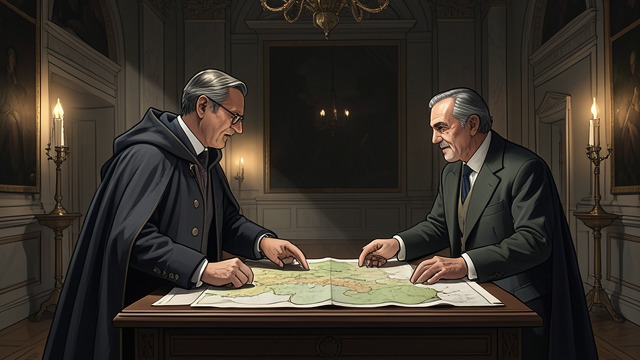
Alliances in Motion
Balancing powers
Wolsey seeks French support for Henry’s marriage case while trying to keep the papacy independent of imperial control. His diplomacy depends on money, ceremony, and a shifting reading of interests.
The limits of negotiation
The Sack of Rome and the Emperor’s influence over the pope obstruct the English case. Each new diplomatic opening is vulnerable to events beyond Wolsey’s control.
A Meeting Across the Channel
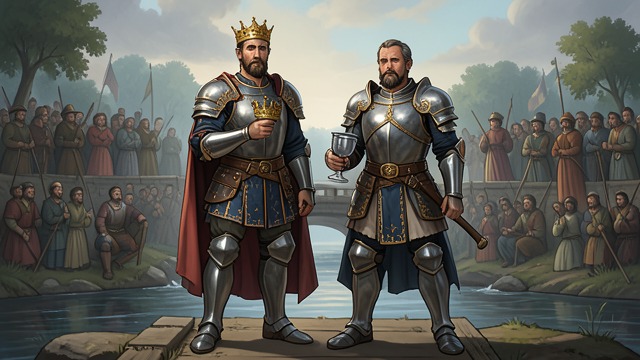
The Calais and Boulogne Encounter
Treaty as performance
Henry and Francis meet amid pageantry, gifts, and political bargaining. Anne’s status complicates the ceremonies, while the English hope that France will support their position toward Rome.
Cromwell’s informal role
Cromwell moves between kings, envoys, and commercial contacts, treating the meeting as a continuing process rather than a single agreement. The alliance offers goodwill, not certainty.
The Emperor’s Shadow

War Kept at Bay
Competing calculations
Charles V could threaten England, especially in defense of Katherine and Mary, but his commitments elsewhere limit his freedom. Cromwell uses that constraint while urging England to prepare its own defenses.
A fragile equilibrium
Treaties, merchant interests, and military plans hold off immediate conflict. The country’s separation from Rome remains embedded in an international struggle, not merely a domestic reform.
1527–1529
1532
1534–1535
