Austin Friars
Wolf HallAustin Friars is Thomas Cromwell’s London home and working base, but it is never merely a private residence. Its household gathers kin, servants, clerks, political allies, foreign visitors, and petitioners; its rooms host financial and diplomatic business as well as family life. Across the novel, the house’s crowded intimacy both sustains Cromwell and exposes what his service to the king takes from him.
A household and a place of belonging
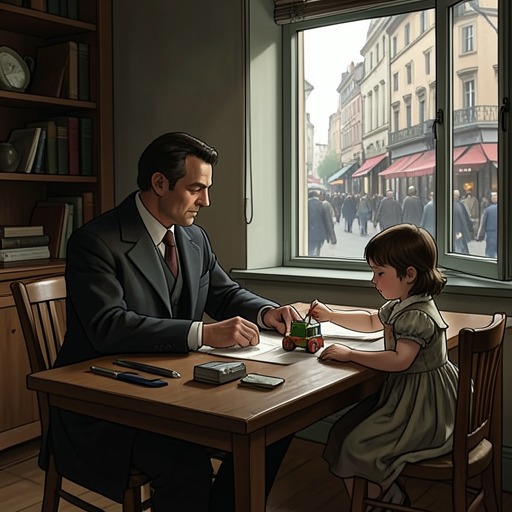
John Williamson, Johane, and their young daughter Jo move into Austin Friars, where Williamson is needed for Cromwell’s business. Johane questions what that business now entails, and Cromwell describes it as making people rich, with Williamson helping him. The exchange places the house at the intersection of kinship and enterprise: family members are welcomed in, but their presence also becomes part of the network that supports Cromwell’s work.
The household expands and changes around him. Two orphans, Richard and Walter, are added to it; Kat Cromwell remains close enough to measure her brother’s success against the person she remembers, even as she admits she can no longer understand him. The house also holds children and servants, including Jo, Alice, and Mercy, whose movements and conversations make clear that it is a shared domestic world rather than a solitary statesman’s retreat. Cromwell’s will reflects this web of obligations: it provides for Johane and Williamson, gives a marriage portion to their daughter, and leaves money to servants, poor maidens, prisoners, and road repairs. His books are left to Rafe Sadler, while Masses are to be said for his parents.
The family’s security remains vulnerable to illness. When plague threatens to return, Cromwell asks whether the children should be sent away; Johane asks in which direction, while Mercy doubts that anyone can outrun it. Their debate is practical rather than abstract: Austin Friars is a home whose members must decide together how to face danger, even when they cannot be sure that precautions will protect them.
Work, hospitality, and political traffic
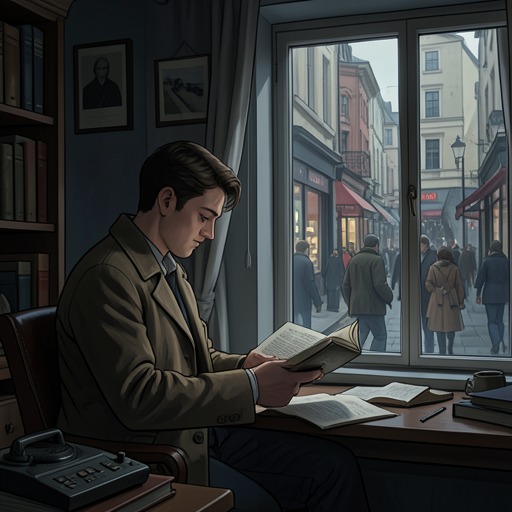
The house is also a place of administration. Cromwell trains Thomas Avery to manage his private finances, while clerks and other young men move through the household. Thomas Wriothesley, once employed under Cromwell in Wolsey’s household and later taken into Stephen Gardiner’s service, appears at Austin Friars as well as at court. The children suspect him of spying for Gardiner. In this traffic of visitors, the house offers access and opportunity, but few chances for privacy: Cromwell reflects that every letter of the alphabet seems to watch him.
Cromwell’s work reaches beyond the walls. From Austin Friars, he pursues a seat for himself in the Commons at Taunton, with Rafe Sadler sounding out the intentions of Thomas Howard and the king. The conversation reveals how parliamentary representation depends on the choices of powerful patrons. Elsewhere, Cromwell speaks with Anne Boleyn about the political interests of her family and the benefits they have received from Wolsey’s lands. The house is therefore not separate from court faction: political intelligence and patronage enter its rooms alongside domestic concerns.
Its hospitality is generous and conspicuously international. Cromwell’s household includes French and German visitors, and people from Florence; the kitchen feeds a crowd so large that, according to the cook Thurston, even aldermen come in disguise. On Easter, after Thurston has fed people gathered outside the gate, Cromwell goes to the kitchen, gives him a slap on the head and a gold piece, and hears that the crowd will return by supper. The house’s abundance draws people to it, turning hospitality into both a social practice and a visible measure of Cromwell’s means.
The working household has its own disciplined routines. In the kitchens, the garzoni learn to make spiced wafers, a task requiring careful timing and attention at each stage. Elsewhere, Cromwell receives Lucy Petyt, whose husband is imprisoned, and offers her a place by the fire and warm spiced wine. Her visit brings the consequences of religious persecution into a room otherwise associated with finance and political planning. Austin Friars can shelter conversation and offer comfort, but it cannot undo what has happened beyond its doors.
Private grief within public life
The house repeatedly holds Cromwell’s grief for his dead wife, Elizabeth. He says that he thinks of her every day, resisting the idea that her death was simply a mistake from which a person can return unchanged. The losses of his daughters, Anne and Grace, remain present too. When the children ask whether the cardinal might seek permission from the Pope to release Elizabeth from Purgatory, they also wonder whether the girls have been there longer and might need help more. Their appeal joins the household’s bereavement to its Catholic habits of prayer and intercession.
A later visit from Alice makes the family’s losses visible in another way. She asks whether Cromwell will write to the cardinal on Elizabeth’s behalf. He asks about Kat and his daughters in return, as if the household’s remembered dead form a single unsettled account. His response, inwardly reduced to the principle that one must ask in order to receive, also shows how he turns private need into a request that can be pursued through political influence. At Austin Friars, grief is neither sealed off from business nor easily resolved by it.
The house’s Christmas routines are shadowed by the memory of Elizabeth’s death. When the household is awakened by a knock after midnight, Cromwell finds William Brereton of the privy chamber waiting with an armed escort. He thinks they have come to arrest him. Johane is in her nightgown, Alice and Jo appear, and Jo begins to cry; the scene recalls the night Elizabeth died, when his daughters had waited in their night-shifts for him to come home. Mercy takes the girls away, while Gregory comes downstairs and offers to stay if needed. Royal power enters the house as a threat, and its disturbance awakens an earlier family trauma.
A home reshaped by service
Austin Friars offers Cromwell a place to return to, but increasingly his public duties determine how much of it he can inhabit. While staying at Westminster, he misses the music heard nightly at home and the women’s voices coming from other rooms. The contrast identifies what political work removes from him: not simply leisure, but the sounds and shared life that make a residence a home.
In time, he considers moving his clerks and papers to the Rolls so Austin Friars can become a home again, but the question of whom it would be for remains unresolved. The house is held on a ninety-nine-year lease, with Cromwell’s great-grandchildren imagined as its eventual occupants. He notices his name in the documents and his arms carved over the doorways, marks of a future in which the family’s presence might outlast its founder. Yet the thought of the house’s legacy leads him back to the past—to Liz’s book of hours, to Hatfield, and to the remembered violence of his father’s fist. The building can preserve a name, but it cannot make a life’s memories orderly.
Cromwell’s relationship with Rafe Sadler further shows the house becoming a place where private bonds are made and revealed. Rafe tells him, aboard the king’s barge, that he has secretly married Helen Barre and that she is carrying a child. He recalls the evening at Austin Friars when he first took Helen to bed, after coming to find her and taking her to the home of Thomas Cranmer’s wife. Cromwell offers to help the couple find a house of their own and says that, if they wish, the children can remain at Austin Friars; Rafe answers that Helen would not part with them. Cromwell recognizes that the household will change, and that he may have no more children there unless he makes room for a different kind of life.
That prospect remains unsettled. Austin Friars is at once the site of Cromwell’s deepest domestic attachments and a base increasingly organized around royal work. Its crowded rooms make political power tangible—in the clerks, messengers, visitors, meals, and favors that pass through them—while its absences give that power an intimate cost. The house’s history is the history of a home continually used for business, and of the family life Cromwell tries to preserve within it.