Cambridge
Wolf HallCambridge is a university town whose significance in the novel lies less in its physical description than in the struggles over learning, conscience, and jurisdiction attached to it. It is associated both with scholarly training and with the fate of religious reformers: Thomas Cromwell asks Thomas Wolsey to release Thomas Bilney on the condition that Bilney return there, while arguments about Parliament’s authority draw on the experience of Cambridge disputation.
Learning and Disputation
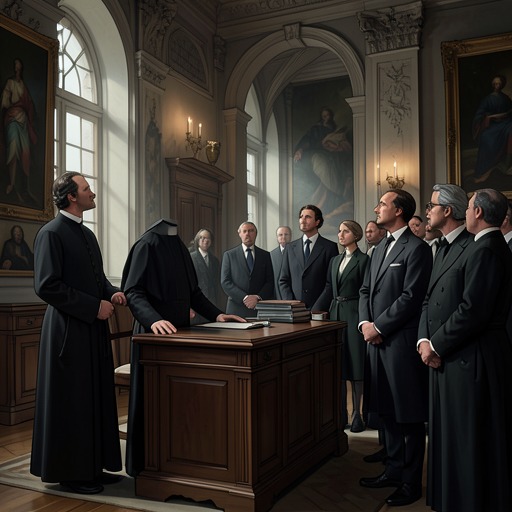
Cambridge appears as a place of intellectual formation. Thomas Wriothesley recalls that scholarly disputation there was supposed to train the mind, though he later dismisses its practice as futile argument. Thomas Cromwell contrasts that academic wrangling with the more practical council work he remembers under Thomas Wolsey: proposals were disputed, refined, and then put into effect. In the present council, by contrast, arguments are entangled with factional rivalry and personal threats.
The contrast makes Cambridge’s intellectual culture politically consequential. The skills cultivated in academic argument do not determine how authority will be exercised at court; there, the same capacity for debate can be used to delay, threaten, or contest a policy. Yet the language of learning also gives political actors a way to make institutional claims appear reasoned and legitimate.
Bilney and the Limits of Protection
Cambridge is the destination Thomas Cromwell demands for Thomas Bilney, a timid and physically weak prisoner who has spent a year in the Tower. Cromwell asks Thomas Wolsey to use his power, write letters, and petition the king if necessary to secure Bilney’s release. His appeal is sharpened by the deaths of Clerke and Sumner, two scholars imprisoned in the cold college cellars at Oxford, where the plague found them. Cromwell fears that Bilney, too, is being kept in conditions that could destroy him.
Wolsey agrees to intervene, but sets a condition: Bilney must return to Cambridge and abandon his plan to go to Rome to persuade the Pope to reform. His protection therefore has a boundary. Bilney may be released from the Tower, but not to pursue an appeal beyond Wolsey’s reach; Cambridge becomes the permitted destination within a compromise negotiated through political power.
Cambridge in the Contest over Authority
The novel also invokes Cambridge in its wider debates about the relationship between church and state. In Thomas Cromwell’s account of Marsiglio of Padua’s propositions, Christ is described as having come not to rule but as a subject, while priests are placed under secular government. The argument proceeds to the claim that Parliament represents the people’s will and that a king derives his kingship through that legislative body. Cambridge’s association with disputation helps frame such claims as products of learned argument, even as their consequences reach into marriage, legitimacy, clerical property, and the authority of the church.
The dispute is not simply between learning and ignorance. In a later conversation about the king’s title as head of the church, Thomas More distinguishes temporal jurisdiction, which Parliament can alter, from spiritual jurisdiction, which he says lies outside the realm. The competing arguments expose the fault line between parliamentary law and ecclesiastical authority. Cambridge’s place in the novel is therefore both intellectual and political: it stands behind the habits of debate through which the characters test, defend, and challenge the limits of power.