Cardinal Wolsey’s death at Leicester Abbey
Wolf HallThomas Wolsey’s death at Leicester Abbey turns the cardinal’s journey from political disgrace into a final separation from Thomas Cromwell. In George Cavendish’s account, illness overtakes Wolsey as he is being taken south under the authority of William Kingston; his death leaves Cromwell with unanswered questions, a starkly diminished burial, and a court where the old intimacy between king and cardinal cannot be restored.
From imprisonment to the journey south
Wolsey’s final illness unfolds after Kingston arrives to take him into custody. Cavendish recalls Wolsey repeating Kingston’s name and recognizing that the journey is not a return to favour. He tells his attendants that they are leading him into a fool’s paradise: he believes he knows what has been prepared for him. That night, his condition worsens, and the next morning he is too weak to stand. The party nevertheless continues south to Leicester.
The account resists a simple explanation for the illness. Wolsey had gone a week without eating, and Cavendish wonders whether he intended to destroy himself, but cannot accept that interpretation. He had offered Wolsey roasted warden pears with spices, of which the cardinal ate only a little. When Wolsey complained of a cold weight in his chest, Cavendish summoned an apothecary, who prepared a powder. Distrustful, Cavendish and the apothecary each drank a portion before Wolsey took his. The pain eased temporarily, and Wolsey attributed it to wind; the brief improvement gave Cavendish hope that he would recover.
Death at Leicester
At Leicester, Wolsey’s illness continues for days. Cavendish describes him as bleeding, suffering, and unable to keep food down. When offered chicken broth, Wolsey asks whether it is a meatless day and has the bowl removed. His question retains the force of an ordinary religious observance even as his attendants fear that death is near. Cavendish remembers Wolsey saying that death was the end of his illness.
Wolsey dies at eight the following morning, after speaking to the end rather than dying in his sleep. Around his bed, the rosary beads continue to move; beyond the room, the horses wait in their stalls. The account places the death amid the practical details of a journey and the rituals of vigil, not in the setting of the sumptuous life Wolsey once commanded. Cromwell later asks whether the cardinal spoke of him again, but the testimony offers no final message to satisfy that hope.
Burial and the remains of grandeur
After Wolsey’s death, Cavendish washes and prepares him for burial. Beneath the cardinal’s fine holland shirt, he finds a belt of hair, which he believes Wolsey began wearing during his time among the monks at Richmond. The monks at Leicester keep it. Cromwell responds that they will make it pay, measuring the possibility of a relic’s future value against the intimate evidence of Wolsey’s private devotion.
The coffin is made from plain boards, a severe contrast to the tomb Wolsey had imagined: black marble, bronze, and sculpted angels. Cavendish had also pictured the cardinal in his archbishop’s robes, holding his crozier as he was enthroned at York. That ceremony was only two days away when Wolsey was arrested; Cavendish had urged him to accept what he had recovered and go north, believing he might otherwise have lived another ten years. Instead, he places the crozier in Wolsey’s hand for burial. The objects that marked an anticipated future become, at Leicester, tokens of a career ended before its promised culmination.
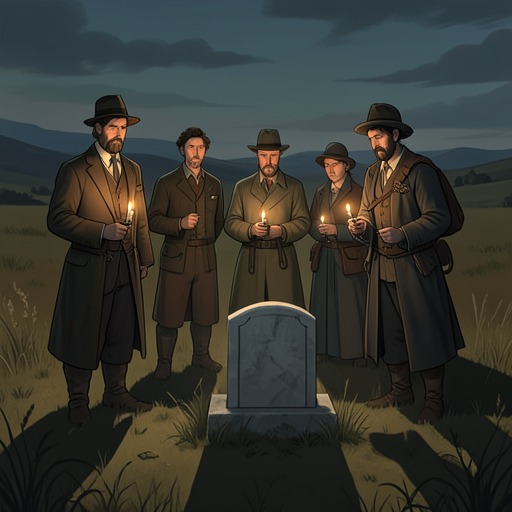
Cavendish and the others summon the mayor and city officials to see Wolsey in his coffin, so no rumours can claim he is still alive or has escaped to France. After a vigil by candlelight until four in the morning, they hear Mass and bury him in the crypt at six. The observance gives his burial a formal religious shape, but cannot restore the magnificence he had expected. Some onlookers remark on his low birth; Cavendish believes they would not have dared say such things in Cromwell’s presence.
Cromwell, the king, and the silence afterward
Cromwell hears Cavendish’s recollections after Wolsey’s death, while thinking of the journey, the burial, and the cardinal’s diminished circumstances. He had earlier told Rafe Sadler that he would not forsake Wolsey, and recalls sitting with him at Esher after Wolsey’s fall. The death makes that loyalty irreversible: there is no longer a living master to return to, nor a chance to resume the relationship that had defined Cromwell’s service.
At Hampton Court, Henry VIII tells Cavendish that he would not have wished Wolsey dead even for twenty thousand pounds. Yet he also instructs Cavendish to say nothing about what the cardinal said in his last days. Cavendish has already been questioned by the king and Norfolk, and Cromwell warns him that Norfolk could twist any disclosure into treason. The demand for silence turns the deathbed into a political matter: even after Wolsey is gone, the meaning of his final words remains something the living can control, conceal, or exploit.
Cavendish’s own position is precarious. He has been paid only ten pounds a year and was three-quarters of a year in arrears; he is worried about money Wolsey had carried on the journey and about transporting his belongings from Yorkshire. Cromwell asks why he had not come to him for help. The small sums and unsettled effects sit beside the king’s immense valuation of the dead cardinal, exposing the mismatch between royal regret and the material treatment of Wolsey’s household.
Political aftermath and narrative significance
Wolsey’s death follows a period in which his public fortunes and private life appear sharply divided. Although he writes to Henry complaining of creditors and describing himself as wrapped in misery and dread, reports say he continues to dine with local gentry, give charity on his former princely scale, settle lawsuits, and reconcile estranged couples. His death therefore closes not a life already emptied of influence, but one still marked by acts of patronage and local authority even as the court has turned against him.
The cardinal’s absence also changes the balance of Cromwell’s political world. In Parliament, Cromwell later advances a bill to suspend payments of annates to Rome, using a division of the Commons to reveal who supports the measure and who opposes it. Henry watches the division and approves with a nod; in the Lords, he must personally make the case. The episode shows political work continuing by different means after Wolsey’s death, with Cromwell increasingly exercising the tactical authority once associated with his former master.
Later, when Stephen Gardiner’s arguments unsettle the king’s council, Cromwell contrasts its wrangling with the method of Wolsey’s advisers: they debated proposals, refined them, and put them into practice. That recollection gives Wolsey’s death an institutional consequence as well as a personal one. The cardinal cannot return, but his administrative model remains a standard by which Cromwell judges the disorder of the council—and a legacy that survives in the work of the former servant who once promised not to forsake him.